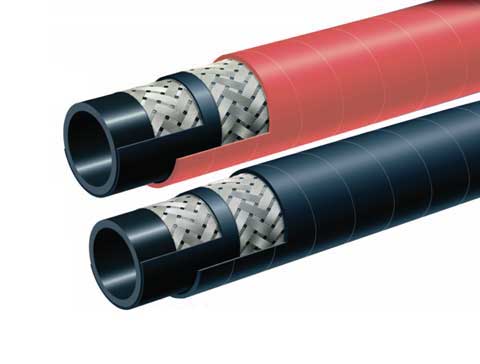
API-compliant oil drilling and production hoses, designed for operating temperatures ranging from -40°C to 120°C.
release date:2026-11-17 09:33:31
reading volume:
share:
In oil and gas drilling and production operations—ranging from frigid polar regions to deep, high-temperature reservoirs—high-pressure mud-conveyance hoses are subjected to extreme temperature fluctuations. In northern, open-air drilling sites during winter, temperatures can plummet to -40°C; conventional rubber hoses become rigid and brittle, leading to cracking or bursting when bent. Conversely, in deep, high-temperature wells, circulating drilling mud can reach 120°C, causing standard hoses to rapidly swell and degrade, which results in the detachment of the inner liner or delamination between layers. Designed to operate within a temperature range of -40°C to 120°C, this API-compliant drilling and production hose is engineered in strict accordance with the API Spec 7K standard. Through comprehensive material modification optimized for a wide temperature spectrum, the hose maintains stable physical properties across the entire -40°C to 120°C range, providing a highly reliable flexible piping solution for drilling and production operations in any thermal environment.
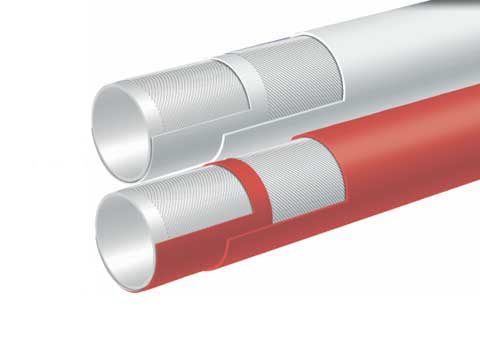
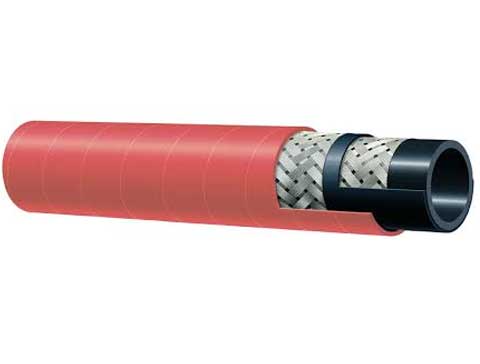
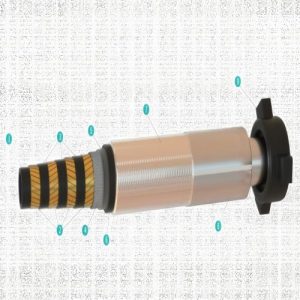 A reinforced structure, specifically modified for a wide temperature range, ensures no loss of pressure-bearing capacity under extreme temperature fluctuations. In conventional drilling hoses, the steel-wire reinforcement structure is not adapted for extreme temperatures. In frigid conditions, the rubber isolation layers become rigid and brittle, failing to cushion the steel-wire layers—a condition that often leads to wire breakage during bending. In high-temperature environments, the rubber isolation layers soften rapidly, causing the steel-wire layers to shift, which significantly compromises the hose's overall pressure-bearing capacity. This API-compliant hose, designed for temperatures from -40°C to 120°C, features a multi-layer, high-strength steel-wire reinforcement structure that has been specifically modified for a wide temperature range. Every component—from the steel wire itself to the rubber layers between the wires—has been optimized for thermal adaptability. Consequently, the hose’s pressure-bearing capacity remains stable throughout the entire -40°C to 120°C range, with no significant degradation caused by temperature fluctuations. The reinforcement layer utilizes ultra-high-strength galvanized steel wire, specially treated via low-temperature tempering. This process significantly enhances the wire's low-temperature impact toughness, ensuring excellent mechanical properties even in extreme cold—down to -40°C—and effectively preventing brittle fractures. The winding parameters for the steel wire have been precisely optimized through simulations of high- and low-temperature cycling; this ensures that when the hose is bent in extreme cold, stress is distributed uniformly across every layer of wire, preventing localized stress concentrations that could lead to wire breakage. At high temperatures of 120°C, the structural strength of the steel wire remains above 95% of its design value, with no significant loss of integrity.
The rubber compound separating the steel wire layers features a specially modified formulation designed for a broad temperature range. At -40°C, it remains elastic rather than becoming hard or brittle, providing consistent cushioning and support for the wire layers. At 120°C, it resists significant softening, ensuring the steel wire layers remain securely in place and maintaining uniform stress distribution across the hose wall throughout the entire operating temperature range. When subjected to a 180° bend test at -40°C, the hose wall remains intact with no visible cracks; it subsequently passes a pressure-holding test at its rated working pressure without any leakage or deformation. After being held at 120°C for 72 hours, the hose’s burst pressure remains above 90% of its value at room temperature—fully meeting the API 7K standard requirement for a 4x burst safety factor—and ensuring sufficient safety margins under extreme temperature conditions. The entire reinforcement structure has undergone thousands of high- and low-temperature cycling tests (ranging from -40°C to 120°C) without any signs of delamination or wire displacement, making it perfectly suited for the complex, high-temperature-fluctuation environments encountered in oil drilling and production operations. A material system designed for a wide temperature range—remaining free from embrittlement at -40°C and resisting degradation at 120°C, with consistent performance throughout.
Standard rubber hoses used in petroleum drilling and production are typically designed for ambient operating conditions, with a temperature tolerance range generally limited to -20°C to 80°C. Exceeding these limits causes a precipitous decline in the physical properties of the rubber, leading to hose failure. This API-compliant, high- and low-temperature resistant drilling and production hose utilizes a specially modified, wide-temperature-range rubber formulation throughout its entire structure—from the inner liner to the outer cover. Through the blending of specialized rubbers and the incorporation of functional additives, the hose maintains stable performance across an exceptionally broad temperature spectrum of -40°C to 120°C, effectively eliminating the common issue of rapid failure in standard hoses under extreme temperatures.
The inner liner, which comes into direct contact with high-temperature drilling mud, employs a wide-temperature-range formulation based on a blend of hydrogenated nitrile rubber (HNBR) and fluororubber. By incorporating specific low-temperature plasticizers and high-temperature anti-degradation agents, the liner retains excellent elasticity even in extreme cold (-40°C), preventing hardening, embrittlement, or cracking. When subjected to long-term immersion in high-temperature (120°C) sulfur-containing drilling mud, the liner remains resistant to swelling, degradation, and material shedding (flaking). Its wear resistance and sealing integrity remain stable, ensuring the liner does not wear through rapidly due to the erosive action of high-temperature media. Furthermore, the chemical resistance of the inner liner has been precisely optimized to withstand long-term exposure to various drilling and production fluids—including water-based muds, oil-based muds, and fracturing fluids—ensuring that the liner’s performance does not deteriorate rapidly when switching between different types of media. The outer cover utilizes a modified blend of EPDM and chloroprene rubber, engineered for a broad temperature range and superior weather resistance. It incorporates specialized additives that provide resistance to extreme cold, high heat, ultraviolet (UV) radiation, and ozone. In the frigid, open-air conditions of a drilling site—where temperatures can drop to -40°C—the outer cover retains excellent flexibility, ensuring it does not crack when dragged or bent. Conversely, during long-term exposure to high-temperature environments (up to 120°C), the material resists rapid softening or becoming tacky; it maintains its structural integrity, effectively shielding the internal reinforcement layers from external threats such as salt spray, oil contamination, and UV radiation. The wear resistance of the outer cover remains stable across the entire operating temperature range, preventing material chipping in extreme cold and rapid abrasion or wear-through in high-heat conditions.
All rubber layers within the hose assembly are bonded at the molecular level using a specialized adhesive system designed for a wide temperature range. This ensures consistent inter-layer bond strength from -40°C to 120°C, preventing delamination, blistering, or bond failure caused by extreme temperature fluctuations, thereby maintaining the structural integrity of the entire composite assembly. The hose’s overall flexibility has been specifically optimized; at -40°C, it achieves a minimum bend radius of just 12 times its diameter. This allows personnel to easily bend and drag the hose even in the harshest, sub-zero field environments, eliminating the operational difficulties—such as snagging or resistance—often associated with stiffer, less flexible hoses.
Compliant with API standards and suitable for all operational scenarios, this solution drives cost reduction and efficiency improvements throughout the entire drilling and production lifecycle, regardless of temperature conditions.
Oil and gas fields in China are geographically diverse, ranging from the frigid regions of the Northeast and Northwest to deep, high-temperature reservoirs. Because drilling and production conditions vary drastically by region, standard hoses—designed for a limited temperature range—cannot be used universally. Consequently, oilfields are often forced to stock a wide variety of hoses tailored to different temperature specifications, leading to exceptionally high costs for spare parts inventory and management. This API-compliant oil drilling and production hose is engineered to withstand extreme temperatures ranging from -40°C to 120°C. Manufactured in strict accordance with the API Spec 7K standard, every hose undergoes rigorous simulated operational testing—covering both high and low-temperature extremes—before leaving the factory. Each unit is supplied with a comprehensive performance test report, ensuring full compliance with the site-entry acceptance criteria for oil and gas fields across diverse geographic regions. A single hose model is capable of meeting the temperature requirements for the vast majority of oil drilling and production applications.
In the frigid winter drilling environments of Northeast China and Xinjiang, conventional hoses often become rigid and brittle; even minor bending during operation can lead to cracking or catastrophic bursting. This not only necessitates frequent replacements but also triggers emergency halts to drilling operations—potentially resulting in losses of hundreds of thousands of yuan per day. By contrast, this API-compliant hose retains excellent flexibility even in extreme cold, eliminating the risk of low-temperature brittle failure. Its service life is more than double that of standard hoses, significantly reducing the frequency of replacements in sub-zero regions and preventing the massive production losses associated with unplanned operational downtime. In deep, high-temperature drilling scenarios, the hose maintains stable performance even when transporting drilling mud at 120°C. It resists rapid degradation or delamination of the inner liner, preventing rubber fragments from clogging the precision nozzles of downhole drilling tools, thereby ensuring safe and continuous operations in high-temperature wells.
To suit various drilling and production requirements, these hoses can be equipped with industry-standard oilfield union couplings. The sealing surfaces of these couplings are specially treated to ensure consistent performance across the entire -40°C to 120°C temperature range, preventing leaks caused by thermal expansion or contraction. For specialized, ultra-high-temperature oil and gas reservoirs, the hose can be further upgraded with advanced materials to accommodate even more extreme thermal conditions. During routine operations and maintenance, simply checking the outer layer of the hose for visible signs of wear, bulging, cracking, or aging—in conjunction with standard oilfield pressure-testing cycles—allows for a quick assessment of the hose's condition. This approach fully complies with the safety, operation, and maintenance standards for API-certified oil drilling and production hoses.
For operators of oil and gas fields spanning diverse geographic regions, adopting these API-compliant hoses—designed to withstand temperatures ranging from -40°C to 120°C—offers significant advantages. It streamlines the management of spare parts across varying thermal environments and reduces annual procurement costs. Furthermore, it eliminates the critical safety risks and substantial losses from drilling downtime that can occur when standard hoses fail under extreme temperatures. These hoses provide a highly reliable, wide-temperature-range flexible transmission solution that meets API standards for oil drilling and production operations across all temperature conditions.
Previous: