API Oil Drilling and Production Hoses for High-Flow, High-Pressure Fluid Transport in Oilfield Fracturing Operations
release date:2026-11-16 10:44:51
reading volume:
share:
In hydraulic fracturing operations for shale and tight oil and gas reservoirs, the high-pressure, proppant-laden fluid delivered by high-capacity fracturing pump units is the critical medium that determines the effectiveness of the stimulation process. During these operations, delivery hoses are subjected to extreme conditions—pressures ranging from 70 to 105 MPa—while transporting fracturing fluids heavily laden with highly abrasive materials such as quartz sand and ceramic proppants. Standard high-pressure hoses are incapable of withstanding the high-velocity erosion caused by these hard proppants; they quickly suffer from internal wear, leading to catastrophic hose bursts. Such failures not only force an immediate suspension of the entire fracturing operation but also pose severe safety risks, including the potential for high-pressure fluid jets to cause serious personal injury. A single unplanned shutdown can result in direct and indirect losses amounting to millions of yuan. Designed in strict accordance with the API Spec 7K standard for petroleum drilling and production hoses, these specialized high-flow, high-pressure hoses feature an ultra-high-strength, multi-layer steel-wire-wound structure and a highly wear-resistant inner liner. They ensure the stable, long-term transport of high-volume, high-pressure, proppant-laden fluids, providing a highly reliable, flexible piping solution for oilfield fracturing operations that meets international API standards.
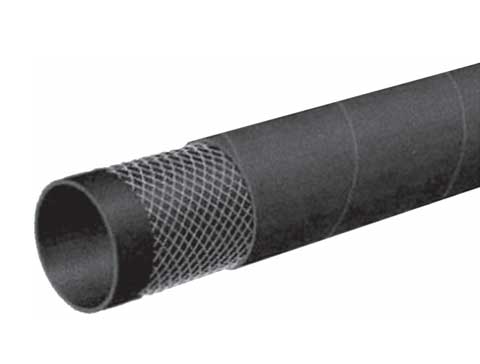
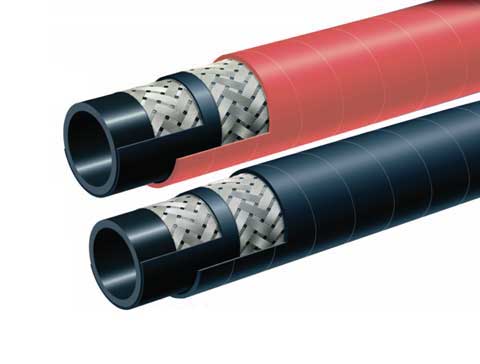
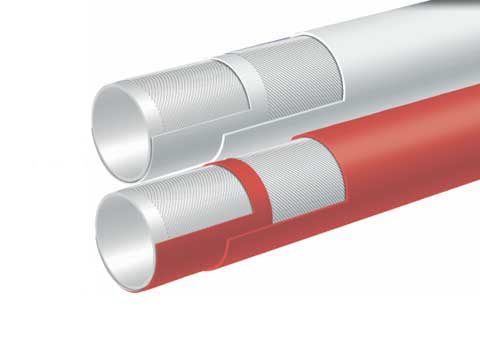
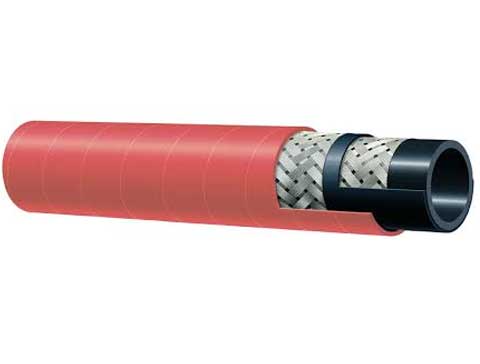
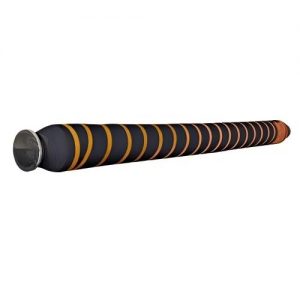 Multi-layer, interleaved steel-wire-wound reinforcement for stable, ultra-high-pressure performance in large-bore hoses.
Most conventional high-pressure fracturing hoses utilize a four-layer steel-wire-wound design with a relatively small internal diameter. These hoses fail to meet the high-flow requirements of large-capacity fracturing pump units and fall short of the mandatory pressure-safety factor requirements stipulated by the API 7K standard. Under the intense, high-pressure, pulsating shocks characteristic of fracturing operations, such hoses are highly susceptible to localized bulging and catastrophic bursts. This API-compliant, high-flow, high-pressure fluid transfer hose is specifically engineered for oilfield fracturing operations. It features six or more layers of ultra-high-strength, specialized steel wire, applied at an optimal winding angle of 54°44′. Through fluid dynamics simulation, the stress parameters for each wire layer have been precisely optimized, ensuring uniform stress distribution across the entire hose wall—eliminating any localized weak points under pressure.
The large-bore design is perfectly suited for the high-flow requirements of high-capacity fracturing fleets. A single hose offers a flow capacity far exceeding that of conventional, smaller-diameter fracturing hoses; consequently, the entire fracturing fleet can be connected to the wellhead using significantly fewer lines. This drastically reduces the labor required for traditional multi-line layouts and minimizes the number of potential leak points on-site. Empirical data shows that at a rated working pressure of 70 MPa, the pressure drop is only 0.08 MPa per 100 meters. This ensures minimal pressure decay during the transport of high-flow, proppant-laden fluids, preventing significant pressure loss at the remote fracturing wellhead and guaranteeing that pump-in pressures remain stable and meet operational requirements.
For the reinforcement layers, only specialized, ultra-high-strength steel wire—with a tensile strength of at least 2200 MPa per individual strand—is used. During manufacturing, the winding tension for every layer is precisely calibrated using computer-controlled, large-bore winding equipment, keeping tension deviations to an absolute minimum. This results in a uniform hose wall thickness, free from weak points caused by uneven wire stacking or inconsistent tension. The finished hose consistently achieves a minimum burst pressure of at least four times its rated working pressure, fully satisfying the 4:1 burst safety factor mandated by the API 7K standard. With a safety margin far exceeding that of standard industrial high-pressure hoses, it is robust enough to withstand the intense pressure pulses and water hammer effects triggered by the frequent starting and stopping of fracturing pumps, effectively preventing catastrophic hose ruptures. A specialized, highly elastic, and wear-resistant rubber isolation layer is positioned between the multiple layers of steel wire. This prevents direct contact and friction between adjacent wires—thereby avoiding internal wire wear or breakage caused by ultra-high-pressure impulse shocks—while simultaneously enhancing the overall bond strength between the wire layers to prevent delamination during long-term, high-pressure cyclic operations. The entire steel-wire-reinforced structure has successfully withstood over 200,000 cycles of impulse testing at 1.5 times the rated working pressure. The hose wall remains completely intact, showing no signs of bulging or broken steel wires, making it fully capable of meeting the rigorous demands of continuous, high-pressure pumping during hydraulic fracturing operations. Furthermore, the multi-layer steel-wire-reinforced structure offers exceptional tensile and pull-out resistance. The large-bore, integrated hammer-union end connections are secured using a multi-stage, progressive swaging process, creating a high-strength, unified assembly. This ensures that, even under ultra-high-pressure conditions, there is no risk of the hose separating from the end connections—a critical safety feature.
An ultra-wear-resistant, purpose-engineered inner liner material system provides long-service-life performance, effectively resisting erosion from proppants (such as ceramic beads or quartz sand) and enduring high-pressure impulse shocks. Standard high-pressure hydraulic hoses are designed solely for clean hydraulic fluids; they cannot withstand the high-velocity erosion caused by fracturing fluids laden with hard proppants. Such hoses would typically suffer from localized liner penetration or wear-through within just a few hours of use, rendering them entirely unsuitable for the full duration of a fracturing operation. This API-certified oilfield fracturing hose has been engineered with materials specifically optimized for the unique conditions of hydraulic fracturing—from the inner liner to the outer rubber cover—delivering a comprehensive performance upgrade: superior resistance to erosive wear, tolerance for complex fracturing fluids, and robust endurance against high-frequency pressure impulses. The inner liner, which comes into direct contact with high-pressure, proppant-laden fracturing fluid, utilizes a composite structure consisting of highly wear-resistant hydrogenated nitrile butadiene rubber (HNBR) and an integrally extruded ultra-high-wear-resistant ultra-high-molecular-weight polyethylene (UPE) layer. This design reduces overall wear by more than 70% compared to standard nitrile rubber, effectively withstanding high-velocity erosion from the large volumes of hard ceramic proppants and quartz sand present in the fracturing fluid. This significantly extends the service life of the liner, overcoming the common issue where standard hoses are worn through after only a few hours of transporting proppant-laden fluids. Furthermore, the chemical resistance of the inner rubber has been specifically optimized; it remains stable during long-term exposure to various types of fracturing fluids at temperatures up to 120°C. The rubber molecules are not subject to rapid degradation or corrosion by chemical additives, ensuring the liner does not swell or shed material—thereby preventing rubber particles from entering the fracturing fluid and clogging the pores of the proppant pack in the formation, which could otherwise compromise the effectiveness of the fracturing treatment.
The outer cover is composed of a modified chloroprene rubber (CR) formulation designed for high wear resistance and compatibility with oilfield environments. It incorporates specialized additives that provide resistance to abrasion, ultraviolet (UV) radiation, and oil contamination. This ensures that the hose can withstand long-term outdoor use at well sites—characterized by intense UV exposure and high levels of oil—without rapid surface chalking or cracking, making it ideally suited for continuous, open-air fracturing operations. The enhanced wear resistance of the outer cover prevents it from wearing through, even when the hose is frequently dragged across rough, gravel-strewn ground or steel manifold bases. This provides a robust protective barrier for the internal multi-layer steel-wire reinforcement, preventing external corrosive agents from penetrating and damaging the high-strength steel wires.
The entire hose assembly is manufactured using a large-scale, high-pressure vulcanization process, which achieves molecular-level bonding between all rubber layers. The inter-layer bond strength far exceeds the requirements set by the API 7K standard for petroleum drilling and production hoses. Even under the extreme, fluctuating high-pressure conditions typical of fracturing operations, the hose remains free from delamination or internal blistering, ensuring the structural integrity of the entire composite assembly. The hose’s overall bending performance has been specifically optimized, featuring a minimum bend radius of just 12 times its diameter. This allows for easy routing within the confined spaces typical of hydraulic fracturing sites, enabling flexible connections without the need for forced bending. Furthermore, the hose effectively dampens the high-frequency vibrations generated during fracturing operations, preventing the cracking of welded joints—a common failure point in rigid metal fracturing manifolds.
Fully compliant with API 7K standards, this solution enhances safety, reduces costs, and boosts efficiency throughout the entire fracturing lifecycle. Hydraulic fracturing in oilfields involves high-pressure, high-risk conditions, necessitating stringent compliance for all high-pressure fluid transport components. Products that do not meet API 7K standards are ineligible for use in major oil and gas fields; a hose rupture during operations could lead to incalculable downtime losses and severe safety risks. This high-flow, high-pressure fracturing hose adheres strictly to API Spec 7K specifications—from the inspection of raw materials upon arrival to the final testing of finished products. Each hose undergoes a pressure-retention test at 1.5 times its rated working pressure before leaving the factory and is supplied with comprehensive material documentation and a certificate of conformity, ensuring it meets the entry requirements for fracturing operations in major oil and gas fields worldwide.
In large-scale fracturing operations—such as those in shale oil and gas fields—conventional, non-standard hoses often fail after only a few uses, with the inner lining wearing through and causing a rupture. Such failures force an immediate halt to the entire fracturing operation, potentially resulting in direct losses reaching millions of yuan. By switching to this API 7K-compliant, high-flow fracturing hose, operators can significantly extend the service life of the equipment, reduce the frequency of replacements, and eliminate the massive production losses caused by unplanned downtime. In high-pressure fracturing operations for ultra-deep oil and gas wells, the ultra-high-pressure structural design is perfectly suited to the extreme pressure requirements of such environments. It effectively withstands the intense pressure fluctuations encountered during fracturing, ensuring the continuous and safe execution of large-scale fracturing operations.
These hose assemblies can be customized in terms of bore size, pressure rating, and length to meet the specific requirements of various fracturing scenarios, regardless of flow rate or well depth. For fracturing operations in frigid regions during winter, the hoses can be upgraded with low-temperature-resistant materials; they retain excellent flexibility even in extreme cold as low as -40°C, preventing issues such as seal failure at the couplings or embrittlement and cracking of the hose itself. During routine maintenance, the hoses should be thoroughly flushed with clean water after each operation to remove any residual proppant-laden fracturing fluid. Regular inspections—checking the sealing surfaces of the unions for damage and the outer cover for significant wear or bulging—combined with periodic pressure testing, allow for a quick assessment of the hose's condition. This process fully complies with the safety and maintenance management standards for oil and gas field fracturing operations.
For providers of fracturing engineering and technical services, adopting these API-certified high-flow, high-pressure oilfield fracturing hoses offers significant advantages. It not only substantially reduces the annual procurement costs for high-flow, ultra-high-pressure fluid transfer lines but also eliminates the major safety risks and costly operational downtime associated with the frequent bursting of non-standard, inferior hoses. These hoses provide a highly reliable, flexible solution for the transport of proppant-laden fluids at high flow rates and ultra-high pressures, fully meeting the international API 7K standard.
Previous: