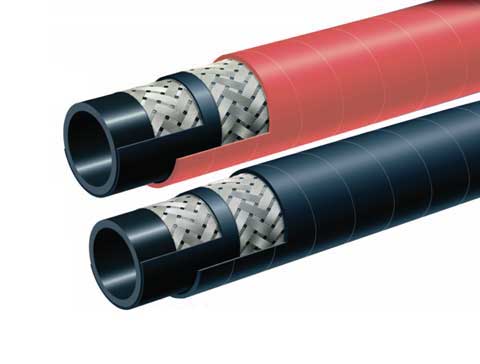
API-compliant rubber hoses for oilfield cementing operations, featuring integral union-end seals for leak prevention.
release date:2026-11-16 10:20:50
reading volume:
share:
In oilfield cementing operations, the high-pressure transport of cement slurry is a critical factor in ensuring cementing quality. Hoses used in these applications are subjected to sustained high pressures—reaching tens of megapascals—while conveying highly abrasive, sand-laden, and alkaline cement slurries. Conventional hoses, which utilize multi-piece (split-flange) connections, suffer from poor sealing reliability; they are highly susceptible to leaks caused by the continuous erosive action of the high-pressure slurry. A sudden leak during an operation not only interrupts the cementing process but also compromises the integrity of the cement seal, leading to significant costs for subsequent well-remediation work. Designed in strict accordance with API standards for petroleum drilling and production hoses, this specialized cementing hose features an integrated, forged-union sealing structure and a proprietary material system highly resistant to cement slurry erosion. It effectively eliminates the persistent issue of leakage during high-pressure transport, providing a highly reliable, flexible solution for oilfield cementing operations.
 Featuring integrally forged-union end connections, this design employs an all-metal, rigid sealing structure that eliminates the risk of leakage. Traditional cementing hoses often rely on split-flange connections, where the flange is secured to the hose end via simple crimping, and the seal is maintained by a standard rubber gasket. Under the intense, high-pressure impact (tens of megapascals) characteristic of cementing operations, these rubber gaskets are easily breached by the abrasive cement slurry. Furthermore, it is difficult to maintain precise coaxial alignment in split-flange assemblies; under prolonged, fluctuating high-pressure conditions, the seal is prone to failure, allowing high-pressure slurry to escape—an event that immediately halts the cementing operation. In contrast, this specialized cementing hose is equipped with integrally forged-union end connections at both ends. The main body of each union is precision-forged as a single, seamless piece—entirely free of welds or joints. This provides superior structural strength compared to welded-flange connections, ensuring that the end connections remain robust and free from cracking, even under ultra-high-pressure conditions. The sealing interface of the union employs a dual-sealing design: a rigid metal-to-metal seal combined with an elastic compensation mechanism. The metal sealing surfaces undergo high-precision lapping, achieving a micron-level surface roughness. When tightened, the two metal faces mate perfectly, creating a primary high-pressure seal capable of withstanding the extreme pressure surges encountered during cementing operations—effectively preventing high-pressure cement slurry from penetrating the metal interface. Simultaneously, a specialized elastic compensation seal fills any minute gaps between the metal surfaces, providing a secondary, auxiliary seal. This eliminates potential leakage paths for high-pressure media, fundamentally preventing the gasket-related blowout or leakage issues common in standard flange connections. Empirical test data confirms that this integrated union sealing system maintains zero leakage even after 24 hours under 70 MPa of pressure, fully meeting the rigorous high-pressure sealing requirements of oilfield cementing operations.
The connection between the union and the hose end utilizes a multi-stage, progressive swaging process. During swaging, CNC equipment precisely controls the compression at each segment, ensuring that the metal teeth of the union bite deeply into the hose’s reinforcement layer. This creates a high-strength, unified assembly, ensuring that the hose will not detach from the fitting—even under extreme 70 MPa pressure. Furthermore, the union’s dimensions adhere to industry-standard specifications for oilfield cementing, allowing for seamless interchangeability between different batches of hoses. This eliminates compatibility issues between new and old components, removing the need for specialized adapters and significantly reducing on-site inventory costs. The union design also facilitates rapid assembly and disassembly; field personnel can connect and lock two hoses securely without the need for complex, specialized tools. Compared to traditional flange connections, this system improves the efficiency of pipeline setup for cementing operations by more than threefold, drastically reducing preparation and downtime. A material system engineered for cement slurry applications, ensuring long-term, stable operation with superior resistance to erosion and corrosion.
Standard oilfield drilling and production hoses feature inner liners designed only for conventional drilling muds; they are entirely incapable of withstanding the highly alkaline nature of cementing slurries or the high-velocity erosion caused by a high concentration of hard cement particles. In practice, such hoses suffer from rapid liner wear-through and chemical degradation due to the alkaline environment, making them unsuitable for repeated cementing operations. This specialized hose, designed specifically for oilfield cementing, features a material composition—from the inner liner to the outer cover—optimized for the unique demands of cement slurries. It delivers a comprehensive performance upgrade, offering exceptional resistance to abrasive erosion, highly alkaline media, and high-pressure pulses.
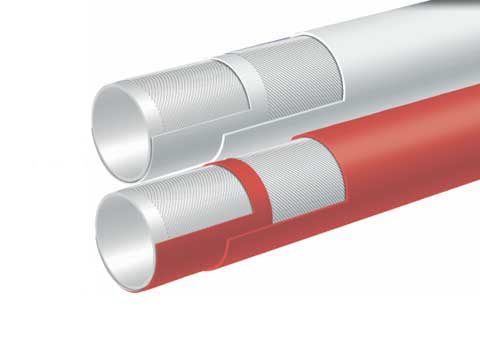
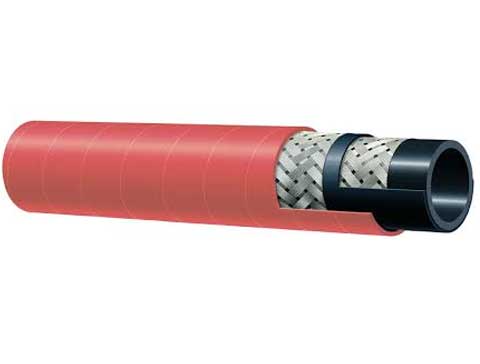
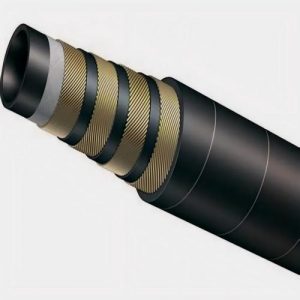
The inner liner, which comes into direct contact with high-pressure cement slurry, utilizes a specially modified rubber compound engineered for high wear and alkali resistance. An optional ultra-high-molecular-weight polyethylene (UPE) wear-resistant layer can also be integrated. This design reduces overall liner wear by more than 60% compared to standard nitrile rubber, effectively withstanding high-velocity scouring from hard cement particles and fine quartz sand. This significantly extends the service life of the liner, overcoming the common issue where standard hoses wear through after only a few uses. Furthermore, the rubber compound has been specifically optimized for high alkalinity; it remains stable even during prolonged exposure to highly alkaline cement slurries at 90°C, showing no signs of chemical degradation, swelling, or fragmentation. This prevents rubber particles from detaching and contaminating the cement slurry—a critical safeguard that ensures the structural integrity of the cured cement and the overall quality of the cementing operation. The hose features a reinforcement layer composed of multiple wraps of high-strength steel wire. The winding angle for each layer is precisely calculated through mechanical simulation, ensuring a balanced, interleaved arrangement that distributes stress uniformly across the entire hose wall. The finished hose offers a burst pressure consistently exceeding four times its rated working pressure—providing a safety margin far beyond industry standards. It is fully capable of withstanding the intense pressure pulses caused by the frequent starting and stopping of cement pumps during cementing operations, effectively preventing localized bulging or hose rupture. The outer cover is crafted from a modified EPDM compound engineered for weather resistance and tolerance to oilfield contaminants. Even when exposed to harsh, high-UV, and oil-rich environments at well sites, the cover resists rapid chalking or cracking, serving as a robust protective barrier that shields the internal steel-wire reinforcement from external corrosive agents.
Through a continuous high-temperature vulcanization process, all rubber layers are fused at the molecular level. The inter-layer bond strength significantly exceeds the requirements set by API standards for petroleum drilling and production hoses. This ensures the structural integrity of the composite assembly, preventing delamination or internal separation—even under the high-pressure, fluctuating load conditions typical of cementing operations. The smooth inner bore prevents cement particles from adhering to the walls; a brief flush with clean water after each operation is sufficient to remove all residual cement slurry. This prevents the cement from hardening or clumping inside the hose—which would otherwise constrict the flow path and reduce throughput—thereby substantially extending the hose's service life for repeated use.
Full compliance with API standards ensures cost-efficiency, operational effectiveness, and safety throughout the entire cementing lifecycle. Oilfield cementing operations impose rigorous compliance requirements on high-pressure delivery lines. Products that fail to meet API specifications are not only excluded from oilfield procurement systems, but any sudden leakage during operations could compromise the quality of the cementing job—leading to remedial costs that far exceed the value of the hose itself. This API-compliant oilfield cementing hose, featuring an integrated union sealing design, undergoes rigorous quality control throughout its entire production process—from the inspection of raw materials to the final testing of finished products—in strict accordance with API standards for petroleum drilling and production hoses. Each hose is subjected to a high-pressure hold test at 1.5 times its rated working pressure before leaving the factory and is supplied with comprehensive material reports and certificates of conformity, fully meeting the site-entry acceptance criteria for oilfield cementing operations.
In conventional oil and gas well cementing, traditional flange-connected hoses often suffer from leaks at the couplings or wear-through of the inner lining after only 3–5 operations. This necessitates frequent replacements, while unexpected leaks during the process can lead to the need for remedial cementing work, resulting in additional losses amounting to hundreds of thousands of yuan. By utilizing this API-compliant hose with an integrated union seal, the service life is extended to dozens of operations. This significantly reduces the frequency of hose replacement and eliminates substantial production losses caused by unplanned remedial cementing. For high-pressure cementing in deep and ultra-deep wells, the hose’s high-pressure-resistant structural design is perfectly suited to the extreme pressure requirements, reliably withstanding the continuous impact of high-pressure cement slurry and ensuring the safe, uninterrupted progress of cementing operations.
These hoses can be customized in terms of bore size, pressure rating, and length to meet the specific requirements of various oilfield cementing operations, accommodating different flow rates and well depths. For winter operations in extremely cold oilfields, the hoses can be upgraded with low-temperature-resistant materials; they maintain excellent flexibility even in temperatures as low as -40°C, preventing issues such as seal failure at the couplings or embrittlement and cracking of the hose itself. During routine maintenance, the hose’s condition can be quickly assessed by flushing out any residual cement slurry after each operation and periodically inspecting the union sealing surfaces for damage, as well as checking the outer cover for significant wear or bulging—a practice that fully aligns with the safety and maintenance management standards for oilfield cementing operations. For users engaged in cementing operations across various oil and gas fields, selecting these integrated, union-connected, leak-proof API-compliant rubber hoses offers significant advantages. Not only do they substantially reduce the annual procurement costs for high-pressure cementing pipelines, but they also effectively eliminate the quality incidents and costly rework—often caused by frequent leaks in traditional flange-connected hoses—thereby providing a highly reliable, leak-proof, and flexible solution for the high-pressure transport of cement slurry in oilfield cementing operations.
Previous: