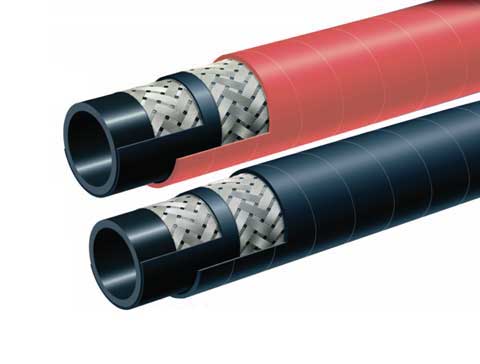
13.5-meter extended-length high-pressure mud-transfer hose for offshore drilling platforms (used in oil drilling and extraction)
release date:2026-11-16 10:07:59
reading volume:
share:
In the drilling riser systems of offshore drilling platforms, mud-transfer hoses serve as critical flexible components connecting the top drive to the riser. These hoses are subjected to a range of extreme conditions: high-frequency vibrations from rig operations, displacement compensation requirements caused by wave-induced motion, continuous exposure to high-pressure, sand-laden drilling mud, and a harsh marine environment characterized by high salinity and intense ultraviolet radiation. Conventional hoses—typically assembled from shorter, spliced segments—feature numerous connection points, which not only elevate the risk of leaks but also fail to accommodate the large-span displacement compensation required. Frequent failures, such as joint leakage or hose bursts, pose a direct threat to the continuous, safe operation of offshore drilling activities. The 13.5-meter extended high-pressure mud-transfer hose for oil drilling and production has been specifically engineered for these unique offshore conditions. Featuring a seamless, 13.5-meter-long, single-piece construction and superior resistance to the marine environment, it provides a highly reliable, long-span flexible piping solution for high-pressure mud transfer on offshore platforms.
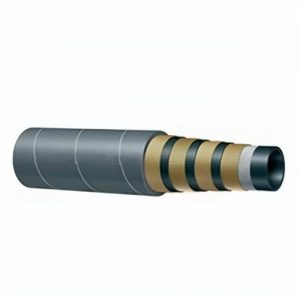 A 13.5-meter seamless, extended design tailored for large-span displacement compensation
Due to manufacturing limitations, traditional mud-transfer hoses for offshore platforms are typically produced in 2-meter or 3-meter segments, which are then joined using multiple union couplings to achieve the necessary length for displacement compensation. This high number of connection points significantly increases the risk of high-pressure mud leakage. Furthermore, it causes vibrational stress to concentrate at the joints; under the constant tension and bending forces exerted by wave motion, these connections are highly susceptible to detachment or seal failure. In contrast, this 13.5-meter extended high-pressure mud-transfer hose is manufactured using an advanced, continuous extrusion process, resulting in a single, seamless 13.5-meter-long unit. With no vulcanized splices, the stress is distributed uniformly across the entire hose wall, effectively eliminating the structural weaknesses inherent in multi-segment, spliced piping systems. The 13.5-meter extended-length hose is precisely engineered to meet the standard displacement compensation requirements between the top drive and the riser on offshore drilling platforms. A single hose can accommodate the entire range of motion—including the vertical travel of the top drive during drilling operations and the platform’s heave caused by ocean swells—eliminating the need to connect multiple shorter hose segments. By reducing the number of connection points from the typical 4–5 down to just two (one at each end), the risk of high-pressure mud leakage at joints is significantly lowered. Empirical data shows that this 13.5-meter hose offers a displacement compensation capacity exceeding 3 meters, fully covering the dynamic displacement requirements throughout the entire offshore drilling cycle. It prevents issues such as over-stretching or the formation of "dead-zone" kinks when the top drive reaches its lowest limit, ensuring the internal flow cross-section remains unobstructed and preventing the hose from being crushed or restricting mud circulation.
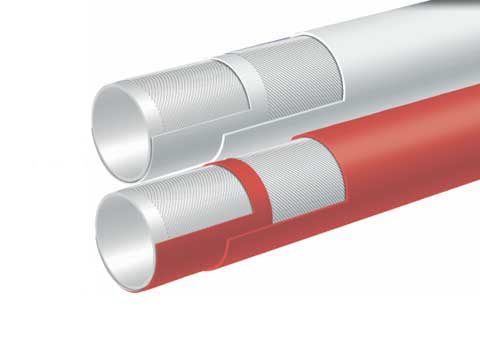
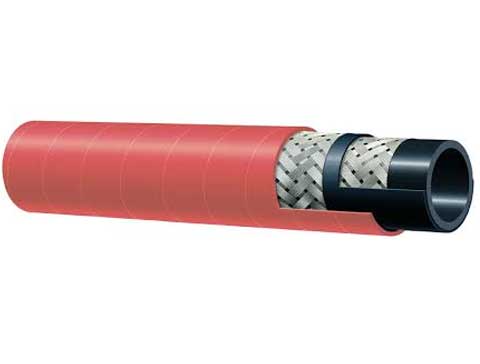
The 13.5-meter continuous hose body is manufactured using a steel-wire-winding reinforcement process, ensuring uniform tension and consistent winding density from end to end. This eliminates the localized weak points—often found at the joints of spliced hose segments—where pressure resistance might otherwise be compromised. The finished hose boasts a burst pressure consistently exceeding four times its rated working pressure, fully complying with safety standards for the offshore oil and gas drilling industry. With a substantial safety margin, it is capable of withstanding the instantaneous high-pressure surges and water-hammer effects common in offshore drilling, effectively preventing catastrophic hose-burst accidents. Furthermore, the seamless, single-piece construction avoids the risk of interlayer bond failure—a frequent issue at the connection points of traditional spliced hose assemblies—thereby significantly extending the overall service life of the hose. Optimized specifically for offshore operating conditions, this hose features a three-fold performance upgrade: enhanced resistance to erosion, salt spray, and weathering. Standard onshore oil drilling hoses are not designed for marine environments; when deployed on offshore platforms, their outer covers rapidly chalk and crack within months due to constant exposure to high salt-spray concentrations and intense ultraviolet (UV) radiation—rendering them unsuitable for long-term offshore service. This 13.5-meter, extra-long, high-pressure mud-transfer hose—engineered specifically for offshore drilling platforms—undergoes targeted modification from its inner liner to its outer cover. The result is a comprehensive performance boost, providing superior resistance to mud erosion, marine salt spray, and weathering.
The inner liner, which comes into direct contact with high-pressure, sand-laden drilling mud, utilizes a composite structure of highly wear-resistant hydrogenated nitrile butadiene rubber (HNBR) and ultra-high-molecular-weight polyethylene (UPE). This design reduces overall wear by more than 50% compared to standard nitrile rubber, significantly extending the liner's service life against high-velocity erosion from hard rock cuttings—effectively preventing the premature wear-through common in conventional hoses. Furthermore, the inner liner withstands long-term exposure to oil-based muds, water-based muds, and sulfur-containing media. It maintains stable physical properties across a broad temperature range—from -40°C to +130°C—and avoids the rapid swelling and degradation typically seen in standard rubber when exposed to the sulfur-rich drilling media often found in offshore operations.
The outer cover employs a specialized, weather-resistant blend of chloroprene and ethylene propylene diene monomer (EPDM) rubber, enhanced with specific additives for salt-spray, UV, and ozone resistance. Accelerated salt-spray aging tests confirm that the outer cover retains its structural integrity and stable mechanical properties even after 5,000 hours of exposure to high-concentration salt spray, making it perfectly suited for the harsh, open-air environments of offshore drilling platforms characterized by high salt-spray levels and intense UV radiation. The outer rubber layer has been reinforced and optimized for superior wear resistance. Even when subjected to frequent dragging and friction against the rough steel decks of a drilling rig, it does not wear through prematurely. This robust outer barrier protects the internal steel-wire reinforcement layer, preventing corrosive marine salt spray from penetrating and damaging the high-strength steel wires within.
The entire 13.5-meter-long hose is vulcanized as a single, continuous unit in a large-scale, extra-long vulcanization autoclave. This process achieves molecular-level fusion and bonding across all rubber layers, resulting in an inter-layer bond strength that far exceeds industry standards. Even under the repetitive stretching and bending stresses caused by ocean swells, the hose remains free from delamination or internal blistering, ensuring the structural integrity of the entire composite assembly. Furthermore, the hose’s overall flexibility has been specifically engineered to resist hardening or embrittlement in the cold temperatures of winter marine environments; it maintains excellent bending characteristics and will not crack or fracture under low-temperature conditions.
Fully compliant for offshore platform operations, ensuring safety, cost reduction, and efficiency throughout the high-pressure mud-transfer lifecycle.
High-pressure fluid components for offshore drilling rigs are subject to extremely stringent industry entry requirements. The failure of any single component can trigger serious safety incidents and result in massive financial losses due to operational downtime. Historically, the high failure rate of mud-transfer piping systems—typically assembled from multiple shorter hose segments—has been a major pain point in offshore drilling operations and maintenance. This 13.5-meter, extended-length high-pressure mud-transfer hose is manufactured in full compliance with all relevant offshore oil and gas drilling standards. Each hose undergoes a pressure-retention test at 1.5 times its rated working pressure before leaving the factory and is supplied with comprehensive material reports and inspection certificates, fully satisfying the entry-acceptance criteria for offshore platforms.
In standard offshore drilling operations, mud-transfer lines assembled from multiple shorter hose segments have historically experienced connection leaks approximately every six months. Such high-pressure mud leaks on an offshore platform necessitate the deployment of maintenance vessels to replace the piping—a process that can lead to drilling downtime costing as much as one million RMB per day. By adopting this 13.5-meter, seamless, extended-length hose, the number of connections in the piping system is significantly reduced, extending the overall service life to over five years. This drastically lowers the frequency of failures in high-pressure mud transport lines, effectively eliminating substantial production losses caused by unplanned drilling downtime at sea. In dynamic positioning drilling scenarios—such as those involving semi-submersible platforms or drillships—the 13.5-meter length better accommodates the large-displacement compensation required as the platform heaves with the waves. This prevents excessive tension on the hose at the limits of its displacement, ensuring continuous and stable drilling operations even in harsh sea conditions.
Each hose comes pre-fitted at both ends with high-pressure, integrated "union" connectors that meet offshore platform standards. These connectors feature a marine-grade hot-dip galvanized anti-corrosion coating, making them fully compatible with high-salinity, corrosive marine environments. Upon delivery, the hoses can be connected directly to the platform’s standard mud system interfaces without the need for complex on-site port modifications, significantly reducing the installation workload within the confined spaces of an offshore platform. For specialized ultra-deepwater drilling applications, the hoses can be further upgraded in terms of pressure rating and enhanced with superior marine-grade anti-corrosion protection to meet the demands of deeper-water operations. During routine maintenance, operators simply need to follow the platform’s equipment inspection protocols—periodically checking the outer layer for visible wear, bulges, cracks, or signs of aging, and conducting scheduled pressure testing—to quickly assess the hose's condition. This process fully complies with the safety and operational management standards of the offshore oil and gas industry.
For operators of various types of offshore drilling platforms, choosing this 13.5-meter, seamless, high-pressure mud transport hose offers significant advantages. It not only substantially lowers the annual maintenance costs for high-pressure mud transport systems but also eliminates the major safety risks and massive production losses associated with frequent leaks in traditional, spliced piping configurations. Ultimately, it provides a highly reliable, long-span, flexible transport solution for high-pressure mud delivery systems on offshore drilling platforms.
Previous: