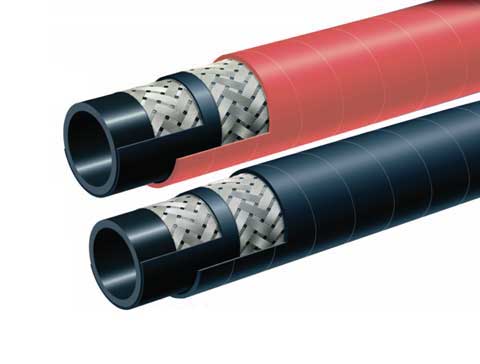
API 7K Standard 6SP Six-Layer Steel-Wire-Wound Petroleum Drilling and Production Hose (70 MPa)
release date:2026-11-16 10:00:03
reading volume:
share:
In oil drilling and workover operations—such as mud circulation through standpipes or hydraulic fracturing circuits—high-pressure mud can reach operating pressures of up to 70 MPa. These environments present a combination of extreme challenges: high-velocity erosion from hard rock cuttings within the drilling fluid, continuous corrosion from sulfur-containing media, and intense ultraviolet (UV) exposure on open-air drill floors. Standard high-pressure hydraulic hoses are entirely unsuitable for such demanding conditions; they quickly suffer from rapid internal wear and catastrophic burst failures. Such failures not only disrupt drilling operations but can also trigger major safety incidents, resulting in economic losses that far exceed the cost of the hose itself. The API 7K-compliant 6SP hose—featuring six layers of spiraled steel wire and a 70 MPa pressure rating—is engineered specifically in accordance with the API Spec 7K standard for oil and gas drilling and production hoses. Its ultra-high-strength design, utilizing six layers of spiraled steel wire, ensures stable and safe long-term operation at a rated working pressure of 70 MPa, providing a highly reliable, flexible piping solution that meets international industry standards for high-pressure mud transport in oil and gas operations.
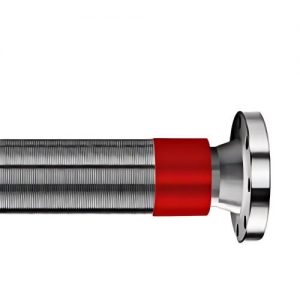 Ultra-high-strength design with six layers of spiraled steel wire for stable performance at 70 MPa
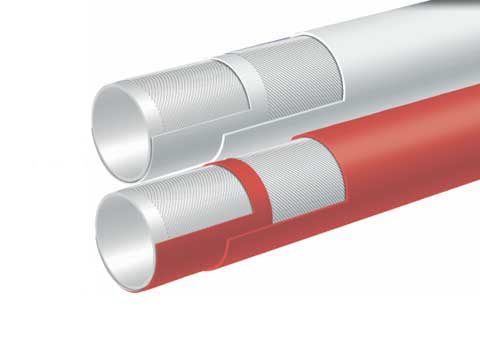
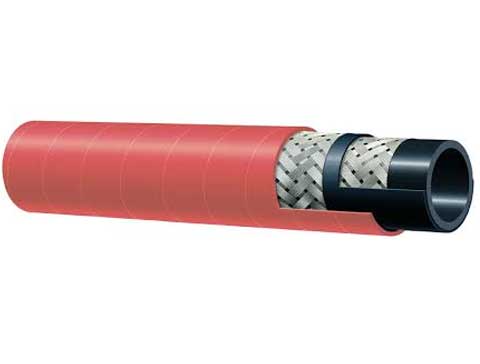
Standard high-pressure hydraulic hoses typically contain no more than four layers of spiraled steel wire and generally have a maximum rated working pressure below 45 MPa, making them completely inadequate for the 70 MPa mud-transport requirements of the oil and gas industry. Furthermore, standard hydraulic hoses often have a safety factor of only 3x, which falls well short of the rigorous safety requirements mandated for oil and gas drilling and production. This API 7K-compliant 6SP hose incorporates six layers of ultra-high-strength galvanized steel wire, arranged in an alternating pattern at an optimal spiral angle of 54°44′. Through precise fluid-dynamic simulation, the stress parameters for each layer of steel wire have been optimized to ensure uniform stress distribution across the entire hose wall at a rated working pressure of 70 MPa, eliminating any localized weak points under pressure. All six layers of steel wire consist of ultra-high-strength, specialized steel filaments, each with a tensile strength of no less than 2150 MPa. The winding tension for every layer is precisely calibrated throughout the process using high-precision, numerically controlled (CNC) winding equipment, ensuring that tension deviations are kept to an absolute minimum. This results in a uniform wall thickness across the entire hose, eliminating weak points caused by localized wire overlapping or uneven tension. The finished hose achieves a minimum burst pressure of 280 MPa—four times its 70 MPa rated working pressure—fully satisfying the 4:1 burst safety factor mandated by the API 7K standard. This provides a safety margin far exceeding that of standard hydraulic hoses, enabling the hose to withstand transient pressure surges and "mud hammer" effects common in oil drilling and production operations, thereby preventing catastrophic hose ruptures.
Specialized, high-adhesion rubber isolation layers are placed between the six steel wire layers. These layers prevent direct contact and friction between adjacent wires—which could otherwise lead to internal wear or wire breakage under ultra-high-pressure pulses—while simultaneously enhancing the overall bond strength between the layers, preventing delamination during prolonged exposure to high-pressure, cyclic operating conditions. The entire steel-wire-reinforced structure has successfully undergone over 200,000 cycles of 105 MPa pressure-pulse testing; the hose wall remained completely intact, with no signs of bulging or wire breakage, making it ideally suited for the continuous, high-pressure, pulsed-load demands of oil drilling and production. Furthermore, the six-layer steel wire structure offers exceptional tensile and pull-out resistance. The coupling assemblies at both ends of the hose provide a grip strength significantly higher than the minimum requirements set by the API 7K standard, ensuring that even under 70 MPa of ultra-high pressure, there is no risk of the hose body detaching from the couplings—a critical safety feature. A purpose-engineered material system for all operational conditions, featuring a comprehensive upgrade in erosion resistance, corrosion resistance, and weatherability.
Standard high-pressure hydraulic hoses are designed exclusively for clean hydraulic fluid; they are entirely ill-suited for the harsh realities of oil and gas drilling—specifically the high-velocity erosion caused by sand-laden drilling fluids, corrosion from sulfur-containing media, and long-term degradation due to exposure to the elements on an open-air drill floor. Consequently, such hoses often fail rapidly as their inner liners are worn through. This API 7K-compliant 6SP drilling hose features a material system optimized from the inner liner to the outer cover specifically for the extreme conditions of oil and gas drilling, delivering a triple-threat enhancement in erosion resistance, chemical (acid/alkali) corrosion resistance, and weather resistance.
The inner liner, which comes into direct contact with high-pressure drilling mud, utilizes a formulation based on HNBR (hydrogenated nitrile butadiene rubber) that is resistant to both oil and drilling mud. For applications involving highly abrasive, sand-laden fluids, an optional UPE (ultra-high molecular weight polyethylene) wear-resistant liner upgrade is available; this reduces liner wear by over 40% compared to standard nitrile rubber, significantly extending service life under the high-velocity impact of hard rock cuttings and preventing the premature wear-through common in conventional hoses. Furthermore, the inner liner material withstands long-term exposure to sulfur-bearing crude oil and oil-based muds, maintaining stable physical properties across a wide temperature range of -40°C to +121°C—avoiding the rapid swelling and degradation typically seen in standard rubber when exposed to sulfurous substances.
The outer cover employs a weather-resistant CR (neoprene) formulation, enhanced with specialized additives for wear, UV, and ozone resistance. This ensures that the hose remains durable even when subjected to the intense UV radiation and high-salinity, salt-spray environments of an open-air drill floor, preventing the rapid chalking or cracking often seen in lesser materials and making it perfectly suited for continuous, exposed-site drilling operations. The outer rubber layer has been reinforced and optimized for superior wear resistance. It can withstand frequent dragging and friction against the rough steel decks of drilling rigs without wearing through prematurely, thereby providing a robust protective barrier for the six internal layers of spirally wound steel wire reinforcement.
All rubber layers within the hose assembly are bonded at the molecular level through a large-scale, high-pressure vulcanization process. This results in an inter-layer bond strength of ≥2.5 kN/m, ensuring the integrity of the composite structure even under long-term, ultra-high-pressure pulsating operating conditions—preventing issues such as gas migration between layers or delamination-induced blistering. The hose’s bending characteristics have been specifically optimized, featuring a minimum bend radius of just 12 times its diameter. This allows for easy routing within the confined space of a drilling rig, enabling flexible connections without the need for forced bending. Furthermore, the hose effectively dampens high-frequency vibrations generated by the riser during drilling operations, preventing the cracking of welded joints often seen in rigid metal piping.
Fully compliant with API 7K standards, this hose enhances safety, reduces costs, and boosts efficiency throughout the entire oil and gas drilling and production lifecycle.
The oil and gas industry imposes extremely stringent compliance requirements for high-pressure hoses; products lacking the necessary certifications are ineligible for entry into oilfield procurement systems. Moreover, the use of non-compliant equipment carries incalculable risks—a potential hose rupture could lead to costly drilling downtime and severe safety hazards. This 70 MPa, 6SP-specification hose—featuring six layers of spirally wound steel wire—is manufactured in strict accordance with API Spec 7K standards, covering everything from raw material inspection to final product testing. Each individual hose undergoes a pressure test at 105 MPa (1.5 times the rated working pressure) before leaving the factory. Every unit is supplied with comprehensive test records and material certifications, fully satisfying the on-site acceptance requirements for oilfield operations. In onshore conventional drilling operations, the use of non-standard high-pressure hoses for mud transport often leads to the inner lining wearing through and the hose bursting after only a few thousand hours of service. Such failures force emergency shutdowns of drilling operations, resulting in losses that can reach hundreds of thousands of yuan per day. By adopting this API 7K-compliant 6SP petroleum drilling and production hose, the service life can be extended to tens of thousands of hours. This significantly reduces the frequency of hose replacement and eliminates the substantial production losses caused by unplanned downtime. In high-pressure workover and hydraulic fracturing applications, the hose’s ultra-high rated working pressure of 70 MPa is perfectly suited for the extreme pressure conditions of fracturing, reliably withstanding intense pressure fluctuations and ensuring the continuous, safe progress of operations.
To meet the requirements of various drilling and production environments, these hoses can be equipped with integral union or flange end connections. Upon delivery, they can be connected directly to the standard interfaces of the drilling rig without the need for complex, additional port machining—perfectly addressing the need for rapid installation in oilfield settings. For specialized conditions in high-sulfur oil and gas fields, the hoses can be upgraded with sulfur-resistant materials to meet specific operational requirements. During routine maintenance, operators can assess the condition of the hose by following API 7K inspection protocols—checking the outer cover for visible wear, bulging, or age-related cracking—and performing pressure testing. This process ensures full compliance with oilfield safety and maintenance management standards.
For users engaged in drilling and workover operations, selecting this API 7K-compliant, 6SP six-layer steel-wire-wound hose (rated for 70 MPa) offers significant advantages. It not only lowers the annual procurement costs for high-pressure mud transport lines but also eliminates the major safety risks and massive downtime losses associated with the sudden bursting of non-compliant hoses. It provides a highly reliable, flexible transport solution for high-pressure mud delivery in oil and gas operations, fully meeting international industry standards.
Previous: