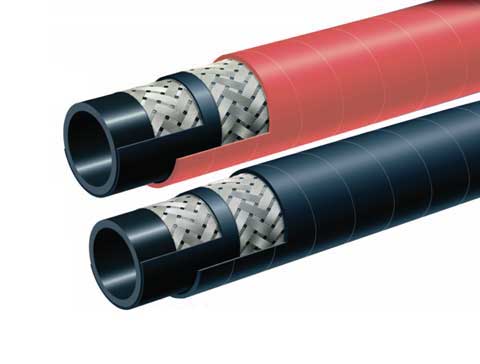
Outdoor Weather-Resistant, UV-Resistant, and Ozone-Resistant EPDM Rubber Hose
release date:2026-11-12 09:46:36
reading volume:
share:
In outdoor fluid-conveyance applications—such as open-air hydraulic engineering, outdoor heavy machinery, and municipal landscaping irrigation—standard rubber hoses often fail within one to two years due to prolonged exposure to ultraviolet (UV) radiation, ozone, and significant temperature fluctuations. This degradation manifests as surface cracking, hardening, embrittlement, and wall ruptures. Frequent replacements not only drive up operation and maintenance costs but also pose the risk of sudden hose bursts during outdoor operations, leading to costly work interruptions. Designed specifically for the rigors of outdoor environments, weather-resistant EPDM (ethylene propylene diene monomer) rubber hoses leverage the inherent molecular advantages of EPDM. They feature a comprehensive protective system against UV radiation, ozone, and extreme temperature swings, offering a durable and reliable solution for long-term outdoor fluid transport.
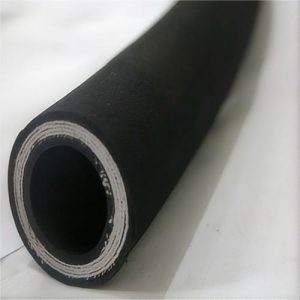 A saturated molecular backbone provides an intrinsic defense against ozone and UV radiation.
The molecular backbones of conventional rubbers contain numerous unsaturated double bonds. Ozone, a powerful oxidizing agent, reacts readily with these bonds, causing visible surface cracking in a short period. Furthermore, high-energy UV photons can sever the rubber’s molecular chains, rapidly stripping the material of its elasticity and causing it to become hard and brittle—rendering it unsuitable for long-term, stable use in outdoor settings. In contrast, the molecular backbone of EPDM rubber consists of a fully saturated alkane structure. Lacking the unsaturated, reactive sites vulnerable to ozone or UV attack, EPDM inherently blocks the chemical pathways that lead to ozone-induced degradation and UV-driven photo-aging.
When ozone comes into contact with the surface of EPDM rubber, it is largely unable to compromise the primary molecular backbone. It may react slowly with a negligible number of unsaturated double bonds present on the side chains; however, this reaction occurs at such a low rate that it causes no significant damage to the rubber’s overall mechanical properties. Outdoor aging test data show that after five years of exposure to the natural outdoor environment, EPDM rubber retains over 80% of its original tensile strength and elasticity. Unlike conventional rubber, it does not exhibit extensive surface cracking, chalking, or flaking. Its resistance to ozone-induced aging is 6 to 10 times greater than that of standard natural rubber, making it exceptionally well-suited for demanding, long-term outdoor applications.
Furthermore, EPDM’s inherent weather resistance allows it to perform reliably across a broad temperature range—from -50°C to 150°C—while maintaining high elasticity. It remains flexible and resistant to embrittlement in the extreme cold of northern winters, while also avoiding softening or becoming tacky under the intense, sustained heat of southern summers. It is thus fully capable of withstanding the extreme temperature fluctuations found in most regions across China. This fundamental advantage, rooted in its molecular structure, cannot be replicated in ordinary rubber materials through simple formulation adjustments; it serves as the core technical basis for this hose’s long-lasting outdoor durability.
A Targeted Weather-Resistance Modification System: Triple-Layer Protection for Extreme Outdoor Conditions
While the intrinsic weather resistance of EPDM is impressive, it is not sufficient on its own to meet the requirements for ultra-long service life in harsh, long-term outdoor environments. Through the targeted addition of weather-resistant functional components and structural optimization, this EPDM rubber hose incorporates a triple-layer protection system—UV shielding, ozone absorption, and aging retardation—which extends its outdoor service life several times over, far exceeding the performance of standard EPDM hoses.
During the compounding phase of the outer rubber layer, surface-modified, high-efficiency UV absorbers and hindered-amine light stabilizers are uniformly incorporated. These functional components effectively absorb UV energy striking the hose surface, converting harmful, high-energy photons into harmless, low-energy heat that is released gradually. This prevents UV radiation from directly attacking the rubber’s polymer chains, significantly slowing the rate of photo-aging. In the reinforcement system of the outer rubber layer, high-structure carbon black—with optimized, targeted particle size distribution—is uniformly dispersed within the rubber matrix. This creates a continuous physical shielding layer that blocks ultraviolet (UV) radiation from penetrating the rubber, thereby enhancing the outer layer's UV resistance and protecting the deeper structure of the hose wall from UV-induced degradation.
The rubber matrix is also formulated with specialized anti-ozonant waxes and chemical anti-ozonants. During operation, the anti-ozonant wax gradually migrates to the surface, forming a continuous, dense protective film that isolates the rubber from ozone molecules, preventing direct contact and subsequent oxidative reactions. Simultaneously, the chemical anti-ozonants actively capture any trace ozone molecules that penetrate the rubber, breaking them down into harmless substances. This effectively disrupts the oxidative pathway, preventing the formation of deep internal cracks. Accelerated weathering tests—simulating 10 years of outdoor exposure to UV radiation and ozone—have confirmed the durability of this EPDM hose. Even after such rigorous testing, the hose wall remains intact, free from penetrating cracks, and retains over 70% of its original mechanical properties.
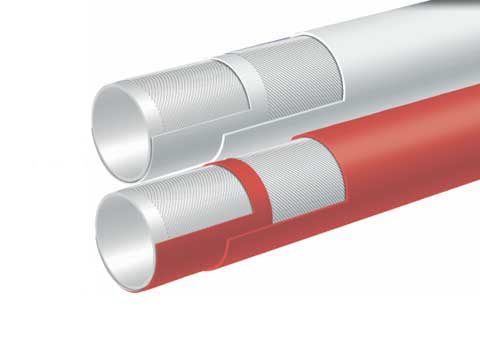
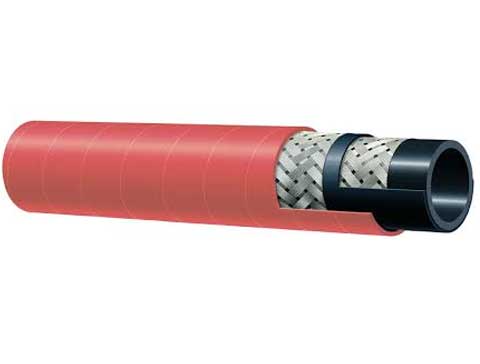
All rubber layers of the hose are composed of the same EPDM-based material, bonded at the molecular level through a co-vulcanization process. This ensures that, even under extreme outdoor temperature fluctuations, there is no risk of delamination—a common issue caused by mismatched coefficients of thermal expansion between different rubber layers. This structural integrity prevents external UV radiation and ozone from infiltrating the hose through interlayer gaps, further reinforcing its overall weather resistance.
Designed for full outdoor deployment, significantly reducing total lifecycle operation and maintenance costs.
For fluid-handling applications requiring long-term outdoor exposure, the frequent replacement of conventional rubber hoses—and the associated procurement costs and operational downtime—has long been a major pain point for users. This weather-resistant EPDM hose, engineered specifically for outdoor use, offers a service life far exceeding that of standard rubber hoses, delivering comprehensive cost savings and enhanced efficiency throughout its entire lifecycle. In open-pit mining operations—specifically for hydraulic auxiliary circuits and cooling water lines on heavy machinery—standard rubber hoses typically fail within one to two years due to weathering and cracking. This not only incurs significant costs for replacement parts but also leads to unplanned equipment downtime, resulting in production losses that far exceed the value of the hoses themselves. By switching to this weather-resistant EPDM hose, the service life can be extended to 8–10 years, drastically reducing the frequency of replacements and effectively eliminating unplanned downtime caused by hose failure in outdoor environments. Similarly, in large-scale municipal irrigation and water distribution networks, these hoses can be left exposed outdoors for years without the need for additional shading or protective structures, significantly lowering both initial infrastructure costs and long-term maintenance burdens.
In water supply systems for cleaning equipment at outdoor photovoltaic (PV) power plants—where hoses are constantly exposed to intense ultraviolet (UV) radiation—standard rubber hoses often crack and degrade in just over a year. This weather-resistant EPDM hose, however, offers long-term, reliable performance, making it perfectly suited for remote, field-based PV installations and substantially reducing the labor costs associated with inspecting and replacing hoses in isolated locations. For temporary water transport in hydraulic engineering projects or emergency disaster-relief operations, these hoses can be kept in outdoor storage for extended periods; they remain ready for immediate deployment without the risk of degradation or failure due to long-term exposure.
Furthermore, these hoses can be customized to meet the specific requirements of various applications. Variants with wear-resistant additives are designed to withstand the rigors of being dragged across the ground by heavy machinery, preventing rapid abrasion of the outer layer. Low-temperature-resistant versions remain flexible even in the extreme cold of high-altitude or high-latitude regions. Additionally, food-grade variants are available for the transport of drinking water, ensuring full compliance with health and safety standards. During routine maintenance, the condition of the hose can be quickly assessed simply by periodically checking the outer layer for visible cracks or signs of powdering (degradation). This eliminates the need for complex inspection procedures, significantly simplifying the maintenance of piping systems in outdoor environments.
For users who rely on fluid-conveying hoses in long-term outdoor settings, choosing this weather-resistant, UV-stabilized, and ozone-resistant EPDM rubber hose offers a dual advantage: it substantially lowers annual procurement costs and minimizes the risk of unexpected operational downtime caused by premature aging or cracking. It serves as a durable and reliable barrier for fluid transport in any application where equipment remains exposed to the outdoors for extended periods.