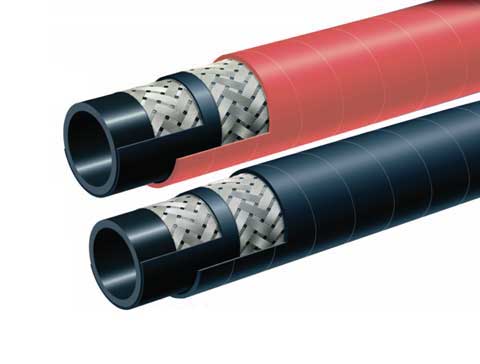
EPDM-lined rubber hose resistant to chloride ion erosion and seawater
release date:2026-11-12 09:39:24
reading volume:
share:
In applications such as seawater transport for coastal industries, circulating water systems for coastal nuclear power plants, and the conveyance of corrosive media in offshore engineering, long-term erosion by chloride ions is the primary cause of rubber pipeline failure. When standard rubber hoses are exposed to high-chloride seawater over extended periods, their molecular chains undergo rapid oxidative cleavage. This leads to the hardening, embrittlement, cracking, and leakage of the hose walls—resulting in persistently high maintenance costs and the potential for environmental or safety incidents caused by media leakage. EPDM-lined, seawater-resistant rubber hoses—constructed entirely from EPDM (ethylene propylene diene monomer) rubber—leverage the inherent molecular structure of the material to create a comprehensive, long-term protective barrier against chloride ion erosion. These hoses offer a highly reliable solution for the long-term transport of media containing high concentrations of chloride ions.
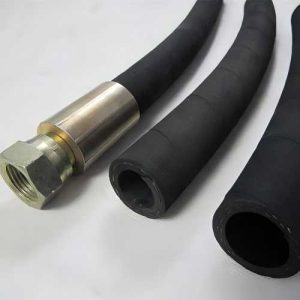 A fully saturated EPDM molecular system blocks the path of chloride ion erosion at the source.
The molecular backbones of conventional rubbers contain numerous unsaturated double bonds. Highly oxidizing agents, such as chloride ions, can readily engage in addition reactions with these double bonds, rapidly severing the polymer chains. This causes the inherently elastic rubber to quickly lose its toughness, become hard and brittle, and eventually crack and leak—rendering it incapable of stable, long-term service in high-chloride seawater environments. In contrast, the molecular backbone of EPDM rubber consists of a fully saturated alkane structure. It lacks the unsaturated, reactive sites susceptible to attack by chloride ions, thereby blocking the chemical pathway for addition-based erosion at the material's molecular core.
When chloride ions come into contact with the surface of EPDM rubber, they are unable to trigger rapid chemical reactions. At most, they may induce trace-level free-radical substitution reactions, which occur at an extremely slow rate—insufficient to cause any significant damage to the overall molecular structure of the rubber. Empirical data shows that after long-term immersion in simulated seawater (with a 3.5% concentration), EPDM rubber retains over 85% of its tensile strength, with a mass change of less than 5%. Its service life—specifically regarding resistance to chloride-ion corrosion—is 8 to 12 times that of standard natural rubber, making it exceptionally well-suited for demanding environments involving prolonged seawater exposure.
Furthermore, EPDM possesses inherent chemical inertness. Beyond its superior resistance to chloride ions, it effectively withstands the complex, corrosive cocktail found in marine environments—including weakly alkaline salts, trace oxidizing agents, and metabolic byproducts of marine microorganisms. Unlike conventional rubber, which tends to swell or degrade rapidly upon contact with seawater, EPDM remains stable. Even in coastal industrial settings where brine concentrations—and thus chloride-ion levels—far exceed those of typical seawater, EPDM maintains its physical integrity without premature performance degradation. This fundamental molecular advantage—which cannot be replicated in standard rubber materials through simple formulation adjustments—is the core reason why this hose delivers long-lasting resistance to chloride-ion corrosion.
An integrated, all-EPDM construction eliminates the risk of inter-layer corrosion and infiltration.
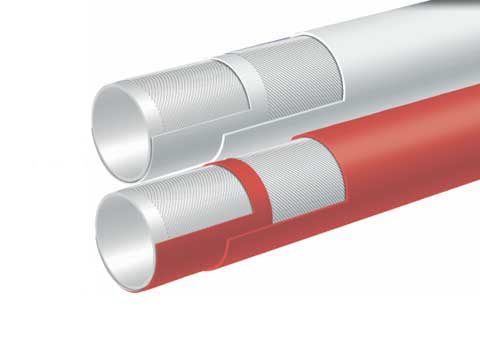
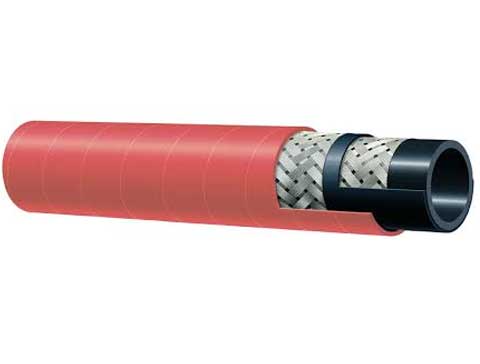
Standard seawater-resistant hoses often use EPDM only for the inner lining, while employing different rubber materials for the outer layers. Because these materials differ significantly in molecular polarity, maintaining a stable bond between layers over time is difficult. Prolonged seawater immersion frequently leads to delamination; seawater then infiltrates the gaps created by this separation, causing the entire hose structure to fail rapidly. In contrast, this hose features an all-EPDM architecture—from the inner liner and intermediate transition layer to the outer protective layer. By using EPDM throughout, the design eliminates compatibility issues between disparate materials, ensuring uniform seawater resistance across the entire structure. The inner lining, which comes into direct contact with seawater, is composed of thickened, high-purity EPDM rubber. It is manufactured via an integrated extrusion process, ensuring a seamless interior with no joints—thereby eliminating any potential weak points through which chloride ions could penetrate the inner structure. The thickness of the lining is gradient-optimized for specific operational scenarios, incorporating a generous corrosion allowance; this ensures that even with long-term exposure to high-chloride seawater, the lining remains resistant to erosion and breakthrough. Furthermore, the EPDM lining features an exceptionally smooth surface, which significantly reduces the rate of erosion and abrasion caused by suspended sediment particles during high-velocity flow. This provides superior wear resistance when transporting nearshore seawater containing silt or marine sediment, preventing the lining from thinning prematurely and extending the overall service life of the hose.
The transition bonding layers—situated between the inner lining and the central reinforcement layer—also utilize a modified EPDM rubber matrix. Being part of the same molecular system as the inner and outer EPDM layers, these transition layers achieve molecular-level fusion through a co-vulcanization process. This prevents delamination or interlayer separation, even during prolonged immersion in seawater, and effectively eliminates the pathways for interlayer corrosion—a common issue in hoses constructed from dissimilar rubber compounds. The outermost layer consists of weather-resistant, modified EPDM rubber, which remains durable against the high humidity, salt spray, and intense ultraviolet (UV) radiation characteristic of marine environments. It resists rapid chalking or cracking, serving as a robust protective barrier that shields the internal structure from direct exposure to salt spray and seawater splashes. This integrated, all-EPDM structural design has undergone thousands of hours of accelerated continuous seawater immersion testing; the assembly remained intact with no significant degradation in performance, fully meeting the requirements for long-term service in seawater applications. Scenario-Specific Customization for Significantly Lower Total Lifecycle Operational Costs
In coastal industrial and marine engineering applications involving the transport of media with high chloride-ion concentrations, users have long struggled with the high procurement costs and operational downtime associated with the frequent replacement of conventional rubber hoses. This seawater-resistant hose, constructed entirely from EPDM, offers a service life several times longer than that of standard rubber hoses, driving cost reductions and efficiency gains across the entire product lifecycle.
In the circulating seawater cooling systems of coastal nuclear power plants, conventional rubber hoses previously required complete replacement every 1–2 years. This not only incurred substantial procurement costs but also necessitated system shutdowns, which compromised the operational efficiency of the nuclear power units. By switching to this EPDM-based, seawater-resistant hose, the service life is extended to over eight years. This drastically reduces the frequency of replacements and eliminates production losses caused by unplanned downtime. In land-reclamation projects involving the long-distance transport of seawater—where hoses are continuously submerged in high-chloride-ion water and subjected to abrasive wear from sediment and silt—this hose excels. Its superior resistance to both chloride-ion corrosion and mechanical abrasion ensures a service life far exceeding that of standard water-transport hoses, thereby extending replacement intervals and cutting the high labor costs associated with offshore maintenance.
In coastal chemical industrial parks, where hoses are used to transport concentrated brine or chloride-containing wastewater—media with chloride-ion concentrations far exceeding those of typical seawater—conventional rubber hoses often corrode and fail within just a few months. This all-EPDM hose, however, provides long-term, stable resistance to high-concentration chloride-ion erosion, making it perfectly suited for the transport of such highly corrosive, chloride-laden media. The hose system can be customized to meet specific operational requirements, with options for various diameters, pressure ratings, and connection types. Large-diameter versions can be equipped with flanges, facilitating the long-distance transport of high-volume seawater, while smaller-diameter versions can be fitted with quick-connect couplings, offering flexibility for temporary seawater transfer applications. Models featuring a reinforced, negative-pressure-resistant framework are also suitable for suction operations, ensuring the hose does not collapse or deform under vacuum conditions.
During routine maintenance, the condition of the hose can be quickly assessed through a simple visual and tactile inspection: if the hose wall retains good elasticity when squeezed, the rubber remains in sound condition. A noticeable hardening of the wall—indicated by a significantly slower recovery after compression—suggests the onset of chloride-ion-induced degradation in the EPDM material; at this stage, a replacement can be scheduled. This eliminates the need for the frequent, labor-intensive inspections often required for standard rubber hoses. For operations in high-chloride seawater environments, choosing this seawater-resistant, all-EPDM hose system not only significantly lowers annual procurement costs but also mitigates the environmental risks associated with sudden corrosion-related leaks. It provides a durable, reliable barrier against chloride-ion corrosion for the transport of high-chloride-content fluids.