EPDM Rubber Hoses for Power Plant Cooling Water Systems
release date:2026-11-12 09:54:26
reading volume:
share:
In the circulating cooling water systems of thermal and nuclear power plants, cooling water hoses are subjected to harsh conditions: prolonged exposure to circulating water with high chloride ion concentrations and broad-spectrum biocides, combined with continuous temperature fluctuations. Standard rubber hoses often begin to swell and degrade internally, or crack and age externally, within just one to two years. This not only leads to cooling water leaks—which reduce the heat-exchange efficiency of the power generation units—but also necessitates frequent replacements, resulting in significant downtime losses and high operation and maintenance costs. EPDM (ethylene propylene diene monomer) rubber hoses, specifically engineered for power plant cooling water systems, leverage the inherent material advantages of EPDM. Optimized for the unique operating conditions of these plants, they are perfectly suited for the long-term, continuous operation of circulating water systems, providing a highly reliable flexible conduit for power plant cooling water circuits.
 EPDM: Inherently Suited for the Environment with Superior Resistance to Heat, Water, and Chlorine
The operating environment of a power plant’s cooling water system is highly demanding. The circulating water typically remains within a temperature range of 40°C to 70°C—with even higher temperatures occurring near the condenser. Furthermore, to inhibit the growth of bacteria and algae, chlorine-based biocides are continuously added to the system, resulting in chloride ion concentrations and levels of oxidizing agents far exceeding those found in natural water sources. Under such complex conditions, conventional rubber quickly suffers from the oxidative cleavage of its molecular chains and rapid swelling, rendering it incapable of supporting long-term, continuous operation. The molecular backbone of EPDM consists of a fully saturated alkane structure, devoid of the unsaturated active sites susceptible to attack by chloride ions or oxidizing biocides; thus, it is fundamentally well-suited to the specific medium and environment of power plant cooling water.
EPDM also exhibits exceptional resistance to hot water and steam. Even after thousands of hours of continuous immersion in 90°C water, it retains over 80% of its original tensile strength. This makes it perfectly adapted to the temperatures encountered during the long-term, continuous operation of power plant cooling water systems, as it does not undergo the rapid hydrolysis or degradation typical of ordinary rubber when exposed to sustained hot-water conditions. Furthermore, thanks to the saturated molecular structure of EPDM rubber, this material exhibits exceptional resistance to the oxidizing, chlorine-based biocides found in circulating water. It is not susceptible to rapid oxidative degradation by residual chlorine—even when chlorine concentrations are maintained within the standard control ranges typical for power plants—thereby avoiding the premature embrittlement and oxidation often seen in conventional rubber linings.
Accelerated testing, simulated under actual power plant operating conditions, demonstrates that this specialized EPDM hose lasts more than five times longer than standard nitrile or natural rubber hoses when continuously immersed in chlorinated circulating water. It fully meets the requirements for long-term, multi-year service in power plant cooling water systems without the need for replacement. Moreover, EPDM offers superior resistance to weathering and aging; its outer layer does not rapidly chalk or crack, even when exposed to the high-humidity, salt-mist, and UV-rich environments found around cooling towers. This makes it perfectly suited for outdoor sections of cooling water piping, effectively addressing the various failure modes common to standard hoses in such applications.
Optimized Structural Design for Diverse Operating Conditions in Cooling Water Systems
Power plant cooling water systems feature complex piping layouts. These include large-diameter flexible expansion joints at condenser inlets and outlets—designed to accommodate significant displacement stresses caused by the thermal expansion and contraction of rigid piping—as well as vibration-dampening sections at cooling water pump inlets and outlets to absorb high-frequency operational vibrations. Additionally, there are exposed, interconnected pipelines located around cooling towers. Given the vast differences in operating conditions across these various locations, this specialized EPDM hose has been structurally optimized to meet the complex, multi-faceted requirements of the entire cooling water system.
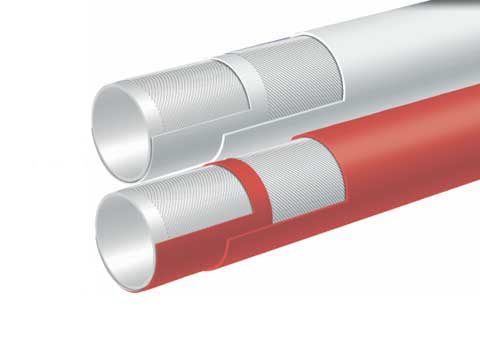
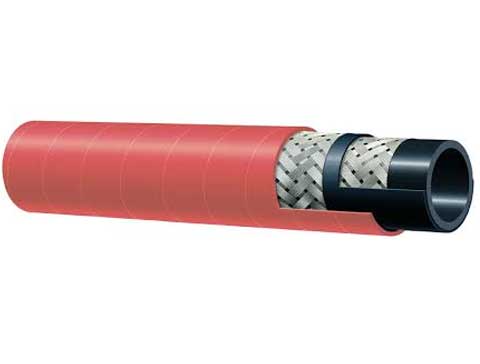
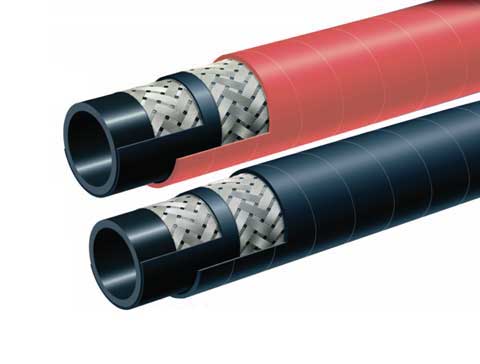
The inner lining—the layer in direct contact with the circulating water—consists of a thickened, high-purity EPDM rubber. It is manufactured via an integrated extrusion process, ensuring a seamless interior that eliminates any potential weak points where corrosive agents from the circulating water could penetrate the hose wall. The thickness of the liner is precisely engineered with a corrosion allowance tailored to specific power plant operating conditions. By incorporating a substantial margin for long-term corrosion, the design ensures that the liner will not be breached—even after years of exposure to circulating water containing chlorides. Furthermore, the EPDM liner features an exceptionally smooth surface, which prevents silt, bacteria, algae, and other impurities in the circulating water from adhering to or scaling on the pipe walls. This ensures that the effective flow cross-section remains unreduced and the cooling water flow rate stays consistent, thereby maintaining stable heat-exchange and cooling efficiency over the long term.
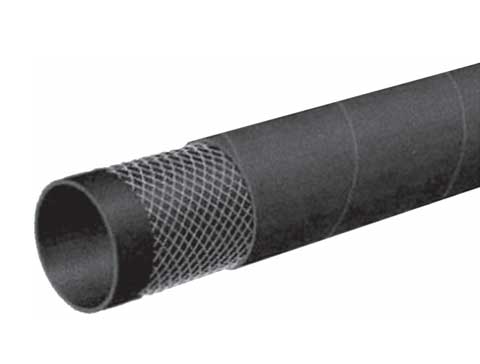
The intermediate reinforcement layer consists of a high-strength, cross-wound polyester synthetic fiber structure, specifically designed to meet the standard pressure ratings required for cooling water systems. These hoses are available in various diameters and cover the full pressure range of power plant cooling water systems; they offer an ample safety margin, ensuring that the pipe walls will neither bulge nor leak during system pressure fluctuations. The transition bonding layers—located both inside and outside the reinforcement—are composed of modified EPDM rubber. Being part of the same molecular system as the inner and outer EPDM layers, they achieve molecular-level fusion through a co-vulcanization process. This ensures the structural integrity of the entire composite, preventing delamination or blistering even when subjected to prolonged immersion in high-temperature circulating water.
The outermost layer utilizes a weather-resistant, UV-stabilized modified EPDM formulation. This provides a robust protective barrier, preventing the exterior from rapidly chalking or cracking—even in the harsh, high-humidity, salt-laden, and high-UV environments typically found around cooling towers. To address the specific requirements of different installation locations, the hoses can be customized: large-diameter versions can be equipped with flange connections to serve as thermal expansion compensation segments at condenser inlets and outlets, absorbing displacements caused by the thermal expansion or contraction of rigid piping and preventing stress-induced cracking. Additionally, models with optimized vibration-dampening structures can be installed at the inlets and outlets of cooling water pumps; these absorb high-frequency vibrations generated during pump operation, preventing such vibrations from being transmitted to the rigid piping, where they could otherwise cause fatigue cracking in weld seams. Comprehensive, power-plant-grade system integration: reducing costs and enhancing efficiency throughout the entire lifecycle to ensure continuous unit operation.
The cooling water system is a critical auxiliary component essential for the continuous operation of power generation units. A sudden failure or leak in the piping can lead to insufficient cooling water flow and reduced heat-exchange efficiency; in more severe cases, it may necessitate a complete unit shutdown—resulting in losses from foregone power generation that far exceed the value of the hose itself. This EPDM rubber hose, engineered specifically for power plants, is optimized for such environments—from its connection design to final factory inspection. It establishes a highly reliable, flexible conduit for cooling water systems, driving comprehensive cost reduction and efficiency gains throughout the product's entire lifecycle.
The connecting flanges at both ends of the hose undergo anti-corrosion passivation and are fully compatible with standard flange interfaces found in power plant circulating water systems. The integration of the flange with the hose end is reinforced to eliminate the risk of the hose detaching under the stress of high-volume water flow. The flange sealing surfaces are precision-machined and paired with specialized EPDM gaskets—resistant to corrosion from circulating water—ensuring a rapid, airtight seal during on-site installation and preventing leaks over long-term use. Every hose assembly undergoes rigorous hydrostatic pressure testing before leaving the factory, meeting all safety standards for piping in the power industry. Upon delivery, the hoses are ready for immediate installation into power plant cooling water systems, requiring no complex pre-treatment. In actual power plant environments, this hose is ideally suited for various critical locations: as large-diameter flexible expansion joints at the inlet and outlet of condensers, it serves as a superior alternative to traditional metal bellows expansion joints—eliminating the risk of pitting corrosion and perforation caused by long-term exposure to circulating water, thereby significantly extending the service life of the components and reducing the potential for leaks in the condenser area. Used as flexible, vibration-dampening connectors at the inlets and outlets of cooling water pumps, these hoses absorb high-frequency vibrations generated during pump operation, lowering noise levels throughout the piping system and preventing weld cracks that often occur in rigid piping subjected to prolonged vibration. Furthermore, when used for exposed, interconnecting pipelines around cooling towers, these hoses remain stable and reliable over the long term—even in environments characterized by high humidity and intense ultraviolet radiation—eliminating the need for frequent replacements and substantially easing the maintenance burden for cooling tower piping systems.
For power plant operators, adopting this EPDM rubber hose—specifically engineered for cooling water systems—not only enhances the operational reliability of the cooling water infrastructure (preventing unexpected leaks that could force unplanned load reductions or even unit shutdowns) but also extends replacement intervals. This significantly lowers the high maintenance costs associated with replacing cooling water piping during the limited windows available for plant outages, providing a robust auxiliary system foundation that supports the long-term, continuous, and stable operation of power generation units.