Server liquid cooling hoses feature smooth inner walls and low flow resistance, reducing pump power consumption by 15% and ensuring high heat transfer efficiency.
release date:2026-10-08 09:42:14
reading volume:
share:
 In AI computing clusters and high-density data centers, the power consumed by pumps in liquid cooling systems accounts for a significant portion of the total cooling system energy consumption. As coolant flows through the piping, the pump must continuously perform work to overcome the frictional resistance (line resistance) generated against the inner walls; the rougher the inner wall, the more intense the boundary layer turbulence, resulting in a higher pressure drop and increased pump power consumption. Low-flow-resistance liquid cooling hoses with smooth inner walls offer an optimized solution to this energy efficiency challenge. By utilizing an ultra-smooth inner wall to minimize flow resistance, this design achieves a 15% reduction in pump power consumption. Furthermore, the use of glycol-resistant EPDM material ensures long-term fluid compatibility, making these hoses an ideal flexible conduit for data center liquid cooling systems that require both high heat transfer efficiency and energy-saving operation.
I. The Logic of Drag Reduction via Inner Wall Smoothness: From "Boundary Layer Friction" to Pump Power Consumption
When coolant flows through a hose, the fluid layer immediately adjacent to the wall remains in a laminar state due to viscosity, forming a "boundary layer." This layer of fluid barely participates in radial mixing, and the friction between it and the pipe wall becomes the primary source of flow resistance. The rougher the inner wall, the thicker the boundary layer and the higher the turbulence intensity, leading to a greater pressure drop.
Inner wall smoothness reduces flow resistance through two mechanisms. First, reducing surface roughness directly lowers the friction coefficient between the fluid and the pipe wall. With precision-extruded EPDM inner walls, surface roughness can be kept at an extremely low level, allowing the coolant to flow more smoothly against the wall. Second, it reduces boundary layer thickness; a smooth inner wall results in a thinner laminar sublayer within the boundary layer and allows the turbulent core region to establish itself earlier, thereby lowering overall flow resistance.
Pump power consumption is directly proportional to pipeline pressure drop. In liquid cooling systems, pipeline line resistance typically accounts for 30% to 50% of the total pressure drop. By optimizing the smoothness of the hose's inner wall to reduce line resistance, the pump assembly can deliver the same volume of coolant while operating at a lower head pressure. Industry data indicates that adopting a low-flow-resistance design can reduce pump power consumption by approximately 15%—a significant annual energy saving for data centers operating 24/7.
II. Low-Flow-Resistance Materials and Structural Design: Synergy Between the EPDM Inner Wall and Reinforcement Layer
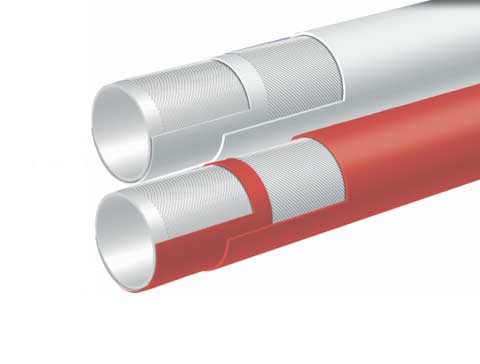
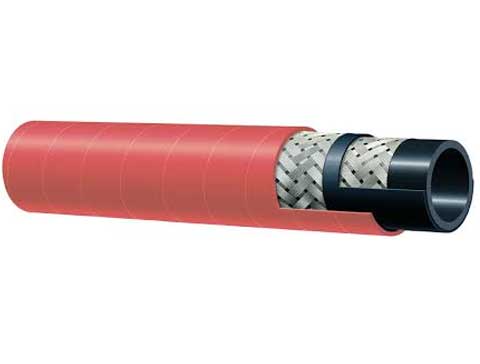
The performance of low-flow-resistance liquid cooling hoses stems from the systematic integration of the inner layer material and the reinforcement structure.
The inner layer utilizes a peroxide-cured EPDM formulation, formed into a smooth inner wall via a precision extrusion process. The flexibility of the EPDM molecular chains allows the material to replicate the mold's mirror-like finish during extrusion, keeping inner wall roughness at an extremely low level. The peroxide curing system creates a denser cross-linked network within the EPDM, further reducing the permeation rates of water and glycol molecules; this preserves coolant purity during long-term circulation and prevents the inner wall from roughening due to media erosion over time.
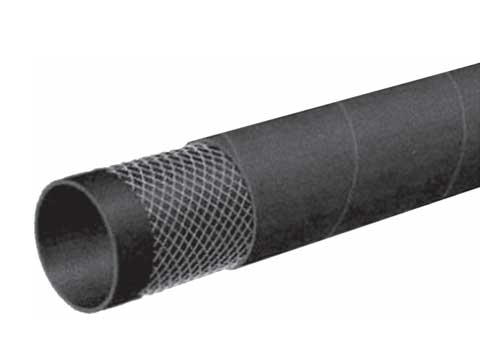
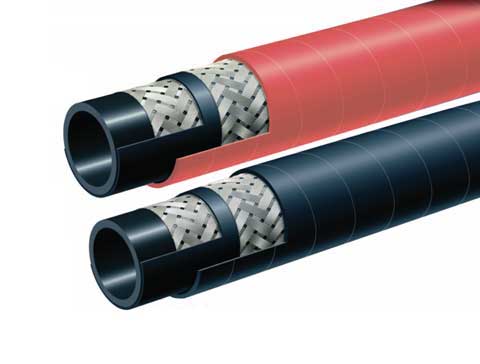
The reinforcement layer consists of a single or double-layer synthetic fiber braid. Compared to steel wire braiding, fiber braiding offers lighter weight and superior flexibility; furthermore, the tight fit between the braid and the inner wall prevents localized hose deformation caused by inter-layer gaps. This compact structural integration ensures the hose maintains a circular cross-section under pressure, preventing fluctuations in the flow channel's cross-sectional area and thereby sustaining stable, low-flow-resistance characteristics.
The outer rubber layer employs a weather-resistant EPDM formulation, making it resistant to cracking caused by ozone or UV aging during long-term operation in server room environments. The tight bond between the outer rubber layer and the reinforcement layer ensures the hose wall does not wrinkle during bending and routing, thereby avoiding sudden spikes in local flow resistance caused by such wrinkles.
III. System-Level Assurance of Heat Transfer Efficiency: From Flow Resistance Optimization to End-to-End Compatibility
The value of low-flow-resistance liquid cooling hoses lies not only in reduced pump power consumption but also in their contribution to the heat transfer efficiency of the entire liquid cooling system. In cold-plate liquid cooling systems, coolant flow rate directly impacts the heat transfer coefficient between the cold plate and the chip. Low-flow-resistance hoses ensure the stable achievement of design flow rates, allowing cold plates to deliver optimal thermal performance under rated operating conditions.
Matching the hose with the CDU (Coolant Distribution Unit) pump assembly is crucial to leveraging the benefits of low flow resistance. Pump selection for the CDU must be based on the pressure drop curve of the entire loop. Low-flow-resistance hoses reduce total loop resistance, enabling the CDU to achieve the design flow rate at lower pump speeds; this lowers pump power consumption and reduces wear on the pump assembly. In large-scale data centers, this effect is further amplified in liquid cooling systems featuring multiple parallel-connected racks.
The impact of quick-connect couplings is equally significant. The internal flow path of the UQD (Universal Quick Disconnect) couplings pre-installed at both ends of the hose should feature a full-bore design to prevent local throttling caused by diameter constriction. The coupling seals are made of EPDM—material-compatible with the hose's inner layer—ensuring that flow rate degradation due to seal aging does not occur during long-term operation.
Regarding maintenance and verification, it is recommended to measure pressure drop changes in critical loops quarterly during the first year of system operation. A significant increase in pressure drop at the same flow rate suggests that the hose's inner wall may have become roughened due to particulate deposition from the coolant; in such cases, the coolant filtration system should be inspected, or hose replacement considered. Routine inspections should focus on checking for cracking in the outer rubber layer and leaks at the couplings to ensure the piping system consistently operates at its design point.
In summary, low-flow-resistance liquid cooling hoses—featuring an ultra-smooth inner wall design for drag reduction, a 15% reduction in pump power consumption, and long-term stability provided by EPDM material (compatible with glycol-based coolants)—perfectly meet the systematic requirements of data center liquid cooling systems for high heat transfer efficiency and energy-saving operation. From the microscopic optimization of boundary-layer friction to the macroscopic energy savings achieved through pump-head efficiency; from the precision extrusion of mirror-smooth inner walls to ensuring cross-sectional stability in the fiber-braided layers—every incremental improvement in inner-wall smoothness and every aspect of the reinforcement structure’s integration serve a single goal: to provide a low-resistance, high-flow, and long-lasting coolant delivery pathway for the liquid cooling systems of AI computing cabinets operating continuously, 24/7.
In AI computing clusters and high-density data centers, the power consumed by pumps in liquid cooling systems accounts for a significant portion of the total cooling system energy consumption. As coolant flows through the piping, the pump must continuously perform work to overcome the frictional resistance (line resistance) generated against the inner walls; the rougher the inner wall, the more intense the boundary layer turbulence, resulting in a higher pressure drop and increased pump power consumption. Low-flow-resistance liquid cooling hoses with smooth inner walls offer an optimized solution to this energy efficiency challenge. By utilizing an ultra-smooth inner wall to minimize flow resistance, this design achieves a 15% reduction in pump power consumption. Furthermore, the use of glycol-resistant EPDM material ensures long-term fluid compatibility, making these hoses an ideal flexible conduit for data center liquid cooling systems that require both high heat transfer efficiency and energy-saving operation.
I. The Logic of Drag Reduction via Inner Wall Smoothness: From "Boundary Layer Friction" to Pump Power Consumption
When coolant flows through a hose, the fluid layer immediately adjacent to the wall remains in a laminar state due to viscosity, forming a "boundary layer." This layer of fluid barely participates in radial mixing, and the friction between it and the pipe wall becomes the primary source of flow resistance. The rougher the inner wall, the thicker the boundary layer and the higher the turbulence intensity, leading to a greater pressure drop.
Inner wall smoothness reduces flow resistance through two mechanisms. First, reducing surface roughness directly lowers the friction coefficient between the fluid and the pipe wall. With precision-extruded EPDM inner walls, surface roughness can be kept at an extremely low level, allowing the coolant to flow more smoothly against the wall. Second, it reduces boundary layer thickness; a smooth inner wall results in a thinner laminar sublayer within the boundary layer and allows the turbulent core region to establish itself earlier, thereby lowering overall flow resistance.
Pump power consumption is directly proportional to pipeline pressure drop. In liquid cooling systems, pipeline line resistance typically accounts for 30% to 50% of the total pressure drop. By optimizing the smoothness of the hose's inner wall to reduce line resistance, the pump assembly can deliver the same volume of coolant while operating at a lower head pressure. Industry data indicates that adopting a low-flow-resistance design can reduce pump power consumption by approximately 15%—a significant annual energy saving for data centers operating 24/7.
II. Low-Flow-Resistance Materials and Structural Design: Synergy Between the EPDM Inner Wall and Reinforcement Layer
The performance of low-flow-resistance liquid cooling hoses stems from the systematic integration of the inner layer material and the reinforcement structure.
The inner layer utilizes a peroxide-cured EPDM formulation, formed into a smooth inner wall via a precision extrusion process. The flexibility of the EPDM molecular chains allows the material to replicate the mold's mirror-like finish during extrusion, keeping inner wall roughness at an extremely low level. The peroxide curing system creates a denser cross-linked network within the EPDM, further reducing the permeation rates of water and glycol molecules; this preserves coolant purity during long-term circulation and prevents the inner wall from roughening due to media erosion over time.
The reinforcement layer consists of a single or double-layer synthetic fiber braid. Compared to steel wire braiding, fiber braiding offers lighter weight and superior flexibility; furthermore, the tight fit between the braid and the inner wall prevents localized hose deformation caused by inter-layer gaps. This compact structural integration ensures the hose maintains a circular cross-section under pressure, preventing fluctuations in the flow channel's cross-sectional area and thereby sustaining stable, low-flow-resistance characteristics.
The outer rubber layer employs a weather-resistant EPDM formulation, making it resistant to cracking caused by ozone or UV aging during long-term operation in server room environments. The tight bond between the outer rubber layer and the reinforcement layer ensures the hose wall does not wrinkle during bending and routing, thereby avoiding sudden spikes in local flow resistance caused by such wrinkles.
III. System-Level Assurance of Heat Transfer Efficiency: From Flow Resistance Optimization to End-to-End Compatibility
The value of low-flow-resistance liquid cooling hoses lies not only in reduced pump power consumption but also in their contribution to the heat transfer efficiency of the entire liquid cooling system. In cold-plate liquid cooling systems, coolant flow rate directly impacts the heat transfer coefficient between the cold plate and the chip. Low-flow-resistance hoses ensure the stable achievement of design flow rates, allowing cold plates to deliver optimal thermal performance under rated operating conditions.
Matching the hose with the CDU (Coolant Distribution Unit) pump assembly is crucial to leveraging the benefits of low flow resistance. Pump selection for the CDU must be based on the pressure drop curve of the entire loop. Low-flow-resistance hoses reduce total loop resistance, enabling the CDU to achieve the design flow rate at lower pump speeds; this lowers pump power consumption and reduces wear on the pump assembly. In large-scale data centers, this effect is further amplified in liquid cooling systems featuring multiple parallel-connected racks.
The impact of quick-connect couplings is equally significant. The internal flow path of the UQD (Universal Quick Disconnect) couplings pre-installed at both ends of the hose should feature a full-bore design to prevent local throttling caused by diameter constriction. The coupling seals are made of EPDM—material-compatible with the hose's inner layer—ensuring that flow rate degradation due to seal aging does not occur during long-term operation.
Regarding maintenance and verification, it is recommended to measure pressure drop changes in critical loops quarterly during the first year of system operation. A significant increase in pressure drop at the same flow rate suggests that the hose's inner wall may have become roughened due to particulate deposition from the coolant; in such cases, the coolant filtration system should be inspected, or hose replacement considered. Routine inspections should focus on checking for cracking in the outer rubber layer and leaks at the couplings to ensure the piping system consistently operates at its design point.
In summary, low-flow-resistance liquid cooling hoses—featuring an ultra-smooth inner wall design for drag reduction, a 15% reduction in pump power consumption, and long-term stability provided by EPDM material (compatible with glycol-based coolants)—perfectly meet the systematic requirements of data center liquid cooling systems for high heat transfer efficiency and energy-saving operation. From the microscopic optimization of boundary-layer friction to the macroscopic energy savings achieved through pump-head efficiency; from the precision extrusion of mirror-smooth inner walls to ensuring cross-sectional stability in the fiber-braided layers—every incremental improvement in inner-wall smoothness and every aspect of the reinforcement structure’s integration serve a single goal: to provide a low-resistance, high-flow, and long-lasting coolant delivery pathway for the liquid cooling systems of AI computing cabinets operating continuously, 24/7.
Previous: