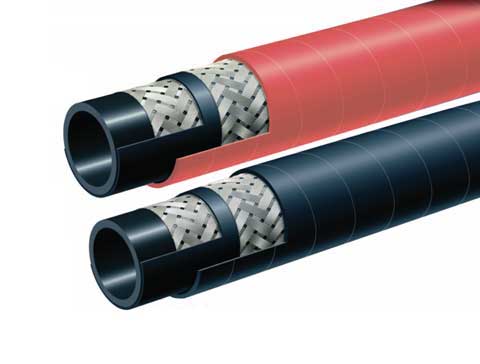
Liquid cooling hose with an ultra-flexible 15mm bending radius, allowing for flexible routing in tight cabinet spaces.
release date:2026-10-08 09:37:00
reading volume:
share:
 In AI computing clusters and high-density server racks, the space available for routing liquid cooling lines has become unprecedentedly constrained. The gaps between GPU cold plates and rack manifolds, the interstitial spaces between CDUs and server nodes, and the channels accommodating multiple parallel supply and return lines are often only a few centimeters wide. Traditional liquid cooling hoses typically have a bend radius of 30–50 mm; in such tight spaces, they either cannot be installed at all or, if forced to bend, suffer from collapsed walls and a drastic drop in flow rate. Ultra-flexible liquid cooling hoses offer a solution to this spatial challenge: they achieve cable-like routing flexibility with a minimal bend radius in the 15 mm range, balance pressure resistance and kink resistance through a fiber-braided reinforcement structure, and ensure long-term fluid compatibility with an EPDM inner layer resistant to glycol-based coolants. They serve as flexible conduits that offer superior spatial adaptability and routing efficiency in high-density rack liquid cooling systems.
I. The Engineering Significance of a 15 mm Bend Radius: From "Impossible to Fit" to "Effortless Maneuverability"
Bend radius is a critical parameter determining whether a hose can be successfully installed in a confined space. It defines the minimum radius of the arc a hose can form without collapsing its inner wall or damaging its reinforcement layer. In data center racks, piping channels are often only a few centimeters wide—the gap between 1U servers is less than 45 mm, and the space between the rack sidewall and the manifold may be merely 60–80 mm.
A bend radius in the 15 mm range provides a crucial breakthrough for this spatial constraint. This means the hose can execute a 180-degree turn within an arc diameter of approximately 30 mm—effectively allowing a change in piping direction within a space the size of a coin. Achieving this level of performance relies on the precise control of hose wall thickness and the optimization of the reinforcement layer's flexibility; excessively thick walls create high bending resistance, while a reinforcement layer that is too rigid causes the hose to spring back during bending. By employing a reinforcement layer woven from highly flexible synthetic fibers and minimizing the tube wall thickness, the hose achieves "cable-grade" flexibility while maintaining the necessary pressure-bearing capacity.
The relationship between bend radius and flow resistance is also critical. If the bend radius falls below the rated value, the tube wall deforms into an oval shape at the bend, reducing the cross-sectional area for flow; this leads to increased local flow resistance and reduced flow rates. In a liquid cooling system, this results in insufficient coolant supply to the cold plate and rising GPU temperatures. A hose with a 15mm bend radius maintains its circular cross-section even under extreme bending, ensuring stable coolant flow.
II. Balancing Ultra-Flexibility and Pressure Resistance: The "Rigid-Yet-Flexible" Nature of Fiber-Braided Reinforcement
The "ultra-flexibility" of these liquid cooling hoses is not achieved at the expense of pressure-bearing capacity. The 15mm bend radius is made possible by the precise coordination of the reinforcement layer structure and the material system.
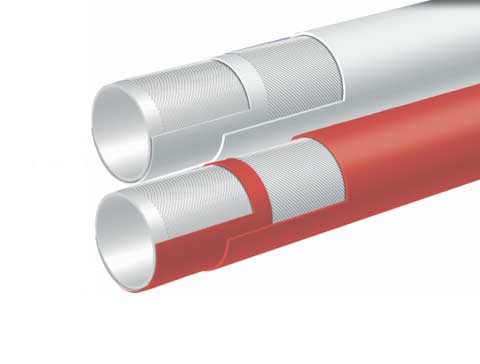
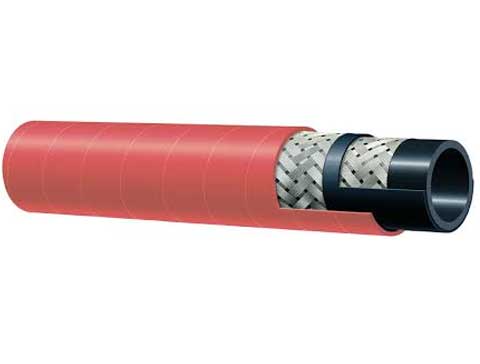
The reinforcement layer utilizes one or two layers of high-strength synthetic fiber braiding, woven at specific angles to form a "mesh-like skeleton." Compared to steel wire braiding, this fiber-braiding approach significantly reduces the rigidity of the hose body, imparting excellent flexibility and kink resistance. Simultaneously, the fiber-braided layer effectively constrains radial expansion under pressure, allowing the hose to operate at pressures of 1.0–2.0 MPa, with a burst pressure three to four times the operating pressure.
Kink resistance is crucial for routing ultra-flexible hoses in confined spaces. When routed inside a server cabinet, hoses often must navigate around power cables, optical modules, and metal brackets, involving frequent, tight bends. The fiber-braided reinforcement layer absorbs bending stress through the elastic deformation of the fibers, preventing the tube wall from collapsing or "necking" at sharp bends. Product test data shows that high-quality ultra-flexible liquid cooling hoses withstand 100,000 cycles in 360° bending tests without rupture, meeting the demands for kink resistance during frequent maintenance and component swapping within the cabinet. The inner layer utilizes a peroxide-cured EPDM formulation, offering excellent chemical inertness against 20%–30% ethylene glycol or propylene glycol aqueous coolants. By eliminating the zinc oxide required in traditional sulfur-curing systems, the peroxide-curing process fundamentally removes the risk of zinc salt leaching, which could otherwise contaminate the coolant. The operating temperature range spans -40°C to +120°C, meeting the demands of all operational scenarios—from cold starts in winter to high-temperature operation under full GPU load.
III. Cabinet Adaptation: How a Small Bend Radius Reshapes Piping Efficiency
The engineering value of a 15mm bend radius is ultimately realized through a comprehensive improvement in the installation and maintenance efficiency of cabinet liquid cooling systems.
At the connection point between server nodes and manifolds, the hose must transition from the rack manifold to the GPU cold plate within a very short distance. Traditional hoses, due to their larger bend radii, often require longer segments to achieve a gentle curve, leading to coiled or compressed piping within the cabinet. A hose with a 15mm bend radius can change direction within a 30mm arc; this significantly reduces hose length and improves internal space utilization while minimizing maintenance issues caused by hose interference.
In scenarios involving parallel routing for multiple nodes, the small bend radius of these ultra-flexible hoses allows multiple supply and return lines to run side-by-side in narrow channels without compressing one another. The red and blue outer layers facilitate easy identification of supply and return lines, while pre-installed UQD (Quick Disconnect) fittings enable the replacement of individual hoses in seconds, drastically reducing downtime for GPU node maintenance.
Regarding installation, although the hose supports a 15mm bend radius, care must be taken to avoid excessive stretching or twisting; torsion can disrupt the fiber-braided structure, thereby compromising pressure resistance and kink resistance. Routine inspections should focus on identifying any cracking in the outer rubber layer caused by repeated bending and checking for signs of leakage at the joints, ensuring the hose maintains its original sealing reliability throughout its long service life.
In summary, the ultra-flexible liquid cooling hose—featuring a minimal 15mm bending radius for tight spaces, a balance of pressure resistance and kink resistance via fiber-braid reinforcement, and broad compatibility (operating from -40°C to 120°C with EPDM material resistant to glycol-based fluids)—perfectly meets the systematic requirements of high-density cabinet liquid cooling systems for flexible routing, compact installation, and long-term reliability. From extreme flexibility allowing a 180° bend within a 30mm arc and durability verified through 100,000 bending cycles, to a 2.0 MPa working pressure rating and red/blue color-coding for easy maintenance, every reduction in bending radius and every aspect of the fiber-braid design serves a single goal: providing a reliable, flexible conduit—easy to bend, ensuring smooth flow, and enabling quick connection—for liquid cooling systems within the confined spaces of AI computing cabinets.
In AI computing clusters and high-density server racks, the space available for routing liquid cooling lines has become unprecedentedly constrained. The gaps between GPU cold plates and rack manifolds, the interstitial spaces between CDUs and server nodes, and the channels accommodating multiple parallel supply and return lines are often only a few centimeters wide. Traditional liquid cooling hoses typically have a bend radius of 30–50 mm; in such tight spaces, they either cannot be installed at all or, if forced to bend, suffer from collapsed walls and a drastic drop in flow rate. Ultra-flexible liquid cooling hoses offer a solution to this spatial challenge: they achieve cable-like routing flexibility with a minimal bend radius in the 15 mm range, balance pressure resistance and kink resistance through a fiber-braided reinforcement structure, and ensure long-term fluid compatibility with an EPDM inner layer resistant to glycol-based coolants. They serve as flexible conduits that offer superior spatial adaptability and routing efficiency in high-density rack liquid cooling systems.
I. The Engineering Significance of a 15 mm Bend Radius: From "Impossible to Fit" to "Effortless Maneuverability"
Bend radius is a critical parameter determining whether a hose can be successfully installed in a confined space. It defines the minimum radius of the arc a hose can form without collapsing its inner wall or damaging its reinforcement layer. In data center racks, piping channels are often only a few centimeters wide—the gap between 1U servers is less than 45 mm, and the space between the rack sidewall and the manifold may be merely 60–80 mm.
A bend radius in the 15 mm range provides a crucial breakthrough for this spatial constraint. This means the hose can execute a 180-degree turn within an arc diameter of approximately 30 mm—effectively allowing a change in piping direction within a space the size of a coin. Achieving this level of performance relies on the precise control of hose wall thickness and the optimization of the reinforcement layer's flexibility; excessively thick walls create high bending resistance, while a reinforcement layer that is too rigid causes the hose to spring back during bending. By employing a reinforcement layer woven from highly flexible synthetic fibers and minimizing the tube wall thickness, the hose achieves "cable-grade" flexibility while maintaining the necessary pressure-bearing capacity.
The relationship between bend radius and flow resistance is also critical. If the bend radius falls below the rated value, the tube wall deforms into an oval shape at the bend, reducing the cross-sectional area for flow; this leads to increased local flow resistance and reduced flow rates. In a liquid cooling system, this results in insufficient coolant supply to the cold plate and rising GPU temperatures. A hose with a 15mm bend radius maintains its circular cross-section even under extreme bending, ensuring stable coolant flow.
II. Balancing Ultra-Flexibility and Pressure Resistance: The "Rigid-Yet-Flexible" Nature of Fiber-Braided Reinforcement
The "ultra-flexibility" of these liquid cooling hoses is not achieved at the expense of pressure-bearing capacity. The 15mm bend radius is made possible by the precise coordination of the reinforcement layer structure and the material system.
The reinforcement layer utilizes one or two layers of high-strength synthetic fiber braiding, woven at specific angles to form a "mesh-like skeleton." Compared to steel wire braiding, this fiber-braiding approach significantly reduces the rigidity of the hose body, imparting excellent flexibility and kink resistance. Simultaneously, the fiber-braided layer effectively constrains radial expansion under pressure, allowing the hose to operate at pressures of 1.0–2.0 MPa, with a burst pressure three to four times the operating pressure.
Kink resistance is crucial for routing ultra-flexible hoses in confined spaces. When routed inside a server cabinet, hoses often must navigate around power cables, optical modules, and metal brackets, involving frequent, tight bends. The fiber-braided reinforcement layer absorbs bending stress through the elastic deformation of the fibers, preventing the tube wall from collapsing or "necking" at sharp bends. Product test data shows that high-quality ultra-flexible liquid cooling hoses withstand 100,000 cycles in 360° bending tests without rupture, meeting the demands for kink resistance during frequent maintenance and component swapping within the cabinet. The inner layer utilizes a peroxide-cured EPDM formulation, offering excellent chemical inertness against 20%–30% ethylene glycol or propylene glycol aqueous coolants. By eliminating the zinc oxide required in traditional sulfur-curing systems, the peroxide-curing process fundamentally removes the risk of zinc salt leaching, which could otherwise contaminate the coolant. The operating temperature range spans -40°C to +120°C, meeting the demands of all operational scenarios—from cold starts in winter to high-temperature operation under full GPU load.
III. Cabinet Adaptation: How a Small Bend Radius Reshapes Piping Efficiency
The engineering value of a 15mm bend radius is ultimately realized through a comprehensive improvement in the installation and maintenance efficiency of cabinet liquid cooling systems.
At the connection point between server nodes and manifolds, the hose must transition from the rack manifold to the GPU cold plate within a very short distance. Traditional hoses, due to their larger bend radii, often require longer segments to achieve a gentle curve, leading to coiled or compressed piping within the cabinet. A hose with a 15mm bend radius can change direction within a 30mm arc; this significantly reduces hose length and improves internal space utilization while minimizing maintenance issues caused by hose interference.
In scenarios involving parallel routing for multiple nodes, the small bend radius of these ultra-flexible hoses allows multiple supply and return lines to run side-by-side in narrow channels without compressing one another. The red and blue outer layers facilitate easy identification of supply and return lines, while pre-installed UQD (Quick Disconnect) fittings enable the replacement of individual hoses in seconds, drastically reducing downtime for GPU node maintenance.
Regarding installation, although the hose supports a 15mm bend radius, care must be taken to avoid excessive stretching or twisting; torsion can disrupt the fiber-braided structure, thereby compromising pressure resistance and kink resistance. Routine inspections should focus on identifying any cracking in the outer rubber layer caused by repeated bending and checking for signs of leakage at the joints, ensuring the hose maintains its original sealing reliability throughout its long service life.
In summary, the ultra-flexible liquid cooling hose—featuring a minimal 15mm bending radius for tight spaces, a balance of pressure resistance and kink resistance via fiber-braid reinforcement, and broad compatibility (operating from -40°C to 120°C with EPDM material resistant to glycol-based fluids)—perfectly meets the systematic requirements of high-density cabinet liquid cooling systems for flexible routing, compact installation, and long-term reliability. From extreme flexibility allowing a 180° bend within a 30mm arc and durability verified through 100,000 bending cycles, to a 2.0 MPa working pressure rating and red/blue color-coding for easy maintenance, every reduction in bending radius and every aspect of the fiber-braid design serves a single goal: providing a reliable, flexible conduit—easy to bend, ensuring smooth flow, and enabling quick connection—for liquid cooling systems within the confined spaces of AI computing cabinets.
Previous: