Cooling system polyester reinforced hose pressure resistance 2.0MPa, suitable for high-pressure water circulation circuit
release date:2026-08-03 10:35:46
reading volume:
share:
In industrial cooling systems, large-scale equipment thermal management, and high-pressure water circulation circuits, pipelines not only need to withstand continuous medium pressure, but also need to maintain long-term reliability in temperature fluctuations and mechanical vibrations. The working pressure level of 2.0MPa is a typical requirement for high-pressure water circulation systems - higher than the conventional low-pressure cooling circuit's 0.3-0.8MPa, but not reaching the extreme working conditions of ultra-high pressure hydraulic, forming an independent pressure range. Polyester reinforced hoses are a mature solution for this scenario - using a mechanical skeleton woven/wrapped with polyester fibers to carry a pressure of 2.0 MPa, and using EPDM or thermoplastic polyester elastomers to ensure temperature and corrosion resistance, becoming a flexible channel in high-pressure water circulation systems that combines "pressure resistance, weather resistance, and long life".
 1、 2.0MPa pressure positioning: the technical boundary of high-pressure water circulation
2.0MPa (approximately 20 bar) has a clear boundary between industrial cooling and fluid transportation. The working pressure of conventional cooler hoses is mostly 0.4 MPa (4 bar), which is suitable for low-pressure circulation between the radiator and the engine; The 2.0MPa grade hose is positioned in high-pressure water circulation circuits, such as large compressor cooling systems, generator thermal management, industrial cooling water stations, and water cooling circuits for certain hydraulic systems.
This pressure level means that the reinforcement layer needs to be upgraded from a "single-layer fabric" to a "multi-layer composite" structure. HANSA-FLEX's NYZ series thermoplastic hoses [SAE 100 R8 standard] provide higher pressure bearing capacity, with a reinforced layer made of aramid weaving and a working pressure range of 140-350 bar. For the high-pressure water cycle scenario of 2.0MPa, the polyester reinforcement scheme provides a balance between cost and performance - meeting pressure requirements while maintaining good bending flexibility.
2、 Polyester reinforced structural code: from weaving density to blasting allowance
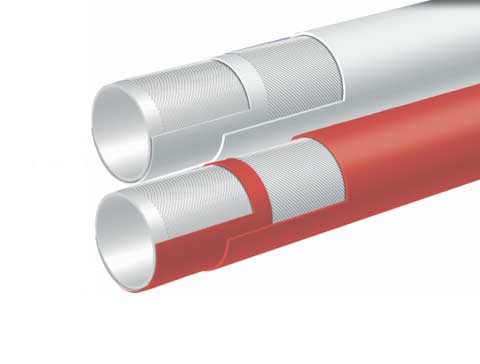
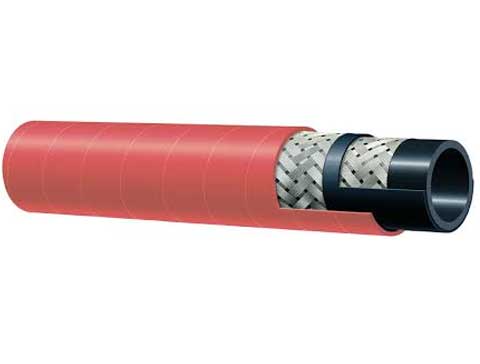
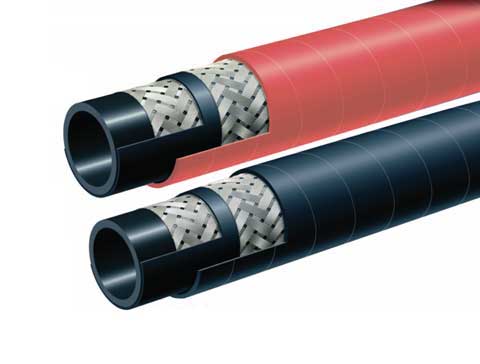
The pressure bearing capacity of polyester reinforced hoses depends on the structural design and material matching of the reinforcement layer. The cooling water pipe combined with the rubber inner tube has an EPDM inner rubber layer, a reinforcement layer of "one layer of polyester weaving or one layer of synthetic fiber weaving", and an EPDM outer rubber layer. The working temperature is -40 ℃ to 120 ℃. This structure is suitable for low-pressure cooling scenarios at the 4 bar level.
For the 2.0MPa high-pressure water circulation circuit, the reinforcement layer needs to be further strengthened. The industrial universal solution adopts a "double-layer or multi-layer high-strength polyester fiber winding" structure, and in some scenarios, spiral steel wires can be stacked to enhance the anti collapse ability under negative pressure conditions. The high modulus and low creep characteristics of polyester fibers enable them to maintain dimensional stability during long-term pressure cycles and are less prone to joint loosening due to the "breathing effect".
In terms of safety redundancy, the industry standard blasting pressure is 3-4 times the working pressure. For a 2.0MPa hose, the burst pressure is usually designed to be 6-8 MPa, providing ample safety margin for instantaneous overpressure in the system. Although the working pressure of HANSA-FLEX radiator hose is 4 bar, the burst pressure is 12 bar (3 times), which is representative in polyester reinforced products.
3、 Material adaptation and system integration: from coolant compatibility to easy installation
The long-term reliability of high-pressure water circulation hoses depends not only on the reinforcement layer, but also on the chemical compatibility between the inner pipe material and the conveying medium.
In terms of inner tube material, EPDM (Ethylene Propylene Diene Monomer Rubber) has been industry validated for its chemical resistance to ethylene glycol based coolant and water, and is suitable for a wide temperature range of -40 ℃ to 120 ℃. For higher temperatures or special media (such as aqueous solutions containing chemical additives), thermoplastic polyester elastomers (TPE) are another option - they have excellent chemical resistance, ozone resistance, and wear resistance in hydraulic oil, synthetic oil, water, and air media.
In terms of installation and bending, polyester reinforced hoses have better flexibility than steel wire reinforced solutions. The minimum bending radius of the NY 800 series thermoplastic hose is only 30-200mm (depending on the diameter), making it easy to navigate in compact spaces inside the equipment. The outer layer is made of ozone resistant and UV resistant polyurethane or EPDM, which is not easily aged or cracked in outdoor or high temperature and high humidity environments.
In terms of maintenance management, the hoses in the high-pressure water circulation circuit should be regularly inspected for bulges, cracks, or exposed reinforcement layers on the outer rubber layer. When the outer diameter change rate exceeds 5% or leakage occurs at the joint, it should be replaced in a timely manner to avoid equipment shutdown or safety accidents caused by pipe bursting.
In summary, the polyester reinforced hose of the cooling system perfectly meets the systematic requirements of the high-pressure water circulation circuit for "pressure stability, medium resistance, and long-term reliability" with its three core technologies: the 2.0MPa load-bearing capacity of multi-layer polyester fiber winding, the medium compatibility of EPDM/TPE material, and the installation convenience of wide temperature range and compact bending radius. From full climate adaptation from -40 ℃ to 120 ℃ to safety redundancy of 3-4 times burst pressure, from compact bending radius to outdoor adaptation of ozone resistant outer rubber, every structural detail points to the same goal: providing reliable guarantees for water medium transportation in high-pressure cycles of compressors, generators, and large industrial cooling systems that can withstand pressure tests and environmental erosion.
1、 2.0MPa pressure positioning: the technical boundary of high-pressure water circulation
2.0MPa (approximately 20 bar) has a clear boundary between industrial cooling and fluid transportation. The working pressure of conventional cooler hoses is mostly 0.4 MPa (4 bar), which is suitable for low-pressure circulation between the radiator and the engine; The 2.0MPa grade hose is positioned in high-pressure water circulation circuits, such as large compressor cooling systems, generator thermal management, industrial cooling water stations, and water cooling circuits for certain hydraulic systems.
This pressure level means that the reinforcement layer needs to be upgraded from a "single-layer fabric" to a "multi-layer composite" structure. HANSA-FLEX's NYZ series thermoplastic hoses [SAE 100 R8 standard] provide higher pressure bearing capacity, with a reinforced layer made of aramid weaving and a working pressure range of 140-350 bar. For the high-pressure water cycle scenario of 2.0MPa, the polyester reinforcement scheme provides a balance between cost and performance - meeting pressure requirements while maintaining good bending flexibility.
2、 Polyester reinforced structural code: from weaving density to blasting allowance
The pressure bearing capacity of polyester reinforced hoses depends on the structural design and material matching of the reinforcement layer. The cooling water pipe combined with the rubber inner tube has an EPDM inner rubber layer, a reinforcement layer of "one layer of polyester weaving or one layer of synthetic fiber weaving", and an EPDM outer rubber layer. The working temperature is -40 ℃ to 120 ℃. This structure is suitable for low-pressure cooling scenarios at the 4 bar level.
For the 2.0MPa high-pressure water circulation circuit, the reinforcement layer needs to be further strengthened. The industrial universal solution adopts a "double-layer or multi-layer high-strength polyester fiber winding" structure, and in some scenarios, spiral steel wires can be stacked to enhance the anti collapse ability under negative pressure conditions. The high modulus and low creep characteristics of polyester fibers enable them to maintain dimensional stability during long-term pressure cycles and are less prone to joint loosening due to the "breathing effect".
In terms of safety redundancy, the industry standard blasting pressure is 3-4 times the working pressure. For a 2.0MPa hose, the burst pressure is usually designed to be 6-8 MPa, providing ample safety margin for instantaneous overpressure in the system. Although the working pressure of HANSA-FLEX radiator hose is 4 bar, the burst pressure is 12 bar (3 times), which is representative in polyester reinforced products.
3、 Material adaptation and system integration: from coolant compatibility to easy installation
The long-term reliability of high-pressure water circulation hoses depends not only on the reinforcement layer, but also on the chemical compatibility between the inner pipe material and the conveying medium.
In terms of inner tube material, EPDM (Ethylene Propylene Diene Monomer Rubber) has been industry validated for its chemical resistance to ethylene glycol based coolant and water, and is suitable for a wide temperature range of -40 ℃ to 120 ℃. For higher temperatures or special media (such as aqueous solutions containing chemical additives), thermoplastic polyester elastomers (TPE) are another option - they have excellent chemical resistance, ozone resistance, and wear resistance in hydraulic oil, synthetic oil, water, and air media.
In terms of installation and bending, polyester reinforced hoses have better flexibility than steel wire reinforced solutions. The minimum bending radius of the NY 800 series thermoplastic hose is only 30-200mm (depending on the diameter), making it easy to navigate in compact spaces inside the equipment. The outer layer is made of ozone resistant and UV resistant polyurethane or EPDM, which is not easily aged or cracked in outdoor or high temperature and high humidity environments.
In terms of maintenance management, the hoses in the high-pressure water circulation circuit should be regularly inspected for bulges, cracks, or exposed reinforcement layers on the outer rubber layer. When the outer diameter change rate exceeds 5% or leakage occurs at the joint, it should be replaced in a timely manner to avoid equipment shutdown or safety accidents caused by pipe bursting.
In summary, the polyester reinforced hose of the cooling system perfectly meets the systematic requirements of the high-pressure water circulation circuit for "pressure stability, medium resistance, and long-term reliability" with its three core technologies: the 2.0MPa load-bearing capacity of multi-layer polyester fiber winding, the medium compatibility of EPDM/TPE material, and the installation convenience of wide temperature range and compact bending radius. From full climate adaptation from -40 ℃ to 120 ℃ to safety redundancy of 3-4 times burst pressure, from compact bending radius to outdoor adaptation of ozone resistant outer rubber, every structural detail points to the same goal: providing reliable guarantees for water medium transportation in high-pressure cycles of compressors, generators, and large industrial cooling systems that can withstand pressure tests and environmental erosion.
Previous: