Corrosion resistant chemical PTFE corrugated hose, resistant to strong acids and alkalis, working temperature -60 ℃~230 ℃
release date:2026-08-04 09:30:34
reading volume:
share:
In chemical production, pharmaceutical synthesis, electroplating processes, and semiconductor wet processes, the transportation of strong acids, strong bases, and organic solvents imposes almost stringent corrosion resistance requirements on pipeline materials. Under the continuous erosion of concentrated sulfuric acid or liquid alkali, ordinary rubber hoses can swell, harden, or even leak within weeks to months - this is one of the main hidden dangers of chemical pipeline failure. PTFE corrugated hose is the core solution for this working condition - it achieves strong acid and alkali resistance with the "chemical inertness" of polytetrafluoroethylene, endows flexible connection ability with corrugated structure, and covers all seasons of chemical industry with a wide temperature range of -60 ℃ to 230 ℃, becoming an "almost universal" flexible channel in the field of corrosive medium transportation.
 1、 Molecular basis of chemical inertness: How PTFE achieves "strong acid and strong alkali non invasion"
The reason why PTFE (polytetrafluoroethylene) can withstand long-term corrosion from strong acids and bases is due to its unique molecular structure. PTFE molecules are composed of carbon fluorine bonds, and the extremely high electronegativity of fluorine atoms forms a dense "electron shield" around the carbon chain, preventing almost all chemical molecules from reacting with it. This chemical inertness enables PTFE to withstand long-term corrosion from most strong acids, strong bases, and organic solvents, including extreme corrosive chemicals such as aqua regia, hydrofluoric acid, concentrated hydrochloric acid, and liquid alkali.
In practical applications, the medium adaptability of PTFE corrugated hoses has been fully verified. Whether transporting diluted or concentrated strong acids, caustic alkalis, or in contact with chemically active media such as hot paints, solvents, fuels, oxidants, PTFE maintains chemical stability, does not swell, degrade, or release pollutants. In chemical plants, electroplating production lines, pharmaceutical workshops, and other scenarios, PTFE corrugated hoses have become a standard configuration for transporting highly corrosive media.
2、 Wide temperature range structure from -60 ℃ to 230 ℃: full scene coverage from extreme cold to high temperature
PTFE corrugated hoses exhibit strong environmental adaptability within the working temperature range. Industry data shows that its continuous operating temperature range is -60 ℃ to+230 ℃, and some models can be extended to -70 ℃ to+260 ℃. This temperature range covers the full scenario requirements from low-temperature workshops in the north during winter to high-temperature steam tracing pipelines.
The realization of this wide temperature range capability is due to the low glass transition temperature and excellent thermal stability of PTFE material itself. PTFE can still maintain an elongation of 5% at a low temperature of -100 ℃ and will not break due to cold brittleness; Long term use at a high temperature of 230 ℃ will not result in thermal oxidation degradation. For special operating conditions such as the need to withstand high-temperature steam at 250 ℃ or cryogenic media at -196 ℃, high-performance models also provide reliable options.
The design of the corrugated structure also plays a key role in this wide temperature range performance. The corrugated pipe wall adopts a wavy configuration to absorb size changes during thermal expansion and contraction through the expansion and contraction deformation of the ripples, effectively reducing the impact of thermal stress on the pipe body and end joints. This characteristic makes PTFE corrugated hoses particularly suitable for pipeline systems with sudden temperature changes or alternating cold and hot operation - even if the internal medium rises sharply from -60 ℃ to+200 ℃, the corrugated structure can still maintain a complete seal.
3、 Structural integration: Stainless steel wire reinforcement and sealing guarantee for end connections
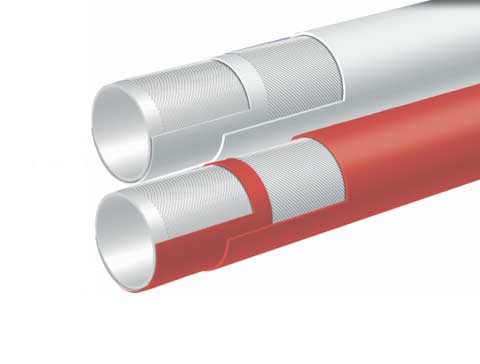
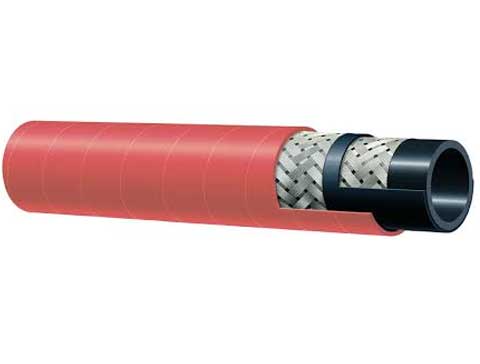
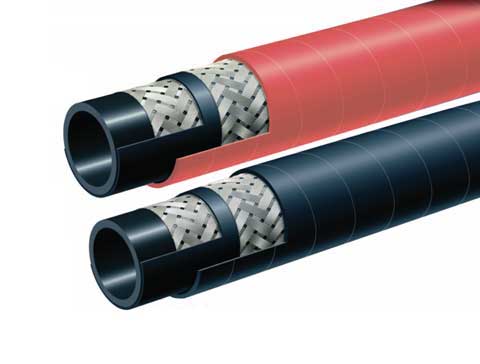
The reliability of PTFE corrugated hoses in practical chemical applications depends not only on the chemical inertness of the PTFE inner tube, but also on the structural design of the reinforcement layer and end connection. Industrial grade PTFE corrugated hoses are commonly equipped with stainless steel wire braided or double helix stainless steel sheaths as reinforcement layers. The stainless steel wire braided layer provides three functions: preventing excessive expansion of the PTFE inner tube under pressure, protecting the tube body from external mechanical damage, and maintaining the shape of the tube body to avoid collapse under negative pressure conditions.
Typical products such as Dixon CPVWSS series corrugated PTFE hoses adopt a three-layer composite structure of spiral corrugated PTFE inner tube, external vacuum steel wire, and stainless steel wire weaving. The vacuum degree reaches -0.09MPa, the working pressure is 45 bar at 20 ℃, and the burst pressure is 210 bar (about 4.7 times the working pressure), with sufficient safety redundancy. Galton PTFE corrugated tube CF also adopts a composite structure of spiral PTFE tube and stainless steel wire mesh, which has passed FDA and USP VI certification and can be safely used in the pharmaceutical and food industries.
In terms of end connections, PTFE corrugated hoses are usually equipped with 304/316 stainless steel flanges, threaded joints, or quick couplings. The PTFE lining is extended to the flange sealing surface through the expansion and flanging process, ensuring that the medium flow path is completely covered by PTFE - the flange surface is entirely made of PTFE material, completely eliminating the risk of metal joints coming into contact with corrosive media. The NK-2300PT series from NFK in Japan has added SUS304 stainless steel corrugated pipe outer protection on the PTFE lining, which enhances its compressive strength while resisting strong corrosion through a double-layer structure. It is widely used in electroplating acid and alkali solution transportation, semiconductor wet chemical pipelines, and solvent transfer scenarios in pharmaceutical factories.
In summary, the corrosion-resistant chemical PTFE corrugated hose, with its PTFE molecular level chemical inert barrier, wide temperature range structural adaptability from -60 ℃ to 230 ℃, and system integration of stainless steel wire weaving and full PTFE flange sealing, perfectly meets the strict requirements of "safe transportation, flexible connection, and long-term reliability" for highly corrosive media in fields such as chemical, pharmaceutical, and semiconductor. From concentrated sulfuric acid to liquid alkali, from -60 ℃ deep cooling to 230 ℃ high temperature steam, from flange full PTFE sealing to stainless steel wire enhanced anti negative pressure, every technical detail points to the same goal: to provide an "almost universal" flexible passage for safe transportation in the highly corrosive environment of chemical plants.
1、 Molecular basis of chemical inertness: How PTFE achieves "strong acid and strong alkali non invasion"
The reason why PTFE (polytetrafluoroethylene) can withstand long-term corrosion from strong acids and bases is due to its unique molecular structure. PTFE molecules are composed of carbon fluorine bonds, and the extremely high electronegativity of fluorine atoms forms a dense "electron shield" around the carbon chain, preventing almost all chemical molecules from reacting with it. This chemical inertness enables PTFE to withstand long-term corrosion from most strong acids, strong bases, and organic solvents, including extreme corrosive chemicals such as aqua regia, hydrofluoric acid, concentrated hydrochloric acid, and liquid alkali.
In practical applications, the medium adaptability of PTFE corrugated hoses has been fully verified. Whether transporting diluted or concentrated strong acids, caustic alkalis, or in contact with chemically active media such as hot paints, solvents, fuels, oxidants, PTFE maintains chemical stability, does not swell, degrade, or release pollutants. In chemical plants, electroplating production lines, pharmaceutical workshops, and other scenarios, PTFE corrugated hoses have become a standard configuration for transporting highly corrosive media.
2、 Wide temperature range structure from -60 ℃ to 230 ℃: full scene coverage from extreme cold to high temperature
PTFE corrugated hoses exhibit strong environmental adaptability within the working temperature range. Industry data shows that its continuous operating temperature range is -60 ℃ to+230 ℃, and some models can be extended to -70 ℃ to+260 ℃. This temperature range covers the full scenario requirements from low-temperature workshops in the north during winter to high-temperature steam tracing pipelines.
The realization of this wide temperature range capability is due to the low glass transition temperature and excellent thermal stability of PTFE material itself. PTFE can still maintain an elongation of 5% at a low temperature of -100 ℃ and will not break due to cold brittleness; Long term use at a high temperature of 230 ℃ will not result in thermal oxidation degradation. For special operating conditions such as the need to withstand high-temperature steam at 250 ℃ or cryogenic media at -196 ℃, high-performance models also provide reliable options.
The design of the corrugated structure also plays a key role in this wide temperature range performance. The corrugated pipe wall adopts a wavy configuration to absorb size changes during thermal expansion and contraction through the expansion and contraction deformation of the ripples, effectively reducing the impact of thermal stress on the pipe body and end joints. This characteristic makes PTFE corrugated hoses particularly suitable for pipeline systems with sudden temperature changes or alternating cold and hot operation - even if the internal medium rises sharply from -60 ℃ to+200 ℃, the corrugated structure can still maintain a complete seal.
3、 Structural integration: Stainless steel wire reinforcement and sealing guarantee for end connections
The reliability of PTFE corrugated hoses in practical chemical applications depends not only on the chemical inertness of the PTFE inner tube, but also on the structural design of the reinforcement layer and end connection. Industrial grade PTFE corrugated hoses are commonly equipped with stainless steel wire braided or double helix stainless steel sheaths as reinforcement layers. The stainless steel wire braided layer provides three functions: preventing excessive expansion of the PTFE inner tube under pressure, protecting the tube body from external mechanical damage, and maintaining the shape of the tube body to avoid collapse under negative pressure conditions.
Typical products such as Dixon CPVWSS series corrugated PTFE hoses adopt a three-layer composite structure of spiral corrugated PTFE inner tube, external vacuum steel wire, and stainless steel wire weaving. The vacuum degree reaches -0.09MPa, the working pressure is 45 bar at 20 ℃, and the burst pressure is 210 bar (about 4.7 times the working pressure), with sufficient safety redundancy. Galton PTFE corrugated tube CF also adopts a composite structure of spiral PTFE tube and stainless steel wire mesh, which has passed FDA and USP VI certification and can be safely used in the pharmaceutical and food industries.
In terms of end connections, PTFE corrugated hoses are usually equipped with 304/316 stainless steel flanges, threaded joints, or quick couplings. The PTFE lining is extended to the flange sealing surface through the expansion and flanging process, ensuring that the medium flow path is completely covered by PTFE - the flange surface is entirely made of PTFE material, completely eliminating the risk of metal joints coming into contact with corrosive media. The NK-2300PT series from NFK in Japan has added SUS304 stainless steel corrugated pipe outer protection on the PTFE lining, which enhances its compressive strength while resisting strong corrosion through a double-layer structure. It is widely used in electroplating acid and alkali solution transportation, semiconductor wet chemical pipelines, and solvent transfer scenarios in pharmaceutical factories.
In summary, the corrosion-resistant chemical PTFE corrugated hose, with its PTFE molecular level chemical inert barrier, wide temperature range structural adaptability from -60 ℃ to 230 ℃, and system integration of stainless steel wire weaving and full PTFE flange sealing, perfectly meets the strict requirements of "safe transportation, flexible connection, and long-term reliability" for highly corrosive media in fields such as chemical, pharmaceutical, and semiconductor. From concentrated sulfuric acid to liquid alkali, from -60 ℃ deep cooling to 230 ℃ high temperature steam, from flange full PTFE sealing to stainless steel wire enhanced anti negative pressure, every technical detail points to the same goal: to provide an "almost universal" flexible passage for safe transportation in the highly corrosive environment of chemical plants.
Previous: