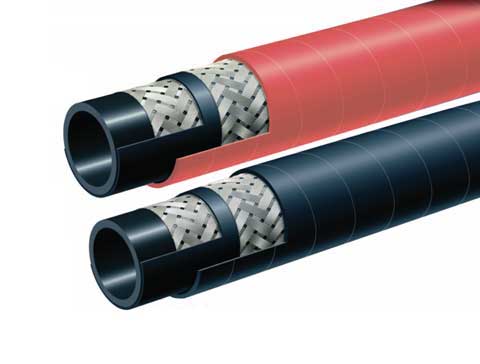
Internal threaded hoses in engine cooling system increase heat dissipation area and improve heat exchange efficiency
release date:2026-08-03 10:30:43
reading volume:
share:
In the engine thermal management system, the heat exchange efficiency of the coolant circulation pipeline is directly related to the temperature stability and fuel economy of the entire machine. Although traditional smooth surface hoses can transport media, their smooth inner walls limit the development of fluid turbulence, making it difficult to effectively destroy the heat transfer boundary layer - there is a significant thermal resistance in the process of heat transfer from the pipe wall to the central area of the fluid. The internally threaded hose is an innovative design aimed at this bottleneck - it reconstructs the fluid motion trajectory with spiral ridges on the pipe wall, expands the heat transfer surface to increase the heat dissipation area, and forces turbulence to break the boundary layer thermal resistance, becoming a "structure as function" heat exchange enhancement solution in engine cooling systems.
 1、 The hydrodynamic code for internal threads: breaking the boundary layer thermal resistance
When the coolant flows inside a smooth tube, the fluid layer tightly attached to the tube wall is in a laminar state due to the viscous effect, forming a "thermal boundary layer" - this layer of fluid hardly participates in radial mixing, and heat can only slowly pass through through through molecular heat conduction, becoming the main thermal resistance for heat transfer. The internal thread structure fundamentally changes the fluid's motion mode through the spiral ridges on the pipe wall.
When the coolant flows through the internally threaded pipe, the spiral ridges force the fluid to rotate and advance along the pipe wall. Under the action of centrifugal force, the fluid with higher temperature in the central area is thrown towards the pipe wall, and the fluid that has already exchanged heat near the pipe wall is pushed towards the center, forming continuous radial mixing. This mechanism not only destroys the continuity of the thermal boundary layer, but also makes the water film at the pipe wall difficult to be peeled off by high-speed airflow due to the three-dimensional adhesion force generated by rotation. Actual data shows that the convective heat transfer coefficient of internally threaded pipes can reach 1.5 to 2.4 times that of smooth pipes of the same specification, while the flow resistance only increases by 3% -5%, and the heat transfer efficiency is improved by 20% -35%.
2、 Geometric multiplication of heat dissipation area: from smooth inner walls to spiral expansion
The internally threaded hose upgrades "flat heat transfer" to "three-dimensional heat transfer" through the spiral ridges on the inner surface of the pipe wall. Each spiral tooth is a heat exchange fin that significantly expands the contact area between the coolant and the tube wall at the same tube length.
The tooth profile optimization of threaded pipes in the industry has entered the stage of refinement. Taking the field of automotive air conditioning as an example, controlling the tooth tip angle at 15 ° and increasing the helix angle to 35 ° can increase the evaporative heat transfer coefficient by 8% compared to ordinary internally threaded pipes. The "double tooth" combination tooth profile developed in recent years has doubled the number of gasification cores while maintaining the same number of teeth, further improving the evaporative heat transfer performance. For engine cooling systems, this means that internally threaded hoses can take away more heat at the same pipe diameter and flow rate, providing a structured solution to the heat dissipation challenges of high-power density engines.
3、 Hose Integration: Collaborative Design of Internal Thread and Rubber Tube Body
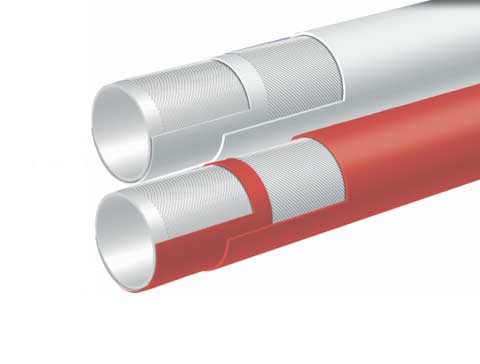
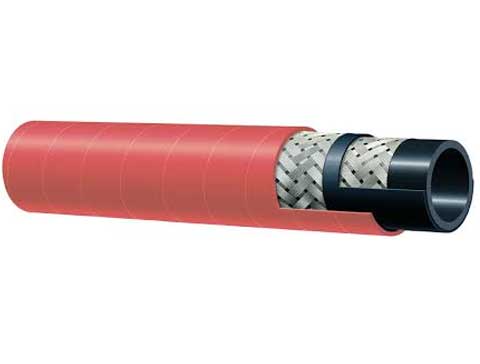
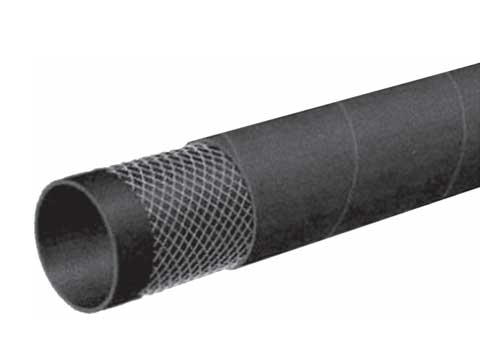
The transplantation of internal thread technology from metal heat exchange tubes to rubber hoses requires innovative design in both rubber molding process and structural durability. The existing solution is to directly form a threaded structure on the inner wall of the rubber cooling water pipe through the through mold vulcanization molding process, combined with a fiber weaving reinforcement layer (such as aramid wire weaving skeleton), so that the hose can have internal thread heat transfer function while meeting the high temperature resistance (up to 170 ℃), pulse resistance, and vibration resistance requirements of the engine compartment.
At the application level, the "disturbance enhancement" effect of internally threaded hoses on coolant flow is more pronounced in high-temperature and high humidity conditions. The spiral structure on its inner wall continuously updates the liquid film at the pipe wall under the action of centrifugal force, effectively suppressing the "gas barrier" phenomenon formed by the accumulation of bubbles on the high-temperature wall surface and avoiding local overheating. This characteristic is particularly critical for high heat load conditions in turbocharged engines where the coolant temperature frequently exceeds 100 ℃ - the continuously updated liquid film in the internally threaded tube ensures that even under extreme heat loads, the tube wall can still be effectively wetted by the liquid, and heat exchange continues to be efficient.
In summary, the internal threaded hose of the engine cooling system redefines the heat transfer boundary of the cooling pipeline through three core technologies: fluid dynamics enhancement driven by its spiral ridges, doubling of the heat dissipation area of the extended heat transfer surface, and structural integration of rubber vulcanization molding and fiber reinforcement. From a heat transfer coefficient of 1.5-2.4 times to an energy efficiency optimization of 20% -35%, from suppressing wall air separation to ensuring continuous heat transfer under extreme working conditions, every structural detail points to the same goal: to provide a "structure as function" efficient heat exchange channel for the cooling system in the context of continuously increasing engine heat load.
1、 The hydrodynamic code for internal threads: breaking the boundary layer thermal resistance
When the coolant flows inside a smooth tube, the fluid layer tightly attached to the tube wall is in a laminar state due to the viscous effect, forming a "thermal boundary layer" - this layer of fluid hardly participates in radial mixing, and heat can only slowly pass through through through molecular heat conduction, becoming the main thermal resistance for heat transfer. The internal thread structure fundamentally changes the fluid's motion mode through the spiral ridges on the pipe wall.
When the coolant flows through the internally threaded pipe, the spiral ridges force the fluid to rotate and advance along the pipe wall. Under the action of centrifugal force, the fluid with higher temperature in the central area is thrown towards the pipe wall, and the fluid that has already exchanged heat near the pipe wall is pushed towards the center, forming continuous radial mixing. This mechanism not only destroys the continuity of the thermal boundary layer, but also makes the water film at the pipe wall difficult to be peeled off by high-speed airflow due to the three-dimensional adhesion force generated by rotation. Actual data shows that the convective heat transfer coefficient of internally threaded pipes can reach 1.5 to 2.4 times that of smooth pipes of the same specification, while the flow resistance only increases by 3% -5%, and the heat transfer efficiency is improved by 20% -35%.
2、 Geometric multiplication of heat dissipation area: from smooth inner walls to spiral expansion
The internally threaded hose upgrades "flat heat transfer" to "three-dimensional heat transfer" through the spiral ridges on the inner surface of the pipe wall. Each spiral tooth is a heat exchange fin that significantly expands the contact area between the coolant and the tube wall at the same tube length.
The tooth profile optimization of threaded pipes in the industry has entered the stage of refinement. Taking the field of automotive air conditioning as an example, controlling the tooth tip angle at 15 ° and increasing the helix angle to 35 ° can increase the evaporative heat transfer coefficient by 8% compared to ordinary internally threaded pipes. The "double tooth" combination tooth profile developed in recent years has doubled the number of gasification cores while maintaining the same number of teeth, further improving the evaporative heat transfer performance. For engine cooling systems, this means that internally threaded hoses can take away more heat at the same pipe diameter and flow rate, providing a structured solution to the heat dissipation challenges of high-power density engines.
3、 Hose Integration: Collaborative Design of Internal Thread and Rubber Tube Body
The transplantation of internal thread technology from metal heat exchange tubes to rubber hoses requires innovative design in both rubber molding process and structural durability. The existing solution is to directly form a threaded structure on the inner wall of the rubber cooling water pipe through the through mold vulcanization molding process, combined with a fiber weaving reinforcement layer (such as aramid wire weaving skeleton), so that the hose can have internal thread heat transfer function while meeting the high temperature resistance (up to 170 ℃), pulse resistance, and vibration resistance requirements of the engine compartment.
At the application level, the "disturbance enhancement" effect of internally threaded hoses on coolant flow is more pronounced in high-temperature and high humidity conditions. The spiral structure on its inner wall continuously updates the liquid film at the pipe wall under the action of centrifugal force, effectively suppressing the "gas barrier" phenomenon formed by the accumulation of bubbles on the high-temperature wall surface and avoiding local overheating. This characteristic is particularly critical for high heat load conditions in turbocharged engines where the coolant temperature frequently exceeds 100 ℃ - the continuously updated liquid film in the internally threaded tube ensures that even under extreme heat loads, the tube wall can still be effectively wetted by the liquid, and heat exchange continues to be efficient.
In summary, the internal threaded hose of the engine cooling system redefines the heat transfer boundary of the cooling pipeline through three core technologies: fluid dynamics enhancement driven by its spiral ridges, doubling of the heat dissipation area of the extended heat transfer surface, and structural integration of rubber vulcanization molding and fiber reinforcement. From a heat transfer coefficient of 1.5-2.4 times to an energy efficiency optimization of 20% -35%, from suppressing wall air separation to ensuring continuous heat transfer under extreme working conditions, every structural detail points to the same goal: to provide a "structure as function" efficient heat exchange channel for the cooling system in the context of continuously increasing engine heat load.
Previous: