Wide temperature range EPDM liquid cooled rubber hose -40 ℃ to+150 ℃ suitable for all-weather operation in data centers
release date:2026-06-29 14:38:28
reading volume:
share:
The cabinets in the data center are not temperature controlled greenhouses. The tidal fluctuations in server load, the start stop switching of cooling systems, and even the low-temperature start-up of data centers in northern winter can cause severe temperature changes in the cooling pipelines. The risk of low-temperature brittleness and high-temperature softening increases sharply for ordinary rubber hoses under such wide temperature range impacts. The wide temperature range EPDM liquid cooled rubber hose is a professional solution to this challenge - it has a maximum temperature resistance span of -40 ℃ to+150 ℃, ensuring stable transmission of the liquid cooling system between cold start-up and full load high temperature, becoming a "temperature immunity" guarantee for data centers to operate year-round.
 1、 Wide temperature range password: molecular skeleton and formulation optimization of EPDM
The reason why EPDM (ethylene propylene diene monomer) can maintain stable performance in the extreme temperature range of -40 ℃ to+150 ℃ is rooted in its unique molecular structure. The main chain of EPDM is composed of saturated carbon carbon bonds, without double bonds that are easily attacked by thermal oxygen, which endows it with excellent heat aging resistance. At the same time, its glass transition temperature is extremely low (below -50 ℃), and even in a cold environment of -40 ℃, the molecular chains can still maintain a certain degree of mobility, avoiding the material from entering a brittle glass state.
Formula optimization is the key to achieving a wide temperature range of -40 ℃ to+150 ℃. In the face of low temperature challenges, specific plasticizers and cold resistant additives need to be added to the material to enhance the flexibility of EPDM at low temperatures and prevent the hose from cracking due to stiffness in extremely cold environments. At the high temperature end (150 ℃), high temperature resistant filler and anti-aging agent shall be incorporated into the formula to effectively slow down the breaking speed of rubber molecular chain under continuous high temperature. Industry data shows that through precise formula control, special EPDM materials can work stably within a range of -55 ℃ to 125 ℃ or even wider.
According to industry technical parameters, EPDM hoses that meet the liquid cooling requirements of data centers typically have a continuous operating temperature range of -40 ℃ to+100 ℃, while some high-performance models, with special formulations, can achieve a short-term temperature resistance limit of+150 ℃.
2、 Extreme Cold and Heat: Stability Guarantee under Dual Extreme Working Conditions
In the actual operation of data centers, the temperature challenge faced by hoses is not unidirectional. Under low-temperature start-up conditions, data centers may experience a sudden drop in ambient temperature to below zero after power outages and restarts in winter or nighttime shutdowns in cold regions. Ordinary hoses become stiff and fragile at this temperature, and the internal coolant (such as water ethylene glycol) may freeze and expand, directly fracturing the pipe wall. EPDM hoses maintain flexibility and elasticity at -40 ℃, effectively avoiding the risk of low-temperature brittleness. They are also compatible with antifreeze such as water ethylene glycol and propylene glycol, ensuring system startup in cold environments.
Continuous high temperature conditions are caused by server full load operation or cooling system failure. When the AI computing power cluster is fully loaded, the GPU/CPU core temperature can reach over 80 ℃, and the coolant reflux temperature increases accordingly. EPDM hoses can maintain sealing performance and dimensional stability even at sustained high temperatures ranging from 100 ℃ to 120 ℃, without causing loose joints or bulging of the pipe body due to thermal softening. The EPDM liquid cooled sealing ring from Cologne New Materials has a temperature tolerance range of -55 ℃ to 125 ℃, and has been certified by key customers and has the ability to supply in bulk.
The ability to withstand temperature shocks is equally crucial. The tidal fluctuations of data center loads, such as the day night alternation of AI training tasks, can cause frequent temperature cycles in the cooling system. EPDM material is less prone to fatigue cracking during repeated thermal expansion and contraction, and its coefficient of linear expansion (about 160 μ m/(m · K)) is similar to that of metal joints, effectively reducing the sealing stress at the joint.
3、 Structural synergy: full temperature range adaptation from inner lining to outer covering
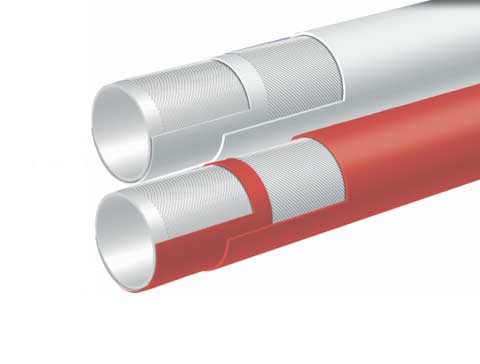
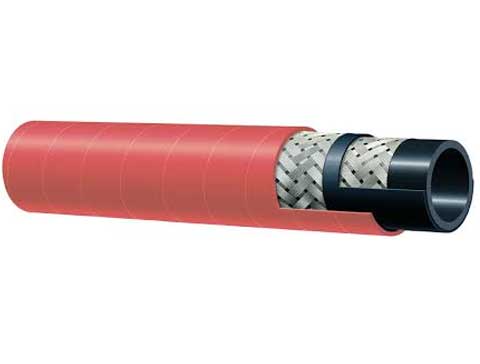
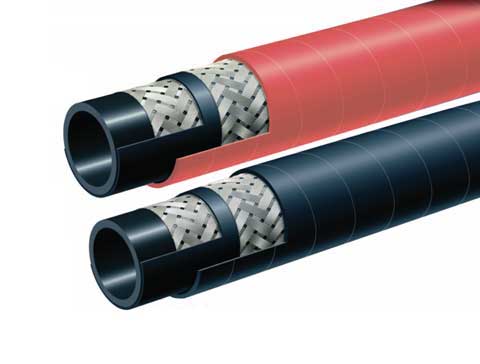
The temperature adaptability of EPDM liquid cooled rubber hoses with a wide temperature range depends not only on the inner layer material, but also on the synergistic effect of the multi-layer structure.
The inner rubber layer is made of peroxide vulcanized EPDM high-purity synthetic rubber, with a smooth surface and anti-static properties. It maintains chemical inertness to water ethylene glycol and propylene glycol based coolant within the temperature range of -40 ℃ to+150 ℃, without swelling or precipitation, ensuring the purity of the coolant. The reinforcement layer is woven with aramid thread or high-strength synthetic fiber, providing a stable pressure bearing skeleton over a wide temperature range - the working pressure of the 3/4 inch specification can reach 150psi, and the burst pressure is 4 times the working pressure, maintaining sufficient safety redundancy even when the material modulus decreases at high temperatures. The outer rubber layer is made of flame-retardant EPDM synthetic rubber, which has passed UL94 V-0 fire certification. It can quickly self extinguish without producing ignition droplets when exposed to open flames, and also has ozone resistance, UV resistance, and weather aging resistance.
UL94 V-0 flame retardant certification has special significance in data center security regulations. High density cabinets are densely packed with electrical equipment, and any source of fire may trigger a chain disaster. The EPDM outer coating, certified as V-0 flame retardant, can self extinguish within 10 seconds upon contact with an open flame without producing molten droplets, ensuring that the hose itself does not become a "flame retardant" for the spread of fire.
The precautions for low-temperature installation cannot be ignored. The piping environment of the liquid cooling system in the data center may be as low as 0 ℃ or below. When installing hoses at this time, attention should be paid to the following: the bending radius should not be less than the specified small value (such as 34mm for 3/8-inch specifications), to avoid excessive bending and low temperature stress concentration; For extreme environments of -40 ℃, it is recommended to leave the hose at room temperature for 24 hours before installation to restore its flexibility before laying.
In summary, the wide temperature range EPDM liquid cooled hose perfectly meets the strict requirements of data center liquid cooling systems for "full season adaptation and wide temperature range stability" with its four core technologies: molecular level temperature resistance design from -40 ℃ to+150 ℃, pure inner lining vulcanized with peroxide, stable pressure bearing reinforced with fiber weaving, and V-0 level flame retardant outer cover protection. From starting at -40 ℃ extreme cold to+120 ℃ full load high temperature, from UL94 V-0 fire certification to 4x safety redundancy at 150psi working pressure, every technical detail points to the same goal: providing temperature immunity, zero leakage, and zero risk flexible protection for liquid cooling systems behind a 7 × 24-hour uninterrupted digital world.
1、 Wide temperature range password: molecular skeleton and formulation optimization of EPDM
The reason why EPDM (ethylene propylene diene monomer) can maintain stable performance in the extreme temperature range of -40 ℃ to+150 ℃ is rooted in its unique molecular structure. The main chain of EPDM is composed of saturated carbon carbon bonds, without double bonds that are easily attacked by thermal oxygen, which endows it with excellent heat aging resistance. At the same time, its glass transition temperature is extremely low (below -50 ℃), and even in a cold environment of -40 ℃, the molecular chains can still maintain a certain degree of mobility, avoiding the material from entering a brittle glass state.
Formula optimization is the key to achieving a wide temperature range of -40 ℃ to+150 ℃. In the face of low temperature challenges, specific plasticizers and cold resistant additives need to be added to the material to enhance the flexibility of EPDM at low temperatures and prevent the hose from cracking due to stiffness in extremely cold environments. At the high temperature end (150 ℃), high temperature resistant filler and anti-aging agent shall be incorporated into the formula to effectively slow down the breaking speed of rubber molecular chain under continuous high temperature. Industry data shows that through precise formula control, special EPDM materials can work stably within a range of -55 ℃ to 125 ℃ or even wider.
According to industry technical parameters, EPDM hoses that meet the liquid cooling requirements of data centers typically have a continuous operating temperature range of -40 ℃ to+100 ℃, while some high-performance models, with special formulations, can achieve a short-term temperature resistance limit of+150 ℃.
2、 Extreme Cold and Heat: Stability Guarantee under Dual Extreme Working Conditions
In the actual operation of data centers, the temperature challenge faced by hoses is not unidirectional. Under low-temperature start-up conditions, data centers may experience a sudden drop in ambient temperature to below zero after power outages and restarts in winter or nighttime shutdowns in cold regions. Ordinary hoses become stiff and fragile at this temperature, and the internal coolant (such as water ethylene glycol) may freeze and expand, directly fracturing the pipe wall. EPDM hoses maintain flexibility and elasticity at -40 ℃, effectively avoiding the risk of low-temperature brittleness. They are also compatible with antifreeze such as water ethylene glycol and propylene glycol, ensuring system startup in cold environments.
Continuous high temperature conditions are caused by server full load operation or cooling system failure. When the AI computing power cluster is fully loaded, the GPU/CPU core temperature can reach over 80 ℃, and the coolant reflux temperature increases accordingly. EPDM hoses can maintain sealing performance and dimensional stability even at sustained high temperatures ranging from 100 ℃ to 120 ℃, without causing loose joints or bulging of the pipe body due to thermal softening. The EPDM liquid cooled sealing ring from Cologne New Materials has a temperature tolerance range of -55 ℃ to 125 ℃, and has been certified by key customers and has the ability to supply in bulk.
The ability to withstand temperature shocks is equally crucial. The tidal fluctuations of data center loads, such as the day night alternation of AI training tasks, can cause frequent temperature cycles in the cooling system. EPDM material is less prone to fatigue cracking during repeated thermal expansion and contraction, and its coefficient of linear expansion (about 160 μ m/(m · K)) is similar to that of metal joints, effectively reducing the sealing stress at the joint.
3、 Structural synergy: full temperature range adaptation from inner lining to outer covering
The temperature adaptability of EPDM liquid cooled rubber hoses with a wide temperature range depends not only on the inner layer material, but also on the synergistic effect of the multi-layer structure.
The inner rubber layer is made of peroxide vulcanized EPDM high-purity synthetic rubber, with a smooth surface and anti-static properties. It maintains chemical inertness to water ethylene glycol and propylene glycol based coolant within the temperature range of -40 ℃ to+150 ℃, without swelling or precipitation, ensuring the purity of the coolant. The reinforcement layer is woven with aramid thread or high-strength synthetic fiber, providing a stable pressure bearing skeleton over a wide temperature range - the working pressure of the 3/4 inch specification can reach 150psi, and the burst pressure is 4 times the working pressure, maintaining sufficient safety redundancy even when the material modulus decreases at high temperatures. The outer rubber layer is made of flame-retardant EPDM synthetic rubber, which has passed UL94 V-0 fire certification. It can quickly self extinguish without producing ignition droplets when exposed to open flames, and also has ozone resistance, UV resistance, and weather aging resistance.
UL94 V-0 flame retardant certification has special significance in data center security regulations. High density cabinets are densely packed with electrical equipment, and any source of fire may trigger a chain disaster. The EPDM outer coating, certified as V-0 flame retardant, can self extinguish within 10 seconds upon contact with an open flame without producing molten droplets, ensuring that the hose itself does not become a "flame retardant" for the spread of fire.
The precautions for low-temperature installation cannot be ignored. The piping environment of the liquid cooling system in the data center may be as low as 0 ℃ or below. When installing hoses at this time, attention should be paid to the following: the bending radius should not be less than the specified small value (such as 34mm for 3/8-inch specifications), to avoid excessive bending and low temperature stress concentration; For extreme environments of -40 ℃, it is recommended to leave the hose at room temperature for 24 hours before installation to restore its flexibility before laying.
In summary, the wide temperature range EPDM liquid cooled hose perfectly meets the strict requirements of data center liquid cooling systems for "full season adaptation and wide temperature range stability" with its four core technologies: molecular level temperature resistance design from -40 ℃ to+150 ℃, pure inner lining vulcanized with peroxide, stable pressure bearing reinforced with fiber weaving, and V-0 level flame retardant outer cover protection. From starting at -40 ℃ extreme cold to+120 ℃ full load high temperature, from UL94 V-0 fire certification to 4x safety redundancy at 150psi working pressure, every technical detail points to the same goal: providing temperature immunity, zero leakage, and zero risk flexible protection for liquid cooling systems behind a 7 × 24-hour uninterrupted digital world.
Previous: