Ozone resistant and anti-aging EPDM hose for long-term outdoor use without cracking, matching with liquid cooling cooling system
release date:2026-06-29 14:41:05
reading volume:
share:
In outdoor cooling modules of data centers, remote cooling systems of communication base stations, and new energy storage facilities, cooling hoses are exposed to direct sunlight, ozone pollution, and extreme temperature differences all year round. Under the combined attack of ozone and ultraviolet radiation, ordinary rubber can experience surface cracking, hardening, and even leakage within a few months to a year, becoming the "short lifespan" of outdoor liquid cooling systems. The ozone resistant and anti-aging EPDM hose is a professional product developed for this scenario - it resists ozone erosion from the root with saturated carbon chain molecular structure, establishes a dual protection system with anti ozone agent and wax antioxidant, and ensures all-weather service outside the home with the adaptability of a wide temperature range from -50 ℃ to+150 ℃, becoming a reliable guarantee for the liquid cooling cooling system to "not crack and live long" in harsh outdoor environments.
 1、 Molecular code: How EPDM saturated structure achieves' ozone immunity '
The ozone resistance of rubber materials is rooted in the content of unsaturated double bonds in their molecular structure. Natural rubber (NR), nitrile rubber (NBR) and other rubbers with a large number of carbon carbon double bonds (C=C) in the main chain will be directly attacked by ozone, which will cut off the molecular chain through the "ozone decomposition" mechanism and form a typical turtle crack path on the material surface. Under tension, the crack growth rate is faster, but under low stress, longer deep cracks can actually grow, causing more severe damage to rubber.
EPDM (Ethylene Propylene Diene Monomer Rubber) is called an "ozone immune" material because its molecular backbone is entirely composed of saturated carbon carbon single bonds, without double bonds that are susceptible to ozone attack. Its unsaturated double bonds are "isolated" on the side chains (ethylene and cyclopentenyl), and the molecular chain segments at these side chain positions have limited activity, making it difficult for ozone to effectively attack the main chain, thus fundamentally endowing EPDM with excellent ozone resistance. The study on the blending of EPDM and IIR (butyl rubber) shows that a small amount of EPDM can significantly improve the thermal decomposition temperature and ozone resistance of the blended rubber, because EPDM can inhibit the breakage of the main chain cross-linking bonds during aging.
For extreme outdoor exposure scenarios, photo oxidative aging and ozone aging often work together. The data from the Xisha Ocean Atmospheric Exposure Test shows that EPDM undergoes cross-linking reaction in the early stage of aging and degradation in the later stage under the combined action of salt spray, UV, and ozone. The surface will produce β - diketone aging products and microcracks. However, it is worth noting that a single salt spray test cannot simulate outdoor aging - UV radiation is a necessary condition for surface degradation of EPDM, and the synergistic effect of ozone and UV is the main cause of outdoor cracking. EPDM hoses can extend this aging process to over 10 years through formula optimization.
2、 Protection password: "dual barrier" of anti ozone agent and wax layer
Although the EPDM molecular structure itself has excellent ozone resistance, it still requires the synergistic protection of anti ozone agents and physical protective layers in extreme outdoor exposure scenarios for several years.
Chemical anti ozone agents (such as p-phenylenediamine derivatives) can "preemptively capture" ozone before ozone molecules come into contact with the rubber backbone, forming a protective layer that is oxidized by ozone to protect the rubber body. Chemical ozone inhibitors are a solution that can continuously provide protection under dynamic service conditions, such as pipeline vibration or repeated deformation due to thermal expansion and contraction with equipment. EPDM formulations typically include 1.5-3 phr (parts per hundred parts of rubber) of ozone inhibitor to effectively suppress crack propagation under dynamic stress.
The physical protective layer is achieved through the "migration film formation" mechanism of microcrystalline wax. The microcrystalline wax in the formula will slowly migrate to the surface of the rubber, forming a physical protective film with a thickness of about a few microns, which acts like a "sunscreen" to block direct contact between ozone and the rubber body. However, the wax layer may break when the rubber is repeatedly bent, so wax protection is mainly suitable for static or low-frequency deformation conditions. In liquid cooling systems, the cooling pipelines are usually in a low stress fixed state, and the wax protective layer complements the chemical ozone inhibitor to jointly resist the threat of long-term outdoor exposure.
The outer design of the LT800 series liquid cooled EPDM hose from Litong Technology clearly emphasizes "weather aging resistance, insulation against oxidation erosion, weather resistance, and UV aging resistance", and has passed the UL94 V0 flame retardant certification. Dixon Dixon EPDM liquid cooling hoses also have a fire-resistant outer layer and high flexibility design, suitable for data center servers and outdoor liquid cooling systems. The comparison of technical characteristics shows that the ozone/ultraviolet resistance rating of EPDM hose is "outstanding", while the rating of nitrile rubber (NBR) is "poor". This difference directly determines whether the hose is "not replaced for ten years" or "cracked for a year" in outdoor applications.
3、 Structure coordination: a full life anti-aging system from lining to outer covering
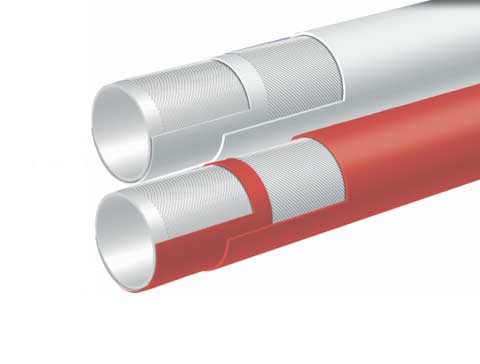
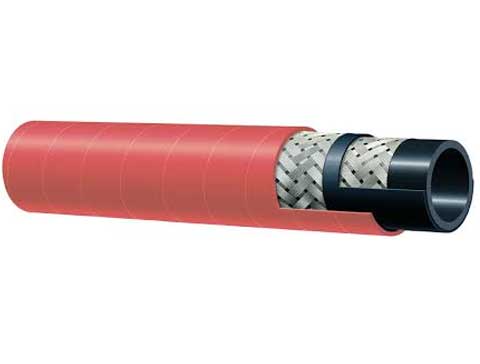
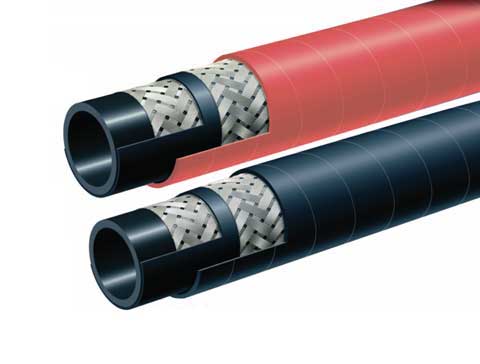
The outdoor long-term reliability of ozone resistant and anti-aging EPDM hose not only depends on the outer layer protection, but also is the synergistic result of the three-layer structure of "inner rubber layer - reinforcement layer - outer coating".
The inner rubber layer adopts a peroxide vulcanized EPDM formula, which maintains chemical inertness to water and water ethylene glycol based coolant in a wide temperature range of -50 ℃ to+150 ℃. The peroxide sulfurization system abandons the traditional zinc oxide required for sulfur sulfurization, avoiding the risk of zinc salt precipitation contaminating the coolant, while endowing the inner rubber layer with a denser cross-linked network, further reducing the permeation rate of water molecules and ozone molecules.
The reinforcement layer is woven with high-strength synthetic fibers, giving the hose the necessary compressive strength. The working pressure of Dixon Dico Saint EPDM liquid cooled hose reaches 16 bar (approximately 232 psi), with a safety factor of 3:1, a temperature range of -40 ℃ to 140 ℃, and a bending radius of only 50mm (1/4 inch specification). Songqing Xinye EPDM pipes further integrate built-in intelligent sensing systems, which can instantly monitor coolant leaks and provide abnormal warnings, suitable for high-end applications such as AI servers and data centers.
The outer layer is the core line of defense against ozone and aging. Made of flame-retardant EPDM synthetic rubber, certified with UL94 V-0 fire resistance, while also possessing ozone resistance, UV resistance, and weather aging resistance. The multi-layer covering design ensures that even in surface environments where ozone concentration has been increasing year by year (due to continuous rise in near surface ozone concentration in the past 20 years due to automobile exhaust emissions and strong shortwave ultraviolet radiation), stress cracks do not appear on the surface of the hose.
In conclusion, ozone resistant and anti-aging EPDM hose perfectly meets the strict requirements of outdoor liquid cooling system for "no cracking, weather resistance and long life" with its three core technologies of ozone immune gene of saturated molecular chain, dual protection of chemical/physical cooperation, and long-life integration of three-layer structure. From a compact bending radius of 50mm to a wide temperature range adaptation of -50 ℃ to 150 ℃, from UL94 V0 flame retardant certification to a typical service life of over 10 years, every technical detail points to the same goal: to provide zero cracking and zero leakage long-lasting protection for liquid cooling systems in outdoor data centers, outdoor energy storage stations, and communication base stations exposed to wind and rain.
1、 Molecular code: How EPDM saturated structure achieves' ozone immunity '
The ozone resistance of rubber materials is rooted in the content of unsaturated double bonds in their molecular structure. Natural rubber (NR), nitrile rubber (NBR) and other rubbers with a large number of carbon carbon double bonds (C=C) in the main chain will be directly attacked by ozone, which will cut off the molecular chain through the "ozone decomposition" mechanism and form a typical turtle crack path on the material surface. Under tension, the crack growth rate is faster, but under low stress, longer deep cracks can actually grow, causing more severe damage to rubber.
EPDM (Ethylene Propylene Diene Monomer Rubber) is called an "ozone immune" material because its molecular backbone is entirely composed of saturated carbon carbon single bonds, without double bonds that are susceptible to ozone attack. Its unsaturated double bonds are "isolated" on the side chains (ethylene and cyclopentenyl), and the molecular chain segments at these side chain positions have limited activity, making it difficult for ozone to effectively attack the main chain, thus fundamentally endowing EPDM with excellent ozone resistance. The study on the blending of EPDM and IIR (butyl rubber) shows that a small amount of EPDM can significantly improve the thermal decomposition temperature and ozone resistance of the blended rubber, because EPDM can inhibit the breakage of the main chain cross-linking bonds during aging.
For extreme outdoor exposure scenarios, photo oxidative aging and ozone aging often work together. The data from the Xisha Ocean Atmospheric Exposure Test shows that EPDM undergoes cross-linking reaction in the early stage of aging and degradation in the later stage under the combined action of salt spray, UV, and ozone. The surface will produce β - diketone aging products and microcracks. However, it is worth noting that a single salt spray test cannot simulate outdoor aging - UV radiation is a necessary condition for surface degradation of EPDM, and the synergistic effect of ozone and UV is the main cause of outdoor cracking. EPDM hoses can extend this aging process to over 10 years through formula optimization.
2、 Protection password: "dual barrier" of anti ozone agent and wax layer
Although the EPDM molecular structure itself has excellent ozone resistance, it still requires the synergistic protection of anti ozone agents and physical protective layers in extreme outdoor exposure scenarios for several years.
Chemical anti ozone agents (such as p-phenylenediamine derivatives) can "preemptively capture" ozone before ozone molecules come into contact with the rubber backbone, forming a protective layer that is oxidized by ozone to protect the rubber body. Chemical ozone inhibitors are a solution that can continuously provide protection under dynamic service conditions, such as pipeline vibration or repeated deformation due to thermal expansion and contraction with equipment. EPDM formulations typically include 1.5-3 phr (parts per hundred parts of rubber) of ozone inhibitor to effectively suppress crack propagation under dynamic stress.
The physical protective layer is achieved through the "migration film formation" mechanism of microcrystalline wax. The microcrystalline wax in the formula will slowly migrate to the surface of the rubber, forming a physical protective film with a thickness of about a few microns, which acts like a "sunscreen" to block direct contact between ozone and the rubber body. However, the wax layer may break when the rubber is repeatedly bent, so wax protection is mainly suitable for static or low-frequency deformation conditions. In liquid cooling systems, the cooling pipelines are usually in a low stress fixed state, and the wax protective layer complements the chemical ozone inhibitor to jointly resist the threat of long-term outdoor exposure.
The outer design of the LT800 series liquid cooled EPDM hose from Litong Technology clearly emphasizes "weather aging resistance, insulation against oxidation erosion, weather resistance, and UV aging resistance", and has passed the UL94 V0 flame retardant certification. Dixon Dixon EPDM liquid cooling hoses also have a fire-resistant outer layer and high flexibility design, suitable for data center servers and outdoor liquid cooling systems. The comparison of technical characteristics shows that the ozone/ultraviolet resistance rating of EPDM hose is "outstanding", while the rating of nitrile rubber (NBR) is "poor". This difference directly determines whether the hose is "not replaced for ten years" or "cracked for a year" in outdoor applications.
3、 Structure coordination: a full life anti-aging system from lining to outer covering
The outdoor long-term reliability of ozone resistant and anti-aging EPDM hose not only depends on the outer layer protection, but also is the synergistic result of the three-layer structure of "inner rubber layer - reinforcement layer - outer coating".
The inner rubber layer adopts a peroxide vulcanized EPDM formula, which maintains chemical inertness to water and water ethylene glycol based coolant in a wide temperature range of -50 ℃ to+150 ℃. The peroxide sulfurization system abandons the traditional zinc oxide required for sulfur sulfurization, avoiding the risk of zinc salt precipitation contaminating the coolant, while endowing the inner rubber layer with a denser cross-linked network, further reducing the permeation rate of water molecules and ozone molecules.
The reinforcement layer is woven with high-strength synthetic fibers, giving the hose the necessary compressive strength. The working pressure of Dixon Dico Saint EPDM liquid cooled hose reaches 16 bar (approximately 232 psi), with a safety factor of 3:1, a temperature range of -40 ℃ to 140 ℃, and a bending radius of only 50mm (1/4 inch specification). Songqing Xinye EPDM pipes further integrate built-in intelligent sensing systems, which can instantly monitor coolant leaks and provide abnormal warnings, suitable for high-end applications such as AI servers and data centers.
The outer layer is the core line of defense against ozone and aging. Made of flame-retardant EPDM synthetic rubber, certified with UL94 V-0 fire resistance, while also possessing ozone resistance, UV resistance, and weather aging resistance. The multi-layer covering design ensures that even in surface environments where ozone concentration has been increasing year by year (due to continuous rise in near surface ozone concentration in the past 20 years due to automobile exhaust emissions and strong shortwave ultraviolet radiation), stress cracks do not appear on the surface of the hose.
In conclusion, ozone resistant and anti-aging EPDM hose perfectly meets the strict requirements of outdoor liquid cooling system for "no cracking, weather resistance and long life" with its three core technologies of ozone immune gene of saturated molecular chain, dual protection of chemical/physical cooperation, and long-life integration of three-layer structure. From a compact bending radius of 50mm to a wide temperature range adaptation of -50 ℃ to 150 ℃, from UL94 V0 flame retardant certification to a typical service life of over 10 years, every technical detail points to the same goal: to provide zero cracking and zero leakage long-lasting protection for liquid cooling systems in outdoor data centers, outdoor energy storage stations, and communication base stations exposed to wind and rain.
Previous: