Heavy-duty sludge discharge rubber hose, large-diameter wear-resistant type, suitable for tunnel shield slurry treatment
release date:2026-05-07 10:54:41
reading volume:
share:
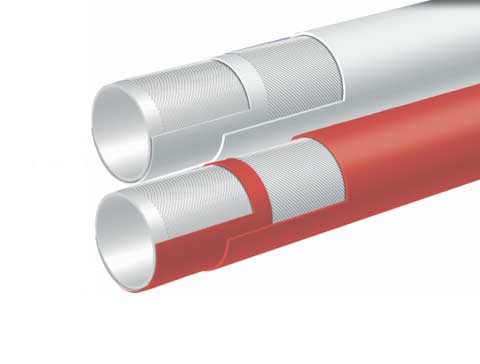
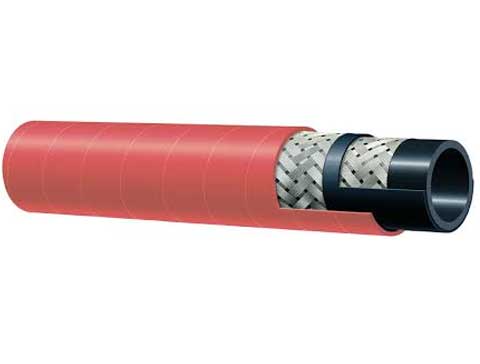
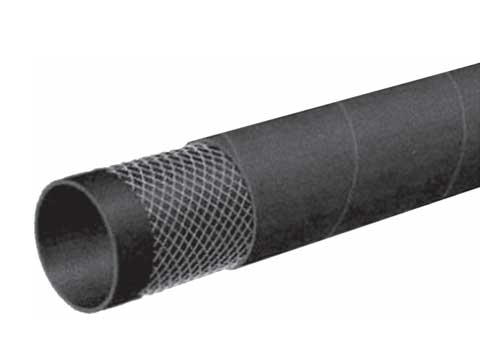
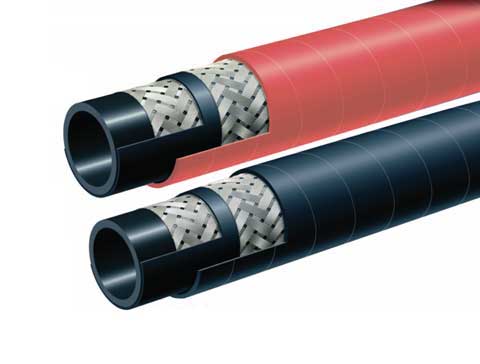
 In underground tunnel boring projects, the shield machine resembles a "steel dragon" traversing the earth. Its slurry circulation system serves as the core lifeline for maintaining the stability of the excavation face and transporting excavated soil. This system imposes extremely stringent requirements on the wear resistance, negative pressure resistance, and structural strength of the conveying pipes. The large-diameter wear-resistant slurry discharge rubber hose is a specialized product designed specifically for this working condition. It is composed of a "super-wear-resistant inner lining layer + high-strength spiral steel wire frame + weather-resistant outer rubber layer", and bears the significant responsibility of stably conveying slurry under extreme working conditions involving muddy water pressurization and gravel impact, making it an indispensable "special forces" in shield tunnel construction.
1. Wear-resistant King inner layer: a "hardcore armor" that resists the continuous impact of quartz sand and gravel
The mud discharged from the shield machine is not ordinary muddy water, but a highly abrasive solid-liquid mixture containing a large amount of quartz sand, gravel, and rock debris. Under high pressure, these sharp particles scour the pipe wall at speeds ranging from several meters to over ten meters per second, causing significant wear to ordinary rubber materials within a few hours. Therefore, the wear resistance of the inner rubber layer is the primary factor determining the service life of large-diameter slurry hoses.
Modern high-performance sludge hoses have achieved a qualitative breakthrough in the material of the inner rubber layer. The basic configuration utilizes black wear-resistant and anti-static NR&SBR synthetic rubber, which, through nano-enhanced modification, significantly improves its resistance to abrasive wear while maintaining good elasticity. For extreme abrasive conditions, the industry-leading solution is to use UPE (ultra-high molecular weight polyethylene) lining - this material, known as the "wear king," has a wear resistance index that can be 3-5 times higher than natural rubber, and its friction coefficient is extremely low, effectively reducing slurry conveying resistance and minimizing head loss.
According to the HG/T 2192 standard and industry norms, the Akron abrasion loss of the inner rubber layer of high-quality sludge discharge hoses should be controlled at an extremely low level, with some products requiring a value no greater than 0.15cm³/1.6km. The inner rubber layer must also possess antistatic properties - by adding conductive carbon black to form a conductive network, the surface resistance is controlled at the level of 1×10⁶Ω, effectively preventing safety hazards caused by static electricity in coal mines or tunnels rich in methane.
Based on the characteristics of different media, the material of the inner rubber layer can be flexibly selected: SBR synthetic rubber can be used for conveying ordinary water slag slurry; NBR formula is required for conveying mud containing a small amount of oil; and EPDM (ethylene propylene diene monomer) rubber can be selected for strong acid and alkali conditions. This customized design of "one pipe, one formula" enables the large-diameter sludge discharge hose to adapt to diverse tunnel construction needs, ranging from soft soil strata to hard rock tunneling.
II. Spiral steel wire frame: An "anti-collapse wonder" that conquers alternating positive and negative pressure
The working mechanism of the shield mudwater treatment system necessitates that the hose must withstand the dual challenges of positive pressure discharge and negative pressure suction simultaneously. When the hose is installed at the outlet end of the slurry discharge pump, it experiences positive pressure impact inside; when installed at the suction inlet end, it is under negative pressure. Ordinary non-reinforced hoses are easily "sucked flat" under negative pressure, leading to pipeline blockage and even equipment damage. Therefore, the spiral steel wire reinforcement structure is the core technical secret of large-diameter slurry discharge hoses.
According to the industry product technical specifications, the reinforcement layer of the large-diameter wear-resistant sludge discharge hose adopts a composite structure consisting of high-tension textile cord winding and high-flexibility spiral steel wire. The textile cord provides basic radial and axial tensile strength, bearing the pressure pulse generated by the slurry pump; while the spiral steel wire acts like the "spine" of the pipeline, providing continuous radial support to the pipe body. At the practical parameter level, taking the specification with a nominal inner diameter of 203mm (8 inches) as an example, it can withstand a vacuum degree of 80-90Kpa under continuous suction conditions, effectively ensuring that the pipe body does not collapse or deform at the suction inlet end of the slurry pump.
For different pressure levels, the reinforcement layer structure can be flexibly configured: for conventional slurry conveying conditions, a scheme combining textile wire ropes and a single layer of spiral steel wire can be adopted; for high-pressure scenarios such as deep tunnels and long-distance pumping, a reinforcement structure consisting of multiple layers of cord fabric, multiple layers of spiral steel wire, or even 2-8 layers of steel wire winding can be selected. This design concept of graded adaptation enables the large-diameter slurry hose to achieve a balance between safety, economy, and applicability to working conditions.
The reinforcement layer design must also meet the special requirements of shield construction for hoses, specifically the ability to provide flexible compensation. During shield tunneling, the slurry pipeline not only bears internal pressure but also needs to absorb displacements caused by equipment movement and thermal expansion and contraction of the pipeline. The spiral steel wire reinforcement structure endows the hose with excellent flexibility and toughness, allowing the small bending radius to be controlled within a range of 5-8 times the pipe diameter. During on-site installation, the hose can effectively compensate for angular displacements of ±15° and axial expansion and contraction of 5% of the pipe length, protecting rigid pipelines from stress damage.
III. "Plug and Play" solution for flange connection and construction site
The tunnel shield construction site is characterized by dense equipment and narrow space, making traditional steel pipe welding or segmented flange splicing time-consuming and laborious. Large-diameter sludge hoses are commonly equipped with carbon steel flange connectors, providing a convenient "plug and play" solution for on-site installation.
The core concept of connection design lies in integrated integration. Flange connectors are typically made of Q235B carbon steel or SS304 stainless steel, with surfaces treated with galvanizing or epoxy resin coating to withstand the humid environment and mud corrosion inside tunnels. The combination of flanges and pipe bodies employs an integrated high-temperature vulcanization process - the steel wire reinforcement layer is integrally wrapped around the flange connector, ensuring that the tensile strength of the connection area reaches over 95% of the pipe body's strength, completely eliminating the risk of connector detachment under high-pressure scouring.
In terms of actual construction efficiency, the advantages of large-diameter sludge discharge hoses are extremely significant. Application data from a certain subway tunnel project shows that traditional steel pipe connections require welding or flange butt joint segment by segment, with a single connection taking 2-4 hours; whereas large-diameter rubber hoses, coupled with flange connectors, can be installed in 30 minutes, and disassembly and maintenance are equally convenient. Under positive pressure conditions, the working pressure of such hoses can reach 1.0-1.6 MPa, and the burst pressure is 4 times the working pressure (safety factor 3:1 to 4:1); under negative pressure conditions, the spiral steel wire skeleton ensures that the pipe body maintains a circular cross-section without collapsing during continuous suction.
Full lifecycle management is equally important. During shield construction, it is recommended to inspect the hose every 200-500 hours: check the outer rubber layer for any bulges or wear that exposes the steel wire, inspect the flange joint bolts for any looseness or corrosion, and observe the inner wall for any noticeable stepped wear. When the outer diameter change rate exceeds 5% or the inner rubber layer wears down to the warning line (such as exposure of the colored inner lining), it should be replaced promptly. Tracking data from a construction company shows that after adopting high-quality large-diameter sludge discharge hoses, the pipeline leakage rate decreased by 60%, the maintenance cycle extended from 3 months to 12 months, and the comprehensive operation and maintenance cost per section of tunneling decreased by over 45%.
IV. Summary
In summary, the heavy-duty sludge discharge rubber hose, with its three-in-one technical integration of "ultra-wear-resistant inner lining + high-strength spiral steel wire frame + weather-resistant outer rubber layer", perfectly meets the stringent requirements of the tunnel shield sludge water treatment system for "negative pressure resistance, wear resistance, and high reliability". From the protection of the UPE "wear-resistant king" inner lining to the anti-collapse design of multi-layer spiral steel wire, from the efficient installation of flange connection to the abundant redundancy with a 4-fold safety factor, every technical detail points to the same goal: to provide solid and flexible support for the safe and efficient tunneling of shield machines at construction sites of subway tunnels, cross-sea channels, and municipal utility tunnels. As the development of underground space expands towards deeper burial, higher water pressure, and longer distances, the technical value of large-diameter wear-resistant sludge discharge hoses will continue to be prominent, becoming an indispensable core equipment in modern tunnel engineering.
In underground tunnel boring projects, the shield machine resembles a "steel dragon" traversing the earth. Its slurry circulation system serves as the core lifeline for maintaining the stability of the excavation face and transporting excavated soil. This system imposes extremely stringent requirements on the wear resistance, negative pressure resistance, and structural strength of the conveying pipes. The large-diameter wear-resistant slurry discharge rubber hose is a specialized product designed specifically for this working condition. It is composed of a "super-wear-resistant inner lining layer + high-strength spiral steel wire frame + weather-resistant outer rubber layer", and bears the significant responsibility of stably conveying slurry under extreme working conditions involving muddy water pressurization and gravel impact, making it an indispensable "special forces" in shield tunnel construction.
1. Wear-resistant King inner layer: a "hardcore armor" that resists the continuous impact of quartz sand and gravel
The mud discharged from the shield machine is not ordinary muddy water, but a highly abrasive solid-liquid mixture containing a large amount of quartz sand, gravel, and rock debris. Under high pressure, these sharp particles scour the pipe wall at speeds ranging from several meters to over ten meters per second, causing significant wear to ordinary rubber materials within a few hours. Therefore, the wear resistance of the inner rubber layer is the primary factor determining the service life of large-diameter slurry hoses.
Modern high-performance sludge hoses have achieved a qualitative breakthrough in the material of the inner rubber layer. The basic configuration utilizes black wear-resistant and anti-static NR&SBR synthetic rubber, which, through nano-enhanced modification, significantly improves its resistance to abrasive wear while maintaining good elasticity. For extreme abrasive conditions, the industry-leading solution is to use UPE (ultra-high molecular weight polyethylene) lining - this material, known as the "wear king," has a wear resistance index that can be 3-5 times higher than natural rubber, and its friction coefficient is extremely low, effectively reducing slurry conveying resistance and minimizing head loss.
According to the HG/T 2192 standard and industry norms, the Akron abrasion loss of the inner rubber layer of high-quality sludge discharge hoses should be controlled at an extremely low level, with some products requiring a value no greater than 0.15cm³/1.6km. The inner rubber layer must also possess antistatic properties - by adding conductive carbon black to form a conductive network, the surface resistance is controlled at the level of 1×10⁶Ω, effectively preventing safety hazards caused by static electricity in coal mines or tunnels rich in methane.
Based on the characteristics of different media, the material of the inner rubber layer can be flexibly selected: SBR synthetic rubber can be used for conveying ordinary water slag slurry; NBR formula is required for conveying mud containing a small amount of oil; and EPDM (ethylene propylene diene monomer) rubber can be selected for strong acid and alkali conditions. This customized design of "one pipe, one formula" enables the large-diameter sludge discharge hose to adapt to diverse tunnel construction needs, ranging from soft soil strata to hard rock tunneling.
II. Spiral steel wire frame: An "anti-collapse wonder" that conquers alternating positive and negative pressure
The working mechanism of the shield mudwater treatment system necessitates that the hose must withstand the dual challenges of positive pressure discharge and negative pressure suction simultaneously. When the hose is installed at the outlet end of the slurry discharge pump, it experiences positive pressure impact inside; when installed at the suction inlet end, it is under negative pressure. Ordinary non-reinforced hoses are easily "sucked flat" under negative pressure, leading to pipeline blockage and even equipment damage. Therefore, the spiral steel wire reinforcement structure is the core technical secret of large-diameter slurry discharge hoses.
According to the industry product technical specifications, the reinforcement layer of the large-diameter wear-resistant sludge discharge hose adopts a composite structure consisting of high-tension textile cord winding and high-flexibility spiral steel wire. The textile cord provides basic radial and axial tensile strength, bearing the pressure pulse generated by the slurry pump; while the spiral steel wire acts like the "spine" of the pipeline, providing continuous radial support to the pipe body. At the practical parameter level, taking the specification with a nominal inner diameter of 203mm (8 inches) as an example, it can withstand a vacuum degree of 80-90Kpa under continuous suction conditions, effectively ensuring that the pipe body does not collapse or deform at the suction inlet end of the slurry pump.
For different pressure levels, the reinforcement layer structure can be flexibly configured: for conventional slurry conveying conditions, a scheme combining textile wire ropes and a single layer of spiral steel wire can be adopted; for high-pressure scenarios such as deep tunnels and long-distance pumping, a reinforcement structure consisting of multiple layers of cord fabric, multiple layers of spiral steel wire, or even 2-8 layers of steel wire winding can be selected. This design concept of graded adaptation enables the large-diameter slurry hose to achieve a balance between safety, economy, and applicability to working conditions.
The reinforcement layer design must also meet the special requirements of shield construction for hoses, specifically the ability to provide flexible compensation. During shield tunneling, the slurry pipeline not only bears internal pressure but also needs to absorb displacements caused by equipment movement and thermal expansion and contraction of the pipeline. The spiral steel wire reinforcement structure endows the hose with excellent flexibility and toughness, allowing the small bending radius to be controlled within a range of 5-8 times the pipe diameter. During on-site installation, the hose can effectively compensate for angular displacements of ±15° and axial expansion and contraction of 5% of the pipe length, protecting rigid pipelines from stress damage.
III. "Plug and Play" solution for flange connection and construction site
The tunnel shield construction site is characterized by dense equipment and narrow space, making traditional steel pipe welding or segmented flange splicing time-consuming and laborious. Large-diameter sludge hoses are commonly equipped with carbon steel flange connectors, providing a convenient "plug and play" solution for on-site installation.
The core concept of connection design lies in integrated integration. Flange connectors are typically made of Q235B carbon steel or SS304 stainless steel, with surfaces treated with galvanizing or epoxy resin coating to withstand the humid environment and mud corrosion inside tunnels. The combination of flanges and pipe bodies employs an integrated high-temperature vulcanization process - the steel wire reinforcement layer is integrally wrapped around the flange connector, ensuring that the tensile strength of the connection area reaches over 95% of the pipe body's strength, completely eliminating the risk of connector detachment under high-pressure scouring.
In terms of actual construction efficiency, the advantages of large-diameter sludge discharge hoses are extremely significant. Application data from a certain subway tunnel project shows that traditional steel pipe connections require welding or flange butt joint segment by segment, with a single connection taking 2-4 hours; whereas large-diameter rubber hoses, coupled with flange connectors, can be installed in 30 minutes, and disassembly and maintenance are equally convenient. Under positive pressure conditions, the working pressure of such hoses can reach 1.0-1.6 MPa, and the burst pressure is 4 times the working pressure (safety factor 3:1 to 4:1); under negative pressure conditions, the spiral steel wire skeleton ensures that the pipe body maintains a circular cross-section without collapsing during continuous suction.
Full lifecycle management is equally important. During shield construction, it is recommended to inspect the hose every 200-500 hours: check the outer rubber layer for any bulges or wear that exposes the steel wire, inspect the flange joint bolts for any looseness or corrosion, and observe the inner wall for any noticeable stepped wear. When the outer diameter change rate exceeds 5% or the inner rubber layer wears down to the warning line (such as exposure of the colored inner lining), it should be replaced promptly. Tracking data from a construction company shows that after adopting high-quality large-diameter sludge discharge hoses, the pipeline leakage rate decreased by 60%, the maintenance cycle extended from 3 months to 12 months, and the comprehensive operation and maintenance cost per section of tunneling decreased by over 45%.
IV. Summary
In summary, the heavy-duty sludge discharge rubber hose, with its three-in-one technical integration of "ultra-wear-resistant inner lining + high-strength spiral steel wire frame + weather-resistant outer rubber layer", perfectly meets the stringent requirements of the tunnel shield sludge water treatment system for "negative pressure resistance, wear resistance, and high reliability". From the protection of the UPE "wear-resistant king" inner lining to the anti-collapse design of multi-layer spiral steel wire, from the efficient installation of flange connection to the abundant redundancy with a 4-fold safety factor, every technical detail points to the same goal: to provide solid and flexible support for the safe and efficient tunneling of shield machines at construction sites of subway tunnels, cross-sea channels, and municipal utility tunnels. As the development of underground space expands towards deeper burial, higher water pressure, and longer distances, the technical value of large-diameter wear-resistant sludge discharge hoses will continue to be prominent, becoming an indispensable core equipment in modern tunnel engineering.
Previous: