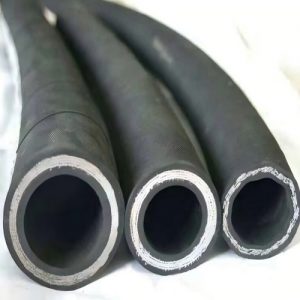
Large-diameter water hose, with an inner diameter ranging from 152mm to 305mm, is used for water supply and drainage in industrial and mining areas
release date:2026-05-07 10:56:43
reading volume:
share:
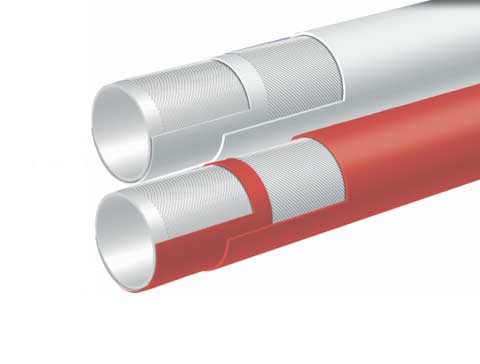
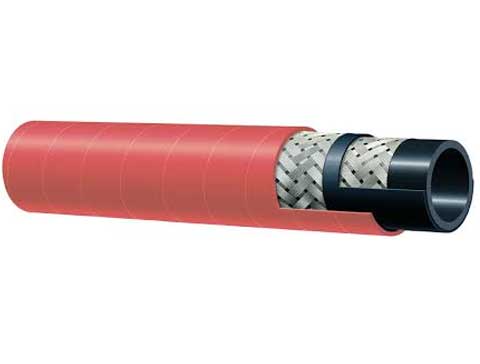
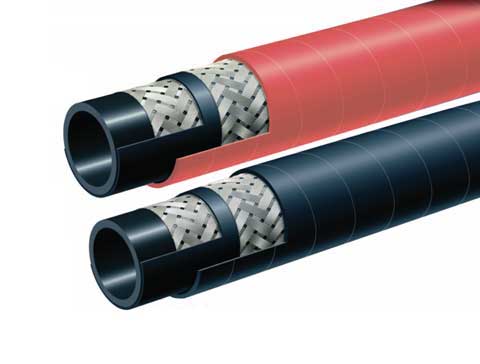
 In large-scale hydraulic engineering projects such as mine dewatering, urban flood drainage, industrial circulating water systems, and agricultural irrigation, efficient water flow transportation requires the support of pipelines with "wide channels and large flow rates." Large-diameter water hoses with an inner diameter ranging from 152mm to 305mm are precisely designed as a flexible solution to meet this demand. With a composite structure consisting of an "inner rubber sealing layer + multiple layers of fabric/cord reinforcement + spiral steel wire skeleton," these hoses address the shortcomings of rigid pipelines in complex terrains and temporary projects, becoming an indispensable "water artery" in industrial and mining water supply and drainage systems.
1. Large-diameter triplets: The pressure and flow secrets of 152mm/203mm/254mm/305mm
The core requirements of industrial and mining water supply and drainage for pipelines can be summarized as "high flow rate" and "high adaptability". The inner diameter of large-diameter water hoses directly determines their maximum flow capacity. The mainstream specifications, represented by 152mm (6 inches), 203mm (8 inches), 254mm (10 inches), and 305mm (12 inches), each correspond to different application orientations.
In terms of flow measurement, when the flow velocity within the pipeline is 3m/s, a hose with an inner diameter of 152mm can deliver approximately 650 cubic meters of water per hour, while one with an inner diameter of 305mm can exceed 1,300 cubic meters. This "large hose" type of flow advantage enables it to quickly drain water in case of sudden mine inrush, or serve as an emergency water conveyance channel in large water conservancy projects.
According to standards and specifications such as HG/T 3035, water hoses with diameters ranging from 152mm to 305mm are primarily divided into two pressure levels: the conventional 150PSI (approximately 1.03MPa) type and the reinforced 300PSI (approximately 2.07MPa) type. The conventional type is suitable for gravity flow or medium and low-pressure water supply and drainage in factories, mines, and construction sites. The reinforced type, with its higher pressure-bearing capacity, is suitable for long-distance pumping or inverted siphon projects with significant elevation differences. For example, hoses with diameters ranging from 152mm to 203mm are often equipped with 4-6 layers of fabric reinforcement, while those ranging from 254mm to 305mm, due to their large diameter, require the implantation of a high-strength spiral steel wire skeleton within the pipe wall, supplemented by multiple layers of cord winding, to prevent pipe rupture or collapse under high or negative pressure suction conditions.
II. Structural Code: "Positive Pressure Resistance + Negative Pressure Resistance" Dual Armor Constructed by Spiral Steel Wire and Multi-Layer Cloth
The superior performance of large-diameter water hoses stems from their precise composite wall structure. Industrial and mining applications not only have to cope with the positive pressure impact of pumping, but also often need to handle negative pressure suction in sedimentation tanks or low-lying areas.
The inner rubber layer of such hoses serves as a crucial barrier, directly contacting the transmission medium. Given the variable water quality in industrial and mining environments, the inner rubber layer commonly adopts black EPDM (ethylene propylene diene monomer rubber) or NR&SBR (natural rubber blended with styrene-butadiene rubber) formulations. EPDM exhibits excellent resistance to ozone, aging, and dilute acids and alkalis, making it suitable for transmitting industrial water containing mildly corrosive media; whereas NR&SBR demonstrates superior wear resistance and flexibility, making it ideal for turbid water containing sediment particles.
The configuration of the reinforcement layer embodies the core wisdom of large-diameter design. According to the technical parameters, the pipe wall with a diameter ranging from 152mm to 305mm not only contains 4 to 8 layers of cloth or cord winding layers to bear internal water pressure and disperse stress, but also specially configures a high-strength spiral steel wire with a diameter of up to 5.0mm as the skeleton. This spiral steel wire acts as the "spine" of the pipeline. Under positive pressure conditions, it and the cord jointly bear pressure pulsations; when negative pressure is generated at the pump suction end, the radial support force of the spiral steel wire ensures that the pipe body maintains a circular cross-section, eliminating the common "squash-flat" phenomenon of ordinary hoses.
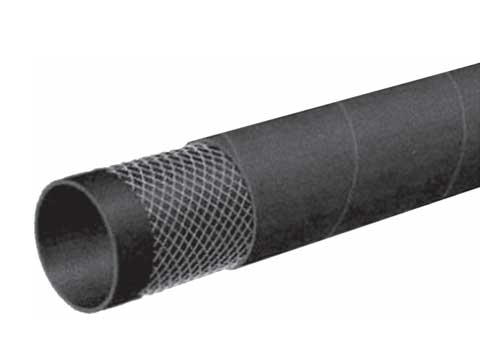
In addition, the outer rubber layer is made of weather-resistant and wear-resistant synthetic rubber, usually in black glossy or cloth-like finish, to adapt to the friction and dragging on mine rubble and industrial floors.
III. Mining and Industrial Scenarios: The "Pioneer" in Flange Connection and Corrosion Resistance
In complex industrial and mining environments, the reliability of pipeline connections and corrosion resistance pose bottlenecks to the long-term stable operation of the system. To address this, large-diameter water hoses have undergone targeted reinforcement, from the joints to the pipe body.
Flanged connection is a standard "high reliability" solution. Large-diameter hoses ranging from 152mm to 305mm are typically equipped with carbon steel slip-on flanges or fixed flange adapters at both ends. This design not only ensures mechanical strength at the connection point, capable of withstanding significant hydraulic pressure impacts, but also facilitates on-site installation and disassembly. When maintenance is required for the pipeline, simply dismantle the flange bolts, eliminating the need for welding or large cutting equipment, significantly enhancing emergency repair efficiency. In the mining sector, the flange surface is usually treated with anti-corrosion measures to resist erosion from mine water.
Wide temperature range and medium applicability are another highlight. This type of large-diameter hose can operate stably within a temperature range of -30℃ to +100℃. Whether it's the antifreeze requirement in the sub-zero winter of the north or the high-temperature test of industrial circulating water in summer, its specially formulated rubber maintains elasticity and sealing performance. For industrial wastewater with complex water quality (such as containing trace amounts of acid, alkali, or oil), special inner rubber materials resistant to acid, alkali, or oil can be selected to extend the service life of the pipeline.
In specific industrial and mining applications, the "flexibility" advantage of large-diameter water hoses is fully demonstrated. When faced with platform height differences, twisted paths, or connections to vibrating equipment that are difficult for traditional steel pipes to overcome, large-diameter hoses, with their soft bodies and compact bending radii, can easily bypass obstacles and absorb mechanical vibrations. For example, medium and low-pressure models with pressures ranging from 0.5 to 0.8 MPa are commonly used to connect large centrifugal pumps to ground pipe networks, addressing the potential damage to rigid pipelines caused by pump vibration. In underground coal mine drainage systems, wear-resistant and pressure-resistant hoses with a diameter of 254mm serve as the main drainage pipeline. They can flexibly conform to the direction of tunnel excavation in the event of sudden flooding, thus gaining valuable time for emergency response.
It is worth mentioning that in order to adapt to different industrial and mining power and interface standards, large-diameter water hoses can also be customized with a negative pressure resistance limit. Depending on the structural strength, they can withstand a vacuum degree of 80-90Kpa. This characteristic makes them not only suitable for drainage, but also excellent in dredging conditions that require "drainage" or "siphonage".
IV. Summary
In summary, large-diameter water hoses with an inner diameter ranging from 152mm to 305mm perfectly meet the comprehensive needs of industrial and mining water supply and drainage for "large flow, high pressure resistance, negative pressure resistance, corrosion resistance, and quick connection" due to their ultra-large flow cross-section, composite reinforced structure consisting of spiral steel wires and multi-layer cloth clamping, and flexible flange connection method. From emergency rescue tunnels in mines hundreds of meters deep, to circulating cooling water systems in large factories, to drought-resistant water diversion in contiguous irrigation areas, these large-diameter "water arteries" rely on their "combination of strength and flexibility" to carry the heavy responsibility of industrial and domestic water supply and are indispensable flexible guarantees in modern water conservancy and mining engineering.
In large-scale hydraulic engineering projects such as mine dewatering, urban flood drainage, industrial circulating water systems, and agricultural irrigation, efficient water flow transportation requires the support of pipelines with "wide channels and large flow rates." Large-diameter water hoses with an inner diameter ranging from 152mm to 305mm are precisely designed as a flexible solution to meet this demand. With a composite structure consisting of an "inner rubber sealing layer + multiple layers of fabric/cord reinforcement + spiral steel wire skeleton," these hoses address the shortcomings of rigid pipelines in complex terrains and temporary projects, becoming an indispensable "water artery" in industrial and mining water supply and drainage systems.
1. Large-diameter triplets: The pressure and flow secrets of 152mm/203mm/254mm/305mm
The core requirements of industrial and mining water supply and drainage for pipelines can be summarized as "high flow rate" and "high adaptability". The inner diameter of large-diameter water hoses directly determines their maximum flow capacity. The mainstream specifications, represented by 152mm (6 inches), 203mm (8 inches), 254mm (10 inches), and 305mm (12 inches), each correspond to different application orientations.
In terms of flow measurement, when the flow velocity within the pipeline is 3m/s, a hose with an inner diameter of 152mm can deliver approximately 650 cubic meters of water per hour, while one with an inner diameter of 305mm can exceed 1,300 cubic meters. This "large hose" type of flow advantage enables it to quickly drain water in case of sudden mine inrush, or serve as an emergency water conveyance channel in large water conservancy projects.
According to standards and specifications such as HG/T 3035, water hoses with diameters ranging from 152mm to 305mm are primarily divided into two pressure levels: the conventional 150PSI (approximately 1.03MPa) type and the reinforced 300PSI (approximately 2.07MPa) type. The conventional type is suitable for gravity flow or medium and low-pressure water supply and drainage in factories, mines, and construction sites. The reinforced type, with its higher pressure-bearing capacity, is suitable for long-distance pumping or inverted siphon projects with significant elevation differences. For example, hoses with diameters ranging from 152mm to 203mm are often equipped with 4-6 layers of fabric reinforcement, while those ranging from 254mm to 305mm, due to their large diameter, require the implantation of a high-strength spiral steel wire skeleton within the pipe wall, supplemented by multiple layers of cord winding, to prevent pipe rupture or collapse under high or negative pressure suction conditions.
II. Structural Code: "Positive Pressure Resistance + Negative Pressure Resistance" Dual Armor Constructed by Spiral Steel Wire and Multi-Layer Cloth
The superior performance of large-diameter water hoses stems from their precise composite wall structure. Industrial and mining applications not only have to cope with the positive pressure impact of pumping, but also often need to handle negative pressure suction in sedimentation tanks or low-lying areas.
The inner rubber layer of such hoses serves as a crucial barrier, directly contacting the transmission medium. Given the variable water quality in industrial and mining environments, the inner rubber layer commonly adopts black EPDM (ethylene propylene diene monomer rubber) or NR&SBR (natural rubber blended with styrene-butadiene rubber) formulations. EPDM exhibits excellent resistance to ozone, aging, and dilute acids and alkalis, making it suitable for transmitting industrial water containing mildly corrosive media; whereas NR&SBR demonstrates superior wear resistance and flexibility, making it ideal for turbid water containing sediment particles.
The configuration of the reinforcement layer embodies the core wisdom of large-diameter design. According to the technical parameters, the pipe wall with a diameter ranging from 152mm to 305mm not only contains 4 to 8 layers of cloth or cord winding layers to bear internal water pressure and disperse stress, but also specially configures a high-strength spiral steel wire with a diameter of up to 5.0mm as the skeleton. This spiral steel wire acts as the "spine" of the pipeline. Under positive pressure conditions, it and the cord jointly bear pressure pulsations; when negative pressure is generated at the pump suction end, the radial support force of the spiral steel wire ensures that the pipe body maintains a circular cross-section, eliminating the common "squash-flat" phenomenon of ordinary hoses.
In addition, the outer rubber layer is made of weather-resistant and wear-resistant synthetic rubber, usually in black glossy or cloth-like finish, to adapt to the friction and dragging on mine rubble and industrial floors.
III. Mining and Industrial Scenarios: The "Pioneer" in Flange Connection and Corrosion Resistance
In complex industrial and mining environments, the reliability of pipeline connections and corrosion resistance pose bottlenecks to the long-term stable operation of the system. To address this, large-diameter water hoses have undergone targeted reinforcement, from the joints to the pipe body.
Flanged connection is a standard "high reliability" solution. Large-diameter hoses ranging from 152mm to 305mm are typically equipped with carbon steel slip-on flanges or fixed flange adapters at both ends. This design not only ensures mechanical strength at the connection point, capable of withstanding significant hydraulic pressure impacts, but also facilitates on-site installation and disassembly. When maintenance is required for the pipeline, simply dismantle the flange bolts, eliminating the need for welding or large cutting equipment, significantly enhancing emergency repair efficiency. In the mining sector, the flange surface is usually treated with anti-corrosion measures to resist erosion from mine water.
Wide temperature range and medium applicability are another highlight. This type of large-diameter hose can operate stably within a temperature range of -30℃ to +100℃. Whether it's the antifreeze requirement in the sub-zero winter of the north or the high-temperature test of industrial circulating water in summer, its specially formulated rubber maintains elasticity and sealing performance. For industrial wastewater with complex water quality (such as containing trace amounts of acid, alkali, or oil), special inner rubber materials resistant to acid, alkali, or oil can be selected to extend the service life of the pipeline.
In specific industrial and mining applications, the "flexibility" advantage of large-diameter water hoses is fully demonstrated. When faced with platform height differences, twisted paths, or connections to vibrating equipment that are difficult for traditional steel pipes to overcome, large-diameter hoses, with their soft bodies and compact bending radii, can easily bypass obstacles and absorb mechanical vibrations. For example, medium and low-pressure models with pressures ranging from 0.5 to 0.8 MPa are commonly used to connect large centrifugal pumps to ground pipe networks, addressing the potential damage to rigid pipelines caused by pump vibration. In underground coal mine drainage systems, wear-resistant and pressure-resistant hoses with a diameter of 254mm serve as the main drainage pipeline. They can flexibly conform to the direction of tunnel excavation in the event of sudden flooding, thus gaining valuable time for emergency response.
It is worth mentioning that in order to adapt to different industrial and mining power and interface standards, large-diameter water hoses can also be customized with a negative pressure resistance limit. Depending on the structural strength, they can withstand a vacuum degree of 80-90Kpa. This characteristic makes them not only suitable for drainage, but also excellent in dredging conditions that require "drainage" or "siphonage".
IV. Summary
In summary, large-diameter water hoses with an inner diameter ranging from 152mm to 305mm perfectly meet the comprehensive needs of industrial and mining water supply and drainage for "large flow, high pressure resistance, negative pressure resistance, corrosion resistance, and quick connection" due to their ultra-large flow cross-section, composite reinforced structure consisting of spiral steel wires and multi-layer cloth clamping, and flexible flange connection method. From emergency rescue tunnels in mines hundreds of meters deep, to circulating cooling water systems in large factories, to drought-resistant water diversion in contiguous irrigation areas, these large-diameter "water arteries" rely on their "combination of strength and flexibility" to carry the heavy responsibility of industrial and domestic water supply and are indispensable flexible guarantees in modern water conservancy and mining engineering.
Previous: