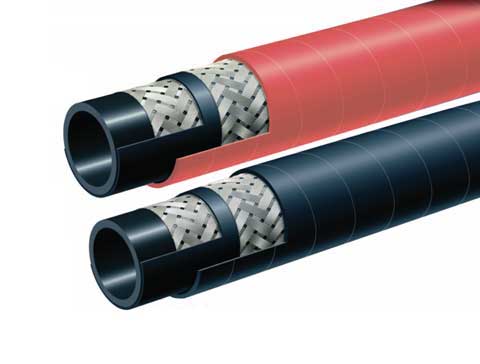
Large-diameter industrial suction and discharge hose, with an inner diameter of 203mm, resistant to negative pressure, used for slurry transportation in mines
release date:2026-05-07 10:52:00
reading volume:
share:
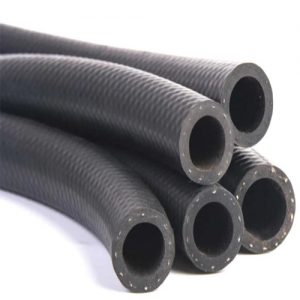 In operations such as mine slurry transportation, river dredging, and industrial tailings treatment, the transportation of high-concentration solid-liquid mixtures poses stringent requirements on the wear resistance, negative pressure resistance, and structural strength of pipelines. The large-diameter suction and discharge hose with an inner diameter of 203mm is precisely a heavy-duty flexible channel designed for this specific working condition. With a composite structure consisting of an inner rubber layer, multiple reinforcement layers, and a spiral steel wire skeleton, it shoulders the core mission of stably transporting highly abrasive slurry under alternating positive and negative pressure conditions, becoming the "wear-resistant artery" of the mine slurry treatment system.
1. "Anti-negative pressure password" with a 203mm caliber: mechanical support from the spiral steel wire skeleton
For mine slurry conveying, hoses not only have to withstand the positive pressure impact at the pump outlet, but also deal with the negative pressure suction at the pump inlet. When the hose is used at the inlet end of the pump, the inside of the hose is under negative pressure, and ordinary hoses are easily "sucked flat", leading to pipeline blockage and even equipment damage. Therefore, the ability to withstand negative pressure is a core technical indicator for large-diameter suction and discharge hoses.
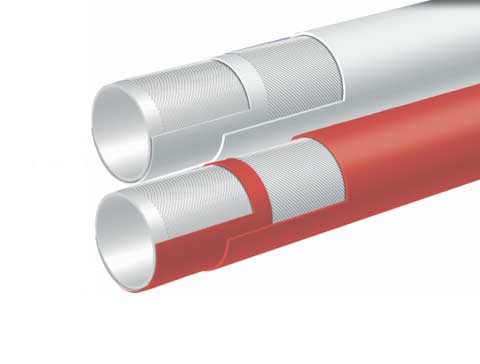
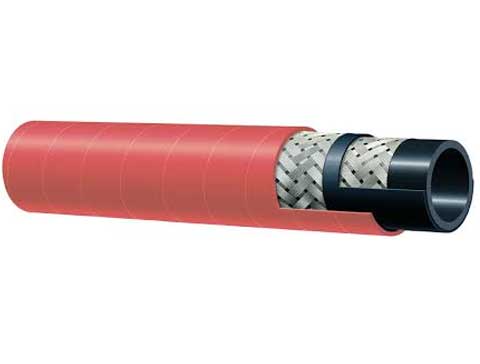
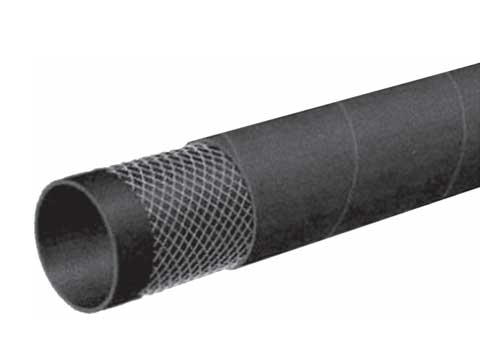
The key to the negative pressure resistance design of the 203mm (approximately 8 inches) suction and discharge hose lies in its spiral steel wire reinforcement structure. This structure, from the inside out, consists of an inner rubber layer, a fabric/cord reinforcement layer, a spiral metal wire skeleton layer, a middle rubber layer, and an outer rubber layer. The spiral steel wire embedded in the pipe wall acts as the "skeleton" of the pipe, providing continuous radial support to the pipe body. Even under vacuum pressures ranging from -0.08MPa to -0.09MPa, the pipe body can maintain a circular cross-section without collapsing.
Taking the 203mm specification as an example, the technical parameters indicate that its vacuum pressure can reach 80Kpa (approximately -0.08MPa). This capability means that the hose can be installed at the suction inlet end of the slurry pump to directly extract high-concentration slurry from tailings ponds and sedimentation tanks, without worrying about the hose wall being sucked in. The diameter and pitch of the spiral steel wire are designed according to different pressure requirements - for both suction and discharge conditions, the steel wire diameter can be selected as 5.0mm to ensure structural stability under alternating positive and negative pressures.
II. Wear-resistant inner layer: The core barrier against high-hardness particles
Mine slurry contains a large amount of tailings particles - whether it is quartz in iron tailings, silicates in copper tailings, or rock debris in coal slime, their hardness is much higher than that of ordinary rubber materials. Under high-speed flow conditions, these particles continuously "cut" and "impact" the pipe wall, and the wear resistance of the inner rubber layer directly determines the service life of the hose.
The inner rubber layer of the 203mm suction and discharge hose has been specially designed for slurry conditions. The base material is a blend of natural rubber (NR) and nitrile rubber (NBR), with the addition of high-abrasion-resistant silicon carbide particles or high-structure carbon black, which enhances the wear resistance of the inner rubber layer by more than 300% compared to ordinary rubber. The Shore hardness is controlled at 65±5 Shore A, ensuring sufficient elasticity to absorb particle impact energy while maintaining wear resistance. Based on calculations under the working conditions of a slurry concentration of 50% and a flow rate of 3m/s, the optimized inner rubber layer can achieve a service life of over 800 hours.
Based on different medium characteristics, the inner rubber layer offers a variety of material options: SBR synthetic rubber for conveying ordinary water slag slurry; NBR formula to enhance oil resistance for conveying oily slag slurry; and EPDM rubber for slag slurry with strong acidity or alkalinity. This customized design of "one formula for one pipe" enables large-diameter suction and discharge hoses to adapt to diverse slag slurry conveying needs, ranging from coal mines to metal mines.
III. Adaptation of flange connection to mining conditions
The mine slurry conveying system typically requires quick and reliable connections between hoses, slurry pumps, and piping systems. The 203mm large-diameter suction and discharge hoses are commonly equipped with carbon steel flange connectors, providing convenience and assurance for on-site installation and long-term operation.
The design of the flange connection fully considers the harshness of mining conditions. The flange material is Q235B carbon steel or 304 stainless steel, which meets the GB/T 9119 and ANSI B16.5 standards. The flange thickness is designed to ensure no deformation under high-pressure impact, with bolt hole spacing tolerances controlled within ±0.5mm, and the roughness of the sealing surface is Ra≤3.2μm. For marine dredging or humid mine environments, the flange surface is treated with galvanizing or epoxy resin coating, with a salt spray corrosion resistance time of over 1000 hours, effectively preventing connection failure caused by flange rusting. The integration of the flange and the pipe body adopts an integrated high-temperature vulcanization process, with the steel wire wrapped around the flange joint as a whole, making the tensile strength of the connection part reach over 95% of the pipe body strength.
In field applications, the 203mm large-diameter suction and discharge hose exhibits significant advantages. Traditional steel pipe connections require segment-by-segment welding or flange butt jointing, with each connection taking several hours; whereas large-diameter hoses, coupled with flange connectors, can be installed in just 30 minutes, and disassembly and maintenance are equally convenient. Under positive pressure conditions, the hose can withstand a working pressure of 0.5-1.2MPa, with a burst pressure up to four times the working pressure; under negative pressure conditions, its spiral steel wire frame ensures that the hose body does not collapse during continuous suction. Application data from a certain iron ore tailings conveying system shows that after adopting the 203mm large-diameter suction and discharge hose, the pipeline leakage rate has decreased by 60%, the maintenance cycle has been extended from 3 months to 12 months, and the comprehensive operation and maintenance costs have dropped by more than 45%.
In summary, the large-diameter industrial suction and discharge hose with an inner diameter of 203mm perfectly meets the stringent requirements of mine slurry transportation for "negative pressure resistance, wear resistance, and high reliability" through its three core technologies: the anti-negative pressure design of the spiral steel wire skeleton, the material innovation of the high wear-resistant inner rubber layer, and the reliable and convenient flange connection. From positive pressure discharge to negative pressure suction, from iron tailings to coal slurry, this "wear-resistant artery" with an impressive 8-inch diameter carries the fluid lifeblood of mine production, providing a solid and flexible guarantee for efficient and safe slurry processing.
In operations such as mine slurry transportation, river dredging, and industrial tailings treatment, the transportation of high-concentration solid-liquid mixtures poses stringent requirements on the wear resistance, negative pressure resistance, and structural strength of pipelines. The large-diameter suction and discharge hose with an inner diameter of 203mm is precisely a heavy-duty flexible channel designed for this specific working condition. With a composite structure consisting of an inner rubber layer, multiple reinforcement layers, and a spiral steel wire skeleton, it shoulders the core mission of stably transporting highly abrasive slurry under alternating positive and negative pressure conditions, becoming the "wear-resistant artery" of the mine slurry treatment system.
1. "Anti-negative pressure password" with a 203mm caliber: mechanical support from the spiral steel wire skeleton
For mine slurry conveying, hoses not only have to withstand the positive pressure impact at the pump outlet, but also deal with the negative pressure suction at the pump inlet. When the hose is used at the inlet end of the pump, the inside of the hose is under negative pressure, and ordinary hoses are easily "sucked flat", leading to pipeline blockage and even equipment damage. Therefore, the ability to withstand negative pressure is a core technical indicator for large-diameter suction and discharge hoses.
The key to the negative pressure resistance design of the 203mm (approximately 8 inches) suction and discharge hose lies in its spiral steel wire reinforcement structure. This structure, from the inside out, consists of an inner rubber layer, a fabric/cord reinforcement layer, a spiral metal wire skeleton layer, a middle rubber layer, and an outer rubber layer. The spiral steel wire embedded in the pipe wall acts as the "skeleton" of the pipe, providing continuous radial support to the pipe body. Even under vacuum pressures ranging from -0.08MPa to -0.09MPa, the pipe body can maintain a circular cross-section without collapsing.
Taking the 203mm specification as an example, the technical parameters indicate that its vacuum pressure can reach 80Kpa (approximately -0.08MPa). This capability means that the hose can be installed at the suction inlet end of the slurry pump to directly extract high-concentration slurry from tailings ponds and sedimentation tanks, without worrying about the hose wall being sucked in. The diameter and pitch of the spiral steel wire are designed according to different pressure requirements - for both suction and discharge conditions, the steel wire diameter can be selected as 5.0mm to ensure structural stability under alternating positive and negative pressures.
II. Wear-resistant inner layer: The core barrier against high-hardness particles
Mine slurry contains a large amount of tailings particles - whether it is quartz in iron tailings, silicates in copper tailings, or rock debris in coal slime, their hardness is much higher than that of ordinary rubber materials. Under high-speed flow conditions, these particles continuously "cut" and "impact" the pipe wall, and the wear resistance of the inner rubber layer directly determines the service life of the hose.
The inner rubber layer of the 203mm suction and discharge hose has been specially designed for slurry conditions. The base material is a blend of natural rubber (NR) and nitrile rubber (NBR), with the addition of high-abrasion-resistant silicon carbide particles or high-structure carbon black, which enhances the wear resistance of the inner rubber layer by more than 300% compared to ordinary rubber. The Shore hardness is controlled at 65±5 Shore A, ensuring sufficient elasticity to absorb particle impact energy while maintaining wear resistance. Based on calculations under the working conditions of a slurry concentration of 50% and a flow rate of 3m/s, the optimized inner rubber layer can achieve a service life of over 800 hours.
Based on different medium characteristics, the inner rubber layer offers a variety of material options: SBR synthetic rubber for conveying ordinary water slag slurry; NBR formula to enhance oil resistance for conveying oily slag slurry; and EPDM rubber for slag slurry with strong acidity or alkalinity. This customized design of "one formula for one pipe" enables large-diameter suction and discharge hoses to adapt to diverse slag slurry conveying needs, ranging from coal mines to metal mines.
III. Adaptation of flange connection to mining conditions
The mine slurry conveying system typically requires quick and reliable connections between hoses, slurry pumps, and piping systems. The 203mm large-diameter suction and discharge hoses are commonly equipped with carbon steel flange connectors, providing convenience and assurance for on-site installation and long-term operation.
The design of the flange connection fully considers the harshness of mining conditions. The flange material is Q235B carbon steel or 304 stainless steel, which meets the GB/T 9119 and ANSI B16.5 standards. The flange thickness is designed to ensure no deformation under high-pressure impact, with bolt hole spacing tolerances controlled within ±0.5mm, and the roughness of the sealing surface is Ra≤3.2μm. For marine dredging or humid mine environments, the flange surface is treated with galvanizing or epoxy resin coating, with a salt spray corrosion resistance time of over 1000 hours, effectively preventing connection failure caused by flange rusting. The integration of the flange and the pipe body adopts an integrated high-temperature vulcanization process, with the steel wire wrapped around the flange joint as a whole, making the tensile strength of the connection part reach over 95% of the pipe body strength.
In field applications, the 203mm large-diameter suction and discharge hose exhibits significant advantages. Traditional steel pipe connections require segment-by-segment welding or flange butt jointing, with each connection taking several hours; whereas large-diameter hoses, coupled with flange connectors, can be installed in just 30 minutes, and disassembly and maintenance are equally convenient. Under positive pressure conditions, the hose can withstand a working pressure of 0.5-1.2MPa, with a burst pressure up to four times the working pressure; under negative pressure conditions, its spiral steel wire frame ensures that the hose body does not collapse during continuous suction. Application data from a certain iron ore tailings conveying system shows that after adopting the 203mm large-diameter suction and discharge hose, the pipeline leakage rate has decreased by 60%, the maintenance cycle has been extended from 3 months to 12 months, and the comprehensive operation and maintenance costs have dropped by more than 45%.
In summary, the large-diameter industrial suction and discharge hose with an inner diameter of 203mm perfectly meets the stringent requirements of mine slurry transportation for "negative pressure resistance, wear resistance, and high reliability" through its three core technologies: the anti-negative pressure design of the spiral steel wire skeleton, the material innovation of the high wear-resistant inner rubber layer, and the reliable and convenient flange connection. From positive pressure discharge to negative pressure suction, from iron tailings to coal slurry, this "wear-resistant artery" with an impressive 8-inch diameter carries the fluid lifeblood of mine production, providing a solid and flexible guarantee for efficient and safe slurry processing.
Previous: