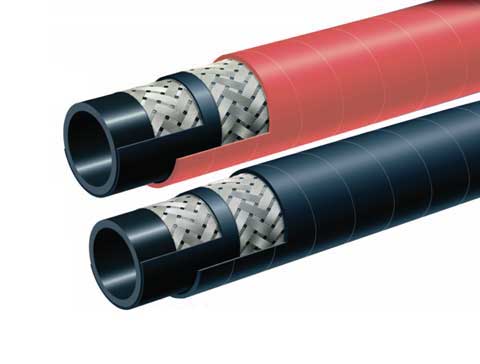
Industrial-grade chemical hose with double-layer steel wire reinforcement, designed for pressure resistance and leak prevention
release date:2026-11-19 09:43:27
reading volume:
share:
In industrial settings—such as the unloading of tanker trucks in chemical parks, the transfer of corrosive media within production workshops, or the transport of highly acidic or alkaline fluids in wastewater treatment—the handling of corrosive fluids under medium-to-high pressure has long been plagued by challenges: insufficient pressure resistance, leakage at connection points, and the accumulation of static electricity. Standard fiber-reinforced chemical hoses not only have low pressure-bearing limits but are also prone to bursting or leaking when subjected to pressure fluctuations. Furthermore, the inability to dissipate static electricity creates a risk of fire or explosion when handling flammable organic solvents. A leak not only results in the loss of materials but can also trigger emergency safety and environmental response protocols within a chemical park, leading to losses that far exceed the value of the hose itself. Our industrial-grade chemical hose, featuring a dual-layer steel-wire-braided reinforcement and an optimized anti-leakage system, ensures the stable and safe long-term transport of corrosive fluids under medium-to-high pressure, providing a highly reliable flexible piping solution for complex industrial chemical transfer applications.
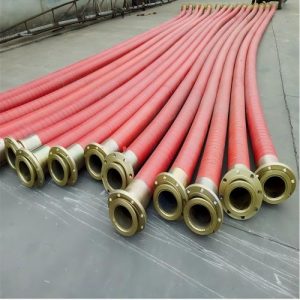
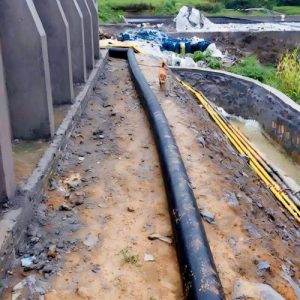 Dual-layer interlaced steel-wire-braided reinforcement: stable pressure resistance and pulse tolerance for medium-to-high-pressure operations.
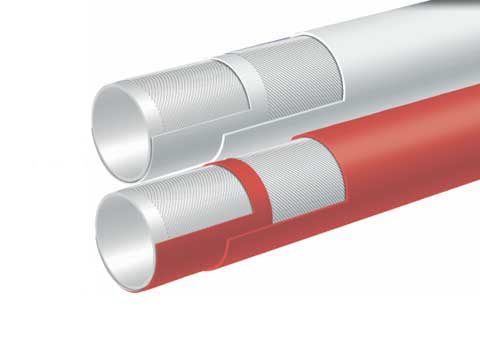
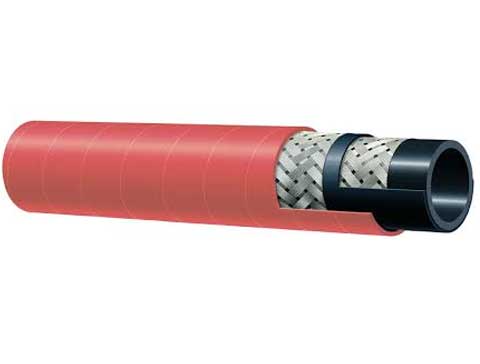
Most standard industrial chemical hoses utilize a single-layer fiber-braided reinforcement, which typically limits their pressure capacity to below 1.0 MPa—wholly inadequate for the medium-to-high-pressure requirements common in chemical facilities. Under the pressure surges caused by the starting and stopping of chemical pumps, these hoses are highly susceptible to wall bulging or sudden, catastrophic bursts. This industrial-grade chemical hose employs a dual-layer, high-strength galvanized steel-wire reinforcement, with the wires interlaced at balanced angles. Through precise mechanical simulation, the braiding density and orientation angle of each layer have been optimized to ensure uniform stress distribution across the entire hose wall, eliminating any localized weak points. The dual-layer steel wire reinforcement utilizes high-toughness galvanized steel wires, each with a tensile strength of no less than 1800 MPa. During the braiding process, the tension of each wire layer is precisely calibrated by high-precision, digitally controlled equipment, ensuring minimal tension deviation. This results in a uniform wall thickness throughout the hose, eliminating localized wire bunching or uneven tension—factors that would otherwise create weak points prone to failure under pressure. The finished hose consistently achieves a minimum burst pressure of at least four times its rated working pressure, fully complying with industry safety standards for hoses used in the transport of industrial chemical fluids. With a substantial safety margin, the hose effectively withstands transient pressure surges and water hammer effects—common occurrences during pump start-stop cycles—thereby preventing catastrophic hose bursts.
A specialized, highly elastic rubber isolation layer is positioned between the two layers of steel wire. This prevents direct contact and friction between the layers, which could otherwise lead to internal wire wear or breakage under long-term pressure pulsations. Furthermore, this layer acts as a stress buffer, absorbing the alternating stresses generated by high-pressure pulses and significantly enhancing the fatigue resistance of the entire braided structure. The dual-layer wire-braided assembly has successfully undergone over 150,000 cycles of alternating pressure testing at 1.5 times the rated working pressure; the hose wall remained intact, with no signs of bulging or wire breakage, making it ideally suited for the long-term, continuous, high-pressure pulse conditions typical of industrial chemical transport. Additionally, the dual-layer braided structure offers exceptional tensile and pull-out resistance. The hose ends are secured using a multi-stage, progressive crimping process, creating a high-strength, integrated assembly between the fittings and the hose. This ensures that, even under rated working pressure, there is no risk of the hose separating from the fittings—a critical safety feature. The continuous metal structure, formed by a double-layer steel wire braid, naturally creates a complete, conductive path. This allows for the continuous dissipation of static electricity without the need for additional conductive fillers. It effectively eliminates the risk of fire or explosion—a danger that can arise when static electricity, generated by the high-speed flow of flammable or explosive organic solvents, accumulates due to an inability to discharge. This design is particularly well-suited for the transport of Class A flammable organic solvents, addressing static-related safety hazards at the structural level.
A multi-layer, fully leak-proof composite system eliminates potential permeation paths—from the inner liner to the couplings.
In standard industrial chemical hoses, leak prevention often relies solely on a single corrosion-resistant inner liner. Over time, highly corrosive media can slowly permeate this liner, reaching and corroding the outer braided layer, which leads to bulging and leaks. Furthermore, the simple crimped sealing structures used at the couplings are prone to high-pressure leaks. Such designs fall far short of the requirements for long-term industrial use. In contrast, this industrial-grade chemical hose—featuring a double-layer steel wire braid—establishes a comprehensive, end-to-end leak-proof system, encompassing the inner liner, intermediate barrier layers, and coupling seals, thereby completely blocking all potential permeation paths for corrosive media.
The inner liner, which comes into direct contact with corrosive substances, consists of a composite blend of modified UPE (Ultra-High Molecular Weight Polyethylene) and EPDM (Ethylene Propylene Diene Monomer). This liner is resistant to a vast array of common acids, bases, salts, and organic solvents, ensuring it does not swell or degrade even during long-term exposure to highly corrosive media. The liner’s overall density has been specifically optimized, resulting in a permeation rate only one-tenth that of standard, pure-rubber liners. This significantly slows the migration of corrosive media, preventing it from reaching and damaging the internal reinforcement structure. For applications involving particularly aggressive solvents, an optional high-purity PTFE (polytetrafluoroethylene) liner is available, offering even greater corrosion resistance and superior impermeability. A specialized, highly dense barrier layer is positioned between the inner liner and the dual-layer steel wire reinforcement. Should any trace amounts of corrosive media slowly permeate the inner liner, this barrier layer effectively halts further penetration, preventing the media from reaching the steel wire reinforcement. This safeguards the steel wires against corrosion-induced fracture, significantly extending the overall service life of the hose. The outer cover is constructed from a modified EPDM compound—engineered for weather resistance and protection against chemical splashes—and enhanced with specific additives to resist ozone, UV radiation, and incidental exposure to corrosive substances. This ensures the hose remains durable during long-term outdoor use in chemical industrial parks, preventing premature chalking or cracking of the outer cover and providing a robust, comprehensive protective barrier for the internal structure.
The hose assemblies feature fully encapsulated, forged-metal couplings. The metal ferrules completely encase the multi-layered end structure of the hose, while an internal stepped sealing groove allows the corrosion-resistant inner liner to form a flanged seal. This seal covers all wetted surfaces of the coupling, ensuring that corrosive media never come into contact with the metal interior. This design not only prevents corrosion at the coupling interface but also eliminates potential leakage paths at the crimp point, achieving zero-leakage performance across the entire hose assembly—effectively resolving the common issue of leaks occurring at the end-fittings of standard chemical hoses.
Designed for full compliance across a wide range of industrial applications, these hoses drive cost reduction and efficiency improvements throughout the entire lifecycle of chemical fluid transport. Industrial chemical transport within chemical parks is subject to stringent safety regulations regarding pressure resistance, leak prevention, and anti-static properties. Hoses that fail to meet these standards not only jeopardize safety inspections but also pose a risk of serious accidents—potentially leading to catastrophic safety or environmental incidents and incalculable losses. This industrial-grade chemical hose features a dual-layer steel-wire reinforced design, engineered for high-pressure resistance and leak prevention. The entire manufacturing process strictly adheres to industry standards for chemical transfer hoses. Each individual hose undergoes rigorous factory testing—including pressure retention tests at 1.5 times the rated working pressure and electrical conductivity verification—and is supplied with comprehensive documentation, including chemical compatibility reports and safety test certificates, ensuring full compliance with the stringent safety and entry requirements of chemical industrial parks.
In high-pressure unloading operations for chemical tanker trucks, conventional fiber-reinforced hoses are prone to bursting or leaking due to frequent pressure fluctuations. This not only leads to significant material loss and waste but also necessitates frequent hose replacements, resulting in high operational and maintenance costs. By switching to this dual-layer steel-wire reinforced hose, the service life can be extended to more than three times that of standard fiber-reinforced alternatives. This drastically reduces the frequency of replacements and eliminates the material loss, safety hazards, and environmental risks associated with unplanned leaks. In high-pressure transfer applications involving corrosive media within production facilities, the hose’s stable pressure-bearing capacity and leak-proof performance ensure consistent material flow, preventing unexpected pipeline failures from causing costly production line shutdowns.
To accommodate diverse chemical processing requirements, these hoses can be equipped with various quick-connect couplings or flange connections—available in materials such as stainless steel, UPVC, or PP. All wetted surfaces of these fittings are specially treated for corrosion resistance, effectively preventing leaks at connection points. Upon delivery, the hoses are ready for immediate integration with standard chemical facility interfaces, requiring no additional, complex port modifications. For outdoor operations in extremely cold climates, the hoses can be upgraded with low-temperature resistant materials; they remain highly flexible even in temperatures as low as -30°C, ensuring they do not become brittle or crack under freezing conditions. During routine operations and maintenance, the condition of the hose can be quickly assessed by periodically inspecting the outer layer for visible signs of wear, bulging, or localized leakage, and by conducting pressure testing in accordance with chemical safety standards. This approach fully complies with the safety and operational management requirements for fluid transport within the chemical industry.
For industrial users—ranging from chemical production facilities and hazardous materials logistics providers to wastewater treatment plants—this industrial-grade, leak-proof chemical hose (reinforced with a double layer of steel wire braiding) offers significant advantages. It not only substantially reduces the annual procurement and replacement costs for pipelines handling medium-to-high-pressure corrosive fluids, but also eliminates the risks of material loss, safety incidents, and environmental hazards—common issues associated with frequent leaks or bursts in standard hoses. It provides a highly reliable, pressure-resistant, and leak-proof flexible solution for the transport of complex, industrial-grade chemical fluids under medium-to-high pressure.