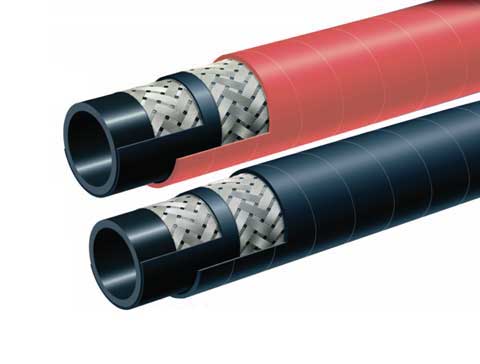
Chemical transfer hose with a high-purity UPE liner, resistant to 98% of common chemicals
release date:2026-11-19 09:33:37
reading volume:
share:
In sectors such as fine chemicals, new materials for lithium batteries, and pharmaceutical intermediates, fluid transport often involves highly acidic, alkaline, or corrosive liquid chemicals circulating through pipelines under high pressure or suction. Standard rubber or PVC hoses, when exposed to such aggressive media, can suffer from inner-liner swelling, cracking, or permeation-related leakage within just a few days. This not only leads to the loss of valuable materials but also poses significant safety risks, including chemical burns and environmental contamination. Our chemical-resistant hoses, featuring a high-purity Ultra-High Molecular Weight Polyethylene (UPE) liner, leverage the exceptional corrosion resistance of this material to ensure the stable, long-term transport of 98% of commonly used acids, bases, and solvents—offering a highly reliable, flexible piping solution for handling corrosive fluids in the chemical industry.
 Integrated High-Purity UPE Liner: Superior Corrosion Resistance Across the Board
Most conventional chemical hoses utilize liners made from standard rubber, modified PTFE, or low-purity polyethylene. These materials offer only limited chemical resistance; when exposed to certain highly polar organic solvents or high-concentration acids and bases, they tend to swell and degrade rapidly, failing to meet the requirements for the long-term transport of complex chemical media. In contrast, our chemical-resistant hoses employ an ultra-high-purity UPE material with a molecular weight exceeding 2.5 million. Through an integrated, continuous extrusion process, this material forms a seamless, monolithic inner liner—eliminating the risk of joints or the leaching of impurities—and providing a level of chemical resistance that far surpasses that of conventional liner materials. The high-purity UPE (Ultra-High Molecular Weight Polyethylene) liner features an exceptionally stable molecular structure. At room temperature, it is virtually insoluble in any known organic solvent and exhibits outstanding resistance to a wide range of corrosive media, including 98% concentrated sulfuric acid, concentrated caustic soda (at concentrations above 30%), most organic solvents (such as ketones, esters, and benzene derivatives), and various salts. Even after prolonged immersion in these highly corrosive substances, the liner’s weight change remains below 0.5%—completely avoiding the rapid swelling, degradation, and flaking often seen in conventional rubber liners when exposed to such aggressive media. Furthermore, the ultra-high purity of the liner ensures that no impurities are leached into the high-purity chemicals being transported. This makes it perfectly suited for the clean transfer of lithium-ion battery electrolytes, pharmaceutical intermediates, and high-purity fine chemical raw materials, ensuring that the final product’s purity is not compromised by contaminants introduced from the piping system.
Produced via an integrated, continuous extrusion process, the high-purity UPE liner features an extremely smooth inner surface with a roughness of less than 0.8 μm. When transporting high-viscosity or crystallization-prone chemicals, the medium is unlikely to adhere to or remain on the pipe walls. A brief rinse with a small amount of cleaning solvent is sufficient to completely remove any residual material, effectively preventing cross-contamination when switching between different batches or types of chemicals—an ideal solution for the flexible transport of diverse, small-batch fine chemical products. Additionally, the liner offers superior wear resistance; when handling corrosive slurries containing small amounts of solid particles, its wear rate is only one-third that of a standard PTFE (polytetrafluoroethylene) liner, significantly extending the overall service life of the hose. A patented process—combining specialized plasma surface activation with a transitional bonding layer—is applied between the high-purity UPE liner and the external rubber reinforcement. This effectively resolves the industry-wide challenge of bonding UPE materials to rubber, creating a robust, integrated structure. Even under alternating positive-pressure delivery and negative-pressure suction, the liner remains securely bonded, preventing delamination or collapse (suction-induced deformation). This makes the hose ideally suited for the complex, fluctuating pressure conditions typical of the chemical industry.
A multi-layer composite reinforcement system ensures stable performance across a wide temperature range and varying pressure conditions.
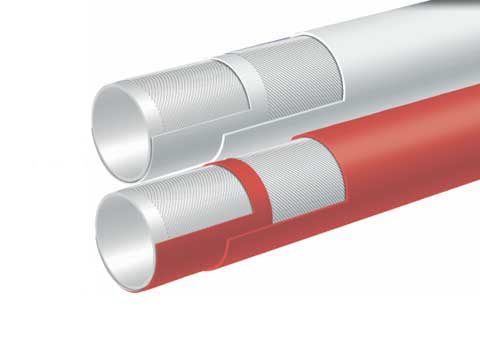
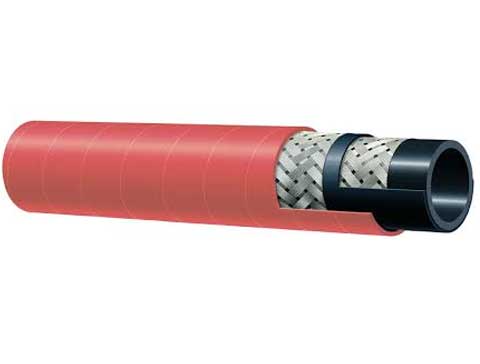
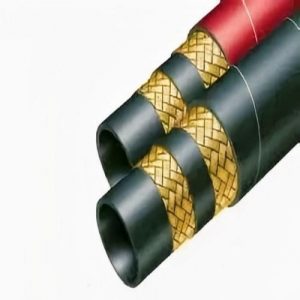
Standard chemical transfer hoses often rely on simple fiber-braided reinforcement, which offers poor resistance to both high pressure and vacuum-induced collapse. Under high-pressure chemical transport or vacuum suction, such hoses are prone to wall bulging or the collapse of the inner liner—failing to meet the rigorous demands of complex chemical processing environments. This chemical hose, featuring a high-purity UPE liner capable of handling 98% of common chemicals, utilizes a multi-layer, optimized composite reinforcement system. By integrating fiber-braided layers with a helical metal wire skeleton, the design ensures consistent, reliable performance under positive pressure, negative pressure (suction), and across a broad temperature spectrum.
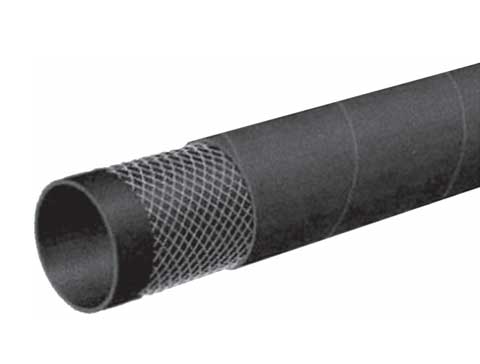
For standard positive-pressure applications, the reinforcement layer employs a multi-layer, interlaced structure of high-strength synthetic polyester fibers. The braiding tension is precisely calibrated via a digital control system, ensuring uniform wall thickness and an even distribution of pressure-induced stress throughout the hose. The finished product boasts a burst pressure exceeding four times its rated working pressure, providing a substantial safety margin that effectively withstands transient pressure surges during chemical transfer, thereby eliminating the risk of sudden hose rupture or leakage. For unloading and feeding operations requiring vacuum suction, the hose features an embedded galvanized spiral steel wire within its reinforcement layer. This ensures that even under high-vacuum conditions—down to -0.09 MPa—the inner liner will not collapse or flatten, maintaining a consistent bore diameter and ensuring an uninterrupted flow of the conveyed medium.
The outer cover is constructed from weather- and age-resistant EPDM rubber, specially formulated with additives to provide resistance against ozone, ultraviolet (UV) radiation, and minor chemical splashes. This allows for long-term outdoor use in chemical processing environments without premature chalking or cracking, providing a robust protective barrier for the internal reinforcement layer and the high-purity UPE (ultra-high molecular weight polyethylene) liner against mechanical damage and corrosive exposure. The outer surface features a textured, fabric-impression finish, which enhances grip and prevents slippage—even in damp chemical plant environments—thereby improving safety for workers when dragging or repositioning the hose.
The multi-layered composite structure is designed to operate within a temperature range of -30°C to +100°C. Throughout this range, the hose’s corrosion resistance, pressure-bearing capacity, and negative-pressure (vacuum) performance remain stable, with no significant degradation due to temperature fluctuations. For applications involving high-temperature chemicals, the material composition can be further upgraded to extend the upper temperature limit, accommodating corrosive media at temperatures up to 130°C. The hose’s flexibility has been specifically optimized, offering a minimum bend radius of just eight times its nominal diameter; this allows for easy routing within the confined spaces of a chemical plant, ensuring that the hose does not develop sharp kinks or "dead spots" that could obstruct the flow of the medium. Designed for full-scenario compliance and cleanliness, this solution drives cost reduction and efficiency improvements throughout the entire lifecycle of chemical fluid transfer. In the chemical industry, the transport of corrosive fluids demands exceptionally high standards for cleanliness and safety. Substandard transfer hoses not only lead to significant material loss but—in the event of a leak—can trigger severe safety and environmental incidents, resulting in losses far exceeding the value of the hoses themselves. This chemical transfer hose, featuring a high-purity UPE (Ultra-High Molecular Weight Polyethylene) liner, is compatible with 98% of common chemicals. It adheres strictly to industry standards for chemical fluid transfer hoses; every single unit undergoes hydrostatic pressure testing and vacuum suction verification before leaving the factory. Each hose is supplied with a comprehensive chemical compatibility chart and a detailed test report, fully satisfying the entry-acceptance requirements for sectors such as fine chemicals and new energy materials.
In fine chemical applications involving corrosive liquids, conventional rubber hoses often fail—due to liner corrosion, swelling, or leakage—within just 1 to 3 months. Frequent replacements drive up procurement costs, while sudden leaks can lead to the loss of entire batches of material and even necessitate emergency safety or environmental responses, incurring additional losses amounting to hundreds of thousands of yuan. By switching to this high-purity UPE-lined hose, the service life can be extended to over two years. This drastically reduces the frequency of hose replacement and eliminates the material waste and safety/environmental risks associated with unplanned leaks. In the transport of high-purity electrolytes for lithium-ion battery materials, the UPE liner’s resistance to impurity leaching ensures the integrity of the electrolyte, preventing product batch rejection caused by contamination from the piping system.
To suit various chemical processing environments, these hoses can be equipped with quick-connect couplings or flange connections made from materials such as PP, PVDF, or stainless steel. All wetted surfaces of these fittings are treated for corrosion resistance, ensuring that leaks do not occur at the connection points. Upon delivery, the hoses are ready for immediate integration with standard industrial interfaces, requiring no complex on-site port modifications. For applications involving the transport of organic solvents with stringent anti-static requirements, the inner liner can be formulated with specialized conductive components. This ensures comprehensive anti-static performance, effectively eliminating the risk of fire or explosion caused by static electricity accumulation during the transfer process. During routine operation and maintenance, the condition of the hose can be readily assessed by inspecting the outer layer for visible signs of wear, bulging, cracking, or aging, and by conducting periodic pressure testing based on the specific characteristics of the conveyed medium. This approach fully complies with the safety and maintenance management standards for fluid transport in the chemical industry.
For users in sectors such as fine chemicals, new energy, advanced materials, and pharmaceuticals, adopting this chemical-resistant hose—featuring a high-purity UPE liner capable of handling 98% of common chemicals—offers significant advantages. It not only substantially reduces the annual procurement and replacement costs for piping systems used to transport corrosive fluids, but also eliminates material waste and the risks of safety or environmental incidents often associated with the frequent corrosion and leakage of standard hoses. It provides a highly reliable, clean, and flexible solution for the transport of 98% of commonly encountered corrosive chemicals.
Previous: