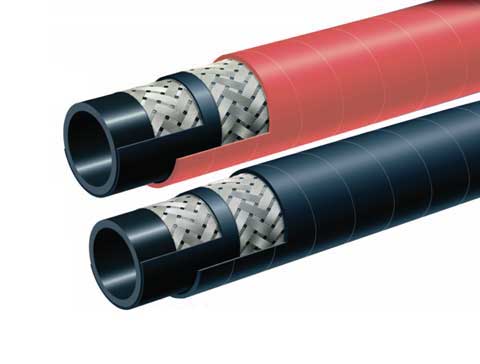
Rubber hose with EPDM lining, resistant to chloride ion ingress and seawater corrosion
release date:2026-11-11 10:04:15
reading volume:
share:
In applications such as seawater transport for coastal industries, fluid transfer in marine engineering, and the handling of chloride-containing fluids in seaside chemical facilities, chloride ions are the primary culprit behind pipeline corrosion. Hoses made from conventional natural rubber or nitrile rubber degrade rapidly when exposed to seawater with high chloride ion concentrations; within months, the hose walls harden, crack, and begin to leak. This not only drives up operation and maintenance costs but also risks environmental and safety incidents caused by fluid leakage. EPDM-lined rubber hoses—designed to resist chloride ion attack and seawater corrosion—utilize ethylene propylene diene monomer (EPDM) as the core lining material. Leveraging its unique molecular structure, EPDM creates a long-lasting protective barrier against chloride ion erosion, offering a highly reliable piping solution for environments involving the transport of seawater with high chloride content.
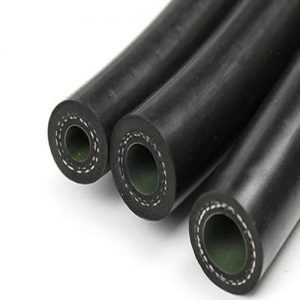 The inherent advantages of the EPDM molecular structure block the path of chloride ion attack at the source.
The molecular backbones of conventional rubber materials contain a large number of unsaturated double bonds. Highly oxidizing agents, such as chloride ions, can readily undergo addition reactions with these double bonds, rapidly severing the polymer chains. This causes the inherently elastic rubber to harden, become brittle, and lose its elasticity within a short period, eventually leading to wall fragmentation and leakage—rendering such materials incapable of long-term, stable service in high-chloride seawater environments. In contrast, the molecular backbone of EPDM is fully saturated; it lacks the vulnerable unsaturated double bonds, thereby blocking the chemical pathway through which chloride ions would otherwise initiate corrosive addition reactions.
When chloride ions come into contact with an EPDM lining, they are unable to trigger rapid chemical reactions. At most, they may induce trace-level free-radical substitution reactions, which occur at such an extremely slow rate that they cause no significant damage to the overall molecular structure of the rubber. Empirical data shows that when immersed in high-chloride seawater, EPDM rubber retains its mechanical properties far better than conventional rubber. Its service life in the presence of chloride-induced corrosion is 5 to 10 times that of standard natural rubber, making it exceptionally well-suited for demanding operating conditions involving prolonged exposure to seawater. EPDM possesses exceptional inherent chemical inertness. It not only exhibits superior resistance to chloride ions but also withstands the combined corrosive effects of the weakly alkaline environment, trace salts, and oxidizing agents typically found in seawater. Unlike conventional rubber, which tends to swell or degrade rapidly upon contact with seawater, EPDM remains stable. Even in hypersaline seawater—where chloride ion concentrations can exceed 18,000 mg/L—the EPDM liner maintains its physical properties without premature degradation, making it perfectly suited for the vast majority of seawater transport applications. This fundamental advantage, rooted in its molecular structure, cannot be replicated in ordinary rubber materials through simple formulation adjustments; it is the core reason why this hose offers long-term resistance to chloride-induced corrosion.
Optimized Multi-Layer Composite Structure for Long-Term Service in Seawater
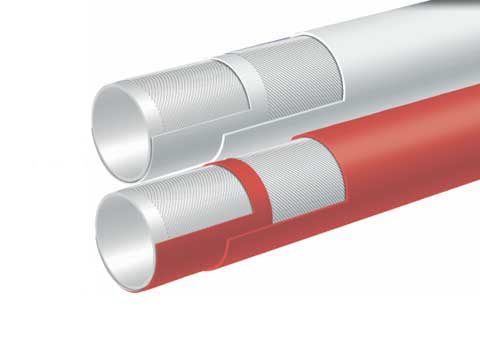
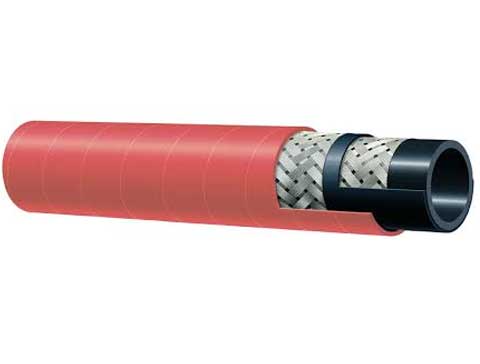
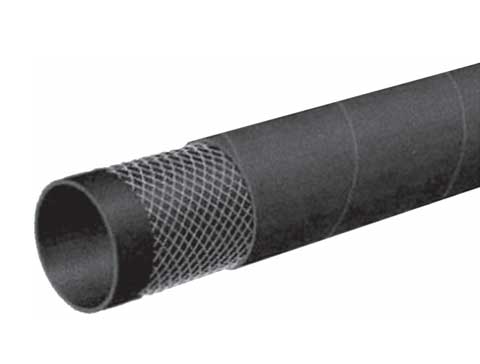
A standalone EPDM liner is insufficient to meet the demands of complex seawater environments; if the outer layers or the reinforcement structure lack adequate corrosion resistance, the hose will fail to reach its intended service life. This seawater-resistant rubber hose features a multi-layer design—from the inner liner and reinforcement layer to the protective outer cover—that has been specifically engineered for seawater conditions, ensuring consistent, long-term corrosion resistance throughout the entire structure.
The EPDM liner is produced via a thickened, integrated extrusion process, resulting in a seamless interior. This eliminates potential weak points where chloride ions could otherwise penetrate the inner structure. The thickness of the liner is optimized for specific operational scenarios, incorporating a generous corrosion allowance to ensure that even with prolonged seawater exposure, the liner will not be breached by corrosion. Furthermore, the EPDM liner features an exceptionally smooth surface, which significantly reduces erosion and abrasion from suspended sediment particles during high-velocity flow. This provides superior wear resistance when transporting seawater containing silt or marine sediment, preventing the liner from thinning prematurely and further extending the overall service life of the hose. The central reinforcement layer utilizes polyester cord fabric or a high-strength synthetic fiber winding structure—both highly resistant to seawater corrosion. This design completely replaces the carbon steel wire reinforcement typically found in conventional rubber hoses, thereby eliminating the root cause of common failures: the rapid rusting of steel wires following seawater ingress, which leads to volumetric expansion, localized bulging, and eventual rupture of the hose wall. The winding process for this reinforcement layer has been precisely optimized to ensure the hose possesses sufficient pressure-bearing capacity for various seawater transport applications, while maintaining excellent flexibility—allowing it to easily conform to complex terrain and bending requirements during installation in offshore engineering projects. The adhesive transition layers, located on either side of the reinforcement, also employ specialized, seawater-resistant bonding agents. This prevents delamination or separation, even in the persistently damp, marine environment, ensuring the structural integrity of the entire composite assembly.
The outermost layer consists of a specially modified rubber compound that is resistant to seawater, salt spray, and ultraviolet (UV) radiation. It remains durable under the high-humidity, salt-laden, and intense UV conditions typical of marine environments, resisting premature chalking or cracking. This layer serves as a robust protective barrier for the internal EPDM liner and the reinforcement structure, shielding them from direct exposure to salt spray and seawater splashes. The entire composite structure has undergone thousands of hours of accelerated testing—involving continuous immersion in seawater—and has remained intact, showing no significant degradation in performance and fully meeting the requirements for long-term service in seawater-handling operations.
Suitable for a wide range of seawater-handling applications, with significantly reduced total lifecycle operating and maintenance costs.
In coastal industrial and offshore engineering sectors, the frequent replacement of conventional rubber hoses—and the associated procurement costs and operational downtime—has long been a major pain point for users. This EPDM-lined, chloride-ion-resistant, and seawater-corrosion-resistant rubber hose offers a service life several times longer than that of standard rubber hoses, delivering comprehensive cost savings and enhanced efficiency throughout its entire lifecycle. In the seawater cooling and transport systems of coastal chemical plants, conventional rubber hoses previously required complete replacement every 1 to 2 years. This not only incurred significant procurement costs but also necessitated the shutdown of the cooling system, disrupting the continuous operation of the entire production line. By switching to these EPDM-lined, seawater-resistant hoses, the service life can be extended to over 5 years. This drastically reduces the frequency of replacements and eliminates production losses caused by unplanned downtime. In land reclamation and marine dredging projects—where hoses are continuously submerged in high-chloride seawater and subjected to the abrasive wear of sediment particles—these hoses offer superior resistance to both chloride-induced corrosion and mechanical abrasion. Their service life far exceeds that of standard dredging hoses, significantly extending replacement intervals and lowering the high labor costs associated with replacing equipment in offshore environments.
In coastal wastewater treatment plants, where sodium hypochlorite is used for disinfection, the medium contains extremely high concentrations of chloride ions. Standard rubber hoses often corrode and fail within just a few months; however, these EPDM-lined hoses remain stable and resistant to such high-concentration chloride environments, making them perfectly suited for transporting highly corrosive, chlorine-containing media. Furthermore, these hoses can be customized to meet specific operational requirements—including diameter, pressure rating, and connection type. Large-diameter versions can be fitted with flanges to facilitate the long-distance transport of high-volume seawater, while smaller-diameter versions can be equipped with quick-connect couplings, offering flexibility for various temporary seawater transport applications.
During routine maintenance, the condition of the hose can be quickly assessed through a simple visual and tactile inspection: lightly scratch the surface of the EPDM lining with a fingernail—if the mark disappears rapidly, the rubber retains its elasticity. If the surface shows signs of "chalking" (where a white, powdery residue rubs off), it indicates that the lining is beginning to suffer from chloride-induced corrosion. At this point, a replacement can be scheduled. This eliminates the need for the frequent, labor-intensive inspections required for standard rubber hoses to identify potential failures. For users operating in seawater environments with high chloride-ion concentrations, selecting this EPDM-lined, seawater-corrosion-resistant rubber hose offers significant advantages: it substantially lowers annual procurement costs for piping and mitigates the environmental risks associated with fluid leakage caused by sudden, corrosion-induced pipe failures. It serves as a durable and reliable barrier against chloride-ion-driven corrosion for a wide range of seawater transport applications.