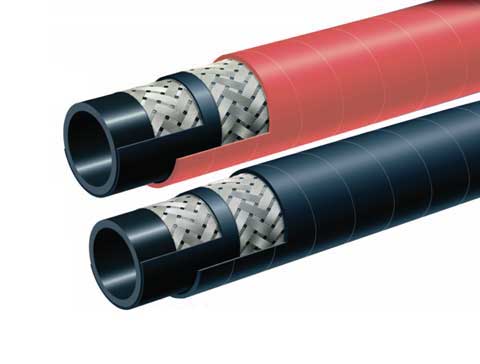
Large-diameter, seawater-corrosion-resistant rubber hoses for marine engineering dredging/sludge discharge
release date:2026-11-11 10:12:20
reading volume:
share:
In marine engineering operations—such as port dredging, land reclamation, and seabed desilting—large-diameter slurry discharge hoses are subjected to both prolonged immersion in highly saline seawater and the continuous transport of high-sediment-content slurry. Standard large-diameter rubber hoses often fail within just a few months due to salt-spray-induced aging of the outer layer, abrasion-through of the inner lining, and corrosion or fracture of the reinforcement structure. Such failures not only incur high offshore replacement costs but also significantly delay the overall progress of marine engineering projects. Our seawater-corrosion-resistant, large-diameter rubber hoses for marine engineering are optimized across every dimension—from the wear-resistant inner lining and pressure-resistant reinforcement to the overall seawater-resistant composition. They are perfectly engineered to withstand the dual extreme conditions of "high abrasion and intense corrosion" inherent in marine dredging, providing a long-service-life, high-capacity solution for slurry transport.
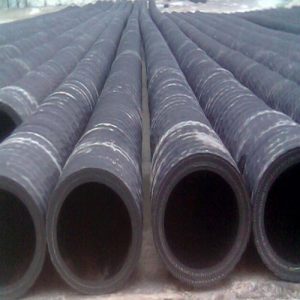 A highly wear-resistant and corrosion-resistant composite inner lining that simultaneously withstands sediment erosion and chloride ion corrosion.
Conventional large-diameter discharge hoses often focus solely on abrasion resistance, neglecting the corrosive impact of chloride ions present in seawater. In the complex environments of marine engineering, the combined effect of continuous sediment erosion and chloride ion corrosion accelerates the degradation of the inner lining, resulting in a service life far shorter than that seen in land-based slurry transport applications. The inner lining of this specialized marine-grade hose utilizes a custom-formulated composite of wear-resistant rubber and modified EPDM. This dual-function design addresses both sediment erosion and chloride ion corrosion, making it ideally suited for the extreme, multi-factor conditions of marine dredging.
The core of the inner lining consists of a blend of highly wear-resistant natural and synthetic rubbers, enhanced with specialized wear-resistant additives. This composition offers superior resistance to sediment erosion compared to standard discharge hoses; when transporting high-concentration slurry with a sediment content of 30%–50%, the service life of this hose is more than three times that of conventional wear-resistant rubber hoses. During the molecular modification of the inner rubber layer, EPDM (ethylene propylene diene monomer) components—known for their corrosion resistance—are incorporated. This significantly increases the saturation level of the polymer backbone, making it highly resistant to direct attack by chloride ions. Consequently, even during long-term exposure to seawater, the liner avoids the rapid swelling, degradation, and embrittlement typically seen in standard wear-resistant rubber. It maintains stable mechanical properties despite the combined effects of abrasion and corrosion.
The liner is produced via an integrated extrusion process, ensuring a seamless, one-piece structure. This completely eliminates the risk of seawater seeping through joints into the internal reinforcement layer. To accommodate the high-velocity flow of slurry in marine dredging operations, the liner’s surface undergoes a specialized treatment to create a smooth, low-friction texture. This reduces direct impact and abrasion from sediment particles, lowers flow resistance for high-concentration slurries, and prevents the accumulation or scaling of particles on the pipe wall. As a result, the effective flow cross-section remains consistent over time, ensuring stable, high-volume discharge efficiency. Furthermore, the liner’s high tear strength effectively withstands the impact and cutting forces of sharp-edged gravel, preventing localized tearing and significantly extending the hose's operational service life.
High-strength, corrosion-resistant composite reinforcement for stable pressure handling in complex marine environments.
In marine dredging applications, these hoses must withstand not only the positive pressure from slurry pumping but also high negative pressures—ranging from -0.08 MPa to -0.1 MPa—during suction operations by dredgers. Moreover, because the hoses are submerged in seawater for extended periods, conventional carbon steel wire reinforcement is highly susceptible to corrosion. The expansion of rust deposits can cause the pipe wall to crack from within, leading to premature failure of the entire hose. The reinforcement layer of this large-bore dredging hose utilizes a high-strength, corrosion-resistant composite structure specifically engineered for marine environments. This design effectively eliminates common issues such as the corrosion and structural collapse—or "flattening"—frequently encountered with standard reinforcement materials in marine operations.
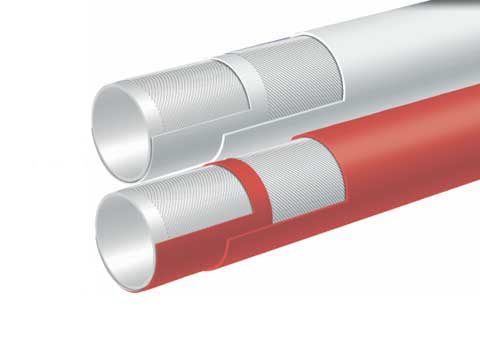
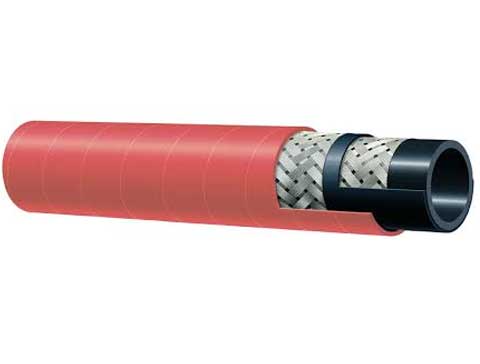
The reinforcement consists of a composite arrangement of multi-layered, high-strength synthetic fiber fabric and corrosion-resistant spiral steel wire. The synthetic fiber fabric is wound at alternating, balanced angles, ensuring an even distribution of internal pressure during the slurry pumping process; this prevents abnormal bulging or bursting of the hose wall under rated operating pressures. The outer spiral steel wire—also corrosion-resistant—is designed specifically for negative-pressure suction conditions. It ensures that the hose maintains its full cross-sectional area even under extreme negative pressures of up to -0.1 MPa, preventing the hose from collapsing or flattening, which would otherwise interrupt the flow of slurry. All metal spiral wires undergo a marine-grade passivation treatment, creating a dense, protective, corrosion-resistant film. Should a small amount of seawater penetrate the reinforcement layer, this film prevents rapid, widespread corrosion, thereby avoiding the common problem where rusting and expanding carbon steel wires cause the hose wall to crack.
Specialized, seawater-resistant adhesive transition layers are applied between the reinforcement and the inner and outer rubber layers. These ensure consistent inter-layer bond strength, even during prolonged immersion in seawater, effectively preventing delamination or the formation of internal blisters—common failure modes in standard rubber hoses. The entire reinforcement structure is engineered for a minimum bend radius of 6 to 8 times the hose diameter, perfectly accommodating the flexible movement of a dredger’s operating boom. As the hose undergoes repeated bending alongside the boom, stress remains uniformly distributed throughout the reinforcement layer, preventing premature failure caused by localized stress concentrations. For certain specialized applications, the reinforcement layer can also incorporate integrated, lightweight buoyant elements. This allows the hose to float on the sea surface, eliminating the need for external underwater pontoons, significantly reducing drag during marine towing operations, and preventing excessive wear on the outer cover that would otherwise result from the hose being dragged along the seabed. Designed for marine engineering applications, this solution significantly reduces overall offshore operation and maintenance costs. Marine dredging environments are complex, and the assembly, disassembly, or replacement of pipelines incurs substantial labor and time costs. A sudden hose failure during operations not only necessitates expensive emergency offshore repairs but also brings the entire dredging line to a standstill, resulting in project losses that far exceed the value of the hose itself. This large-diameter, seawater-corrosion-resistant dredging hose is optimized specifically for the realities of marine engineering—from its coupling design to comprehensive performance validation—delivering cost savings and efficiency gains throughout its entire lifecycle.
The connecting flanges at both ends of the hose feature marine-grade anti-corrosion treatment and are fully compatible with international standards such as ANSI and DIN. The flanges are integrated with the hose’s reinforced end sections, ensuring they remain secure even under high-load transport conditions, with no risk of the ends detaching. The flange sealing surfaces are precision-machined and paired with specialized, seawater-resistant gaskets. This allows for rapid, airtight connections between hoses in offshore environments, preventing leaks even when transporting high-concentration slurry. The system supports flexible assembly across a range of diameters—from 400mm to 1200mm—accommodating various flow requirements and transport distances for diverse projects.
Every hose assembly undergoes rigorous factory testing, including both positive-pressure retention tests and negative-pressure collapse-resistance checks. All specifications fully comply with the performance requirements for marine dredging hoses, ensuring that the equipment is ready for immediate use upon delivery—eliminating the need for any additional performance verification in the field. In practical engineering scenarios, this hose is ideally suited for a wide range of marine dredging and sediment-discharge operations. For large-scale dredgers, where suction and discharge lines are in constant use at sea, the hose’s highly wear-resistant inner lining and seawater-resistant construction extend its service life to several times that of standard dredging hoses—significantly reducing the frequency of replacements throughout a project’s duration. In land-reclamation projects, where long-distance, shore-based discharge pipelines remain submerged in seawater, the hose’s robust corrosion resistance ensures stable, continuous operation, effectively preventing unexpected pipe bursts and costly operational downtime. Furthermore, for temporary sediment-discharge lines used in port dredging, these hoses can be rapidly assembled and deployed; once operations are complete, they can be dismantled and recovered for reuse, greatly enhancing their utility and lowering material costs.
For marine engineering contractors, adopting these large-diameter, seawater-resistant rubber hoses not only boosts the continuous operational efficiency of dredging tasks but also slashes the high maintenance and replacement costs typically incurred in harsh offshore environments. By preventing project delays caused by sudden pipeline failures, these hoses provide a highly reliable solution for high-volume slurry transport in marine dredging and land-reclamation projects.