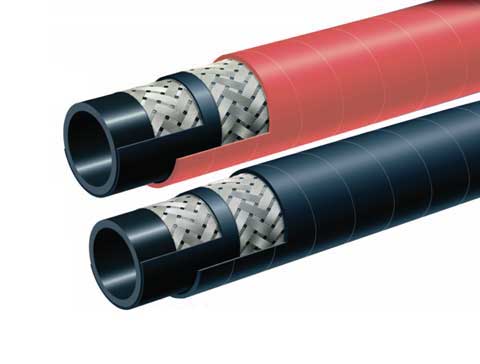
Chemical transfer rubber hose with an ultra-high molecular weight polyethylene (UPE) liner for high wear resistance
release date:2026-11-05 09:40:36
reading volume:
share:
In applications such as the transport of chemical slurries or mixtures of solid particles and corrosive media, the inner lining of standard chemical-resistant rubber hoses is highly susceptible to rapid erosion and abrasion from high-velocity, hard particles. This often leads to the inner layer wearing through and the medium leaking—a scenario that not only drives up maintenance costs due to frequent hose replacements but also creates significant safety risks from the potential leakage of corrosive substances. Chemical-resistant hoses featuring an ultra-high-molecular-weight polyethylene (UPE) liner combine the exceptional wear resistance of UPE with the flexibility and pressure-bearing capacity of traditional rubber hoses. Specifically engineered for high-abrasion, corrosive environments, these hoses serve as a key solution for significantly extending service life in such demanding transport applications.
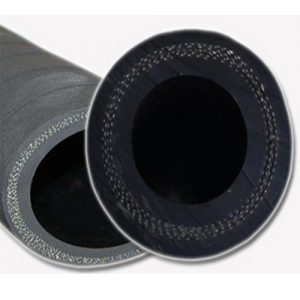 A specialized UPE liner: An abrasion-resistant core that outperforms standard rubber
Even when modified for wear resistance, conventional rubber materials remain vulnerable to rapid surface erosion and thinning when subjected to the long-term, high-velocity impact of hard solid particles. In contrast, UPE—thanks to its unique molecular structure—offers wear resistance far superior to that of standard engineering plastics or wear-resistant rubber, making it the ideal material for the inner lining of these hoses.
With a molecular weight reaching into the millions, UPE’s exceptionally long molecular chains result in a very low coefficient of friction and outstanding resistance to impact and cutting. Under identical operating conditions, its service life is 6–8 times that of standard wear-resistant rubber and 3–4 times that of conventional engineering plastics. When a corrosive medium containing hard particles flows at high speed, the low-friction surface of the UPE liner minimizes the cutting force exerted by the particles against the hose wall. This prevents the particles from rapidly wearing away the material—as they would with standard rubber—thereby significantly slowing the rate of wear on the inner lining. UPE (Ultra-High Molecular Weight Polyethylene) possesses exceptional chemical inertness. With the exception of a very limited number of strong oxidizing agents, it remains resistant to corrosion from the vast majority of acids, bases, salts, and conventional organic solvents. Unlike standard rubber linings, which may swell or degrade after prolonged exposure to chemical media, UPE offers a perfect combination of superior wear resistance and robust corrosion resistance.
Unlike some products on the market that utilize a simplified spray-on wear-resistant coating, this hose features a continuous, seamless UPE liner that extends from one end to the other. This design eliminates the risks of localized delamination or uneven thickness—common issues associated with spray-on coatings. The thickness of the liner is precisely engineered to provide a substantial safety margin for high-wear operating conditions; it ensures an exceptionally long service life, even when subjected to the continuous erosion of slurries with high solids content, effectively preventing the risk of localized wear-through. Furthermore, the inner surface of the UPE liner is extremely smooth, which minimizes the adhesion of particles and the formation of scale. This prevents issues such as a reduction in the effective flow cross-section or increased flow resistance over time, ensuring consistent, high-efficiency transport.
A reinforced rubber composite structure that balances flexibility, pressure resistance, and deformation resistance.
While rigid, pure UPE piping offers excellent wear resistance, it lacks flexibility and has limited pressure-bearing capacity, making it unsuitable for the complex, flexible connection requirements often found in chemical processing environments. This hose integrates a UPE liner with a reinforced rubber structure, combining the superior wear and corrosion resistance of UPE with the high pressure-bearing capacity and flexibility of traditional rubber hoses—making it perfectly suited for complex industrial applications.
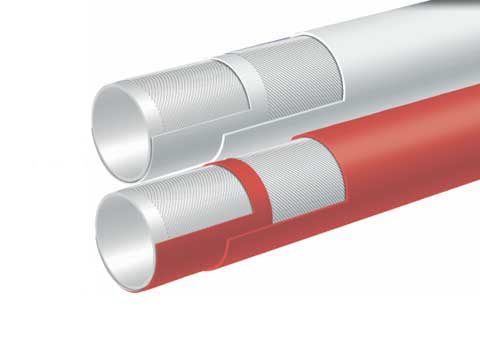
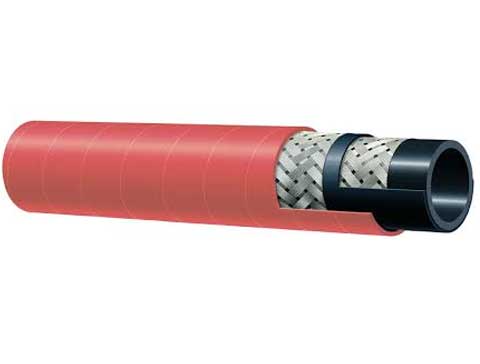
A specialized transition-bonding process is employed between the UPE liner and the outer rubber reinforcement layer. The surface of the UPE liner undergoes a dedicated activation treatment, creating a high-strength, integrated bond between the UPE and the rubber. This effectively prevents the liner from delaminating or separating from the outer rubber layer, even after long-term use. The central reinforcement layer features a composite braided structure of high-strength synthetic fibers and flexible steel wire. By precisely controlling the braiding tension and density, this layer provides stable pressure-bearing support, enabling the hose to cover a wide pressure range—from low to medium-high—to suit various operating conditions. It fully meets the requirements for the pressurized transport of most chemical slurries, effectively preventing the issues of insufficient pressure resistance or deformation (such as bulging) often encountered with pure UPE (ultra-high-molecular-weight polyethylene) piping.
The outer cover is crafted from a specially modified rubber that offers superior resistance to abrasion, aging, and chemical-laden atmospheres. In the complex environments of chemical processing facilities, it withstands wear from being dragged across the floor and accidental impacts from equipment, while also resisting long-term degradation caused by airborne acid/alkali mists and ozone. This prevents premature cracking, aging, or peeling of the outer layer, providing comprehensive protection for the internal reinforcement and the UPE liner, thereby ensuring the hose does not fail prematurely due to external damage. The composite structure has been mechanically optimized to maintain a high pressure-bearing capacity while ensuring a practical bending radius. Being more flexible than rigid UPE piping, it can be easily routed through complex equipment layouts without the need for extensive cutting or welding—significantly reducing on-site installation labor. Furthermore, it absorbs vibrations generated by operating equipment, eliminating the risk of stress-induced fractures often associated with rigid connections.
Adaptable to a wide range of operating conditions, significantly reducing maintenance costs in high-wear environments.
The performance characteristics of this UPE-lined, highly abrasion-resistant chemical hose effectively address the challenges of transporting abrasive or corrosive materials—tasks that many standard hoses cannot handle over the long term. In a variety of industrial settings, it delivers a service life far exceeding that of traditional piping systems, substantially lowering total lifecycle maintenance costs. In the fine chemical industry, where catalyst slurries are transported, these hoses can withstand the dual challenge of corrosive chemical media and highly abrasive catalyst particles. Unlike standard rubber hoses, which can wear through in just a few weeks, these hoses offer a service life extending to several years. In mining and chemical operations—such as the transport of corrosive, high-solids-content tailings slurries—the UPE (Ultra-High Molecular Weight Polyethylene) liner resists both acid corrosion and rapid abrasion from mineral particles, significantly reducing the frequency of hose replacement in remote, field-based environments. Similarly, in wastewater treatment, where sludge contains highly abrasive solid particles, these hoses resist erosion and various corrosive components, ensuring stable, long-term operation without the need for frequent replacement.
Furthermore, the UPE liner is inherently non-stick and resistant to microbial growth, making it suitable for transporting granular materials in the food and pharmaceutical industries, where strict cleanliness standards are required. For chemical enterprises, the primary benefit of adopting these UPE-lined, highly wear-resistant hoses is a substantial reduction in procurement and replacement costs in high-abrasion applications. More importantly, it prevents emergency production line shutdowns caused by premature hose wear and leakage, while also averting safety and environmental incidents resulting from the escape of corrosive media. Over the entire product lifecycle, the total cost of ownership is far lower than that of conventional wear-resistant chemical hoses. During routine maintenance, simple checks—such as verifying the internal bore diameter and inspecting the outer cover for wear—allow operators to assess the remaining thickness of the liner, enabling proactive replacement planning and effectively eliminating the risk of sudden leaks.
As the chemical industry places increasing emphasis on efficiency and safety in high-abrasion and corrosive transport environments, these innovative hoses—which combine the advantages of specialized engineering plastics with traditional rubber hose construction—are gradually replacing standard wear-resistant hoses. They provide a more durable, cost-effective, and safer fluid-handling solution for a wide range of complex, high-abrasion chemical transport applications.
Previous: