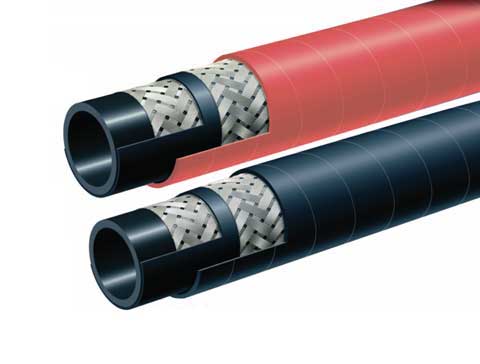
Server liquid cooled hose EPDM resistant to ethylene glycol working pressure of 2.0MPa, specifically designed for data center cabinets
release date:2026-10-08 09:25:02
reading volume:
share:
 In AI computing clusters and high-density data centers, coolant hoses act as the "capillaries" of servers, delivering precise cooling to every GPU and CPU. After the power density of a single cabinet exceeds 50kW, the temperature and pressure of the coolant rise synchronously. If the pipeline material is incompatible with ethylene glycol working fluid, the swelling and detachment of the inner wall will directly block the microchannels of the cold plate, leading to heat dissipation failure. EPDM ethylene glycol resistant liquid cooled hose is a specialized solution for this working condition - using saturated molecular chains of EPDM rubber to resist long-term corrosion of ethylene glycol, using fiber woven reinforced structure to carry a working pressure of 2.0MPa, and UL94 V0 flame retardant rating to meet data center safety regulations. It has become a reliable channel for "medium resistance, pressure bearing, flame retardant safety" in cabinet level liquid cooling systems.
1、 Molecular code of EPDM resistant to ethylene glycol: from "compatibility" to "low precipitation"
The cold plate liquid cooling system in data centers generally uses 20% -30% ethylene glycol or propylene glycol aqueous solution as the cooling working fluid. This medium has swelling and extraction effects on ordinary rubber, and long-term contact can cause inner layer hardening and volume expansion. The precipitated particles and ions circulate with the coolant into the cold plate microchannels, accelerating scaling and blockage.
The main chain of EPDM (Ethylene Propylene Diene Monomer Rubber) is composed of saturated carbon carbon single bonds, without unsaturated double bonds that are susceptible to chemical attacks, and has natural resistance to penetration of ethylene glycol based coolant. According to the technical requirements of the data center liquid cooled hose group standard, the EPDM inner layer has a hardness change of ≤ 10, a tensile strength change rate of ≤ -20%, and a volume change rate of ≤ 10% in a 25% ethylene glycol solution at 100 ℃ for 168 hours. This quantitative indicator ensures that the hose will not accelerate aging due to medium erosion throughout the entire lifecycle of the liquid cooling system.
More importantly, low precipitation and high purity are required. The standard clearly stipulates that the zinc, aluminum, and halogen content limits of the inner layer adhesive are 0, which eliminates the risk of metal ions and halogen precipitation contaminating the coolant from the source. By using a peroxide sulfurization system instead of traditional sulfur sulfurization, residual additives such as zinc oxide (zinc white) are avoided. Combined with a zinc free formula, the conductivity of the coolant remains stable during long-term operation of the hose, meeting the cleanliness requirements for 7 × 24-hour continuous operation of data centers.
2、 2.0MPa pressure bearing and structural design
The working pressure level of the liquid cooled hose needs to match the comprehensive requirements of the CDU pumping system and pipeline resistance. CEJN and other mainstream products set the maximum working pressure to 10-20 bar (1-2MPa), covering the typical pressure range of liquid cooling circuits in data centers. Taking the 1-inch specification as an example, a working pressure of 2.0MPa corresponds to a burst pressure of 6.0MPa (three times the working pressure), providing ample safety redundancy.
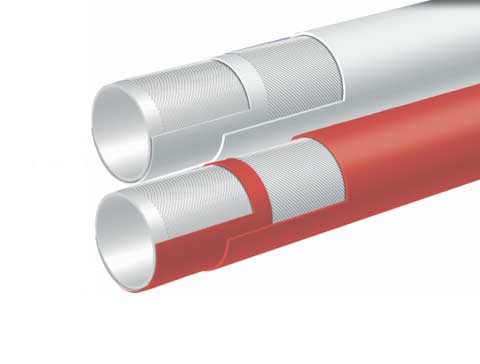
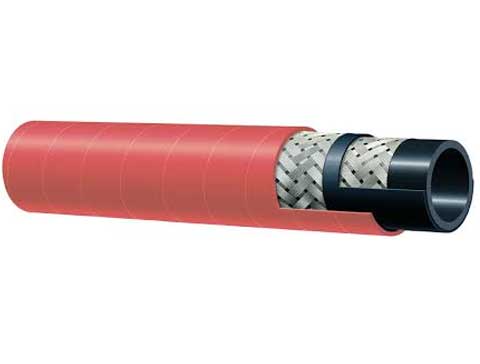
The reinforcement layer adopts a high-strength synthetic fiber weaving structure, which endows the hose with dimensional stability under compression. The 1-2 layers of synthetic fiber woven reinforcement layer work together with the EPDM inner layer to maintain the circular cross-section of the hose from deformation during pressure pulsation caused by pump start stop and valve switching. At the same time, the fiber woven structure endows the hose with excellent flexibility and anti twisting performance. The minimum bending radius can be controlled within the range of 2-4 times the pipe diameter, and it can be flexibly laid in the compact channel where power cables, optical fibers, and liquid cooling pipelines run parallel in the cabinet.
The wide temperature range adaptability covers the full scenario requirements of liquid cooling systems. The working temperature range of the EPDM inner layer is -40 ℃ to+120 ℃, which not only meets the outlet temperature of the server cold plate (usually 40-60 ℃), but also adapts to the temperature shock during the start and stop of the pump unit. The outer rubber layer is made of weather resistant EPDM formula, which is not easily cracked due to ozone or ultraviolet aging during long-term operation in the computer room environment.
3、 Cabinet adaptation and safety specifications
The liquid cooled hoses inside the data center cabinets must meet the triple requirements of flame retardant safety, fast connection, and space adaptation. UL94 V0 flame retardant rating is a mandatory requirement for non-metallic pipelines in data centers - hoses must self extinguish within 10 seconds of encountering an open flame and not produce ignition droplets to prevent them from becoming a path for flame spread. Some products have also passed the UL224 VW-1 vertical combustion test, with a higher safety level.
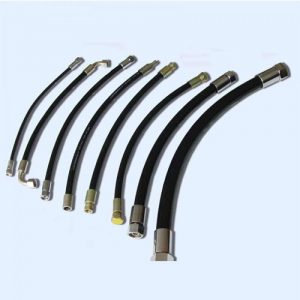
The matching of quick connectors is a key link in maximizing the performance of hoses. Both ends of the hose are pre installed with UQD quick couplings that comply with OCP open standards, using EPDM seals and red blue dual color markings for liquid supply/return direction. It supports "one handed second level connection" and "dry disconnection", and there is no coolant leakage during the entire insertion and removal process, protecting precision electronic devices from liquid damage. The anti misoperation positioning structure ensures that the joint can only be inserted in the correct direction to avoid sealing failure caused by misoperation.
In terms of long-term reliability verification, the liquid cooled hoses in the data center need to undergo 250000 pressure pulses and high and low temperature cycling tests to verify their fatigue life under pump unit start stop and temperature fluctuations. The pressure pulse fatigue index of industry-leading products requires more than 500000 cycles, and the long-term operational reliability needs to meet the requirement of 10000 hours of performance degradation ≤ 5%.
In summary, the EPDM ethylene glycol resistant liquid cooled hose perfectly meets the systematic requirements of the data center cabinet level liquid cooling system for "medium resistance, pressure bearing, and flame retardant safety" through its three core technologies: the ethylene glycol chemical inertness resistance of its ternary ethylene propylene rubber molecular chain, the 2.0MPa pressure resistance and anti twist flexibility reinforced by fiber weaving, and the safety adaptation of UL94 V0 flame retardant and UQD quick connector matching. From the compatibility verification of a 25% ethylene glycol solution at 100 ℃ for 168 hours to the cleanliness control of zero precipitation of zinc aluminum halogens, from 250000 pulse fatigue tests to the convenient operation and maintenance of single handed second level connections, the design of each layer of EPDM rubber and each reinforcing fiber is aimed at the same goal: to provide reliable protection for liquid cooling systems without corrosion, leakage, and combustion assistance in an AI computing power cabinet that operates continuously for 7 × 24 hours.
In AI computing clusters and high-density data centers, coolant hoses act as the "capillaries" of servers, delivering precise cooling to every GPU and CPU. After the power density of a single cabinet exceeds 50kW, the temperature and pressure of the coolant rise synchronously. If the pipeline material is incompatible with ethylene glycol working fluid, the swelling and detachment of the inner wall will directly block the microchannels of the cold plate, leading to heat dissipation failure. EPDM ethylene glycol resistant liquid cooled hose is a specialized solution for this working condition - using saturated molecular chains of EPDM rubber to resist long-term corrosion of ethylene glycol, using fiber woven reinforced structure to carry a working pressure of 2.0MPa, and UL94 V0 flame retardant rating to meet data center safety regulations. It has become a reliable channel for "medium resistance, pressure bearing, flame retardant safety" in cabinet level liquid cooling systems.
1、 Molecular code of EPDM resistant to ethylene glycol: from "compatibility" to "low precipitation"
The cold plate liquid cooling system in data centers generally uses 20% -30% ethylene glycol or propylene glycol aqueous solution as the cooling working fluid. This medium has swelling and extraction effects on ordinary rubber, and long-term contact can cause inner layer hardening and volume expansion. The precipitated particles and ions circulate with the coolant into the cold plate microchannels, accelerating scaling and blockage.
The main chain of EPDM (Ethylene Propylene Diene Monomer Rubber) is composed of saturated carbon carbon single bonds, without unsaturated double bonds that are susceptible to chemical attacks, and has natural resistance to penetration of ethylene glycol based coolant. According to the technical requirements of the data center liquid cooled hose group standard, the EPDM inner layer has a hardness change of ≤ 10, a tensile strength change rate of ≤ -20%, and a volume change rate of ≤ 10% in a 25% ethylene glycol solution at 100 ℃ for 168 hours. This quantitative indicator ensures that the hose will not accelerate aging due to medium erosion throughout the entire lifecycle of the liquid cooling system.
More importantly, low precipitation and high purity are required. The standard clearly stipulates that the zinc, aluminum, and halogen content limits of the inner layer adhesive are 0, which eliminates the risk of metal ions and halogen precipitation contaminating the coolant from the source. By using a peroxide sulfurization system instead of traditional sulfur sulfurization, residual additives such as zinc oxide (zinc white) are avoided. Combined with a zinc free formula, the conductivity of the coolant remains stable during long-term operation of the hose, meeting the cleanliness requirements for 7 × 24-hour continuous operation of data centers.
2、 2.0MPa pressure bearing and structural design
The working pressure level of the liquid cooled hose needs to match the comprehensive requirements of the CDU pumping system and pipeline resistance. CEJN and other mainstream products set the maximum working pressure to 10-20 bar (1-2MPa), covering the typical pressure range of liquid cooling circuits in data centers. Taking the 1-inch specification as an example, a working pressure of 2.0MPa corresponds to a burst pressure of 6.0MPa (three times the working pressure), providing ample safety redundancy.
The reinforcement layer adopts a high-strength synthetic fiber weaving structure, which endows the hose with dimensional stability under compression. The 1-2 layers of synthetic fiber woven reinforcement layer work together with the EPDM inner layer to maintain the circular cross-section of the hose from deformation during pressure pulsation caused by pump start stop and valve switching. At the same time, the fiber woven structure endows the hose with excellent flexibility and anti twisting performance. The minimum bending radius can be controlled within the range of 2-4 times the pipe diameter, and it can be flexibly laid in the compact channel where power cables, optical fibers, and liquid cooling pipelines run parallel in the cabinet.
The wide temperature range adaptability covers the full scenario requirements of liquid cooling systems. The working temperature range of the EPDM inner layer is -40 ℃ to+120 ℃, which not only meets the outlet temperature of the server cold plate (usually 40-60 ℃), but also adapts to the temperature shock during the start and stop of the pump unit. The outer rubber layer is made of weather resistant EPDM formula, which is not easily cracked due to ozone or ultraviolet aging during long-term operation in the computer room environment.
3、 Cabinet adaptation and safety specifications
The liquid cooled hoses inside the data center cabinets must meet the triple requirements of flame retardant safety, fast connection, and space adaptation. UL94 V0 flame retardant rating is a mandatory requirement for non-metallic pipelines in data centers - hoses must self extinguish within 10 seconds of encountering an open flame and not produce ignition droplets to prevent them from becoming a path for flame spread. Some products have also passed the UL224 VW-1 vertical combustion test, with a higher safety level.
The matching of quick connectors is a key link in maximizing the performance of hoses. Both ends of the hose are pre installed with UQD quick couplings that comply with OCP open standards, using EPDM seals and red blue dual color markings for liquid supply/return direction. It supports "one handed second level connection" and "dry disconnection", and there is no coolant leakage during the entire insertion and removal process, protecting precision electronic devices from liquid damage. The anti misoperation positioning structure ensures that the joint can only be inserted in the correct direction to avoid sealing failure caused by misoperation.
In terms of long-term reliability verification, the liquid cooled hoses in the data center need to undergo 250000 pressure pulses and high and low temperature cycling tests to verify their fatigue life under pump unit start stop and temperature fluctuations. The pressure pulse fatigue index of industry-leading products requires more than 500000 cycles, and the long-term operational reliability needs to meet the requirement of 10000 hours of performance degradation ≤ 5%.
In summary, the EPDM ethylene glycol resistant liquid cooled hose perfectly meets the systematic requirements of the data center cabinet level liquid cooling system for "medium resistance, pressure bearing, and flame retardant safety" through its three core technologies: the ethylene glycol chemical inertness resistance of its ternary ethylene propylene rubber molecular chain, the 2.0MPa pressure resistance and anti twist flexibility reinforced by fiber weaving, and the safety adaptation of UL94 V0 flame retardant and UQD quick connector matching. From the compatibility verification of a 25% ethylene glycol solution at 100 ℃ for 168 hours to the cleanliness control of zero precipitation of zinc aluminum halogens, from 250000 pulse fatigue tests to the convenient operation and maintenance of single handed second level connections, the design of each layer of EPDM rubber and each reinforcing fiber is aimed at the same goal: to provide reliable protection for liquid cooling systems without corrosion, leakage, and combustion assistance in an AI computing power cabinet that operates continuously for 7 × 24 hours.
Previous: