API Oil Drilling and Production Hose – Rotary Drilling Mud Hose – 4-Layer Steel Wire Spiral – 5000 psi Working Pressure
release date:2026-10-08 09:54:28
reading volume:
share:
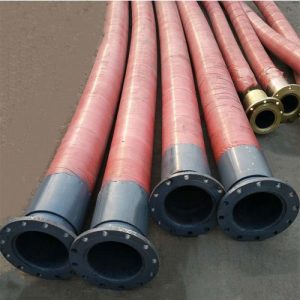 In rotary oil drilling operations, the mud circulation system functions much like the "circulatory system" of the drilling rig, while the rotary drilling mud hose serves as the flexible connection component within this system that endures the highest pressures and harshest operating conditions. The combination of three major challenges—a working pressure of 5,000 psi (approx. 34.5 MPa), continuous erosion from rock cuttings in the mud, and dynamic loads generated by top-drive rotation—places extreme demands on the hose's structural integrity and fatigue life. The API 7K rotary drilling mud hose, reinforced with four layers of spiraled steel wire, is an engineered solution designed specifically for these conditions. It utilizes a pressure-bearing framework constructed from precision-wound steel wire layers, ensures design safety margins in compliance with API 7K standards, and provides dynamic compensation and vibration damping through its flexible connection between the standpipe and the top drive, making it an indispensable "high-pressure flexible hub" in the drilling mud circulation system.
I. 5,000 psi Pressure Rating: The "Safety Benchmark" of API 7K Class D Specifications
API Spec 7K is a standard established by the American Petroleum Institute (API) for drilling and well-servicing equipment; it sets clear technical thresholds regarding pressure ratings, flexibility classes, and safety factors for rotary drilling hoses. The 5,000 psi rating corresponds to the "Class D" pressure category within the specification. This is the standard configuration for medium-to-deep drilling operations, covering the mud pumping requirements of the majority of onshore and offshore drilling rigs.
Class D hoses are subject to a verification pressure of 1.5 times the working pressure (7,500 psi) and a minimum burst pressure of 2.5 times the working pressure (12,500 psi). This pressure hierarchy provides an ample safety margin against the transient overpressure and mud pump pulsation shocks that may occur during drilling. Taking the 2-inch specification as an example—featuring an outer diameter of 75 mm, a linear weight of approximately 6.4 kg/m, and a minimum bending radius of 800 mm—these parameters demonstrate an optimal engineering balance between pressure-bearing capacity and installation flexibility. API 7K also classifies the dynamic service capability of hoses using FSL (Flexibility Service Level) ratings. FSL 1 is suitable for basic design validation for standard top-drive operations, while FSL 2—which requires additional high-frequency impulse pressure testing—is designed for more demanding conditions involving frequent rotation and pressure fluctuations. Users can select the appropriate flexibility level based on the actual load intensity of the drilling operation, ensuring the hose maintains fatigue resistance throughout its expected service life.
II. 4-Layer Steel Wire Winding: The Structural Core for Impulse and Pressure Resistance
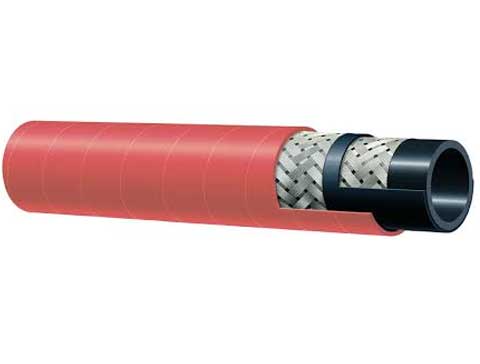
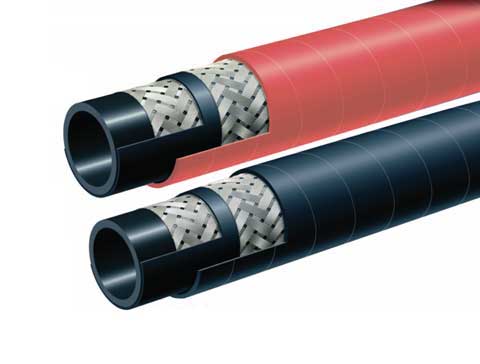
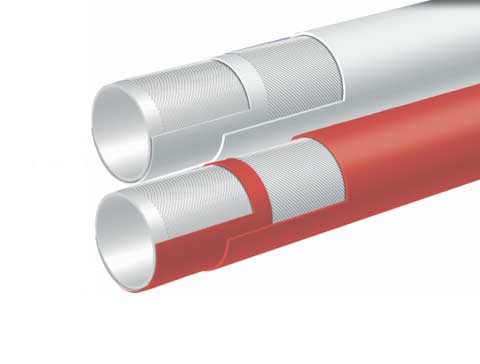
For 5,000 psi-rated rotary drilling mud hoses, the reinforcement layer utilizes a multi-layer, high-strength steel wire spiral winding structure; this is the core technical approach to achieving a design that "withstands pressure without bulging and resists fatigue during bending."
The mechanical logic behind the four-layer steel wire design relies on "layered load-bearing and synergistic deformation." Each layer is wound at a precisely calculated helical angle: the inner layers utilize a steeper angle to provide radial support, resisting bulging deformation under high pressure, while the outer layers employ a shallower angle to form an axial tensile framework, bearing the tensile loads from top-drive movement and the torsional loads induced by rotation. A high-adhesion formulation bonds the layers into a robust, unified structure that deforms synergistically under impulse loads, preventing interlayer delamination caused by stress concentration. The steel wire is made of high-toughness galvanized material and is wound with uniform density and consistent tension; this not only enhances high-pressure tolerance but also accommodates the rotation, bending, and vibration inherent in drilling operations.
The inner rubber layer comes into direct contact with drilling mud, enduring continuous erosion from rock cuttings and sand particles—as well as chemical attack from additives—found in both water-based and oil-based muds. Modern products offer a range of liner options, including HNBR (Hydrogenated Nitrile Butadiene Rubber), UPE (Ultra-High Molecular Weight Polyethylene), or PTFE. HNBR enhances resistance to hydrogen sulfide corrosion and high temperatures while maintaining oil resistance by hydrogenating the unsaturated double bonds in its molecular chain; UPE offers wear resistance six to seven times that of steel, making it particularly suitable for deep-well drilling operations involving high sand content in the drilling mud.
The outer rubber layer utilizes wear- and weather-resistant synthetic rubber blended with anti-ozone and anti-aging additives, enabling it to withstand temperature fluctuations, UV exposure, oil contamination, and abrasion from sand and rock common at drilling sites.
III. Adaptation to Standpipe Applications: From Dynamic Compensation to Connection Safety
The four-layer steel-wire-reinforced mud hose performs two core functions within the drilling system: first, it serves as a flexible connection between the top of the standpipe and the top drive or rotary device, compensating for displacement as the drill string is raised or lowered; second, it acts as a flexible link between the mud pump and the base of the standpipe, absorbing pump vibrations and dampening pressure pulsations.
Dynamic displacement compensation is a specific requirement for hoses used in standpipe applications. During drilling, the top drive moves vertically with the drill string, creating continuous relative displacement against the standpipe fixed to the derrick. Rigid connections cannot accommodate this movement; in contrast, the rotary hose effectively absorbs displacement and cushions shocks through the elastic deformation of its multi-layer reinforcement structure, protecting the standpipe system and top drive equipment from damage caused by abnormal stress.
The reliability of end connections is another critical factor in ensuring system safety. Rotary hoses rated for 5,000 psi typically feature 4-inch Fig. 1003 hammer union fittings, attached to the hose body via a swaging process. The Fig. 1003 union utilizes a misalignment-tolerant design, allowing for a total angular adjustment of up to 15°, which accommodates the alignment challenges often encountered during top-drive operations. The fittings employ a metal-to-metal seal supplemented by an O-ring, ensuring zero leakage even under 5,000 psi of high pressure. Both ends are equipped with safety chains and clamps; the safety chains are made of galvanized steel wire with a diameter of at least 10 mm, effectively preventing fitting detachment and further enhancing operational safety. Regarding installation specifications, the API 7K standard clearly defines the minimum bend radii for these hoses: 800 mm for the 2-inch size, and 1,200 mm for both the 3.5-inch and 4-inch sizes. During installation, it is essential to ensure the bend radius does not fall below these rated values to prevent damage to the reinforcement layers caused by sharp bends. In areas subject to high-frequency vibration—such as mud pump outlets—specialized clamps and vibration-dampening devices should be used to secure the hose and minimize fatigue damage.
In summary, the API 7K rotary drilling mud hose—featuring four-layer steel wire winding and a 5,000 psi working pressure—perfectly meets the rigorous demands of oil drilling mud circulation systems for high-pressure tolerance, dynamic reliability, and secure connections. This performance is driven by three core technical attributes: a rated load capacity of 5,000 psi (Class D), a multi-layer steel wire reinforced structure designed to withstand pressure pulses, and dynamic compensation capabilities for flexible standpipe connections. From the 12,500 psi burst pressure safety margin and precision four-layer wire winding to the rapid connection provided by Fig 1003 hammer unions and the anti-separation protection of dual safety chains, every technical detail serves a single objective: amidst the roar of drilling rigs on towering derricks, to provide a reliable, flexible conduit for high-pressure mud transport that withstands pressure surges and continuous rotation.
In rotary oil drilling operations, the mud circulation system functions much like the "circulatory system" of the drilling rig, while the rotary drilling mud hose serves as the flexible connection component within this system that endures the highest pressures and harshest operating conditions. The combination of three major challenges—a working pressure of 5,000 psi (approx. 34.5 MPa), continuous erosion from rock cuttings in the mud, and dynamic loads generated by top-drive rotation—places extreme demands on the hose's structural integrity and fatigue life. The API 7K rotary drilling mud hose, reinforced with four layers of spiraled steel wire, is an engineered solution designed specifically for these conditions. It utilizes a pressure-bearing framework constructed from precision-wound steel wire layers, ensures design safety margins in compliance with API 7K standards, and provides dynamic compensation and vibration damping through its flexible connection between the standpipe and the top drive, making it an indispensable "high-pressure flexible hub" in the drilling mud circulation system.
I. 5,000 psi Pressure Rating: The "Safety Benchmark" of API 7K Class D Specifications
API Spec 7K is a standard established by the American Petroleum Institute (API) for drilling and well-servicing equipment; it sets clear technical thresholds regarding pressure ratings, flexibility classes, and safety factors for rotary drilling hoses. The 5,000 psi rating corresponds to the "Class D" pressure category within the specification. This is the standard configuration for medium-to-deep drilling operations, covering the mud pumping requirements of the majority of onshore and offshore drilling rigs.
Class D hoses are subject to a verification pressure of 1.5 times the working pressure (7,500 psi) and a minimum burst pressure of 2.5 times the working pressure (12,500 psi). This pressure hierarchy provides an ample safety margin against the transient overpressure and mud pump pulsation shocks that may occur during drilling. Taking the 2-inch specification as an example—featuring an outer diameter of 75 mm, a linear weight of approximately 6.4 kg/m, and a minimum bending radius of 800 mm—these parameters demonstrate an optimal engineering balance between pressure-bearing capacity and installation flexibility. API 7K also classifies the dynamic service capability of hoses using FSL (Flexibility Service Level) ratings. FSL 1 is suitable for basic design validation for standard top-drive operations, while FSL 2—which requires additional high-frequency impulse pressure testing—is designed for more demanding conditions involving frequent rotation and pressure fluctuations. Users can select the appropriate flexibility level based on the actual load intensity of the drilling operation, ensuring the hose maintains fatigue resistance throughout its expected service life.
II. 4-Layer Steel Wire Winding: The Structural Core for Impulse and Pressure Resistance
For 5,000 psi-rated rotary drilling mud hoses, the reinforcement layer utilizes a multi-layer, high-strength steel wire spiral winding structure; this is the core technical approach to achieving a design that "withstands pressure without bulging and resists fatigue during bending."
The mechanical logic behind the four-layer steel wire design relies on "layered load-bearing and synergistic deformation." Each layer is wound at a precisely calculated helical angle: the inner layers utilize a steeper angle to provide radial support, resisting bulging deformation under high pressure, while the outer layers employ a shallower angle to form an axial tensile framework, bearing the tensile loads from top-drive movement and the torsional loads induced by rotation. A high-adhesion formulation bonds the layers into a robust, unified structure that deforms synergistically under impulse loads, preventing interlayer delamination caused by stress concentration. The steel wire is made of high-toughness galvanized material and is wound with uniform density and consistent tension; this not only enhances high-pressure tolerance but also accommodates the rotation, bending, and vibration inherent in drilling operations.
The inner rubber layer comes into direct contact with drilling mud, enduring continuous erosion from rock cuttings and sand particles—as well as chemical attack from additives—found in both water-based and oil-based muds. Modern products offer a range of liner options, including HNBR (Hydrogenated Nitrile Butadiene Rubber), UPE (Ultra-High Molecular Weight Polyethylene), or PTFE. HNBR enhances resistance to hydrogen sulfide corrosion and high temperatures while maintaining oil resistance by hydrogenating the unsaturated double bonds in its molecular chain; UPE offers wear resistance six to seven times that of steel, making it particularly suitable for deep-well drilling operations involving high sand content in the drilling mud.
The outer rubber layer utilizes wear- and weather-resistant synthetic rubber blended with anti-ozone and anti-aging additives, enabling it to withstand temperature fluctuations, UV exposure, oil contamination, and abrasion from sand and rock common at drilling sites.
III. Adaptation to Standpipe Applications: From Dynamic Compensation to Connection Safety
The four-layer steel-wire-reinforced mud hose performs two core functions within the drilling system: first, it serves as a flexible connection between the top of the standpipe and the top drive or rotary device, compensating for displacement as the drill string is raised or lowered; second, it acts as a flexible link between the mud pump and the base of the standpipe, absorbing pump vibrations and dampening pressure pulsations.
Dynamic displacement compensation is a specific requirement for hoses used in standpipe applications. During drilling, the top drive moves vertically with the drill string, creating continuous relative displacement against the standpipe fixed to the derrick. Rigid connections cannot accommodate this movement; in contrast, the rotary hose effectively absorbs displacement and cushions shocks through the elastic deformation of its multi-layer reinforcement structure, protecting the standpipe system and top drive equipment from damage caused by abnormal stress.
The reliability of end connections is another critical factor in ensuring system safety. Rotary hoses rated for 5,000 psi typically feature 4-inch Fig. 1003 hammer union fittings, attached to the hose body via a swaging process. The Fig. 1003 union utilizes a misalignment-tolerant design, allowing for a total angular adjustment of up to 15°, which accommodates the alignment challenges often encountered during top-drive operations. The fittings employ a metal-to-metal seal supplemented by an O-ring, ensuring zero leakage even under 5,000 psi of high pressure. Both ends are equipped with safety chains and clamps; the safety chains are made of galvanized steel wire with a diameter of at least 10 mm, effectively preventing fitting detachment and further enhancing operational safety. Regarding installation specifications, the API 7K standard clearly defines the minimum bend radii for these hoses: 800 mm for the 2-inch size, and 1,200 mm for both the 3.5-inch and 4-inch sizes. During installation, it is essential to ensure the bend radius does not fall below these rated values to prevent damage to the reinforcement layers caused by sharp bends. In areas subject to high-frequency vibration—such as mud pump outlets—specialized clamps and vibration-dampening devices should be used to secure the hose and minimize fatigue damage.
In summary, the API 7K rotary drilling mud hose—featuring four-layer steel wire winding and a 5,000 psi working pressure—perfectly meets the rigorous demands of oil drilling mud circulation systems for high-pressure tolerance, dynamic reliability, and secure connections. This performance is driven by three core technical attributes: a rated load capacity of 5,000 psi (Class D), a multi-layer steel wire reinforced structure designed to withstand pressure pulses, and dynamic compensation capabilities for flexible standpipe connections. From the 12,500 psi burst pressure safety margin and precision four-layer wire winding to the rapid connection provided by Fig 1003 hammer unions and the anti-separation protection of dual safety chains, every technical detail serves a single objective: amidst the roar of drilling rigs on towering derricks, to provide a reliable, flexible conduit for high-pressure mud transport that withstands pressure surges and continuous rotation.
Previous: