PTFE hose with high temperature resistance of 200 ℃, strong acid and alkali resistance, smooth and non adhesive inner wall, specially designed for chemical transportation
release date:2026-09-02 09:31:33
reading volume:
share:
 In the strong acid conveying lines of chemical plants, high-purity medium pipelines in pharmaceutical workshops, and etching solution circulation systems in the semiconductor industry, the chemical stability and purity of pipelines are the core variables that determine production safety and product quality. Ordinary rubber pipes will carbonize and fail after several hours of erosion by concentrated sulfuric acid or aqua regia, while metal pipes are difficult to balance flexibility and resistance to mixed acid corrosion. PTFE (polytetrafluoroethylene) hose is the "ideal pipeline" for this working condition - it achieves almost "universal" chemical inertness with a carbon fluorine bond molecular structure, covers high-temperature medium transportation and steam cleaning scenarios with a temperature resistance level of over 200 ℃, and ensures medium purity and low flow resistance with an extremely smooth inner wall, becoming a reliable channel for the transportation of highly corrosive media in chemical, pharmaceutical, semiconductor and other fields.
1、 The 'chemical inertness' of PTFE: why it can withstand strong acids and bases
The reason why PTFE (polytetrafluoroethylene) can become the preferred lining material for strong acid and alkali resistant transport pipes is rooted in its unique molecular structure. PTFE molecules are composed of carbon fluorine bonds, and the extremely high electronegativity of fluorine atoms forms a dense "electron shield" around the carbon chain, preventing almost all chemical molecules from reacting with it. This chemical inertness enables PTFE to withstand long-term corrosion from sulfuric acid, hydrochloric acid, hydrofluoric acid, aqua regia, sodium hydroxide solutions, and various organic solvents, and is recognized as one of the "most chemically resistant known materials".
In practical applications, the medium adaptability of PTFE hoses has been fully verified. Whether transporting 98% concentrated sulfuric acid, 37% hydrochloric acid, strong alkaline solution, or in contact with various organic solvents and chloride solutions, the PTFE inner layer maintains chemical stability, without swelling, degradation, or precipitation of pollutants. PTFE hoses have become a standard configuration for transporting highly corrosive media in chemical plants, electroplating production lines, pharmaceutical workshops, and other scenarios. For the transportation of non-conductive media such as oil, coatings, and fuels, anti-static PTFE lining (AS Grade) can also be used. By adding high-purity conductive carbon black, the surface resistance is controlled between 10 ³ and 10 ΩΩ, effectively eliminating the safety risks caused by static electricity accumulation.
2、 200 ℃ temperature resistance and smooth inner wall: dual guarantee from high temperature stability to low flow resistance
The high temperature resistance and smooth inner wall characteristics of PTFE hoses are the two core advantages that distinguish them from other chemical hoses. The continuous working temperature of PTFE body can reach 200 ℃ to 260 ℃, and some products can still maintain flexibility in extremely low temperature environments of -70 ℃, covering the full scenario requirements from low-temperature liquid gas transportation to high-temperature steam tracing pipelines. The PTFE high-pressure chemical hoses from brands such as LETONE have a working temperature range of -30 ℃ to+220 ℃, which is suitable for liquid gas transportation in low-temperature environments and can also withstand high-temperature chemical fluids and periodic steam cleaning (CIP cleaning), greatly expanding their usage scenarios.
Smooth and non adhesive inner wall is another characteristic of PTFE hoses. The friction coefficient of PTFE is extremely low (about 0.04), making it one of the smallest friction coefficients among known solid materials. This feature brings triple engineering benefits: firstly, the fluid transport resistance is extremely low, and under the same conditions, the pressure loss is much lower than that of rough inner pipes, which can effectively reduce pumping energy consumption; Secondly, the smooth inner wall is not easily adhered to colloids, crystals, and particles, avoiding cross contamination caused by the accumulation of media inside the pipe; Thirdly, cleaning and maintenance are convenient, and the flushing and purification time during medium replacement is significantly reduced, which is conducive to quickly switching and transporting different chemicals. In the transportation of viscous media such as paint, adhesives, and high-purity drugs, the anti adhesion properties of PTFE hoses are particularly critical, which can effectively prevent channel shrinkage and flow attenuation caused by pipe wall deposition.
3、 Structural Integration: System Design from Stainless Steel Wire Reinforcement to End Connections
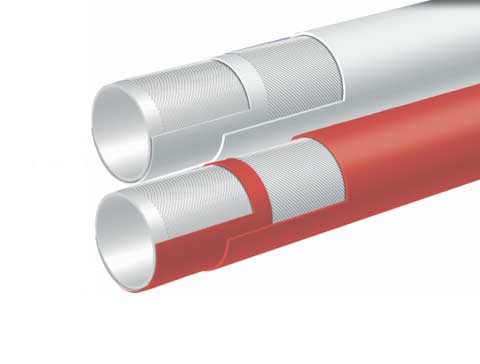
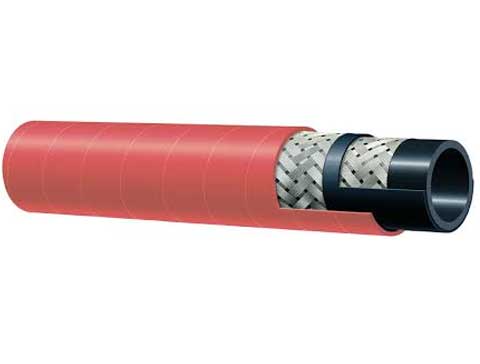
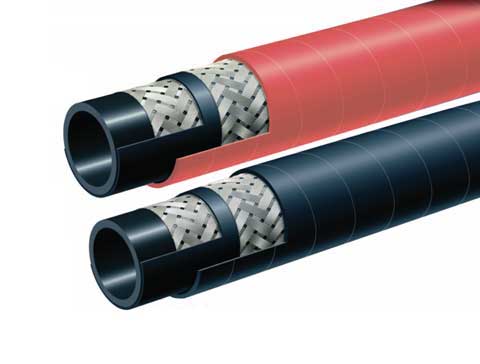
The engineering reliability of PTFE hoses not only depends on the chemical inertness of the material itself, but also on the system integration of the three-layer structure of "inner reinforcement layer outer layer". The inner layer is a PTFE seamless extruded tube, which directly contacts the conveying medium; The reinforcement layer adopts 304 stainless steel wire weaving or high-strength steel wire winding structure, which enables the working pressure of the hose to reach 8-42MPa (about 1160-6090psi), and the burst pressure is more than 4 times the working pressure, meeting the diverse working conditions from vacuum suction to high-pressure conveying. The outer layer is covered with EPDM or FKM rubber, providing additional protection against weather, oil, and wear.
The outer wall of the PTFE inner tube is corrugated to enhance the flexibility of large-diameter hoses, while the inner wall remains smooth to ensure easy cleaning and low flow resistance. The Parker 919J series adds a silicone outer sheath outside the 304 stainless steel braided layer, making the hose not only resistant to high temperatures above 200 ℃, but also capable of steam cleaning, meeting FDA and USP Class VI certification standards, and can simultaneously meet the hygiene requirements of the chemical industry for transporting corrosive media and the food and pharmaceutical industry.
In terms of end connections, PTFE hoses can be equipped with 316 stainless steel flanges, threaded joints, or sanitary grade clamp joints. The PTFE lining is extended to the flange sealing surface through the expansion and flanging process, ensuring that the medium flow path is completely covered by PTFE and completely eliminating the risk of metal parts coming into contact with corrosive media. According to API 16C and other standards, the PTFE lined compression joint is made of stainless steel material and has passed the NACE MR0175 acidic environment test to ensure that the joint does not become a weak point of leakage under strong corrosion conditions.
In summary, PTFE hoses with high temperature resistance of 200 ℃ and strong acid and alkali resistance perfectly meet the systematic needs of industries such as chemical, pharmaceutical, and semiconductor industries for safe transportation, purity assurance, and long-term reliability of highly corrosive media due to their chemical inertness of carbon fluorine bond molecular structure, medium adaptability in the wide temperature range of 200-260 ℃, and low flow resistance and easy cleaning characteristics of extremely smooth inner walls. From high-pressure transportation of 98% concentrated sulfuric acid to pollution-free transfer of high-purity liquid medicine, from -70 ℃ deep cooling to 260 ℃ steam cleaning, the design of each layer of PTFE inner wall and each stainless steel wire is aimed at the same goal: to provide a reliable channel for industrial fluid transportation without leakage, adhesion, and pollution in the face of corrosive media.
In the strong acid conveying lines of chemical plants, high-purity medium pipelines in pharmaceutical workshops, and etching solution circulation systems in the semiconductor industry, the chemical stability and purity of pipelines are the core variables that determine production safety and product quality. Ordinary rubber pipes will carbonize and fail after several hours of erosion by concentrated sulfuric acid or aqua regia, while metal pipes are difficult to balance flexibility and resistance to mixed acid corrosion. PTFE (polytetrafluoroethylene) hose is the "ideal pipeline" for this working condition - it achieves almost "universal" chemical inertness with a carbon fluorine bond molecular structure, covers high-temperature medium transportation and steam cleaning scenarios with a temperature resistance level of over 200 ℃, and ensures medium purity and low flow resistance with an extremely smooth inner wall, becoming a reliable channel for the transportation of highly corrosive media in chemical, pharmaceutical, semiconductor and other fields.
1、 The 'chemical inertness' of PTFE: why it can withstand strong acids and bases
The reason why PTFE (polytetrafluoroethylene) can become the preferred lining material for strong acid and alkali resistant transport pipes is rooted in its unique molecular structure. PTFE molecules are composed of carbon fluorine bonds, and the extremely high electronegativity of fluorine atoms forms a dense "electron shield" around the carbon chain, preventing almost all chemical molecules from reacting with it. This chemical inertness enables PTFE to withstand long-term corrosion from sulfuric acid, hydrochloric acid, hydrofluoric acid, aqua regia, sodium hydroxide solutions, and various organic solvents, and is recognized as one of the "most chemically resistant known materials".
In practical applications, the medium adaptability of PTFE hoses has been fully verified. Whether transporting 98% concentrated sulfuric acid, 37% hydrochloric acid, strong alkaline solution, or in contact with various organic solvents and chloride solutions, the PTFE inner layer maintains chemical stability, without swelling, degradation, or precipitation of pollutants. PTFE hoses have become a standard configuration for transporting highly corrosive media in chemical plants, electroplating production lines, pharmaceutical workshops, and other scenarios. For the transportation of non-conductive media such as oil, coatings, and fuels, anti-static PTFE lining (AS Grade) can also be used. By adding high-purity conductive carbon black, the surface resistance is controlled between 10 ³ and 10 ΩΩ, effectively eliminating the safety risks caused by static electricity accumulation.
2、 200 ℃ temperature resistance and smooth inner wall: dual guarantee from high temperature stability to low flow resistance
The high temperature resistance and smooth inner wall characteristics of PTFE hoses are the two core advantages that distinguish them from other chemical hoses. The continuous working temperature of PTFE body can reach 200 ℃ to 260 ℃, and some products can still maintain flexibility in extremely low temperature environments of -70 ℃, covering the full scenario requirements from low-temperature liquid gas transportation to high-temperature steam tracing pipelines. The PTFE high-pressure chemical hoses from brands such as LETONE have a working temperature range of -30 ℃ to+220 ℃, which is suitable for liquid gas transportation in low-temperature environments and can also withstand high-temperature chemical fluids and periodic steam cleaning (CIP cleaning), greatly expanding their usage scenarios.
Smooth and non adhesive inner wall is another characteristic of PTFE hoses. The friction coefficient of PTFE is extremely low (about 0.04), making it one of the smallest friction coefficients among known solid materials. This feature brings triple engineering benefits: firstly, the fluid transport resistance is extremely low, and under the same conditions, the pressure loss is much lower than that of rough inner pipes, which can effectively reduce pumping energy consumption; Secondly, the smooth inner wall is not easily adhered to colloids, crystals, and particles, avoiding cross contamination caused by the accumulation of media inside the pipe; Thirdly, cleaning and maintenance are convenient, and the flushing and purification time during medium replacement is significantly reduced, which is conducive to quickly switching and transporting different chemicals. In the transportation of viscous media such as paint, adhesives, and high-purity drugs, the anti adhesion properties of PTFE hoses are particularly critical, which can effectively prevent channel shrinkage and flow attenuation caused by pipe wall deposition.
3、 Structural Integration: System Design from Stainless Steel Wire Reinforcement to End Connections
The engineering reliability of PTFE hoses not only depends on the chemical inertness of the material itself, but also on the system integration of the three-layer structure of "inner reinforcement layer outer layer". The inner layer is a PTFE seamless extruded tube, which directly contacts the conveying medium; The reinforcement layer adopts 304 stainless steel wire weaving or high-strength steel wire winding structure, which enables the working pressure of the hose to reach 8-42MPa (about 1160-6090psi), and the burst pressure is more than 4 times the working pressure, meeting the diverse working conditions from vacuum suction to high-pressure conveying. The outer layer is covered with EPDM or FKM rubber, providing additional protection against weather, oil, and wear.
The outer wall of the PTFE inner tube is corrugated to enhance the flexibility of large-diameter hoses, while the inner wall remains smooth to ensure easy cleaning and low flow resistance. The Parker 919J series adds a silicone outer sheath outside the 304 stainless steel braided layer, making the hose not only resistant to high temperatures above 200 ℃, but also capable of steam cleaning, meeting FDA and USP Class VI certification standards, and can simultaneously meet the hygiene requirements of the chemical industry for transporting corrosive media and the food and pharmaceutical industry.
In terms of end connections, PTFE hoses can be equipped with 316 stainless steel flanges, threaded joints, or sanitary grade clamp joints. The PTFE lining is extended to the flange sealing surface through the expansion and flanging process, ensuring that the medium flow path is completely covered by PTFE and completely eliminating the risk of metal parts coming into contact with corrosive media. According to API 16C and other standards, the PTFE lined compression joint is made of stainless steel material and has passed the NACE MR0175 acidic environment test to ensure that the joint does not become a weak point of leakage under strong corrosion conditions.
In summary, PTFE hoses with high temperature resistance of 200 ℃ and strong acid and alkali resistance perfectly meet the systematic needs of industries such as chemical, pharmaceutical, and semiconductor industries for safe transportation, purity assurance, and long-term reliability of highly corrosive media due to their chemical inertness of carbon fluorine bond molecular structure, medium adaptability in the wide temperature range of 200-260 ℃, and low flow resistance and easy cleaning characteristics of extremely smooth inner walls. From high-pressure transportation of 98% concentrated sulfuric acid to pollution-free transfer of high-purity liquid medicine, from -70 ℃ deep cooling to 260 ℃ steam cleaning, the design of each layer of PTFE inner wall and each stainless steel wire is aimed at the same goal: to provide a reliable channel for industrial fluid transportation without leakage, adhesion, and pollution in the face of corrosive media.
Previous: