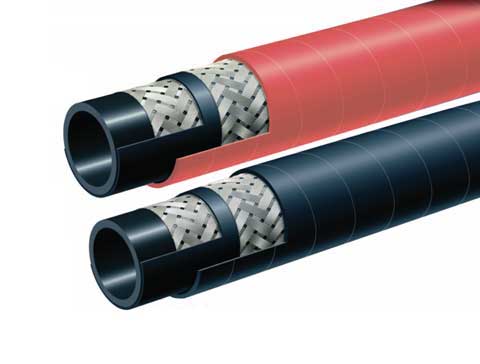
PTFE hose, steel wire braided, vacuum resistant -0.9 bar, steam conveying
release date:2026-09-02 09:55:36
reading volume:
share:
 In pharmaceutical steam sterilization, high-temperature heat transfer oil transportation in chemical plants, and steam pipelines in the food processing industry, hoses not only need to maintain stability in high temperatures above 200 ℃ and highly corrosive chemical media, but also often operate under negative pressure at the pump suction end - ordinary smooth PTFE hoses are easily "sucked flat" under negative pressure, causing pipeline paralysis. The PTFE hose with corrugated structure, built-in spiral steel wire, and stainless steel weaving is a systematic solution for this composite working condition - using the chemical inertness and wide temperature range of PTFE material body to cover steam and chemical transportation scenarios, using the double reinforcement of corrugated pipe wall and built-in spiral steel wire to resist -0.9 bar ultimate vacuum, and using 304 stainless steel weaving layer to provide high-pressure bearing and mechanical protection, becoming a reliable channel for steam transportation and negative pressure suction in the pharmaceutical, chemical, and food industries.
1、 PTFE material: the "chemical inertness" gene of corrosion resistance and steam resistance
In steam transportation scenarios, hoses not only withstand high temperatures and pressures, but also face chemical erosion from condensed water and periodic impacts from cleaning media. PTFE (polytetrafluoroethylene), with its unique molecular structure - the "electron shield" composed of carbon fluorine bonds - hardly reacts with any chemical substances and can withstand long-term corrosion from sulfuric acid, hydrochloric acid, hydrofluoric acid, and various organic solvents. This characteristic makes it particularly important in the pharmaceutical and food industries: PTFE material has full saturation characteristics, does not adsorb odors, does not breed bacteria, does not release harmful substances, and can be directly used to transport drugs and food media.
The continuous working temperature of PTFE body can reach -70 ℃ to+260 ℃. This means that the same hose can withstand high-temperature steam sterilization of pharmaceutical equipment and maintain flexibility in material transportation in low-temperature environments, making it an ideal material foundation for "one tube for multiple uses". It should be noted that PTFE material itself is an insulator (volume resistivity>10 ^ 18 Ω· cm). For scenarios where static electricity may accumulate during the transportation of steam or non-conductive media, some products can use black conductive PTFE lining, with surface resistance controlled below 10 ^ 6 Ω, effectively eliminating static electricity risks.
2、 Double reinforcement of corrugated and spiral steel wire: "anti suction flattening" architecture for extreme vacuum of -0.9bar
Ordinary smooth PTFE hoses are prone to collapse and collapse under negative pressure conditions - once the pipe wall is in contact, the steam flow is interrupted, and the system is paralyzed. The design structure of corrugated PTFE pipe wall and built-in stainless steel spiral wire solves this problem.
The corrugated PTFE tube wall is the foundation of flexibility and resistance to negative pressure. The wavy configuration of the ripples evenly disperses stress on the pipe wall during bending through the expansion and contraction deformation of the ripples, rather than concentrating on a single point, giving the hose excellent flexibility - the minimum bending radius can be controlled within 25-70mm (3/8-1 inch specification), making it easy to flexibly lay pipes in equipment intensive workshops. More importantly, when the tube is under negative pressure, the corrugated structure provides more geometric support points, effectively resisting collapse caused by external atmospheric pressure.
The built-in stainless steel spiral wire is the second line of defense against negative pressure. Spiral steel wire is like the "spine" of a hose, embedded inside the corrugated pipe wall, providing continuous radial support, allowing the hose to maintain a circular cross-section even under extreme negative pressure conditions of -0.9 bar. The vacuum pressure rating of some products is marked as "HALF VACUUM", which can withstand extreme negative pressure conditions. This design enables the hose to not only handle steam transportation, but also maintain unobstructed passage during the suction condition at the pump suction end.
3、 Stainless steel weaving: the "mechanical framework" for high-pressure bearing and mechanical protection
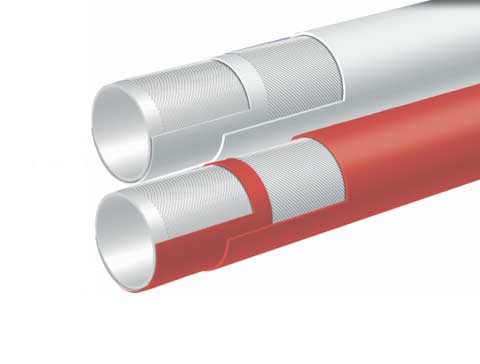
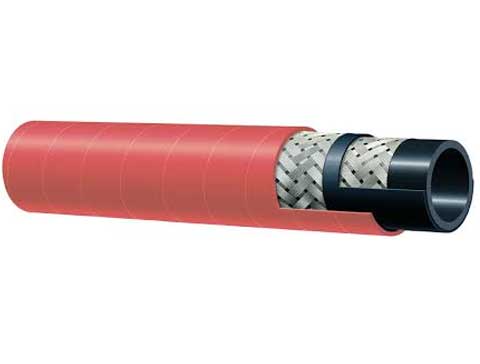
The outer stainless steel braided layer is the structural core of this type of hose for high-pressure steam transportation. The 304 stainless steel braided layer provides multiple key functions with high tensile strength: enhancing the hose's resistance to bursting, allowing the working pressure to reach 25-110 bar (depending on the diameter), and the bursting pressure to be more than 4 times the working pressure; Lock the weaving layer and the joint tightly through the crimping process to prevent the end joint from loosening or pulling off under high voltage pulses; Simultaneously protecting the PTFE inner tube from external mechanical damage and extending the overall lifespan of the hose.
Precautions for steam application: Although PTFE corrugated braided hoses can withstand steam temperatures up to 260 ℃, the steam pressure should be controlled within the rated working pressure range of the hose. Taking the 3/8 inch specification as an example, its working pressure is 110 bar (approximately 11 MPa) and the burst pressure is 440 bar. When used for steam transportation, it should be confirmed that the maximum steam pressure of the system does not exceed the rated working pressure of the hose, and a reasonable replacement cycle should be developed based on the frequency of use.
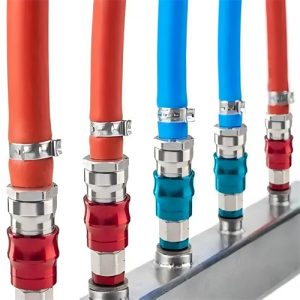
The end connection usually uses 316 stainless steel joints, and flange, threaded or quick connect forms can be selected according to on-site needs. The sealing surface of the joint should ensure a reliable transition with the PTFE inner tube, avoiding direct contact of the medium with the metal parts at the connection. When applied in the pharmaceutical and food industries, FDA certified models should be prioritized to ensure compliance with hygiene requirements.
In summary, the composite structure hose of corrugated PTFE inner tube, built-in spiral steel wire, and stainless steel braided layer perfectly meets the systematic requirements of "corrosion resistance, anti suction flat resistance, and high pressure bearing" in the pharmaceutical, chemical, and food industries for steam transportation and negative pressure suction, thanks to its chemical inertness of PTFE material and adaptability to a wide temperature range of -70 ℃ to 260 ℃, dual anti negative pressure enhancement of corrugated and spiral steel wire, and high-pressure bearing and mechanical protection of stainless steel braided. From the vacuum steam circulation in the sterilization cabinet to the hot material suction in the reaction kettle, from the 25mm bending radius of 3/8 inch to the working pressure of 110bar, the design of each layer of ripples and each steel wire is aimed at the same goal: to provide a reliable channel for fluid transportation in the harsh environment of steam and chemicals, without corrosion, flattening, and leakage.
In pharmaceutical steam sterilization, high-temperature heat transfer oil transportation in chemical plants, and steam pipelines in the food processing industry, hoses not only need to maintain stability in high temperatures above 200 ℃ and highly corrosive chemical media, but also often operate under negative pressure at the pump suction end - ordinary smooth PTFE hoses are easily "sucked flat" under negative pressure, causing pipeline paralysis. The PTFE hose with corrugated structure, built-in spiral steel wire, and stainless steel weaving is a systematic solution for this composite working condition - using the chemical inertness and wide temperature range of PTFE material body to cover steam and chemical transportation scenarios, using the double reinforcement of corrugated pipe wall and built-in spiral steel wire to resist -0.9 bar ultimate vacuum, and using 304 stainless steel weaving layer to provide high-pressure bearing and mechanical protection, becoming a reliable channel for steam transportation and negative pressure suction in the pharmaceutical, chemical, and food industries.
1、 PTFE material: the "chemical inertness" gene of corrosion resistance and steam resistance
In steam transportation scenarios, hoses not only withstand high temperatures and pressures, but also face chemical erosion from condensed water and periodic impacts from cleaning media. PTFE (polytetrafluoroethylene), with its unique molecular structure - the "electron shield" composed of carbon fluorine bonds - hardly reacts with any chemical substances and can withstand long-term corrosion from sulfuric acid, hydrochloric acid, hydrofluoric acid, and various organic solvents. This characteristic makes it particularly important in the pharmaceutical and food industries: PTFE material has full saturation characteristics, does not adsorb odors, does not breed bacteria, does not release harmful substances, and can be directly used to transport drugs and food media.
The continuous working temperature of PTFE body can reach -70 ℃ to+260 ℃. This means that the same hose can withstand high-temperature steam sterilization of pharmaceutical equipment and maintain flexibility in material transportation in low-temperature environments, making it an ideal material foundation for "one tube for multiple uses". It should be noted that PTFE material itself is an insulator (volume resistivity>10 ^ 18 Ω· cm). For scenarios where static electricity may accumulate during the transportation of steam or non-conductive media, some products can use black conductive PTFE lining, with surface resistance controlled below 10 ^ 6 Ω, effectively eliminating static electricity risks.
2、 Double reinforcement of corrugated and spiral steel wire: "anti suction flattening" architecture for extreme vacuum of -0.9bar
Ordinary smooth PTFE hoses are prone to collapse and collapse under negative pressure conditions - once the pipe wall is in contact, the steam flow is interrupted, and the system is paralyzed. The design structure of corrugated PTFE pipe wall and built-in stainless steel spiral wire solves this problem.
The corrugated PTFE tube wall is the foundation of flexibility and resistance to negative pressure. The wavy configuration of the ripples evenly disperses stress on the pipe wall during bending through the expansion and contraction deformation of the ripples, rather than concentrating on a single point, giving the hose excellent flexibility - the minimum bending radius can be controlled within 25-70mm (3/8-1 inch specification), making it easy to flexibly lay pipes in equipment intensive workshops. More importantly, when the tube is under negative pressure, the corrugated structure provides more geometric support points, effectively resisting collapse caused by external atmospheric pressure.
The built-in stainless steel spiral wire is the second line of defense against negative pressure. Spiral steel wire is like the "spine" of a hose, embedded inside the corrugated pipe wall, providing continuous radial support, allowing the hose to maintain a circular cross-section even under extreme negative pressure conditions of -0.9 bar. The vacuum pressure rating of some products is marked as "HALF VACUUM", which can withstand extreme negative pressure conditions. This design enables the hose to not only handle steam transportation, but also maintain unobstructed passage during the suction condition at the pump suction end.
3、 Stainless steel weaving: the "mechanical framework" for high-pressure bearing and mechanical protection
The outer stainless steel braided layer is the structural core of this type of hose for high-pressure steam transportation. The 304 stainless steel braided layer provides multiple key functions with high tensile strength: enhancing the hose's resistance to bursting, allowing the working pressure to reach 25-110 bar (depending on the diameter), and the bursting pressure to be more than 4 times the working pressure; Lock the weaving layer and the joint tightly through the crimping process to prevent the end joint from loosening or pulling off under high voltage pulses; Simultaneously protecting the PTFE inner tube from external mechanical damage and extending the overall lifespan of the hose.
Precautions for steam application: Although PTFE corrugated braided hoses can withstand steam temperatures up to 260 ℃, the steam pressure should be controlled within the rated working pressure range of the hose. Taking the 3/8 inch specification as an example, its working pressure is 110 bar (approximately 11 MPa) and the burst pressure is 440 bar. When used for steam transportation, it should be confirmed that the maximum steam pressure of the system does not exceed the rated working pressure of the hose, and a reasonable replacement cycle should be developed based on the frequency of use.
The end connection usually uses 316 stainless steel joints, and flange, threaded or quick connect forms can be selected according to on-site needs. The sealing surface of the joint should ensure a reliable transition with the PTFE inner tube, avoiding direct contact of the medium with the metal parts at the connection. When applied in the pharmaceutical and food industries, FDA certified models should be prioritized to ensure compliance with hygiene requirements.
In summary, the composite structure hose of corrugated PTFE inner tube, built-in spiral steel wire, and stainless steel braided layer perfectly meets the systematic requirements of "corrosion resistance, anti suction flat resistance, and high pressure bearing" in the pharmaceutical, chemical, and food industries for steam transportation and negative pressure suction, thanks to its chemical inertness of PTFE material and adaptability to a wide temperature range of -70 ℃ to 260 ℃, dual anti negative pressure enhancement of corrugated and spiral steel wire, and high-pressure bearing and mechanical protection of stainless steel braided. From the vacuum steam circulation in the sterilization cabinet to the hot material suction in the reaction kettle, from the 25mm bending radius of 3/8 inch to the working pressure of 110bar, the design of each layer of ripples and each steel wire is aimed at the same goal: to provide a reliable channel for fluid transportation in the harsh environment of steam and chemicals, without corrosion, flattening, and leakage.
Previous: