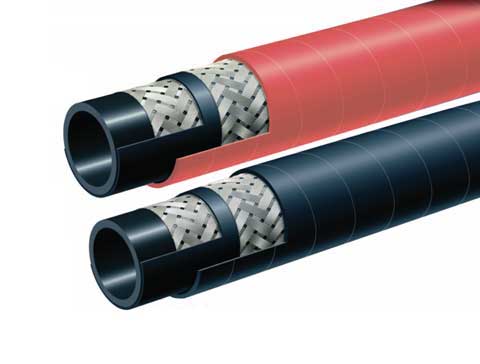
Ultra flexible hydraulic oil pipe with extremely small bending radius, compact space, easy pipe laying equipment, high applicability
release date:2026-08-12 09:40:36
reading volume:
share:
In modern engineering and agricultural machinery such as excavators, cranes, and harvesters, hydraulic systems are rapidly developing towards high integration and compactness. However, the installation space left for hydraulic pipelines inside the equipment is becoming increasingly narrow - the interlayer between multi way valves and the rotation area of joint arms often have only a few centimeters of clearance. Ordinary standard hoses either cannot be installed or bent in such spaces, and forced installation can cause collapse of the pipe wall or damage to the reinforcement layer due to a too small bending radius. The ultra flexible hydraulic oil pipe is a solution to this spatial dilemma - it achieves a significant reduction in bending radius through optimized reinforcement layer structure and specialized rubber formula, ensuring smooth passage of complex pipeline layouts with high flexibility and toughness, providing a flexible connection solution with "strong spatial adaptability and high installation efficiency" for various mechanical equipment.
 1、 Extremely small bending radius: the "flexibility code" to break through spatial bottlenecks
The adaptability of hose installation lies in the minimum bending radius, which is the radius value corresponding to the minimum bending angle that the hose can achieve without causing inner wall collapse or damaging the reinforcement layer. Due to the strong rigidity of the reinforcement layer, high weaving density, and large bending radius, ordinary standard hoses are prone to "folding" when laid in compact spaces, resulting in flow obstruction or stress concentration.
The ultra flexible hydraulic oil pipe compresses the bending radius significantly through two technical paths. Firstly, a high-strength ultra-fine steel wire weaving structure is adopted - compared with ordinary steel wire, ultra-fine steel wire has better flexibility under the same tensile strength, which significantly reduces the stiffness of the reinforcement layer while maintaining its compressive capacity. The Gates M6K ultra flexible hose claims to have a minimum bending radius of up to one-third of the standard, making it easier to install and lay pipes in compact spaces and reducing the use of bends. Secondly, the inner rubber layer of the natural rubber/modified nitrile composite formula has excellent low tenderness and flexibility, and the molecular chains can rearrange without generating excessive internal stress when bent. Taking the Super Hercules series as an example, its bending radius is reduced by 50% compared to the DIN EN853 standard. The minimum bending radius in the 1/4 inch specification is only about 45-51mm, and it can complete 90 ° bending and pipe laying within extremely limited cabinet gaps.
2、 The synergy of structure and materials: flexibility without sacrificing pressure resistance
Ultra flexible hydraulic oil pipes must meet the seemingly contradictory requirements of "high flexibility and toughness" and "high pressure bearing" simultaneously, and must achieve precise matching at the material and structural levels.
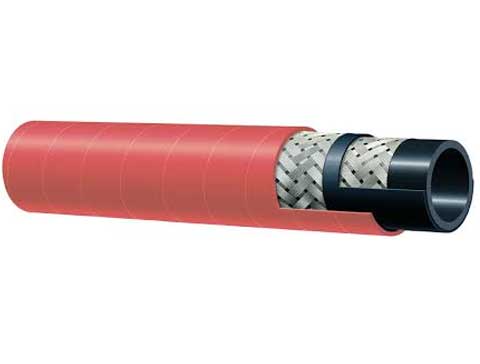
The optimization design of the enhancement layer is crucial. The Parker 436 series adopts a double-layer steel wire weaving reinforced structure, which reduces the bending radius to half of the SAE standard while maintaining a compact outer diameter. The working pressure covers 2000-4000 PSI (about 14-28 MPa) and is suitable for medium and high pressure hydraulic systems. The Super Hercules 403 series goes even further - its 1/4 inch double-layer weaving model (403-2CS) has a working pressure of 42MPa and a burst pressure of 168MPa (4 times the safety factor), while the minimum bending radius is only 45mm, achieving the unity of "small bending radius and high pressure bearing" in a compact space.
The space adaptation design of the outer adhesive layer cannot be ignored. Ultra flexible hoses usually use narrow cloth patterned black non stripping outer glue, with low surface friction coefficient, which is not easy to get stuck when passing through narrow channels; Some products have also passed MSHA flame retardant certification, suitable for compact space scenarios such as mines that require fire prevention. The Litong Super Hercules series outer adhesive layer has a weather resistance performance of over 5 years, and is not easily cracked even after long-term exposure to sunlight and oil pollution, further ensuring the long-term reliability of compact pipe laying.
3、 Wide adaptation: Multi scenario applications from construction machinery to agricultural machinery hydraulics
The high equipment applicability of ultra flexible hydraulic oil pipes is reflected in their precise matching of various mechanical compact space piping requirements.
In the field of construction machinery, the main hydraulic circuit and pilot pipeline of excavators and cranes often need to pass through narrow areas such as boom joints and rotating platforms. Litong LTSA599-FH Super Hercules series is designed for harsh working conditions, with a pulse life of over 1 million times, suitable for oil-based and biodegradable hydraulic oil transportation in excavators, construction machinery, and mining machinery.
In the field of agricultural machinery, the hydraulic pipeline layout of harvesters and tractors is dense, and field operations face harsh environments such as sun exposure, rain, and straw scraping. The EN857 SC series ultra flexible hose (1SC/2SC) is designed specifically for compact hydraulic systems, featuring a high-strength ultra-fine steel wire weaving structure that can be laid with a smaller bending radius. It is also compatible with petroleum based, water-based, and biodegradable hydraulic oils.
In scenarios with special requirements for electrical insulation, such as high-altitude work platforms, Transfer Oil's CPLFC 3000 NEO series is designed with a lightweight polyester elastomer inner tube and synthetic fiber reinforcement. While maintaining its ultra flexible characteristics, it has passed 250KV/m electrical insulation testing and has a bending radius as low as 25mm (DN5 specification), making it suitable for hydraulic systems in contact with high voltage.
Key points for installation selection: When selecting ultra flexible hoses in compact space applications, it is necessary to confirm whether the minimum bending radius of the product meets the actual piping space of the equipment; Simultaneously pay attention to its dynamic pulse life - when the hose is subjected to high-frequency pulses in a bent state, insufficient flexibility design may accelerate fatigue. High quality ultra flexible hoses have typically been validated through over 300000 to 600000 pulse tests.
In summary, the ultra flexible hydraulic oil pipe, with its structural advantage of reducing the bending radius by 50% to 1/3, mechanical balance between 40MPa pressure and 45mm bending radius, and wide adaptability to engineering/agriculture/special equipment, perfectly meets the systematic requirements of modern mechanical equipment for "small space, high flexibility, and long service life" of pipelines with high integration. From the limited clearance of excavator articulated arms to the dense pipelines of harvester cutting platforms, from -40 ° C extreme cold to+125 ° C high temperature wide temperature range operations, the reduction of bending radius and improvement of flexibility at every point point point to the same goal: to make the layout of hydraulic pipelines no longer limited by space, and to make the design freedom of equipment no longer limited by pipelines.
1、 Extremely small bending radius: the "flexibility code" to break through spatial bottlenecks
The adaptability of hose installation lies in the minimum bending radius, which is the radius value corresponding to the minimum bending angle that the hose can achieve without causing inner wall collapse or damaging the reinforcement layer. Due to the strong rigidity of the reinforcement layer, high weaving density, and large bending radius, ordinary standard hoses are prone to "folding" when laid in compact spaces, resulting in flow obstruction or stress concentration.
The ultra flexible hydraulic oil pipe compresses the bending radius significantly through two technical paths. Firstly, a high-strength ultra-fine steel wire weaving structure is adopted - compared with ordinary steel wire, ultra-fine steel wire has better flexibility under the same tensile strength, which significantly reduces the stiffness of the reinforcement layer while maintaining its compressive capacity. The Gates M6K ultra flexible hose claims to have a minimum bending radius of up to one-third of the standard, making it easier to install and lay pipes in compact spaces and reducing the use of bends. Secondly, the inner rubber layer of the natural rubber/modified nitrile composite formula has excellent low tenderness and flexibility, and the molecular chains can rearrange without generating excessive internal stress when bent. Taking the Super Hercules series as an example, its bending radius is reduced by 50% compared to the DIN EN853 standard. The minimum bending radius in the 1/4 inch specification is only about 45-51mm, and it can complete 90 ° bending and pipe laying within extremely limited cabinet gaps.
2、 The synergy of structure and materials: flexibility without sacrificing pressure resistance
Ultra flexible hydraulic oil pipes must meet the seemingly contradictory requirements of "high flexibility and toughness" and "high pressure bearing" simultaneously, and must achieve precise matching at the material and structural levels.
The optimization design of the enhancement layer is crucial. The Parker 436 series adopts a double-layer steel wire weaving reinforced structure, which reduces the bending radius to half of the SAE standard while maintaining a compact outer diameter. The working pressure covers 2000-4000 PSI (about 14-28 MPa) and is suitable for medium and high pressure hydraulic systems. The Super Hercules 403 series goes even further - its 1/4 inch double-layer weaving model (403-2CS) has a working pressure of 42MPa and a burst pressure of 168MPa (4 times the safety factor), while the minimum bending radius is only 45mm, achieving the unity of "small bending radius and high pressure bearing" in a compact space.
The space adaptation design of the outer adhesive layer cannot be ignored. Ultra flexible hoses usually use narrow cloth patterned black non stripping outer glue, with low surface friction coefficient, which is not easy to get stuck when passing through narrow channels; Some products have also passed MSHA flame retardant certification, suitable for compact space scenarios such as mines that require fire prevention. The Litong Super Hercules series outer adhesive layer has a weather resistance performance of over 5 years, and is not easily cracked even after long-term exposure to sunlight and oil pollution, further ensuring the long-term reliability of compact pipe laying.
3、 Wide adaptation: Multi scenario applications from construction machinery to agricultural machinery hydraulics
The high equipment applicability of ultra flexible hydraulic oil pipes is reflected in their precise matching of various mechanical compact space piping requirements.
In the field of construction machinery, the main hydraulic circuit and pilot pipeline of excavators and cranes often need to pass through narrow areas such as boom joints and rotating platforms. Litong LTSA599-FH Super Hercules series is designed for harsh working conditions, with a pulse life of over 1 million times, suitable for oil-based and biodegradable hydraulic oil transportation in excavators, construction machinery, and mining machinery.
In the field of agricultural machinery, the hydraulic pipeline layout of harvesters and tractors is dense, and field operations face harsh environments such as sun exposure, rain, and straw scraping. The EN857 SC series ultra flexible hose (1SC/2SC) is designed specifically for compact hydraulic systems, featuring a high-strength ultra-fine steel wire weaving structure that can be laid with a smaller bending radius. It is also compatible with petroleum based, water-based, and biodegradable hydraulic oils.
In scenarios with special requirements for electrical insulation, such as high-altitude work platforms, Transfer Oil's CPLFC 3000 NEO series is designed with a lightweight polyester elastomer inner tube and synthetic fiber reinforcement. While maintaining its ultra flexible characteristics, it has passed 250KV/m electrical insulation testing and has a bending radius as low as 25mm (DN5 specification), making it suitable for hydraulic systems in contact with high voltage.
Key points for installation selection: When selecting ultra flexible hoses in compact space applications, it is necessary to confirm whether the minimum bending radius of the product meets the actual piping space of the equipment; Simultaneously pay attention to its dynamic pulse life - when the hose is subjected to high-frequency pulses in a bent state, insufficient flexibility design may accelerate fatigue. High quality ultra flexible hoses have typically been validated through over 300000 to 600000 pulse tests.
In summary, the ultra flexible hydraulic oil pipe, with its structural advantage of reducing the bending radius by 50% to 1/3, mechanical balance between 40MPa pressure and 45mm bending radius, and wide adaptability to engineering/agriculture/special equipment, perfectly meets the systematic requirements of modern mechanical equipment for "small space, high flexibility, and long service life" of pipelines with high integration. From the limited clearance of excavator articulated arms to the dense pipelines of harvester cutting platforms, from -40 ° C extreme cold to+125 ° C high temperature wide temperature range operations, the reduction of bending radius and improvement of flexibility at every point point point to the same goal: to make the layout of hydraulic pipelines no longer limited by space, and to make the design freedom of equipment no longer limited by pipelines.
Previous: