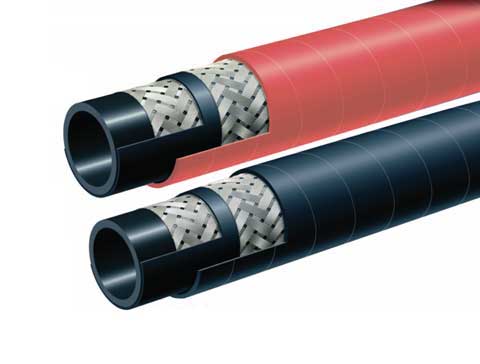
API 7K rotary drilling mud hose, 4-layer steel wire winding, working pressure 5000psi, riser flexible connection
release date:2026-08-07 15:12:48
reading volume:
share:
In oil drilling operations, the flexible connection between the riser system and the top drive device is a key node to ensure smooth mud circulation. During the drilling process, the top drive is lifted and lowered along with the drilling tool, and the riser is fixed to the wellhead. The relative displacement between the two must be compensated for by a flexible hose. The working pressure of 5000psi (approximately 34.5MPa), continuous erosion of mud medium, and torsional load generated by top drive rotation - a triple test combination - put forward ultimate requirements for the structural strength and fatigue life of the hose. The API 7K standard D-grade rotary drilling mud hose is the authoritative solution for this working condition - reinforced with four layers of steel wire winding to carry high-pressure pulses, ensuring design safety redundancy with the API 7K specification system, and achieving dynamic compensation and shock absorption function through the scene adaptation of flexible connections in the riser. It has become an indispensable "high-pressure flexible hub" in the drilling mud circulation system.
 1、 Standard cornerstone: API 7K specification system for rotary drilling hoses
API Spec 7K is a drilling and workover equipment specification developed by the American Petroleum Institute, which sets clear technical thresholds for the pressure rating, flexibility rating, and safety factor of Rotary Drilling Hoses. 5000psi corresponds to the D-class pressure rating in the specifications, which is the standard configuration for mid to deep drilling operations and covers the mud pumping requirements of most onshore and offshore drilling platforms.
The verification pressure of D-grade hose is 7500psi (1.5 times the working pressure), and the minimum burst pressure is 12500psi (2.5 times the working pressure), with sufficient safety factors for testing and design. The setting of this pressure gradient provides sufficient safety margins for possible instantaneous overpressure and mud pump pulse impact during the drilling process - even if the system pressure jumps briefly under abnormal conditions, the hose can still maintain structural integrity.
API 7K also classifies the dynamic service capability of hoses through FSL (Flexible Level). FSL 1 is suitable for basic design verification of conventional top drive operations, while FSL 2 requires additional high-frequency pulse pressure testing, corresponding to more frequent rotation and pressure fluctuation conditions. Users can choose the appropriate flexibility level based on the actual load intensity of drilling operations to ensure the fatigue resistance of the hose within its expected service life.
2、 Structural code: Anti pulse design with 4-layer steel wire winding
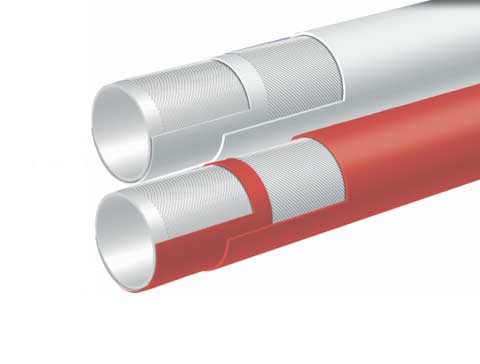
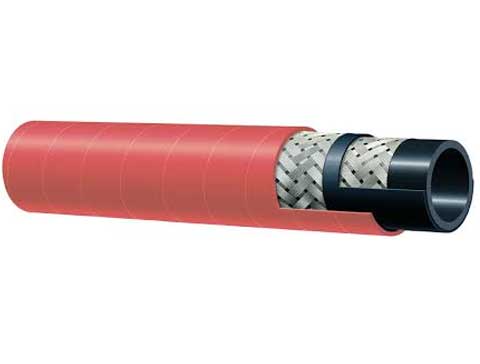
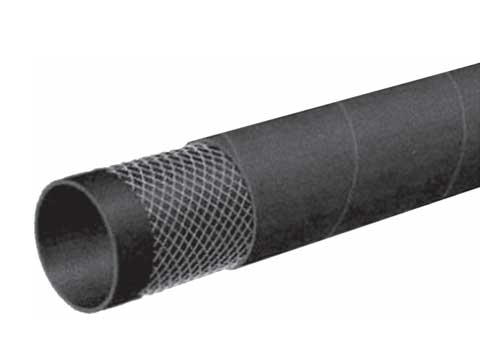
The 5000psi level rotary drilling hose adopts a 4-storey high-strength steel wire spiral winding structure for its reinforcement layer, which is the core technical path to achieve "no bulging under pressure and no fatigue under bending".
The mechanical logic of 4-layer steel wire lies in "layered bearing and collaborative deformation". Each layer of steel wire is wound at a precisely calculated spiral angle, while the inner layer provides radial support at a higher angle to resist the bulging deformation of the pipe body under high pressure; The outer layer constructs an axial tensile skeleton at a lower angle to withstand the tensile load generated by the top drive lifting and the torsional load introduced by the rotational motion. A strong whole is formed between layers through a high adhesion formula, which collaboratively deforms under pulse loads to avoid interlayer delamination caused by stress concentration. The steel wire is made of high toughness galvanized material, with uniform winding density and consistent tension, which not only improves the high pressure tolerance, but also adapts to the rotation, bending, and vibration conditions during the drilling process.
The inner rubber layer directly contacts the drilling mud, facing continuous erosion of rock debris and sand particles in water-based or oil-based mud, as well as erosion from chemical additives. Modern products offer diversified options for HNBR (hydrogenated nitrile rubber), UPE (ultra-high molecular weight polyethylene), or PTFE lining, which can be flexibly matched according to the corrosive and wear-resistant requirements of the conveying medium, effectively extending the service life of the inner layer. The wear resistance of UPE lining is 6-7 times that of ordinary rubber, making it particularly suitable for deep well mud conditions with high sand content.
The outer rubber layer is made of wear-resistant and weather resistant synthetic rubber, and anti ozone and anti-aging additives are added to resist high and low temperature fluctuations, ultraviolet radiation, oil contamination and sand abrasion at the drilling site. Some products have also passed MSHA flame retardant certification and are suitable for work environments with fire protection requirements.
3、 Vertical pipe scene adaptation: from dynamic compensation to connection security
The API 7K D-grade rotary hose serves two core functions in the riser system: firstly, as a flexible connection between the upper end of the riser and the top drive/rotation device, compensating for displacement during drilling tool lifting and lowering; The second is as a flexible connection between the mud pump and the lower end of the riser, absorbing pump group vibration and buffering pressure pulsation.
The dynamic displacement compensation capability is a special requirement for hoses in riser scenarios. During the drilling process, the top drive moves up and down with the drilling tool, generating continuous relative displacement with the riser fixed to the wellhead. Rigid connections cannot adapt to this change, while the rotating hose effectively absorbs displacement and buffers impact through the elastic deformation of multi-layer reinforced structures, protecting the riser system and top drive equipment from abnormal stress damage.
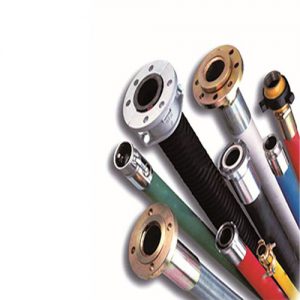
The reliability of end connections is also a key factor in ensuring system security. The 5000psi rotary hose is usually equipped with a 4-inch Fig1003 or Fig1502 hammer joint, which is connected to the pipe body through spinning technology. The Fig1002/1003 union adopts a misaligned connection design, which can achieve a maximum total misalignment adjustment of 15 ° and is suitable for working conditions where pipeline alignment is difficult in top drive operations. The joint adopts metal to metal sealing combined with O-ring auxiliary sealing to maintain zero leakage under high pressure of 5000psi. Both ends are equipped with safety chains and clamps (made of galvanized steel wire, with a diameter of not less than 10mm), which can effectively prevent joint detachment and further enhance operational safety.
In terms of installation specifications, the API 7K standard has clear provisions for the minimum bending radius of hoses - the minimum bending radius for 3.5-inch specifications is 1200mm, and for 4-inch specifications it is 1200-1400mm. During installation, it is necessary to ensure that the bending radius is not lower than the rated value to avoid damage to the reinforcement layer caused by sharp bends. In high-frequency vibration areas such as the outlet of the mud pump, specialized pipe clamps and shock absorbers should be used to fix and reduce fatigue damage.
In summary, the API 7K standard 4-layer steel wire wound rotary drilling mud hose, with its D-grade 5000psi standard bearing capacity, multi-layer steel wire reinforced anti pulse structure, and dynamic compensation function of flexible riser connection, perfectly meets the strict requirements of "high pressure tolerance, dynamic reliability, and connection safety" for petroleum drilling mud circulation systems. From the redundant blasting at 12500psi to the precise winding of 4-layer steel wire, from the quick connection of the Fig1502 hammer joint to the anti detachment protection of the double end safety chain, every technical detail points to the same goal: to provide a reliable flexible channel that can withstand pressure impact and continuous rotation for high-pressure mud transportation in the roar of the drilling rig on the kilometer long derrick.
1、 Standard cornerstone: API 7K specification system for rotary drilling hoses
API Spec 7K is a drilling and workover equipment specification developed by the American Petroleum Institute, which sets clear technical thresholds for the pressure rating, flexibility rating, and safety factor of Rotary Drilling Hoses. 5000psi corresponds to the D-class pressure rating in the specifications, which is the standard configuration for mid to deep drilling operations and covers the mud pumping requirements of most onshore and offshore drilling platforms.
The verification pressure of D-grade hose is 7500psi (1.5 times the working pressure), and the minimum burst pressure is 12500psi (2.5 times the working pressure), with sufficient safety factors for testing and design. The setting of this pressure gradient provides sufficient safety margins for possible instantaneous overpressure and mud pump pulse impact during the drilling process - even if the system pressure jumps briefly under abnormal conditions, the hose can still maintain structural integrity.
API 7K also classifies the dynamic service capability of hoses through FSL (Flexible Level). FSL 1 is suitable for basic design verification of conventional top drive operations, while FSL 2 requires additional high-frequency pulse pressure testing, corresponding to more frequent rotation and pressure fluctuation conditions. Users can choose the appropriate flexibility level based on the actual load intensity of drilling operations to ensure the fatigue resistance of the hose within its expected service life.
2、 Structural code: Anti pulse design with 4-layer steel wire winding
The 5000psi level rotary drilling hose adopts a 4-storey high-strength steel wire spiral winding structure for its reinforcement layer, which is the core technical path to achieve "no bulging under pressure and no fatigue under bending".
The mechanical logic of 4-layer steel wire lies in "layered bearing and collaborative deformation". Each layer of steel wire is wound at a precisely calculated spiral angle, while the inner layer provides radial support at a higher angle to resist the bulging deformation of the pipe body under high pressure; The outer layer constructs an axial tensile skeleton at a lower angle to withstand the tensile load generated by the top drive lifting and the torsional load introduced by the rotational motion. A strong whole is formed between layers through a high adhesion formula, which collaboratively deforms under pulse loads to avoid interlayer delamination caused by stress concentration. The steel wire is made of high toughness galvanized material, with uniform winding density and consistent tension, which not only improves the high pressure tolerance, but also adapts to the rotation, bending, and vibration conditions during the drilling process.
The inner rubber layer directly contacts the drilling mud, facing continuous erosion of rock debris and sand particles in water-based or oil-based mud, as well as erosion from chemical additives. Modern products offer diversified options for HNBR (hydrogenated nitrile rubber), UPE (ultra-high molecular weight polyethylene), or PTFE lining, which can be flexibly matched according to the corrosive and wear-resistant requirements of the conveying medium, effectively extending the service life of the inner layer. The wear resistance of UPE lining is 6-7 times that of ordinary rubber, making it particularly suitable for deep well mud conditions with high sand content.
The outer rubber layer is made of wear-resistant and weather resistant synthetic rubber, and anti ozone and anti-aging additives are added to resist high and low temperature fluctuations, ultraviolet radiation, oil contamination and sand abrasion at the drilling site. Some products have also passed MSHA flame retardant certification and are suitable for work environments with fire protection requirements.
3、 Vertical pipe scene adaptation: from dynamic compensation to connection security
The API 7K D-grade rotary hose serves two core functions in the riser system: firstly, as a flexible connection between the upper end of the riser and the top drive/rotation device, compensating for displacement during drilling tool lifting and lowering; The second is as a flexible connection between the mud pump and the lower end of the riser, absorbing pump group vibration and buffering pressure pulsation.
The dynamic displacement compensation capability is a special requirement for hoses in riser scenarios. During the drilling process, the top drive moves up and down with the drilling tool, generating continuous relative displacement with the riser fixed to the wellhead. Rigid connections cannot adapt to this change, while the rotating hose effectively absorbs displacement and buffers impact through the elastic deformation of multi-layer reinforced structures, protecting the riser system and top drive equipment from abnormal stress damage.
The reliability of end connections is also a key factor in ensuring system security. The 5000psi rotary hose is usually equipped with a 4-inch Fig1003 or Fig1502 hammer joint, which is connected to the pipe body through spinning technology. The Fig1002/1003 union adopts a misaligned connection design, which can achieve a maximum total misalignment adjustment of 15 ° and is suitable for working conditions where pipeline alignment is difficult in top drive operations. The joint adopts metal to metal sealing combined with O-ring auxiliary sealing to maintain zero leakage under high pressure of 5000psi. Both ends are equipped with safety chains and clamps (made of galvanized steel wire, with a diameter of not less than 10mm), which can effectively prevent joint detachment and further enhance operational safety.
In terms of installation specifications, the API 7K standard has clear provisions for the minimum bending radius of hoses - the minimum bending radius for 3.5-inch specifications is 1200mm, and for 4-inch specifications it is 1200-1400mm. During installation, it is necessary to ensure that the bending radius is not lower than the rated value to avoid damage to the reinforcement layer caused by sharp bends. In high-frequency vibration areas such as the outlet of the mud pump, specialized pipe clamps and shock absorbers should be used to fix and reduce fatigue damage.
In summary, the API 7K standard 4-layer steel wire wound rotary drilling mud hose, with its D-grade 5000psi standard bearing capacity, multi-layer steel wire reinforced anti pulse structure, and dynamic compensation function of flexible riser connection, perfectly meets the strict requirements of "high pressure tolerance, dynamic reliability, and connection safety" for petroleum drilling mud circulation systems. From the redundant blasting at 12500psi to the precise winding of 4-layer steel wire, from the quick connection of the Fig1502 hammer joint to the anti detachment protection of the double end safety chain, every technical detail points to the same goal: to provide a reliable flexible channel that can withstand pressure impact and continuous rotation for high-pressure mud transportation in the roar of the drilling rig on the kilometer long derrick.
Previous: