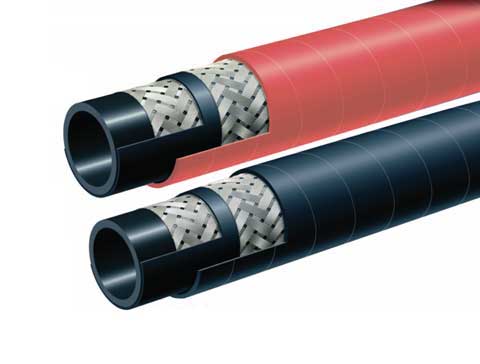
API 17K full flow diameter hose lined with PTFE/UPE can be used for deep-sea oil and gas transportation through a pipeline cleaner
release date:2026-08-07 15:43:55
reading volume:
share:
In the development of deep-sea oil and gas fields, the underwater production system needs to transport the oil and gas mixture produced from the wellhead to the platform or manifold through flexible pipelines. However, traditional steel pipes face the challenge of being unable to be cleaned online after scaling and blockage due to the combined effects of deep water pressure, seawater corrosion, and platform dynamic displacement. Once hydrates, wax, or scaling substances adhere to the inner wall of the pipeline, it must be shut down for replacement or expensive diving operations must be used for maintenance. The API 17K full flow diameter hose is a solution to this operational pain point - with low friction and corrosion resistance of PTFE/UPE lining to ensure smooth passage of the medium, a "full flow, rough inner hole" diameter design to ensure unobstructed passage of the pig, and a multi-layer adhesive composite structure to carry deep-sea high pressure and dynamic loads, becoming a flexible channel in deep-sea oil and gas transportation systems that combines "corrosion resistance" and "maintainability".
 1、 Full flow path: the structural password that the pig can pass through
Deep sea oil and gas pipelines face serious scaling and blockage risks during long-term operation - natural gas hydrates precipitate under low temperature and high pressure conditions, wax components in crude oil deposit on the pipe wall, and inorganic scale layers such as calcium carbonate/barium sulfate gradually thicken, all of which can lead to a reduction in the effective flow cross-section of the pipeline and a decrease in transportation efficiency. Traditional non adhesive hoses have an annular gap between the inner lining and the reinforcement layer, which may cause damage to the pipe wall structure or get stuck at the interlayer transition when the cleaner passes through, posing a high maintenance risk.
The "full flow, rough inner hole" structure of API 17K adhesive hose completely solves this problem. The so-called "full flow" means that the inner wall of the hose is completely covered by a continuous and smooth inner lining layer, without any steps, gaps or protruding structures, ensuring that the sealing cup of the pipe cleaner forms an effective seal with the inner wall and smoothly advances. The technical description of Litong Technology's API 17K crossover hose clearly states that its internal skeleton layer design allows the "pipe cleaner to pass smoothly", achieving "online cleaning and maintenance of oil and gas pipelines without stopping the machine".
In actual operation and maintenance, this characteristic means that when the pipeline transmission efficiency decreases due to scaling, operators can launch pigs into the pipeline (such as foam pigs, polyurethane scraper pigs or intelligent pigs with sensors), and the pigs can scrape off the attachments while pushing along the pipeline wall to restore the pipeline diameter - the whole process can be completed without stopping the production system. Compared to the traditional steel pipe solution that requires the use of divers or ROVs for underwater maintenance, online cleaning of hoses can reduce maintenance costs by an order of magnitude.
2、 PTFE/UPE lining: dual guarantee of pipeline penetrability and corrosion resistance
The choice of lining material directly affects the smoothness of the pig's passage and the service life of the hose in acidic media. PTFE (polytetrafluoroethylene) and UPE (ultra-high molecular weight polyethylene) are currently the two mainstream lining solutions for deep-sea oil and gas transportation hoses.
PTFE lining is known for its extremely low friction coefficient (one of the lowest among solid materials), and the pushing resistance of the cleaner on its surface is minimal, making it particularly suitable for wax crude oil pipelines that require frequent cleaning. Meanwhile, the chemical inertness of PTFE towards H ₂ S, CO ₂, and seawater corrosion makes it excellent in acidic media environments. UPE lining is superior in wear resistance - its wear resistance is 6-7 times that of ordinary rubber, making it suitable for oil and gas transportation scenarios with high sand content. The technical parameters of Litong Technology's API 17K hose show that the UPE/PTFE lining thickness is 4.0mm, which is sufficient to maintain structural integrity during long-term high-pressure flushing.
It is worth noting that the inner wall of the pig experiences a dual effect of "abrasive wear" and "scraping of the sealing cup" when passing through. The extremely low friction coefficient of PTFE minimizes scratching resistance, while the high wear resistance of UPE ensures that the inner wall remains smooth after multiple cleaning cycles. Both have passed the acidic medium immersion test required by API 17K standard, and there is no swelling or performance degradation in harsh conditions containing H ₂ S.
3、 Multi layer adhesive structure: a dual test for bearing high pressure and cleaning impact
When the cleaner passes through the hose, in addition to scratching the inner wall, it also creates an instantaneous "piston effect" inside the pipe body - the accumulated fluid in front of the cleaner is pushed forward, and the gas pressure behind it continues to act on the pipe wall. This dynamic pressure change imposes additional requirements on the interlayer adhesive strength of the hose.
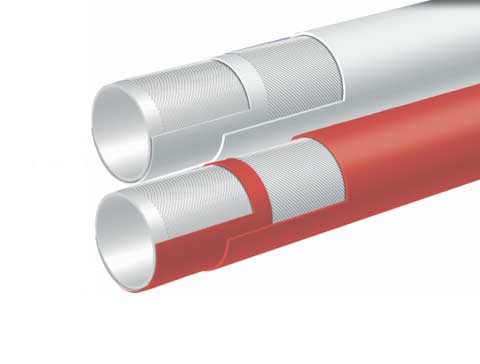
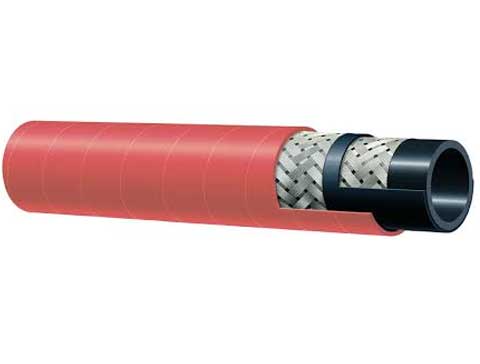
The API 17K adhesive hose adopts a multi-layer composite reinforcement structure: the outer side of the inner lining layer (UPE/PTFE) is sequentially composed of a synthetic rubber buffer layer, a polyester fiber weaving layer, a high-strength ultra flexible copper plated steel wire reinforcement layer, and a weather resistant outer rubber layer. Each layer forms a chemically cross-linked overall structure through an integrated vulcanization process, and the interlayer bonding strength is much higher than that of non bonded hoses. The "multi-layer exhaust gap design" patented by Litong Technology can effectively discharge the diffused gas that penetrates through the inner lining, preventing the accumulation of interlayer pressure from causing structural failure.
In terms of pressure bearing, the working pressure of API 17K hose covers 18 bar to 232 bar (depending on the diameter), with a burst pressure of 2.5 times the working pressure and a test pressure of 1.5 times the working pressure. Taking the 3-inch specification as an example, the working pressure is 232 bar, the testing pressure is 348 bar, and the minimum burst pressure is 580 bar, providing ample safety redundancy. This pressure level is sufficient to withstand the transient pressure peak generated when the pipeline cleaner passes through, ensuring the safety of online pipeline cleaning operations.
The API 17K full flow diameter hose has been localized and applied in multiple national level deep-sea projects such as Wenchang 13-2 Oilfield and Ledong 22-1 Gas Field. During its service in Wenchang Oilfield, the domestically produced hose successfully withstood the extreme test of Typhoon Capricorn, a Category 17 typhoon in 2024, and remained sealed intact even when the platform displacement reached 2.8 meters. Its design lifespan is 20-25 years, during which no structural maintenance is required, reducing maintenance costs by 70% compared to traditional steel pipe solutions.
In summary, the API 17K full flow diameter hose, with its full flow diameter structure, achieves online passage of the cleaning device, PTFE/UPE lining ensures low friction and corrosion resistance, and multi-layer bonding enhances the bearing capacity for high pressure and cleaning impact. These three core technologies perfectly meet the systematic requirements of deep-sea oil and gas transportation for "maintainability, corrosion resistance, and long service life". From the wear-resistant redundancy of 4.0mm thick lining to the safety margin of 580bar burst pressure, from non-stop maintenance of online pipeline cleaning to the full cycle economy of 25 year design life, every structural detail points to the same goal: to provide maintainable, cleanable, and reliable flexible guarantee for oil and gas transportation in the dark environment of thousands of meters deep sea.
1、 Full flow path: the structural password that the pig can pass through
Deep sea oil and gas pipelines face serious scaling and blockage risks during long-term operation - natural gas hydrates precipitate under low temperature and high pressure conditions, wax components in crude oil deposit on the pipe wall, and inorganic scale layers such as calcium carbonate/barium sulfate gradually thicken, all of which can lead to a reduction in the effective flow cross-section of the pipeline and a decrease in transportation efficiency. Traditional non adhesive hoses have an annular gap between the inner lining and the reinforcement layer, which may cause damage to the pipe wall structure or get stuck at the interlayer transition when the cleaner passes through, posing a high maintenance risk.
The "full flow, rough inner hole" structure of API 17K adhesive hose completely solves this problem. The so-called "full flow" means that the inner wall of the hose is completely covered by a continuous and smooth inner lining layer, without any steps, gaps or protruding structures, ensuring that the sealing cup of the pipe cleaner forms an effective seal with the inner wall and smoothly advances. The technical description of Litong Technology's API 17K crossover hose clearly states that its internal skeleton layer design allows the "pipe cleaner to pass smoothly", achieving "online cleaning and maintenance of oil and gas pipelines without stopping the machine".
In actual operation and maintenance, this characteristic means that when the pipeline transmission efficiency decreases due to scaling, operators can launch pigs into the pipeline (such as foam pigs, polyurethane scraper pigs or intelligent pigs with sensors), and the pigs can scrape off the attachments while pushing along the pipeline wall to restore the pipeline diameter - the whole process can be completed without stopping the production system. Compared to the traditional steel pipe solution that requires the use of divers or ROVs for underwater maintenance, online cleaning of hoses can reduce maintenance costs by an order of magnitude.
2、 PTFE/UPE lining: dual guarantee of pipeline penetrability and corrosion resistance
The choice of lining material directly affects the smoothness of the pig's passage and the service life of the hose in acidic media. PTFE (polytetrafluoroethylene) and UPE (ultra-high molecular weight polyethylene) are currently the two mainstream lining solutions for deep-sea oil and gas transportation hoses.
PTFE lining is known for its extremely low friction coefficient (one of the lowest among solid materials), and the pushing resistance of the cleaner on its surface is minimal, making it particularly suitable for wax crude oil pipelines that require frequent cleaning. Meanwhile, the chemical inertness of PTFE towards H ₂ S, CO ₂, and seawater corrosion makes it excellent in acidic media environments. UPE lining is superior in wear resistance - its wear resistance is 6-7 times that of ordinary rubber, making it suitable for oil and gas transportation scenarios with high sand content. The technical parameters of Litong Technology's API 17K hose show that the UPE/PTFE lining thickness is 4.0mm, which is sufficient to maintain structural integrity during long-term high-pressure flushing.
It is worth noting that the inner wall of the pig experiences a dual effect of "abrasive wear" and "scraping of the sealing cup" when passing through. The extremely low friction coefficient of PTFE minimizes scratching resistance, while the high wear resistance of UPE ensures that the inner wall remains smooth after multiple cleaning cycles. Both have passed the acidic medium immersion test required by API 17K standard, and there is no swelling or performance degradation in harsh conditions containing H ₂ S.
3、 Multi layer adhesive structure: a dual test for bearing high pressure and cleaning impact
When the cleaner passes through the hose, in addition to scratching the inner wall, it also creates an instantaneous "piston effect" inside the pipe body - the accumulated fluid in front of the cleaner is pushed forward, and the gas pressure behind it continues to act on the pipe wall. This dynamic pressure change imposes additional requirements on the interlayer adhesive strength of the hose.
The API 17K adhesive hose adopts a multi-layer composite reinforcement structure: the outer side of the inner lining layer (UPE/PTFE) is sequentially composed of a synthetic rubber buffer layer, a polyester fiber weaving layer, a high-strength ultra flexible copper plated steel wire reinforcement layer, and a weather resistant outer rubber layer. Each layer forms a chemically cross-linked overall structure through an integrated vulcanization process, and the interlayer bonding strength is much higher than that of non bonded hoses. The "multi-layer exhaust gap design" patented by Litong Technology can effectively discharge the diffused gas that penetrates through the inner lining, preventing the accumulation of interlayer pressure from causing structural failure.
In terms of pressure bearing, the working pressure of API 17K hose covers 18 bar to 232 bar (depending on the diameter), with a burst pressure of 2.5 times the working pressure and a test pressure of 1.5 times the working pressure. Taking the 3-inch specification as an example, the working pressure is 232 bar, the testing pressure is 348 bar, and the minimum burst pressure is 580 bar, providing ample safety redundancy. This pressure level is sufficient to withstand the transient pressure peak generated when the pipeline cleaner passes through, ensuring the safety of online pipeline cleaning operations.
The API 17K full flow diameter hose has been localized and applied in multiple national level deep-sea projects such as Wenchang 13-2 Oilfield and Ledong 22-1 Gas Field. During its service in Wenchang Oilfield, the domestically produced hose successfully withstood the extreme test of Typhoon Capricorn, a Category 17 typhoon in 2024, and remained sealed intact even when the platform displacement reached 2.8 meters. Its design lifespan is 20-25 years, during which no structural maintenance is required, reducing maintenance costs by 70% compared to traditional steel pipe solutions.
In summary, the API 17K full flow diameter hose, with its full flow diameter structure, achieves online passage of the cleaning device, PTFE/UPE lining ensures low friction and corrosion resistance, and multi-layer bonding enhances the bearing capacity for high pressure and cleaning impact. These three core technologies perfectly meet the systematic requirements of deep-sea oil and gas transportation for "maintainability, corrosion resistance, and long service life". From the wear-resistant redundancy of 4.0mm thick lining to the safety margin of 580bar burst pressure, from non-stop maintenance of online pipeline cleaning to the full cycle economy of 25 year design life, every structural detail points to the same goal: to provide maintainable, cleanable, and reliable flexible guarantee for oil and gas transportation in the dark environment of thousands of meters deep sea.
Previous: