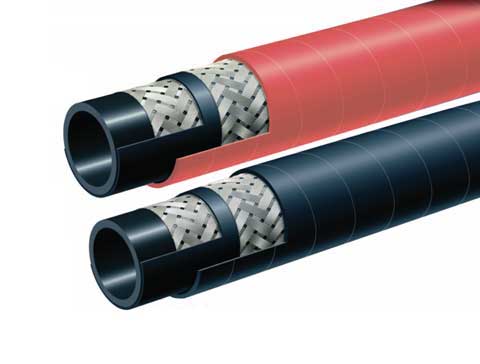
Low temperature EPDM liquid cooled hose resistant to -60 ℃ for data center cooling in extremely cold regions
release date:2026-06-29 14:46:17
reading volume:
share:
In the vicinity of the Arctic Circle, the western high-altitude and cold regions of China's "East West Calculation", and high latitude cold regions, outdoor temperatures often drop below -40 ℃ in winter, and extreme low temperatures in some areas can reach -60 ℃. In such environments, traditional data center cooling pipelines become hard and brittle due to the glass transition of ordinary rubber, which can result in seal failure or complete pipe fracture, causing the cooling system to malfunction. The low-temperature EPDM liquid cooled hose that can withstand extreme cold temperatures of -60 ℃ is a professional product designed for this extreme temperature range. It overcomes the problem of low-temperature embrittlement from the root with a special EPDM molecular structure and plasticizing system, and achieves "no rigidity in extreme cold" with design redundancy below working temperature, becoming a reliable guarantee for year-round cooling operation of data centers in cold regions.
 1、 -60 ℃ Cold resistant Password: "Low temperature Elasticity" of EPDM Molecular Chain and Design Redundancy
The reason why EPDM (ethylene propylene diene monomer) has become a material for hoses in extremely cold environments is primarily due to the structural characteristics of its molecular chains. The EPDM main chain is composed of saturated carbon carbon single bonds, with no polar substituents within the molecule. The intermolecular cohesive energy is low, and the molecular chain maintains good flexibility over a wide temperature range. Its theoretical brittleness temperature is as low as -77 ℃ to -69 ℃, and the glass transition temperature (Tg) is about -60 ℃ to -50 ℃, providing a molecular level "low-temperature gene" for the use of hoses in -60 ℃ environments.
However, there is a fundamental difference between 'usable' and 'reliable'. Academic research has shown that the fracture elongation of EPDM insulation layer drops sharply from 670% at room temperature to 42% under -60 ℃ testing conditions, and the material no longer has high elasticity and enters a brittle state. This means that in order for the hose to maintain flexibility and function normally at extreme low temperatures of -60 ℃, a simple EPDM main material is far from meeting the standards, and a systematic optimization from raw rubber selection to formulation system must be carried out.
Industry practice has proven that this path is feasible. The EPDM liquid cooling sealing ring developed by domestic enterprises for data center liquid cooling systems uses special formula composite materials, with a temperature tolerance range of -55 ℃ to 125 ℃. Some liquid cooling pipeline products can work stably under high temperature conditions from -40 ℃ to 80 ℃. The products have passed UL certification in the United States and rigorous testing by heat dissipation giants. These cases demonstrate that by selecting low-temperature EPDM raw rubber and optimizing the plasticizer system, hoses can break through the conventional upper limit of -40 ℃ temperature range and achieve extreme cold service at -60 ℃ level.
2、 Anti brittleness formula system: from molecular design to reinforcing fillers
-The anti brittleness performance at extreme low temperatures of 60 ℃ depends on the synergistic formula design of the EPDM hose at three levels:
Directional selection of structural parameters for raw rubber. There is a significant difference in the low temperature resistance of different grades of EPDM. Research has shown that the structural parameters of EPDM rubber substrates have a significant impact on low-temperature mechanical properties - the higher the content of the third monomer and the lower the ethylene content, the worse the low-temperature mechanical properties. Therefore, low-temperature EPDM hoses require precise control of the ethylene content of the raw rubber (usually choosing low to medium ethylene grades) and the type of third monomer (the choice of ENB or DCPD directly affects low-temperature crystallization behavior), to ensure the chain segment mobility at low temperatures from the source of rubber molecular chains.
Secondly, optimize the matching of plasticizer systems. The low temperature resistance of EPDM is significantly affected by the type and amount of plasticizer used. Through verification, the selection of plasticizers in the formula is one of the key factors determining the low-temperature performance of EPDM. By adding low-temperature plasticizers with good compatibility with EPDM (such as cold resistant cyclohexane oil and paraffin based oil), the glass transition temperature and brittleness temperature of rubber can be effectively reduced, allowing the hose to maintain sufficient elongation at break at -60 ℃, avoiding "brittle fracture at extreme cold".
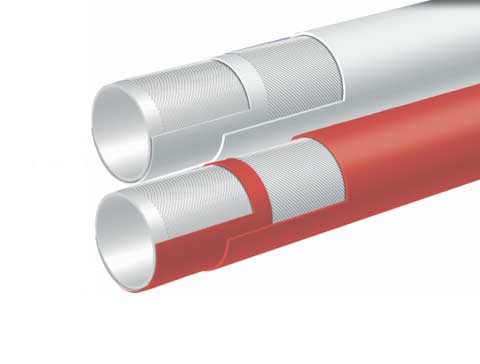
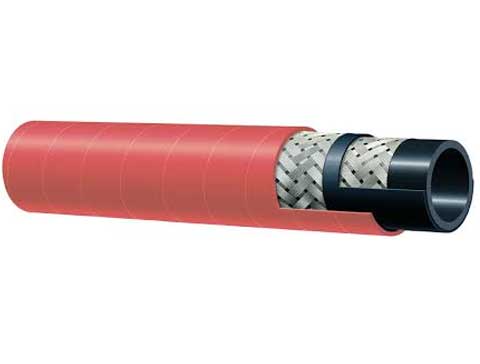
Thirdly, the principle of using fillers and fibers with caution. Although reinforcing fillers such as carbon black have little effect on the tensile stress-strain curve morphology of EPDM, the addition of fibers further restricts the activity of rubber molecular segments at low temperatures. Therefore, for liquid cooled hoses that require extreme cold performance, the reinforcement layer should carefully select fiber materials and weaving density while ensuring mechanical strength, avoiding excessive constraint on the elastic deformation of rubber at low temperatures, and ensuring that the hose can still withstand slight bending without cracking at -60 ℃.
3、 Extreme cold application scenarios: from material certification to full chain adaptation
The cooling system of data centers in cold regions not only requires a -60 ℃ cold resistance requirement for individual hoses, but also requires the pipeline assembly to operate reliably throughout the entire cold chain.
Extreme cold start-up and temperature shock are the primary challenges. In high latitude regions, data center rooms may face low temperature environments during polar nights or cold waves. When the liquid cooling system restarts, the coolant temperature rises sharply, and the temperature difference between the inside and outside of the hoses can reach over 100 ℃. Low temperature EPDM liquid cooled hoses are designed with a special vulcanization system and formula to ensure stable physical properties over a wide temperature range of -60 ℃ to 80 ℃, effectively avoiding the risk of sealing failure caused by sudden temperature changes.
Material certification and quality assurance are the hard barriers to entering the supply chain of data centers in cold regions. At present, the industry-leading liquid cooling pipeline products have passed multiple rounds of rigorous testing by the US UL certification, AMD certification, and global cooling giants, with cold resistance performance being one of the core assessment items. Lingyun Rubber Tube and other enterprises have achieved self-developed core rubber materials for liquid cooling products, building a full industry chain capability of "rubber material research and development - hose manufacturing - pipeline integration". The products have undergone long-term practical operation tests in the extremely cold environment of the Northwest Gobi Supercomputing Center.
The compatibility of wide temperature range matching cannot be ignored. Within the temperature range of -60 ℃ to+120 ℃, the hose needs to maintain coordinated stability with the joints, seals, and coolant (water ethylene glycol/propylene glycol based antifreeze). At present, the industry has verified data that EPDM liquid cooled sealing rings can withstand temperatures ranging from -55 ℃ to 125 ℃. Combined with low-temperature EPDM hoses, it can provide full chain extreme cold protection for data centers in cold regions, from pipelines to joints.
In summary, the low-temperature EPDM liquid cooled hose that can withstand extreme cold temperatures up to -60 ℃ perfectly meets the stringent requirements of cold data center cooling systems for "non brittle cracking in extreme cold, stable in a wide temperature range, and reliable throughout the entire chain" with its molecular chain level low-temperature elasticity gene, synergistic anti brittleness formula of plasticizer rubber filler, and material certification in a wide temperature range from -60 ℃ to 120 ℃. From the molecular basis of the -60 ℃ glass transition temperature to the multi-level redundant design of -55 ℃ seals and -40 ℃ pipelines, from UL certification in the United States to practical verification at the Northwest Supercomputing Center, every technical detail points to the same goal: to provide an eternal heat dissipation guarantee for the computing infrastructure of the digital world in the extremely cold late nights near the Arctic Circle.
1、 -60 ℃ Cold resistant Password: "Low temperature Elasticity" of EPDM Molecular Chain and Design Redundancy
The reason why EPDM (ethylene propylene diene monomer) has become a material for hoses in extremely cold environments is primarily due to the structural characteristics of its molecular chains. The EPDM main chain is composed of saturated carbon carbon single bonds, with no polar substituents within the molecule. The intermolecular cohesive energy is low, and the molecular chain maintains good flexibility over a wide temperature range. Its theoretical brittleness temperature is as low as -77 ℃ to -69 ℃, and the glass transition temperature (Tg) is about -60 ℃ to -50 ℃, providing a molecular level "low-temperature gene" for the use of hoses in -60 ℃ environments.
However, there is a fundamental difference between 'usable' and 'reliable'. Academic research has shown that the fracture elongation of EPDM insulation layer drops sharply from 670% at room temperature to 42% under -60 ℃ testing conditions, and the material no longer has high elasticity and enters a brittle state. This means that in order for the hose to maintain flexibility and function normally at extreme low temperatures of -60 ℃, a simple EPDM main material is far from meeting the standards, and a systematic optimization from raw rubber selection to formulation system must be carried out.
Industry practice has proven that this path is feasible. The EPDM liquid cooling sealing ring developed by domestic enterprises for data center liquid cooling systems uses special formula composite materials, with a temperature tolerance range of -55 ℃ to 125 ℃. Some liquid cooling pipeline products can work stably under high temperature conditions from -40 ℃ to 80 ℃. The products have passed UL certification in the United States and rigorous testing by heat dissipation giants. These cases demonstrate that by selecting low-temperature EPDM raw rubber and optimizing the plasticizer system, hoses can break through the conventional upper limit of -40 ℃ temperature range and achieve extreme cold service at -60 ℃ level.
2、 Anti brittleness formula system: from molecular design to reinforcing fillers
-The anti brittleness performance at extreme low temperatures of 60 ℃ depends on the synergistic formula design of the EPDM hose at three levels:
Directional selection of structural parameters for raw rubber. There is a significant difference in the low temperature resistance of different grades of EPDM. Research has shown that the structural parameters of EPDM rubber substrates have a significant impact on low-temperature mechanical properties - the higher the content of the third monomer and the lower the ethylene content, the worse the low-temperature mechanical properties. Therefore, low-temperature EPDM hoses require precise control of the ethylene content of the raw rubber (usually choosing low to medium ethylene grades) and the type of third monomer (the choice of ENB or DCPD directly affects low-temperature crystallization behavior), to ensure the chain segment mobility at low temperatures from the source of rubber molecular chains.
Secondly, optimize the matching of plasticizer systems. The low temperature resistance of EPDM is significantly affected by the type and amount of plasticizer used. Through verification, the selection of plasticizers in the formula is one of the key factors determining the low-temperature performance of EPDM. By adding low-temperature plasticizers with good compatibility with EPDM (such as cold resistant cyclohexane oil and paraffin based oil), the glass transition temperature and brittleness temperature of rubber can be effectively reduced, allowing the hose to maintain sufficient elongation at break at -60 ℃, avoiding "brittle fracture at extreme cold".
Thirdly, the principle of using fillers and fibers with caution. Although reinforcing fillers such as carbon black have little effect on the tensile stress-strain curve morphology of EPDM, the addition of fibers further restricts the activity of rubber molecular segments at low temperatures. Therefore, for liquid cooled hoses that require extreme cold performance, the reinforcement layer should carefully select fiber materials and weaving density while ensuring mechanical strength, avoiding excessive constraint on the elastic deformation of rubber at low temperatures, and ensuring that the hose can still withstand slight bending without cracking at -60 ℃.
3、 Extreme cold application scenarios: from material certification to full chain adaptation
The cooling system of data centers in cold regions not only requires a -60 ℃ cold resistance requirement for individual hoses, but also requires the pipeline assembly to operate reliably throughout the entire cold chain.
Extreme cold start-up and temperature shock are the primary challenges. In high latitude regions, data center rooms may face low temperature environments during polar nights or cold waves. When the liquid cooling system restarts, the coolant temperature rises sharply, and the temperature difference between the inside and outside of the hoses can reach over 100 ℃. Low temperature EPDM liquid cooled hoses are designed with a special vulcanization system and formula to ensure stable physical properties over a wide temperature range of -60 ℃ to 80 ℃, effectively avoiding the risk of sealing failure caused by sudden temperature changes.
Material certification and quality assurance are the hard barriers to entering the supply chain of data centers in cold regions. At present, the industry-leading liquid cooling pipeline products have passed multiple rounds of rigorous testing by the US UL certification, AMD certification, and global cooling giants, with cold resistance performance being one of the core assessment items. Lingyun Rubber Tube and other enterprises have achieved self-developed core rubber materials for liquid cooling products, building a full industry chain capability of "rubber material research and development - hose manufacturing - pipeline integration". The products have undergone long-term practical operation tests in the extremely cold environment of the Northwest Gobi Supercomputing Center.
The compatibility of wide temperature range matching cannot be ignored. Within the temperature range of -60 ℃ to+120 ℃, the hose needs to maintain coordinated stability with the joints, seals, and coolant (water ethylene glycol/propylene glycol based antifreeze). At present, the industry has verified data that EPDM liquid cooled sealing rings can withstand temperatures ranging from -55 ℃ to 125 ℃. Combined with low-temperature EPDM hoses, it can provide full chain extreme cold protection for data centers in cold regions, from pipelines to joints.
In summary, the low-temperature EPDM liquid cooled hose that can withstand extreme cold temperatures up to -60 ℃ perfectly meets the stringent requirements of cold data center cooling systems for "non brittle cracking in extreme cold, stable in a wide temperature range, and reliable throughout the entire chain" with its molecular chain level low-temperature elasticity gene, synergistic anti brittleness formula of plasticizer rubber filler, and material certification in a wide temperature range from -60 ℃ to 120 ℃. From the molecular basis of the -60 ℃ glass transition temperature to the multi-level redundant design of -55 ℃ seals and -40 ℃ pipelines, from UL certification in the United States to practical verification at the Northwest Supercomputing Center, every technical detail points to the same goal: to provide an eternal heat dissipation guarantee for the computing infrastructure of the digital world in the extremely cold late nights near the Arctic Circle.
Previous: