EPDM Rubber Hoses for Automotive Air Conditioning and Heating Systems
release date:2026-11-12 10:07:56
reading volume:
share:
In the air conditioning and heating systems of passenger and commercial vehicles, coolant hoses are subjected to the harsh environment of the engine compartment—characterized by high temperatures, constant exposure to ethylene glycol-based antifreeze, and frequent thermal cycling. Standard rubber hoses often begin to degrade within just two to three years, suffering from internal swelling and external cracking. This not only leads to coolant leaks, resulting in the failure of heating/cooling systems and engine overheating, but also necessitates frequent replacements, driving up maintenance and repair costs. EPDM (ethylene propylene diene monomer) rubber hoses, specifically optimized for the unique operating conditions of automotive HVAC systems, offer a highly reliable, flexible solution for coolant transport, ensuring stable performance of the thermal management system throughout the vehicle's entire lifecycle.
 Inherent Molecular Compatibility: Exceptional Resistance to Antifreeze and Temperature Extremes
Automotive HVAC systems operate in an extremely demanding environment. The hoses are continuously exposed to ethylene glycol-based antifreeze, while the engine compartment can reach temperatures exceeding 120°C during operation. Conversely, in extreme winter conditions, the coolant temperature can drop well below zero. Subjected to constant, rapid thermal cycling between high and low temperatures, conventional rubber materials quickly succumb to degradation: ethylene glycol molecules cause the polymer chains to swell, while oxidative stress leads to chain scission. This can result in the inner rubber layer delaminating and clogging the heater core. In contrast, the molecular backbone of EPDM rubber consists of a fully saturated alkane structure, devoid of the unsaturated, reactive sites susceptible to attack by ethylene glycol molecules. Consequently, EPDM is inherently well-suited to the specific chemical and thermal environment found in automotive HVAC systems. EPDM material exhibits exceptional resistance to ethylene glycol-based antifreeze. Even after thousands of hours of continuous immersion in a 50% aqueous ethylene glycol solution at 110°C, it retains over 85% of its tensile strength, with a mass change of less than 3%. Unlike conventional rubber, which tends to swell rapidly and suffer a sharp decline in mechanical properties when exposed to ethylene glycol, EPDM remains stable. Furthermore, EPDM offers an extensive operating temperature range—maintaining high elasticity from -50°C to 150°C. It neither hardens or becomes brittle in the extreme cold of northern winters (preventing cracking and antifreeze leaks) nor softens or turns tacky under the intense, sustained heat of an engine bay in summer. This effectively covers the full range of climatic conditions encountered by most vehicles.
Accelerated testing, simulating actual automotive operating conditions, demonstrates that this specialized EPDM hose—subjected to long-term thermal cycling with antifreeze—lasts more than six times longer than hoses made from standard nitrile or natural rubber. It fully meets the long-term durability requirements for passenger vehicles (10 years/300,000 km) and exceeds these benchmarks for commercial vehicles. Additionally, EPDM’s superior resistance to weathering and aging ensures that the outer layer does not rapidly chalk or crack, even when exposed to the complex, high-temperature, and oil-vapor-laden environment of an engine bay. This makes it perfectly suited for the confined, high-heat spaces within a vehicle’s engine compartment, fundamentally resolving the various failure modes typically associated with standard hoses in automotive HVAC (heating, ventilation, and air conditioning) systems.
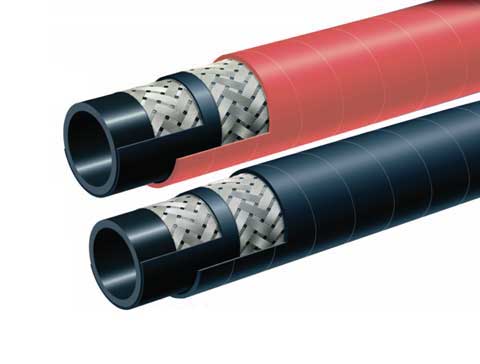
Optimized through a multi-layer composite structure, this material is engineered to meet the mechanical demands of complex automotive operating environments.
The plumbing layout for automotive HVAC systems is highly intricate. Hoses must be routed compactly within the confined space of an engine bay, where they are subjected to continuous high-frequency vibrations from the engine. They must also accommodate the minor displacements caused by the thermal expansion and contraction of rigid metal pipes during thermal cycling, while simultaneously enduring the internal pressure of the circulating antifreeze—all under widely varying operating conditions depending on their specific location within the vehicle. This EPDM rubber hose, designed specifically for automotive HVAC (heating, ventilation, and air conditioning) systems, features a structurally optimized design tailored to the complex operational demands of vehicles, making it suitable for a wide range of automotive heating system applications.
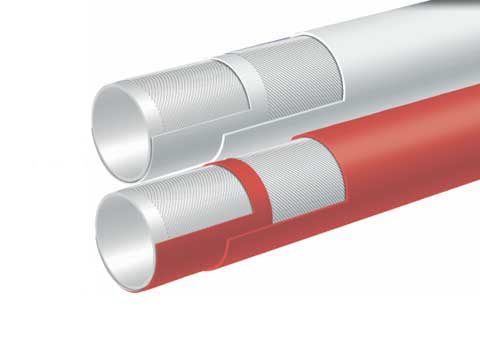
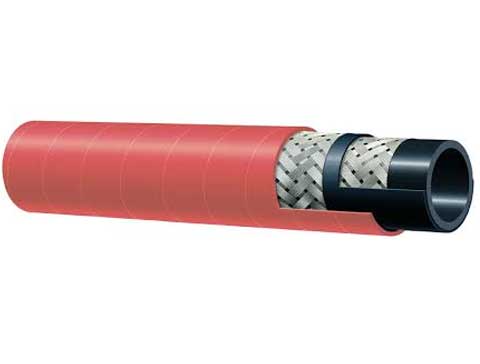
The inner liner—the layer in direct contact with the antifreeze—is composed of high-purity, food-grade EPDM rubber. It is manufactured via a seamless, integrated extrusion process, ensuring the liner is entirely free of joints or pinhole defects. This eliminates the risk of ethylene glycol-based antifreeze penetrating the hose wall through localized weak points. The thickness of the liner incorporates a precise corrosion allowance and a generous margin for long-term swelling. Even after years of continuous antifreeze circulation, the rubber compound will not dissolve or flake off—preventing a common issue where detached rubber particles clog the heater core and degrade heating efficiency. Furthermore, the exceptionally smooth surface of the EPDM liner prevents impurities and scale from the antifreeze from adhering to the pipe walls. This ensures the internal flow cross-section remains unobstructed, maintaining consistent coolant flow and stable heat-exchange efficiency for the HVAC system.
The intermediate reinforcement layer consists of high-strength synthetic polyester fibers, applied using a balanced cross-winding technique. The number of layers is precisely matched to the hose diameter and the specific system pressure requirements of the vehicle, significantly enhancing the hose's overall pressure-bearing capacity and tensile strength. The finished hose boasts a burst pressure exceeding five times the system's rated operating pressure—providing a safety margin far beyond industry standards—and remains resistant to wall bulging or leakage during system pressure fluctuations. The bonding layers between the reinforcement and the inner/outer rubber layers utilize a modified EPDM rubber. Being part of the same molecular family as the inner and outer EPDM layers, these components are fused at the molecular level through an in-line continuous vulcanization process. This ensures the structural integrity of the composite, preventing delamination or internal blistering even under the constant thermal cycling (heating and cooling) of the antifreeze circulation. The outermost layer utilizes a modified EPDM formulation that is resistant to weathering, as well as to oil vapors and contaminants found in the engine compartment. In the demanding environment of an engine bay—characterized by high temperatures and the presence of oil vapors—this layer resists rapid chalking or cracking, providing a robust protective barrier for the internal structure. To accommodate diverse installation requirements, the hoses can be tailored for specific applications: small-diameter versions are ideal for the confined routing spaces of passenger vehicle HVAC systems, featuring a bend radius just five times the hose diameter, allowing for compact installation without the need for forced bending. Variants with enhanced vibration-resistance structures are designed for connections between the engine and the vehicle chassis; these effectively dampen high-frequency vibrations generated during engine operation, preventing stress-induced fractures that could occur with rigid connections.
Automotive-grade, versatile solutions ensuring the stable operation of vehicle HVAC systems throughout their entire lifecycle.
Automotive HVAC systems are critical auxiliary components that ensure both passenger comfort and the safe operation of the engine. A sudden failure or leak in the piping can lead to the loss of heating or cooling functions—detracting from the driving experience—or, more severely, result in a major coolant leak. This can cause the engine to overheat and suffer catastrophic internal damage (such as cylinder scoring), leading to repair costs that far exceed the value of the hose itself. This automotive-grade EPDM rubber hose is optimized for vehicle environments—from interface design to final factory inspection—establishing a highly reliable, flexible conduit for HVAC systems. This delivers comprehensive cost savings and efficiency gains for both vehicle manufacturers and vehicle owners throughout the product's entire lifecycle.
The hose ends are precision-molded to match the standard dimensions of automotive metal piping. This eliminates the need for complex on-site processing; the hose can simply be pushed onto the metal pipe and secured with a hose clamp, effectively preventing the interface leaks often associated with standard hoses. Every hose assembly undergoes rigorous pre-delivery testing, including thermal cycling (alternating hot and cold), hydrostatic pressure retention, and seal integrity verification. All performance metrics fully comply with automotive industry safety standards for components, allowing for immediate installation upon delivery without the need for additional, time-consuming bench testing. In real-world automotive applications, this hose is perfectly suited for critical locations throughout the vehicle. It serves as a conduit between the engine and the heater core, remaining stable despite constant engine vibration and the continuous circulation of high-temperature coolant. Unlike standard hoses, which may suffer from premature aging and leaks, this product significantly extends the replacement interval for heating system piping. In the thermal management systems of new energy vehicles, it accommodates both low-temperature coolant and high-temperature heat-exchange media, maintaining consistent performance even under frequent thermal cycling—preventing the rapid degradation often seen in other materials. For the high-capacity heating systems found in commercial vehicles, the hose’s high-pressure-resistant design effectively handles large-volume coolant flow, ensuring reliable cabin heating during winter and enhancing comfort for occupants on long-haul journeys.
For vehicle manufacturers and after-sales service providers, adopting this EPDM rubber hose for automotive HVAC and heating systems offers several key advantages: it enhances the long-term operational reliability of the vehicle’s climate control system, reduces the incidence of leaks and subsequent repair requirements, and substantially extends the service life of the hose itself. Ultimately, this lowers long-term maintenance costs for vehicle owners and provides a robust, reliable support system for the vehicle’s thermal management and circulation needs throughout its entire lifecycle.