Anti-static, leak-proof, and wear-resistant chemical transfer hose assembly
release date:2026-10-15 13:36:52
reading volume:
share:
 In industrial sectors such as chemical manufacturing, coatings, and pharmaceuticals—where flammable, explosive, or highly corrosive media are handled—static electricity accumulation, accidental leakage, and pipeline wear are frequent safety hazards. Standard industrial hoses often prioritize only one specific performance characteristic, making it difficult to simultaneously meet the comprehensive requirements for anti-static, leak-proof, and wear-resistant properties. Any deficiency in these areas can easily lead to major industrial accidents, including explosions, material leaks, or environmental contamination. Our anti-static, leak-proof, and wear-resistant chemical transfer hose assembly integrates these three core safety features. Through a unified design—encompassing everything from the hose structure itself to the compatible couplings—it serves as a comprehensive safety solution for high-risk chemical transfer operations.
A fully integrated, end-to-end conductive path to eliminate the risk of static-induced explosions at the source.
When flammable or explosive chemical media flow at high speeds, friction between the medium and the pipe wall generates significant amounts of static electricity. If this static charge is not dissipated promptly and reaches a critical threshold, it can trigger an electric spark, potentially igniting volatile substances in the vicinity—a particularly insidious safety hazard in chemical handling. This hose assembly features a complete, end-to-end conductive path—built into both its materials and its structural design—to effectively resolve the issue of static accumulation.
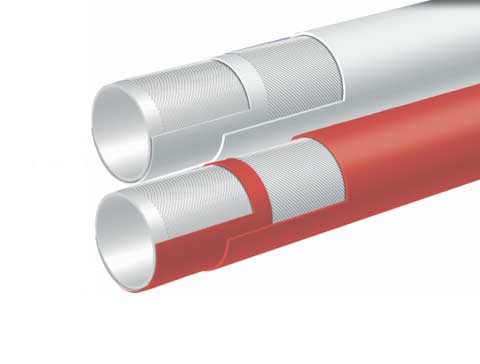
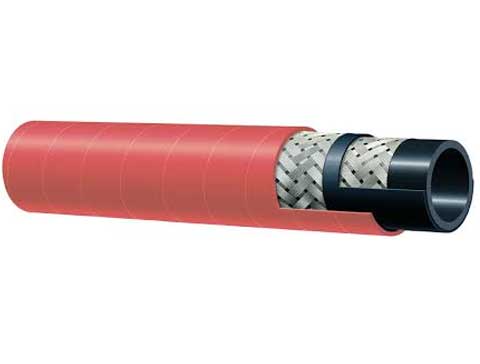
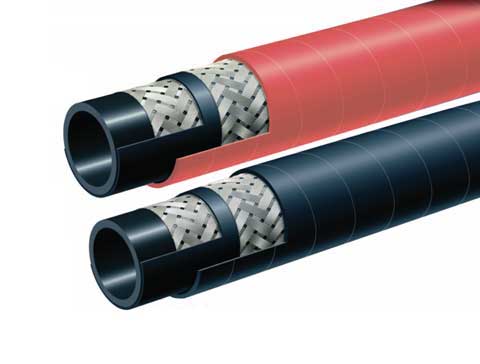
The inner liner replaces standard insulating rubber with a modified, corrosion-resistant base material infused with specialized conductive fillers. This ensures excellent chemical resistance while providing uniform conductivity across the entire pipe wall. Static electricity generated during the transfer process is immediately conducted away through the inner liner, preventing any charge buildup at the interface between the medium and the pipe wall. Unlike some products on the market that merely incorporate conductive filaments into specific areas of the inner liner, this hose offers uniform conductivity throughout the entire liner. This eliminates "blind spots" where static might otherwise become trapped. Furthermore, the hose maintains consistent anti-static performance even after prolonged use, should the inner liner experience minor wear. The intermediate reinforcement layer features a hybrid structure of braided steel wire and conductive fibers. This layer serves both as a pressure-bearing skeleton for the hose and as a continuous conductive network. It is fully integrated with the conductive matrix of the inner rubber layer, allowing static electricity to flow seamlessly from the inner layer to the metal couplings at both ends. From there, the charge is directed into the ground via on-site grounding equipment, establishing an unbroken, end-to-end path for static dissipation—from the medium all the way to the earth. The electrical resistance of this entire static-dissipation system is strictly maintained within the safety range mandated by chemical explosion-proof regulations. This ensures that resistance is neither too high (which would prevent static discharge) nor too low (which could lead to unintended electrical conduction), fully satisfying the explosion-safety standards required for flammable and explosive chemical environments.
An integrated, multi-layered sealing design eliminates the risk of media leakage from every angle.
Leakage in chemical handling often stems from various sources—permeation through the hose wall, gaps at the couplings, or structural cracking caused by long-term pressure. This hose assembly utilizes an integrated, multi-layered sealing design that addresses these root causes, ensuring comprehensive, end-to-end leak prevention.
The inner rubber layer is constructed from a thickened, high-density, corrosion-resistant material. This significantly reduces the ability of highly penetrative chemical media to permeate the material, preventing the "sweating" phenomenon—where media slowly seeps through the hose wall and accumulates on the exterior—common in standard hoses. Even when exposed to highly penetrative organic solvents, the hose wall maintains its structural integrity, ensuring that the medium cannot penetrate the inner layer to reach the intermediate reinforcement skeleton. Furthermore, the steel wire skeleton within the reinforcement layer undergoes a specialized anti-rust passivation treatment. In the unlikely event that a small amount of the medium manages to penetrate, this treatment prevents rapid corrosion or structural failure of the steel wires, providing a sufficient safety margin for emergency response. The hose assembly utilizes a sealing structure where the fitting is crimped directly onto the hose, eliminating the need for traditional, separate flange gaskets. By precisely controlling the crimping pressure, the metal barbs of the fitting are embedded firmly between the inner and outer layers of the hose, creating multiple physical seals that completely eliminate the risk of leakage at the connection interface. Furthermore, the sealing surfaces of the fittings are treated with a specialized, corrosion-resistant coating, ensuring long-term durability against highly corrosive media and preventing seal failure caused by pitting corrosion. Every assembly undergoes an extended pressure-retention test at 1.5 times its rated working pressure before leaving the factory, effectively ruling out any leakage risks under pressurized operating conditions and providing comprehensive, end-to-end leak protection.
Enhanced wear resistance for long-term service in demanding environments
In chemical transfer applications, hoses are frequently subjected to dragging, contact with rough surfaces, and continuous erosion by solid particles. Standard hoses often suffer from rapid outer-layer wear, which exposes and compromises the internal structure. This hose assembly features a reinforced, highly wear-resistant design, significantly extending its service life in challenging operating environments.
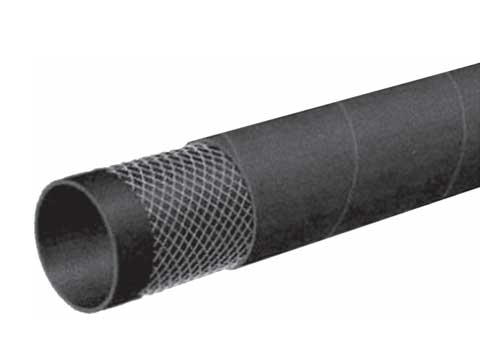
The outer cover is crafted from a specially modified, high-wear-resistance rubber compound infused with functional fillers. This provides superior abrasion resistance compared to conventional chemical hoses, ensuring that the outer layer does not wear through—even when dragged repeatedly over rough concrete or gravel surfaces—thereby preventing the exposure of the reinforcement structure. For applications involving the transport of corrosive chemical slurries containing solid particles, the inner liner has also been reinforced for wear resistance. This ensures the hose maintains its chemical resistance while simultaneously withstanding the erosive impact of solid particles, preventing the inner layer from thinning or suffering localized punctures. This comprehensive, wear-resistant design enables the hose assembly to excel in a wide range of demanding, high-abrasion environments. It withstands frequent dragging—common during loading and unloading operations in chemical storage tank farms—without sustaining rapid damage. In industrial facilities, it remains durable even when subjected to the long-term erosive flow of abrasive slurries. For outdoor, temporary transfer lines, the assembly maintains its structural integrity despite the scraping and crushing forces encountered on uneven terrain. Furthermore, the outer layer is engineered to resist aging, ozone exposure, and chemical vapors; it will not crack, degrade, or flake away—even in workshops filled with volatile, corrosive gases—ensuring consistent, long-term protection.
For chemical enterprises, this multifunctional hose assembly eliminates the compromises often associated with conventional piping. Rather than switching between different types of hoses to meet various safety requirements, a single assembly addresses core needs: anti-static protection, leak prevention, and wear resistance. In daily operation, users simply need to periodically verify the continuity of the anti-static path and ensure that external wear remains within safe limits. This facilitates stable, long-term performance, significantly reducing both operational risks and maintenance costs, while establishing a robust safety barrier for fluid transfer in high-risk chemical production environments.
As safety standards in the chemical industry continue to evolve, hose assemblies that integrate multiple critical safety features are becoming the standard choice for operations involving flammable, explosive, highly corrosive, or abrasive materials—providing a more reliable foundation for the continuous, stable operation of chemical production processes.
In industrial sectors such as chemical manufacturing, coatings, and pharmaceuticals—where flammable, explosive, or highly corrosive media are handled—static electricity accumulation, accidental leakage, and pipeline wear are frequent safety hazards. Standard industrial hoses often prioritize only one specific performance characteristic, making it difficult to simultaneously meet the comprehensive requirements for anti-static, leak-proof, and wear-resistant properties. Any deficiency in these areas can easily lead to major industrial accidents, including explosions, material leaks, or environmental contamination. Our anti-static, leak-proof, and wear-resistant chemical transfer hose assembly integrates these three core safety features. Through a unified design—encompassing everything from the hose structure itself to the compatible couplings—it serves as a comprehensive safety solution for high-risk chemical transfer operations.
A fully integrated, end-to-end conductive path to eliminate the risk of static-induced explosions at the source.
When flammable or explosive chemical media flow at high speeds, friction between the medium and the pipe wall generates significant amounts of static electricity. If this static charge is not dissipated promptly and reaches a critical threshold, it can trigger an electric spark, potentially igniting volatile substances in the vicinity—a particularly insidious safety hazard in chemical handling. This hose assembly features a complete, end-to-end conductive path—built into both its materials and its structural design—to effectively resolve the issue of static accumulation.
The inner liner replaces standard insulating rubber with a modified, corrosion-resistant base material infused with specialized conductive fillers. This ensures excellent chemical resistance while providing uniform conductivity across the entire pipe wall. Static electricity generated during the transfer process is immediately conducted away through the inner liner, preventing any charge buildup at the interface between the medium and the pipe wall. Unlike some products on the market that merely incorporate conductive filaments into specific areas of the inner liner, this hose offers uniform conductivity throughout the entire liner. This eliminates "blind spots" where static might otherwise become trapped. Furthermore, the hose maintains consistent anti-static performance even after prolonged use, should the inner liner experience minor wear. The intermediate reinforcement layer features a hybrid structure of braided steel wire and conductive fibers. This layer serves both as a pressure-bearing skeleton for the hose and as a continuous conductive network. It is fully integrated with the conductive matrix of the inner rubber layer, allowing static electricity to flow seamlessly from the inner layer to the metal couplings at both ends. From there, the charge is directed into the ground via on-site grounding equipment, establishing an unbroken, end-to-end path for static dissipation—from the medium all the way to the earth. The electrical resistance of this entire static-dissipation system is strictly maintained within the safety range mandated by chemical explosion-proof regulations. This ensures that resistance is neither too high (which would prevent static discharge) nor too low (which could lead to unintended electrical conduction), fully satisfying the explosion-safety standards required for flammable and explosive chemical environments.
An integrated, multi-layered sealing design eliminates the risk of media leakage from every angle.
Leakage in chemical handling often stems from various sources—permeation through the hose wall, gaps at the couplings, or structural cracking caused by long-term pressure. This hose assembly utilizes an integrated, multi-layered sealing design that addresses these root causes, ensuring comprehensive, end-to-end leak prevention.
The inner rubber layer is constructed from a thickened, high-density, corrosion-resistant material. This significantly reduces the ability of highly penetrative chemical media to permeate the material, preventing the "sweating" phenomenon—where media slowly seeps through the hose wall and accumulates on the exterior—common in standard hoses. Even when exposed to highly penetrative organic solvents, the hose wall maintains its structural integrity, ensuring that the medium cannot penetrate the inner layer to reach the intermediate reinforcement skeleton. Furthermore, the steel wire skeleton within the reinforcement layer undergoes a specialized anti-rust passivation treatment. In the unlikely event that a small amount of the medium manages to penetrate, this treatment prevents rapid corrosion or structural failure of the steel wires, providing a sufficient safety margin for emergency response. The hose assembly utilizes a sealing structure where the fitting is crimped directly onto the hose, eliminating the need for traditional, separate flange gaskets. By precisely controlling the crimping pressure, the metal barbs of the fitting are embedded firmly between the inner and outer layers of the hose, creating multiple physical seals that completely eliminate the risk of leakage at the connection interface. Furthermore, the sealing surfaces of the fittings are treated with a specialized, corrosion-resistant coating, ensuring long-term durability against highly corrosive media and preventing seal failure caused by pitting corrosion. Every assembly undergoes an extended pressure-retention test at 1.5 times its rated working pressure before leaving the factory, effectively ruling out any leakage risks under pressurized operating conditions and providing comprehensive, end-to-end leak protection.
Enhanced wear resistance for long-term service in demanding environments
In chemical transfer applications, hoses are frequently subjected to dragging, contact with rough surfaces, and continuous erosion by solid particles. Standard hoses often suffer from rapid outer-layer wear, which exposes and compromises the internal structure. This hose assembly features a reinforced, highly wear-resistant design, significantly extending its service life in challenging operating environments.
The outer cover is crafted from a specially modified, high-wear-resistance rubber compound infused with functional fillers. This provides superior abrasion resistance compared to conventional chemical hoses, ensuring that the outer layer does not wear through—even when dragged repeatedly over rough concrete or gravel surfaces—thereby preventing the exposure of the reinforcement structure. For applications involving the transport of corrosive chemical slurries containing solid particles, the inner liner has also been reinforced for wear resistance. This ensures the hose maintains its chemical resistance while simultaneously withstanding the erosive impact of solid particles, preventing the inner layer from thinning or suffering localized punctures. This comprehensive, wear-resistant design enables the hose assembly to excel in a wide range of demanding, high-abrasion environments. It withstands frequent dragging—common during loading and unloading operations in chemical storage tank farms—without sustaining rapid damage. In industrial facilities, it remains durable even when subjected to the long-term erosive flow of abrasive slurries. For outdoor, temporary transfer lines, the assembly maintains its structural integrity despite the scraping and crushing forces encountered on uneven terrain. Furthermore, the outer layer is engineered to resist aging, ozone exposure, and chemical vapors; it will not crack, degrade, or flake away—even in workshops filled with volatile, corrosive gases—ensuring consistent, long-term protection.
For chemical enterprises, this multifunctional hose assembly eliminates the compromises often associated with conventional piping. Rather than switching between different types of hoses to meet various safety requirements, a single assembly addresses core needs: anti-static protection, leak prevention, and wear resistance. In daily operation, users simply need to periodically verify the continuity of the anti-static path and ensure that external wear remains within safe limits. This facilitates stable, long-term performance, significantly reducing both operational risks and maintenance costs, while establishing a robust safety barrier for fluid transfer in high-risk chemical production environments.
As safety standards in the chemical industry continue to evolve, hose assemblies that integrate multiple critical safety features are becoming the standard choice for operations involving flammable, explosive, highly corrosive, or abrasive materials—providing a more reliable foundation for the continuous, stable operation of chemical production processes.
Previous: