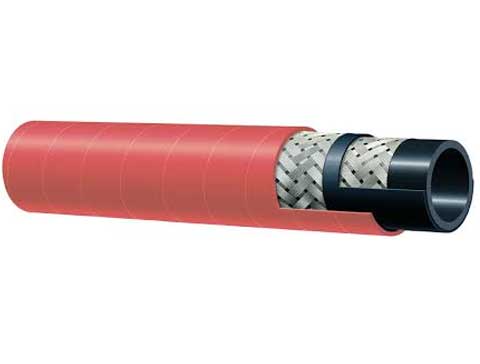
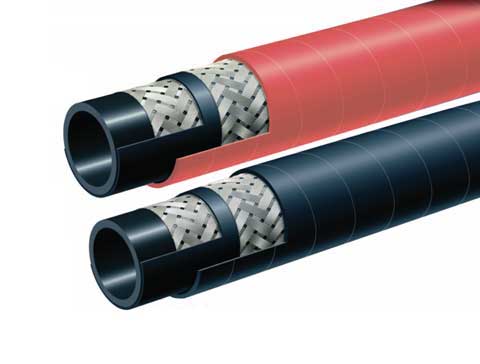
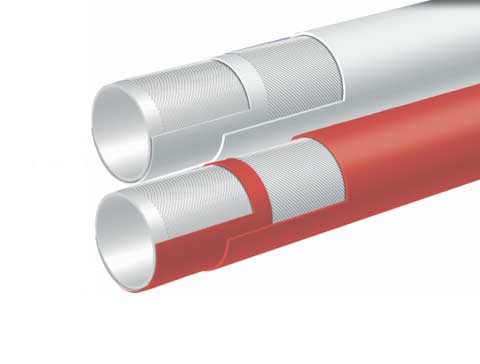
Corrosion-resistant hose assembly with PTFE lining; resistant to strong acids and alkalis; pre-installed flange fittings; ready for immediate installation.
release date:2026-10-09 09:22:07
reading volume:
share:
 、
In applications such as strong-acid transfer lines in chemical plants, high-purity media piping in pharmaceutical workshops, and acid-alkali circulation systems in electroplating lines, the quality of pipe connections directly impacts production safety and operational efficiency. Traditional multi-component assembly methods—requiring the on-site installation of flange clamps, gaskets, and bolts—are not only cumbersome but also create potential leak risks due to improper crimping or tightening. PTFE-lined corrosion-resistant hose assemblies offer a systematic solution to these challenges: a PTFE liner creates a chemical barrier against strong acids and alkalis; factory-prefabricated flange fittings enable "ready-to-install" convenience; and an integrated crimping process ensures reliable sealing. This provides a streamlined "install-upon-delivery, use-immediately" solution for transporting corrosive media across the chemical, pharmaceutical, and electroplating industries.
I. The "Chemical Inertness" of PTFE Liners: From Molecular Structure to Corrosion Resistance
PTFE (polytetrafluoroethylene) is the preferred liner material for hoses handling strong acids and alkalis, a choice rooted in its unique molecular structure featuring carbon-fluorine bonds. The high electronegativity of fluorine atoms creates a dense "electronic protective shield" around the carbon chain, rendering the material unreactive to almost all chemical molecules. This chemical inertness allows PTFE to withstand long-term exposure to sulfuric acid, hydrochloric acid, hydrofluoric acid, aqua regia, sodium hydroxide solutions, and various organic solvents.
In practical applications, the media compatibility of PTFE liners covers the vast majority of corrosive environments found in the chemical industry. When handling strong acidic media such as 98% concentrated sulfuric acid or 37% hydrochloric acid, PTFE liners remain chemically stable—showing no swelling, degradation, or leaching of contaminants. They demonstrate equally excellent resistance to strong alkaline solutions like sodium hydroxide and potassium hydroxide. Even in the mixed-acid environments of electroplating lines—involving substances such as chromic acid and copper sulfate—PTFE liners deliver long-term service without performance degradation. For applications involving the transport of non-conductive media (such as oils or organic solvents) where static electricity might accumulate, an anti-static PTFE liner can be selected. By incorporating conductive fillers to keep surface resistance within safe limits, this effectively eliminates safety hazards caused by electrostatic discharge. Additionally, the smooth, non-stick properties of the PTFE liner facilitate easy flushing and cleaning during media switching, thereby reducing the risk of cross-contamination.
II. Integral Swaging and Pre-installed Flanges: A Shift from "On-site Assembly" to "Ready-to-Use"
The "ready-to-use" nature of these corrosion-resistant hose assemblies relies on a factory-based prefabrication model. Unlike traditional split-flange connections—which require multiple on-site steps such as assembling flange clamps, positioning seals, inserting bolts, and tightening to specific torque values—hose assemblies with pre-installed flange fittings have all connection processes completed before leaving the factory.
The integral swaging process is the core technology ensuring sealing reliability. Within a controlled factory environment, CNC swaging equipment precisely regulates the compression of the fitting onto the hose body within strict tolerances; this ensures a tight fit between the fitting stem and the PTFE liner to form the primary seal, while the outer sleeve creates a mechanical lock with the reinforcement layer. This process eliminates fluctuations in sealing quality that might otherwise arise on-site due to variations in equipment precision or operator skill. Following swaging, every assembly undergoes hydrostatic testing to verify leak-free performance at the rated working pressure.
The pre-installed flange design simplifies on-site installation to just three steps: alignment, bolt insertion, and tightening. Flange sealing surfaces undergo precision machining prior to shipment; combined with pre-installed PTFE gaskets or O-rings, they establish an initial sealing pressure. When high-pressure fluid enters the system, the pressure of the medium acts further upon the sealing surfaces to create a "self-tightening" effect—meaning the seal becomes tighter as the pressure increases. During on-site installation, operators simply align the flange with the equipment interface, insert the bolts, and tighten them to the specified torque to complete the connection; the installation time for a single unit can be reduced to under 30 minutes.
III. Suitability for Chemical Applications: From Strong Acid Transport to High-Purity Media Transfer
PTFE-lined corrosion-resistant hose assemblies are utilized across industries such as chemicals, pharmaceuticals, and electroplating, covering a wide range of applications—from the transport of highly corrosive media to the transfer of high-purity fluids.
In chemical production, these hose assemblies connect reaction vessels to storage tanks and pump outlets to manifolds, transporting highly corrosive media such as sulfuric acid, hydrochloric acid, and nitric acid. The chemical inertness of the PTFE lining ensures that the inner layer does not swell or degrade after prolonged contact with strong acids. The reinforcement layer features a stainless steel wire braid or high-strength fiber wrap structure, enabling working pressures of 1.0–4.0 MPa (depending on diameter and number of reinforcement layers) and a burst pressure exceeding four times the working pressure.
In the pharmaceutical and biotechnology sectors, the PTFE lining complies with FDA and USP Class VI certification requirements, ensuring no contamination from leached metal ions or organic substances. This makes the hoses suitable for applications requiring extreme cleanliness, such as the synthesis of active pharmaceutical ingredients (APIs) and the circulation of water for injection (WFI). The smooth, non-stick nature of the PTFE inner wall facilitates easy cleaning during batch transitions, allowing for the rapid removal of residual media.
In the electroplating and surface treatment industries, the hose assemblies are used to transport corrosive plating solutions, such as chromic acid, copper sulfate, and nickel solutions. The PTFE lining's resistance to strong acids and heavy metal salt solutions ensures long-term stability during continuous electroplating line operations. Pre-installed flange fittings at the ends allow for quick connection to plating tanks, filters, and pump units, thereby minimizing production line downtime for maintenance. Regarding selection and installation, the compatibility rating of the PTFE liner must be verified based on the medium type; the reinforcement layer structure must be selected to match the system's operating pressure; and the flange connection standard (ANSI, DIN, or JIS) must be confirmed to align with on-site equipment. During installation, the bending radius must not fall below the rated value to prevent cracking of the PTFE liner or damage to the reinforcement layer caused by excessive bending. Routine inspections should focus on checking for leaks at the connections and cracks in the outer rubber layer, ensuring the assembly maintains its factory-standard sealing reliability throughout its service life.
In summary, PTFE-lined corrosion-resistant hose assemblies perfectly meet the systematic requirements—corrosion resistance, leak-free performance, and rapid installation—of industries such as chemical processing, pharmaceuticals, and electroplating for the transport of corrosive media. This is achieved through three core technical features: the chemical inertness of the carbon-fluorine molecular structure against strong acids and alkalis; the sealing reliability provided by factory-prefabricated, integral crimping; and the convenience of ready-to-use, pre-installed flange connections. From handling long-term exposure to 98% concentrated sulfuric acid and operating across a wide temperature range (-40°C to 150°C) to enabling 30-minute on-site installation and undergoing hydrostatic testing before shipment, the design of every PTFE liner and crimping process aims for a single goal: to provide a reliable solution for chemical fluid systems transporting corrosive media—one that withstands corrosion and pressure while ensuring rapid installation and stable, dependable operation.
、
In applications such as strong-acid transfer lines in chemical plants, high-purity media piping in pharmaceutical workshops, and acid-alkali circulation systems in electroplating lines, the quality of pipe connections directly impacts production safety and operational efficiency. Traditional multi-component assembly methods—requiring the on-site installation of flange clamps, gaskets, and bolts—are not only cumbersome but also create potential leak risks due to improper crimping or tightening. PTFE-lined corrosion-resistant hose assemblies offer a systematic solution to these challenges: a PTFE liner creates a chemical barrier against strong acids and alkalis; factory-prefabricated flange fittings enable "ready-to-install" convenience; and an integrated crimping process ensures reliable sealing. This provides a streamlined "install-upon-delivery, use-immediately" solution for transporting corrosive media across the chemical, pharmaceutical, and electroplating industries.
I. The "Chemical Inertness" of PTFE Liners: From Molecular Structure to Corrosion Resistance
PTFE (polytetrafluoroethylene) is the preferred liner material for hoses handling strong acids and alkalis, a choice rooted in its unique molecular structure featuring carbon-fluorine bonds. The high electronegativity of fluorine atoms creates a dense "electronic protective shield" around the carbon chain, rendering the material unreactive to almost all chemical molecules. This chemical inertness allows PTFE to withstand long-term exposure to sulfuric acid, hydrochloric acid, hydrofluoric acid, aqua regia, sodium hydroxide solutions, and various organic solvents.
In practical applications, the media compatibility of PTFE liners covers the vast majority of corrosive environments found in the chemical industry. When handling strong acidic media such as 98% concentrated sulfuric acid or 37% hydrochloric acid, PTFE liners remain chemically stable—showing no swelling, degradation, or leaching of contaminants. They demonstrate equally excellent resistance to strong alkaline solutions like sodium hydroxide and potassium hydroxide. Even in the mixed-acid environments of electroplating lines—involving substances such as chromic acid and copper sulfate—PTFE liners deliver long-term service without performance degradation. For applications involving the transport of non-conductive media (such as oils or organic solvents) where static electricity might accumulate, an anti-static PTFE liner can be selected. By incorporating conductive fillers to keep surface resistance within safe limits, this effectively eliminates safety hazards caused by electrostatic discharge. Additionally, the smooth, non-stick properties of the PTFE liner facilitate easy flushing and cleaning during media switching, thereby reducing the risk of cross-contamination.
II. Integral Swaging and Pre-installed Flanges: A Shift from "On-site Assembly" to "Ready-to-Use"
The "ready-to-use" nature of these corrosion-resistant hose assemblies relies on a factory-based prefabrication model. Unlike traditional split-flange connections—which require multiple on-site steps such as assembling flange clamps, positioning seals, inserting bolts, and tightening to specific torque values—hose assemblies with pre-installed flange fittings have all connection processes completed before leaving the factory.
The integral swaging process is the core technology ensuring sealing reliability. Within a controlled factory environment, CNC swaging equipment precisely regulates the compression of the fitting onto the hose body within strict tolerances; this ensures a tight fit between the fitting stem and the PTFE liner to form the primary seal, while the outer sleeve creates a mechanical lock with the reinforcement layer. This process eliminates fluctuations in sealing quality that might otherwise arise on-site due to variations in equipment precision or operator skill. Following swaging, every assembly undergoes hydrostatic testing to verify leak-free performance at the rated working pressure.
The pre-installed flange design simplifies on-site installation to just three steps: alignment, bolt insertion, and tightening. Flange sealing surfaces undergo precision machining prior to shipment; combined with pre-installed PTFE gaskets or O-rings, they establish an initial sealing pressure. When high-pressure fluid enters the system, the pressure of the medium acts further upon the sealing surfaces to create a "self-tightening" effect—meaning the seal becomes tighter as the pressure increases. During on-site installation, operators simply align the flange with the equipment interface, insert the bolts, and tighten them to the specified torque to complete the connection; the installation time for a single unit can be reduced to under 30 minutes.
III. Suitability for Chemical Applications: From Strong Acid Transport to High-Purity Media Transfer
PTFE-lined corrosion-resistant hose assemblies are utilized across industries such as chemicals, pharmaceuticals, and electroplating, covering a wide range of applications—from the transport of highly corrosive media to the transfer of high-purity fluids.
In chemical production, these hose assemblies connect reaction vessels to storage tanks and pump outlets to manifolds, transporting highly corrosive media such as sulfuric acid, hydrochloric acid, and nitric acid. The chemical inertness of the PTFE lining ensures that the inner layer does not swell or degrade after prolonged contact with strong acids. The reinforcement layer features a stainless steel wire braid or high-strength fiber wrap structure, enabling working pressures of 1.0–4.0 MPa (depending on diameter and number of reinforcement layers) and a burst pressure exceeding four times the working pressure.
In the pharmaceutical and biotechnology sectors, the PTFE lining complies with FDA and USP Class VI certification requirements, ensuring no contamination from leached metal ions or organic substances. This makes the hoses suitable for applications requiring extreme cleanliness, such as the synthesis of active pharmaceutical ingredients (APIs) and the circulation of water for injection (WFI). The smooth, non-stick nature of the PTFE inner wall facilitates easy cleaning during batch transitions, allowing for the rapid removal of residual media.
In the electroplating and surface treatment industries, the hose assemblies are used to transport corrosive plating solutions, such as chromic acid, copper sulfate, and nickel solutions. The PTFE lining's resistance to strong acids and heavy metal salt solutions ensures long-term stability during continuous electroplating line operations. Pre-installed flange fittings at the ends allow for quick connection to plating tanks, filters, and pump units, thereby minimizing production line downtime for maintenance. Regarding selection and installation, the compatibility rating of the PTFE liner must be verified based on the medium type; the reinforcement layer structure must be selected to match the system's operating pressure; and the flange connection standard (ANSI, DIN, or JIS) must be confirmed to align with on-site equipment. During installation, the bending radius must not fall below the rated value to prevent cracking of the PTFE liner or damage to the reinforcement layer caused by excessive bending. Routine inspections should focus on checking for leaks at the connections and cracks in the outer rubber layer, ensuring the assembly maintains its factory-standard sealing reliability throughout its service life.
In summary, PTFE-lined corrosion-resistant hose assemblies perfectly meet the systematic requirements—corrosion resistance, leak-free performance, and rapid installation—of industries such as chemical processing, pharmaceuticals, and electroplating for the transport of corrosive media. This is achieved through three core technical features: the chemical inertness of the carbon-fluorine molecular structure against strong acids and alkalis; the sealing reliability provided by factory-prefabricated, integral crimping; and the convenience of ready-to-use, pre-installed flange connections. From handling long-term exposure to 98% concentrated sulfuric acid and operating across a wide temperature range (-40°C to 150°C) to enabling 30-minute on-site installation and undergoing hydrostatic testing before shipment, the design of every PTFE liner and crimping process aims for a single goal: to provide a reliable solution for chemical fluid systems transporting corrosive media—one that withstands corrosion and pressure while ensuring rapid installation and stable, dependable operation.
Previous: