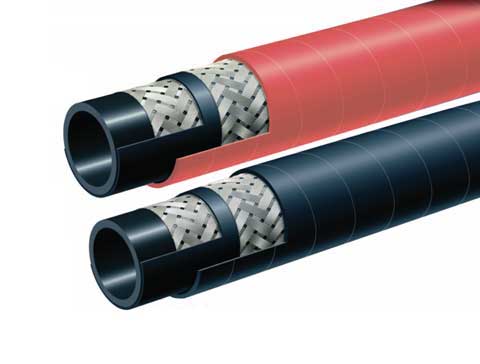
Wear resistant industrial rubber hose, large-diameter rubber hose suitable for solid-liquid mixed transportation
release date:2026-09-09 15:11:02
reading volume:
share:
 In industrial scenarios such as mining beneficiation, river dredging, tunnel shield slurry treatment, and metallurgical concentrate transportation, efficient transportation of solid-liquid mixed media is a key link in production continuity. This type of medium often contains high concentrations of high hardness particles such as quartz sand, slag, and crushed stone, which cause continuous "cutting" and "impact" dual wear on the inner wall of the conveying pipeline. Small diameter pipelines are difficult to meet high flow demands, while ordinary rubber pipes have a significantly shortened lifespan under high sand content conditions. The large-diameter wear-resistant industrial rubber hose is precisely an engineering solution for this working condition - designed with a large diameter to meet the high flow transportation of solid-liquid mixed media, with a graded wear-resistant lining system to resist particle erosion, and a multi-layer composite reinforced structure to carry alternating positive and negative pressure working conditions, becoming a reliable channel for "smooth and wear-resistant" in mining, dredging, and shield tunneling engineering.
1、 The matching logic between large-diameter and solid-liquid mixed media
The transportation characteristics of solid-liquid mixed media determine the selection logic of pipelines. Mining tailings slurry, dredging slurry, shield tunneling slurry and other media have high solid content (usually 40% -60%), high particle hardness (quartz sand Mohs hardness of about 7), long transportation distance, and large flow rate. Small diameter pipelines need to maintain high flow rates at the same flow rate, and excessively high flow rates can rapidly accelerate pipe wall wear. The large-diameter design is the optimal solution to this contradiction - while ensuring the conveying capacity, controlling the flow rate within a reasonable range effectively alleviates the tension between wear rate and operational efficiency.
In terms of inner diameter coverage, large-diameter wear-resistant rubber hoses can be customized with specifications ranging from DN50mm to DN600mm or above. The working pressure of large-diameter specifications is usually 0.6-1.6MPa, and the burst pressure is more than 4 times the working pressure (about 2.4-6.4MPa). Another advantage of large-diameter design is to reduce the resistance along the way and minimize pumping energy consumption, which is particularly critical for long-distance tailings transportation and shield tunneling slurry circulation systems. Large caliber specifications (such as DN300) can achieve a conveying capacity of up to 300m ³/h.
2、 Classification System and Materials Science of Wear resistant Lining
The core technological value of large-diameter wear-resistant rubber hoses lies in the graded wear-resistant design of their inner lining layer, providing differentiated wear-resistant solutions for particles of different sizes and hardness.
Natural rubber based composite lining is the main solution to cope with "large particle impact" wear due to its excellent elasticity and tear resistance. When the conveying medium contains ore fragments with larger particle sizes, natural rubber absorbs impact energy through elastic deformation, converting the cutting action of particles into elastic deformation, exhibiting the unique advantage of "overcoming hardness with softness". The inner rubber layer adopts a high rubber content formula (with a rubber content of over 65%), and after adding high structure carbon black and nano reinforcing fillers, the wear rate can be controlled below 0.2 grams per square meter. The thickness of the inner layer of large-diameter specifications (such as DN200 and above) has significantly increased. The larger the diameter, the thicker the wear-resistant layer, leaving ample "wear allowance" for long-term erosion.
Ultra high molecular weight polyethylene (UPE) lining is an advanced solution to cope with "high-speed fine particle erosion". UPE has a molecular weight of several million and its wear resistance is 3-5 times that of ordinary rubber, with a friction coefficient as low as 0.07-0.11. When conveying mud with a solid content of up to 50%, the wear rate of UPE lining is extremely low, which can achieve a long-life effect of "continuous use with smooth inner walls and no corrosion pits".
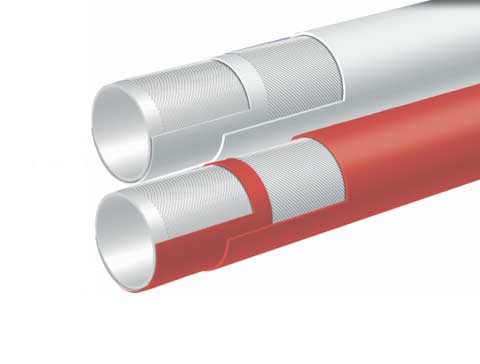
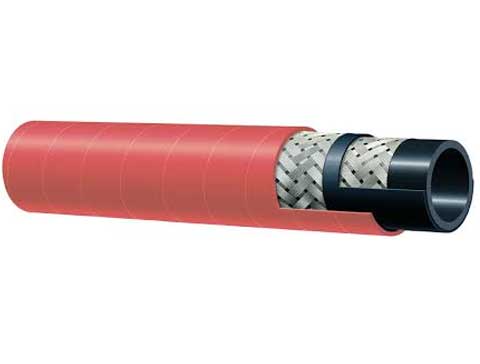
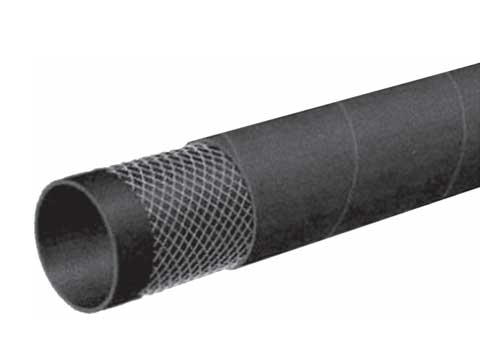
In terms of reinforcement layer structure, large-diameter rubber hoses usually adopt a composite reinforcement scheme of "multi-layer cloth/curtain wire winding+spiral steel wire skeleton". The spiral steel wire skeleton is embedded inside the pipe wall, providing continuous radial support force, allowing the hose to withstand a vacuum degree of 0.9 bar without collapsing. The number of reinforcement layers is determined based on the working pressure - there are working pressure levels such as 0.6MPa, 1.0MPa, 1.6MPa, 2.5MPa, etc. The higher the pressure, the more reinforcement layers are used.
3、 Flange connection and service scenario adaptation
The reliability of large-diameter wear-resistant rubber hoses in solid-liquid mixed medium transportation ultimately depends on the system guarantee of flange connection, negative pressure adaptation, and installation specifications.
Flange connection is a standard end configuration for large-diameter rubber hoses, supporting standards such as ANSI B16.5 and GB/T 9119. The flange material can be selected from carbon steel or 304 stainless steel, and the sealing surface roughness is controlled within Ra ≤ 3.2 μ m to ensure sealing reliability under high pressure impact. The flange connection method enables the installation and replacement of a single hose to be completed in a shorter period of time, adapting to the frequent movement of pipelines in mining and dredging projects. The flange type large-diameter rubber hose adopts an integral vulcanization process, which tightly adheres the flange to the main body of the hose, eliminating leakage problems during transportation, and the sealing leakage rate can be controlled at an extremely low level.
The outer rubber layer is made of ozone resistant and UV resistant chloroprene rubber or chlorosulfonated polyethylene formula in open-pit mines or dredging vessel environments. Some products can withstand temperatures ranging from -40 ℃ to+120 ℃. Under the condition of acidic wastewater in mines, the inner rubber layer can be made of a blend of chlorosulfonated polyethylene rubber and fluororubber, which can improve the corrosion resistance by 50% and extend the service life by 3 times.
In terms of installation specifications, the minimum bending radius of large-diameter rubber hoses is directly related to the diameter and pressure rating. When laying pipes, it is necessary to plan the pipeline direction in advance to avoid damage to the reinforcement layer or increased wear on the inner wall due to excessive bending. When installing flange connections, torque wrenches should be used to tighten bolts to standard torque to avoid seal failure caused by uneven pre tightening force of bolts. The anti-corrosion coating (galvanized or epoxy resin treatment) on the surface of the flange can effectively resist salt spray corrosion in marine or mining environments.
In summary, large-diameter wear-resistant industrial rubber hoses, with their graded wear-resistant lining system (natural rubber/UPE) for differentiated protection of different particle sizes, multi-layer curtain and spiral steel wire composite reinforced positive and negative pressure dual adaptation structure, and flange connection for fast installation and high sealing reliability, perfectly meet the systematic needs of solid-liquid mixed medium transportation such as mining tailings, river dredging, and shield tunneling mud water treatment for "high flow rate, wear resistance, and pressure stability". From the wide caliber coverage of DN50 to DN600 to the explosive redundancy of 4 times the working pressure, from the continuous flushing of mud with a solid content of 50% to the stable bearing of -0.09MPa negative pressure, the design of each layer of wear-resistant rubber and each spiral steel wire is aimed at the same goal: to provide a continuous and reliable channel for the conveying system that can withstand flushing, impact, and in the industrial front line of solid-liquid mixed medium flow.
In industrial scenarios such as mining beneficiation, river dredging, tunnel shield slurry treatment, and metallurgical concentrate transportation, efficient transportation of solid-liquid mixed media is a key link in production continuity. This type of medium often contains high concentrations of high hardness particles such as quartz sand, slag, and crushed stone, which cause continuous "cutting" and "impact" dual wear on the inner wall of the conveying pipeline. Small diameter pipelines are difficult to meet high flow demands, while ordinary rubber pipes have a significantly shortened lifespan under high sand content conditions. The large-diameter wear-resistant industrial rubber hose is precisely an engineering solution for this working condition - designed with a large diameter to meet the high flow transportation of solid-liquid mixed media, with a graded wear-resistant lining system to resist particle erosion, and a multi-layer composite reinforced structure to carry alternating positive and negative pressure working conditions, becoming a reliable channel for "smooth and wear-resistant" in mining, dredging, and shield tunneling engineering.
1、 The matching logic between large-diameter and solid-liquid mixed media
The transportation characteristics of solid-liquid mixed media determine the selection logic of pipelines. Mining tailings slurry, dredging slurry, shield tunneling slurry and other media have high solid content (usually 40% -60%), high particle hardness (quartz sand Mohs hardness of about 7), long transportation distance, and large flow rate. Small diameter pipelines need to maintain high flow rates at the same flow rate, and excessively high flow rates can rapidly accelerate pipe wall wear. The large-diameter design is the optimal solution to this contradiction - while ensuring the conveying capacity, controlling the flow rate within a reasonable range effectively alleviates the tension between wear rate and operational efficiency.
In terms of inner diameter coverage, large-diameter wear-resistant rubber hoses can be customized with specifications ranging from DN50mm to DN600mm or above. The working pressure of large-diameter specifications is usually 0.6-1.6MPa, and the burst pressure is more than 4 times the working pressure (about 2.4-6.4MPa). Another advantage of large-diameter design is to reduce the resistance along the way and minimize pumping energy consumption, which is particularly critical for long-distance tailings transportation and shield tunneling slurry circulation systems. Large caliber specifications (such as DN300) can achieve a conveying capacity of up to 300m ³/h.
2、 Classification System and Materials Science of Wear resistant Lining
The core technological value of large-diameter wear-resistant rubber hoses lies in the graded wear-resistant design of their inner lining layer, providing differentiated wear-resistant solutions for particles of different sizes and hardness.
Natural rubber based composite lining is the main solution to cope with "large particle impact" wear due to its excellent elasticity and tear resistance. When the conveying medium contains ore fragments with larger particle sizes, natural rubber absorbs impact energy through elastic deformation, converting the cutting action of particles into elastic deformation, exhibiting the unique advantage of "overcoming hardness with softness". The inner rubber layer adopts a high rubber content formula (with a rubber content of over 65%), and after adding high structure carbon black and nano reinforcing fillers, the wear rate can be controlled below 0.2 grams per square meter. The thickness of the inner layer of large-diameter specifications (such as DN200 and above) has significantly increased. The larger the diameter, the thicker the wear-resistant layer, leaving ample "wear allowance" for long-term erosion.
Ultra high molecular weight polyethylene (UPE) lining is an advanced solution to cope with "high-speed fine particle erosion". UPE has a molecular weight of several million and its wear resistance is 3-5 times that of ordinary rubber, with a friction coefficient as low as 0.07-0.11. When conveying mud with a solid content of up to 50%, the wear rate of UPE lining is extremely low, which can achieve a long-life effect of "continuous use with smooth inner walls and no corrosion pits".
In terms of reinforcement layer structure, large-diameter rubber hoses usually adopt a composite reinforcement scheme of "multi-layer cloth/curtain wire winding+spiral steel wire skeleton". The spiral steel wire skeleton is embedded inside the pipe wall, providing continuous radial support force, allowing the hose to withstand a vacuum degree of 0.9 bar without collapsing. The number of reinforcement layers is determined based on the working pressure - there are working pressure levels such as 0.6MPa, 1.0MPa, 1.6MPa, 2.5MPa, etc. The higher the pressure, the more reinforcement layers are used.
3、 Flange connection and service scenario adaptation
The reliability of large-diameter wear-resistant rubber hoses in solid-liquid mixed medium transportation ultimately depends on the system guarantee of flange connection, negative pressure adaptation, and installation specifications.
Flange connection is a standard end configuration for large-diameter rubber hoses, supporting standards such as ANSI B16.5 and GB/T 9119. The flange material can be selected from carbon steel or 304 stainless steel, and the sealing surface roughness is controlled within Ra ≤ 3.2 μ m to ensure sealing reliability under high pressure impact. The flange connection method enables the installation and replacement of a single hose to be completed in a shorter period of time, adapting to the frequent movement of pipelines in mining and dredging projects. The flange type large-diameter rubber hose adopts an integral vulcanization process, which tightly adheres the flange to the main body of the hose, eliminating leakage problems during transportation, and the sealing leakage rate can be controlled at an extremely low level.
The outer rubber layer is made of ozone resistant and UV resistant chloroprene rubber or chlorosulfonated polyethylene formula in open-pit mines or dredging vessel environments. Some products can withstand temperatures ranging from -40 ℃ to+120 ℃. Under the condition of acidic wastewater in mines, the inner rubber layer can be made of a blend of chlorosulfonated polyethylene rubber and fluororubber, which can improve the corrosion resistance by 50% and extend the service life by 3 times.
In terms of installation specifications, the minimum bending radius of large-diameter rubber hoses is directly related to the diameter and pressure rating. When laying pipes, it is necessary to plan the pipeline direction in advance to avoid damage to the reinforcement layer or increased wear on the inner wall due to excessive bending. When installing flange connections, torque wrenches should be used to tighten bolts to standard torque to avoid seal failure caused by uneven pre tightening force of bolts. The anti-corrosion coating (galvanized or epoxy resin treatment) on the surface of the flange can effectively resist salt spray corrosion in marine or mining environments.
In summary, large-diameter wear-resistant industrial rubber hoses, with their graded wear-resistant lining system (natural rubber/UPE) for differentiated protection of different particle sizes, multi-layer curtain and spiral steel wire composite reinforced positive and negative pressure dual adaptation structure, and flange connection for fast installation and high sealing reliability, perfectly meet the systematic needs of solid-liquid mixed medium transportation such as mining tailings, river dredging, and shield tunneling mud water treatment for "high flow rate, wear resistance, and pressure stability". From the wide caliber coverage of DN50 to DN600 to the explosive redundancy of 4 times the working pressure, from the continuous flushing of mud with a solid content of 50% to the stable bearing of -0.09MPa negative pressure, the design of each layer of wear-resistant rubber and each spiral steel wire is aimed at the same goal: to provide a continuous and reliable channel for the conveying system that can withstand flushing, impact, and in the industrial front line of solid-liquid mixed medium flow.
Previous: