BOP fire-resistant rubber hose rated working pressure 15000psi fire-resistant well control safety
release date:2026-09-07 09:30:26
reading volume:
share:
 In oil and gas drilling operations, the blowout preventer (BOP) is the last line of defense against blowout accidents. The hydraulic hose connecting the control system and the blowout preventer group is the "nerve and blood vessel" of this defense line - once a blowout catches fire, the ordinary hose will melt and fail within minutes, and the blowout preventer cannot be closed, causing the wellhead to lose control. The BOP fire-resistant rubber hose that complies with the API 16D standard is a specialized solution for this extreme working condition - using a multi-layer composite fire-resistant structure to resist burning from open flames above 704 ℃, using four or more layers of steel wire winding to carry 15000psi ultra-high pressure pulses, and using NBR/HNBR oil resistant lining to ensure pure transmission of hydraulic oil. It has become a safety barrier in drilling well control systems that "does not fail in the fire scene and does not burst under high pressure".
1、 15000psi pressure rating and API 16D standard system
The working pressure of BOP fire-resistant rubber hose covers a range of 5000psi to 15000psi (approximately 35-103MPa), with 15000psi corresponding to the requirements of the deepest and highest pressure well control scenarios. According to the API 16D standard, the validation pressure for this grade of product is 1.5 times the working pressure (22500psi), and the minimum burst pressure is more than 2.5 times the working pressure (37500psi). This ample safety redundancy provides structural support for potential instantaneous pressure peaks during blowout emergencies.
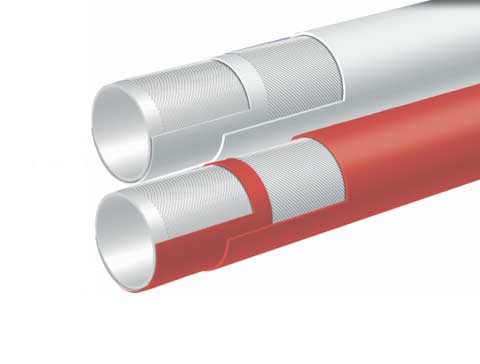
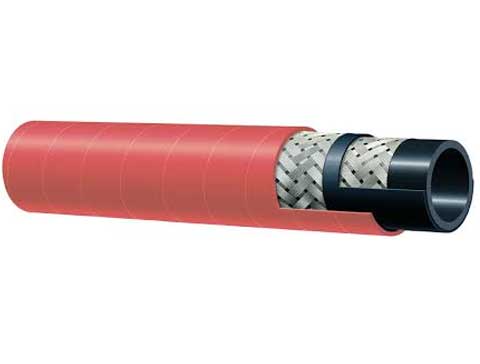
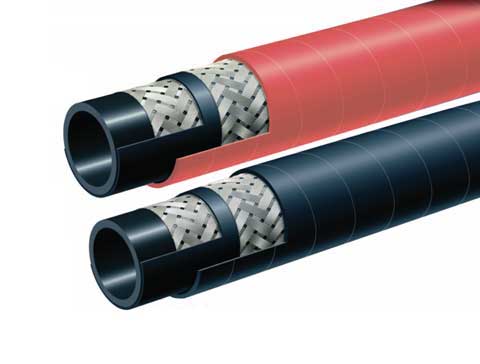
The reinforcement layer adopts an alternating spiral winding structure of 4 or more layers of high-strength ultra flexible steel wire, and adjacent layers are wound in reverse to form an "interlocking" skeleton. The inner steel wire provides radial support at a higher angle to resist tube swelling at 15000psi; The outer steel wire constructs an axial tensile skeleton at a lower angle to prevent excessive elongation of the hose under pulse pressure. The inner rubber layer adopts NBR (nitrile rubber) or HNBR (hydrogenated nitrile rubber) formula, which can withstand the erosion of drilling fluid, hydraulic oil and acidic media, and the working temperature range covers -45 ℃ to+100 ℃.
2、 Fire resistant structure: from 704 ℃× 5 minutes to 1093 ℃× 30 minutes
The core safety value of BOP fire-resistant rubber hose lies in its "fire survival ability". The API 16D standard requires hoses to be continuously burned in an open flame at 704 ℃ (1300 ° F) for 5 minutes without leakage under working pressure. Although this time window is short, it is sufficient for the well control system to complete the emergency shutdown operation. The fire resistance performance of high-end products far exceeds the standard - some products can work continuously for more than 30 minutes at a high temperature of 750 ℃, or maintain stable performance for 5 minutes in a 1093 ℃ flame.
The implementation of fire resistance performance relies on multi-layer composite structure design: a refractory adhesive layer is added outside the steel wire reinforcement layer, which is composed of composite materials such as aluminum silicate fiber cotton, aluminum hydroxide, antimony trioxide, zinc borate, etc. When the flame burns, the flame-retardant components in the refractory layer release non combustible gases to dilute oxygen, while forming a dense carbonization layer to isolate heat transfer to the reinforcement layer. The outer rubber layer is made of high-temperature and fire-resistant synthetic rubber (chloroprene rubber or silicone rubber combined with aramid fiber), and some products are also equipped with stainless steel armor outer protective layer. Even if the outer rubber is burned in a fire, the armor can still maintain the shape of the pipe and prevent the reinforcement layer from being exposed. This structure allows the hose to maintain structural integrity in flames at 750-1093 ℃, providing crucial operational time for well control emergencies.
3、 Well control scenario adaptation: from fire testing to offshore platforms
The reliability of BOP refractory rubber hoses in drilling well control systems ultimately depends on certification compliance, structural integrity, and system integration during on-site installation.
In terms of certification system, API 16D is the core standard for BOP hoses, requiring products to pass fire resistance testing certification by third-party authoritative organizations such as Lloyd's Register. The test program simulates a real fire scenario: the hose is exposed to a 704 ℃ flame at rated working pressure for 5 minutes without leakage, which is considered qualified. Some products also have an additional UL 1738 fire resistance certification. When purchasing, it is necessary to verify whether the product holds a valid API 16D certification certificate and fire resistance test report.
The differentiated design of land and ocean scenes is also worth paying attention to. Land drilling focuses on mechanical durability and on-site adaptability, and a three-layer structure (inner layer+reinforcement+fire-resistant outer adhesive) can meet the requirements. Offshore platforms face dual challenges of high salt spray corrosion and external hydrostatic pressure. The outer layer needs to be equipped with stainless steel armor or waterproof and wear-resistant polyurethane sleeves to prevent seawater infiltration from causing steel wire corrosion. The underwater BOP system also requires hoses to have wider low-temperature toughness (-45 ℃ to+100 ℃) and full flow design to ensure fast response for long-distance transmission in deep sea.
Installation and maintenance points: BOP fire-resistant rubber hose is a key equipment for well control. Before installation, it is necessary to confirm that the hose is free of oil and grease (to prevent grease from deteriorating and corroding the inner rubber layer at high temperatures), and the bending radius should not be less than the rated value (minimum bending radius of 300mm for 1/2 inch specifications). During daily inspections, it is important to observe whether the stainless steel armor is significantly deformed or corroded, and whether there is leakage at the joints. Each hose should be equipped with a unique traceability code to record the production date, batch, and fire resistance test data, providing a complete technical file for well control safety management.
In summary, the BOP fire-resistant rubber hose with a rated working pressure of 15000psi, with its multi-layered steel wire reinforced 15000psi ultra-high pressure bearing, fire-resistant rubber layer and stainless steel armored 704 ℃× 5-minute fire barrier, and compliance guarantee of API 16D certification and Lloyd's Register third-party verification, perfectly meets the safety requirements of drilling well control systems for "high temperature no failure, high pressure no explosion". From the 5-minute emergency window of a single fire resistance test to different protection schemes for sea and land platforms, the design of each layer of refractory rubber material and each armored steel wire is aimed at the same goal: to provide reliable guarantees for the hydraulic control of the blowout preventer to prevent melting, leakage, and failure in the extreme danger of blowout and fire.
In oil and gas drilling operations, the blowout preventer (BOP) is the last line of defense against blowout accidents. The hydraulic hose connecting the control system and the blowout preventer group is the "nerve and blood vessel" of this defense line - once a blowout catches fire, the ordinary hose will melt and fail within minutes, and the blowout preventer cannot be closed, causing the wellhead to lose control. The BOP fire-resistant rubber hose that complies with the API 16D standard is a specialized solution for this extreme working condition - using a multi-layer composite fire-resistant structure to resist burning from open flames above 704 ℃, using four or more layers of steel wire winding to carry 15000psi ultra-high pressure pulses, and using NBR/HNBR oil resistant lining to ensure pure transmission of hydraulic oil. It has become a safety barrier in drilling well control systems that "does not fail in the fire scene and does not burst under high pressure".
1、 15000psi pressure rating and API 16D standard system
The working pressure of BOP fire-resistant rubber hose covers a range of 5000psi to 15000psi (approximately 35-103MPa), with 15000psi corresponding to the requirements of the deepest and highest pressure well control scenarios. According to the API 16D standard, the validation pressure for this grade of product is 1.5 times the working pressure (22500psi), and the minimum burst pressure is more than 2.5 times the working pressure (37500psi). This ample safety redundancy provides structural support for potential instantaneous pressure peaks during blowout emergencies.
The reinforcement layer adopts an alternating spiral winding structure of 4 or more layers of high-strength ultra flexible steel wire, and adjacent layers are wound in reverse to form an "interlocking" skeleton. The inner steel wire provides radial support at a higher angle to resist tube swelling at 15000psi; The outer steel wire constructs an axial tensile skeleton at a lower angle to prevent excessive elongation of the hose under pulse pressure. The inner rubber layer adopts NBR (nitrile rubber) or HNBR (hydrogenated nitrile rubber) formula, which can withstand the erosion of drilling fluid, hydraulic oil and acidic media, and the working temperature range covers -45 ℃ to+100 ℃.
2、 Fire resistant structure: from 704 ℃× 5 minutes to 1093 ℃× 30 minutes
The core safety value of BOP fire-resistant rubber hose lies in its "fire survival ability". The API 16D standard requires hoses to be continuously burned in an open flame at 704 ℃ (1300 ° F) for 5 minutes without leakage under working pressure. Although this time window is short, it is sufficient for the well control system to complete the emergency shutdown operation. The fire resistance performance of high-end products far exceeds the standard - some products can work continuously for more than 30 minutes at a high temperature of 750 ℃, or maintain stable performance for 5 minutes in a 1093 ℃ flame.
The implementation of fire resistance performance relies on multi-layer composite structure design: a refractory adhesive layer is added outside the steel wire reinforcement layer, which is composed of composite materials such as aluminum silicate fiber cotton, aluminum hydroxide, antimony trioxide, zinc borate, etc. When the flame burns, the flame-retardant components in the refractory layer release non combustible gases to dilute oxygen, while forming a dense carbonization layer to isolate heat transfer to the reinforcement layer. The outer rubber layer is made of high-temperature and fire-resistant synthetic rubber (chloroprene rubber or silicone rubber combined with aramid fiber), and some products are also equipped with stainless steel armor outer protective layer. Even if the outer rubber is burned in a fire, the armor can still maintain the shape of the pipe and prevent the reinforcement layer from being exposed. This structure allows the hose to maintain structural integrity in flames at 750-1093 ℃, providing crucial operational time for well control emergencies.
3、 Well control scenario adaptation: from fire testing to offshore platforms
The reliability of BOP refractory rubber hoses in drilling well control systems ultimately depends on certification compliance, structural integrity, and system integration during on-site installation.
In terms of certification system, API 16D is the core standard for BOP hoses, requiring products to pass fire resistance testing certification by third-party authoritative organizations such as Lloyd's Register. The test program simulates a real fire scenario: the hose is exposed to a 704 ℃ flame at rated working pressure for 5 minutes without leakage, which is considered qualified. Some products also have an additional UL 1738 fire resistance certification. When purchasing, it is necessary to verify whether the product holds a valid API 16D certification certificate and fire resistance test report.
The differentiated design of land and ocean scenes is also worth paying attention to. Land drilling focuses on mechanical durability and on-site adaptability, and a three-layer structure (inner layer+reinforcement+fire-resistant outer adhesive) can meet the requirements. Offshore platforms face dual challenges of high salt spray corrosion and external hydrostatic pressure. The outer layer needs to be equipped with stainless steel armor or waterproof and wear-resistant polyurethane sleeves to prevent seawater infiltration from causing steel wire corrosion. The underwater BOP system also requires hoses to have wider low-temperature toughness (-45 ℃ to+100 ℃) and full flow design to ensure fast response for long-distance transmission in deep sea.
Installation and maintenance points: BOP fire-resistant rubber hose is a key equipment for well control. Before installation, it is necessary to confirm that the hose is free of oil and grease (to prevent grease from deteriorating and corroding the inner rubber layer at high temperatures), and the bending radius should not be less than the rated value (minimum bending radius of 300mm for 1/2 inch specifications). During daily inspections, it is important to observe whether the stainless steel armor is significantly deformed or corroded, and whether there is leakage at the joints. Each hose should be equipped with a unique traceability code to record the production date, batch, and fire resistance test data, providing a complete technical file for well control safety management.
In summary, the BOP fire-resistant rubber hose with a rated working pressure of 15000psi, with its multi-layered steel wire reinforced 15000psi ultra-high pressure bearing, fire-resistant rubber layer and stainless steel armored 704 ℃× 5-minute fire barrier, and compliance guarantee of API 16D certification and Lloyd's Register third-party verification, perfectly meets the safety requirements of drilling well control systems for "high temperature no failure, high pressure no explosion". From the 5-minute emergency window of a single fire resistance test to different protection schemes for sea and land platforms, the design of each layer of refractory rubber material and each armored steel wire is aimed at the same goal: to provide reliable guarantees for the hydraulic control of the blowout preventer to prevent melting, leakage, and failure in the extreme danger of blowout and fire.
Previous: