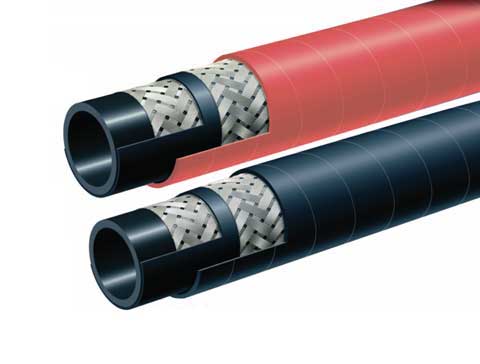
Steel wire braided rubber hose with high temperature resistance of 150 ℃ and rubber inner layer for hot hydraulic oil transportation
release date:2026-09-03 09:14:40
reading volume:
share:
 In thermal hydraulic systems such as metallurgical continuous casting, heavy-duty operations of engineering machinery, and injection molding machines, it is normal for the hydraulic oil temperature to continuously exceed 100 ℃. Under such working conditions, the inner rubber layer of ordinary nitrile rubber hoses accelerates aging and hardens and cracks within a few months, becoming the main cause of system leakage and shutdown maintenance. The high-temperature resistant 150 ℃ steel wire braided rubber hose is an engineering solution for this working condition - using a special HNBR rubber inner layer to construct a heat-resistant oil aging barrier, using steel wire braiding to enhance the pressure stability under high temperature, and using a weather resistant outer rubber layer to resist on-site environmental erosion, becoming a reliable channel for "high-temperature non hardening and long-term non failure" in the field of hot hydraulic oil transportation.
1、 Molecular basis of 150 ℃ heat resistance: "thermal stability gene" of HNBR inner adhesive layer
The failure of rubber materials at high temperatures is essentially the result of thermal oxidative aging of molecular chains. The main chain of ordinary nitrile rubber (NBR) contains a large number of unsaturated double bonds, which are prone to chain breakage and cross-linking under high temperature and oxygen environments, resulting in inner layer hardening, decreased elasticity, and sealing failure.
Hydrogenated nitrile rubber (HNBR) is the core material to solve this problem. HNBR saturates the unsaturated double bonds in the NBR molecular chain through hydrogenation treatment, while retaining excellent oil resistance and increasing the heat resistance level to 150 ℃. After working continuously in hydraulic oil at 150 ℃ for 1000 hours, the tensile strength retention rate of the HNBR inner rubber layer can reach over 90%, and the volume expansion rate is controlled within 5%. This molecular level structural advantage makes HNBR the preferred lining material for 150 ℃ hydraulic oil transportation scenarios.
The optimization of the formula system further enhances the heat resistance performance. The use of peroxide vulcanization system instead of traditional sulfur vulcanization greatly improves the thermal stability of cross-linking bonds, significantly reduces compression set, and provides better sealing retention. Meanwhile, by adding nano zinc oxide and anti-aging agents, the free radical chain reaction at high temperatures can be effectively delayed, extending the service life of the inner adhesive layer. Some products have extended their temperature resistance boundary to the 155 ℃ range.
2、 Collaborative design of multi-layer composite structures: integrated design of pressure bearing, flexibility, and weather resistance
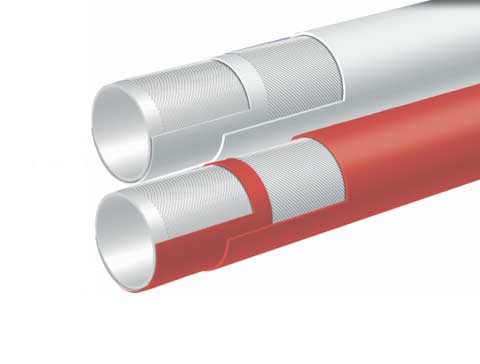
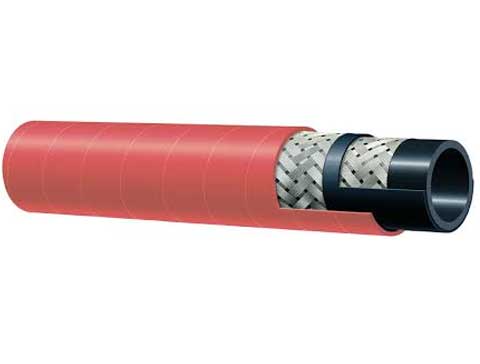
The high-temperature resistant steel wire braided rubber hose needs to maintain long-term reliability under 150 ℃ hot oil impact and continuous pressure pulsation, relying on the system integration of the "inner reinforcement layer outer layer" three-layer structure.
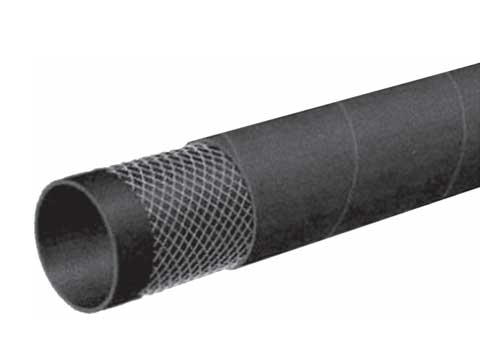
The reinforcement layer adopts one or two layers of high tensile steel wire weaving structure. Unlike the winding structure, the weaving structure provides superior flexibility, allowing the hose to maintain good bending performance at high temperatures. Taking the 1/4 inch specification as an example, the working pressure of the double-layer woven structure can reach 33-41MPa, and the blasting pressure is 4 times the working pressure, providing ample safety redundancy. The precise control of weaving angle and density ensures the dimensional stability of the hose under high temperature and pressure, avoiding joint loosening caused by the "breathing effect".
The outer rubber layer is the second line of defense against the external environment, using synthetic rubber with high ozone resistance, weather resistance, and high temperature resistance. In the high-temperature radiation and oil splashing environment of metallurgical casting workshops, the outer adhesive layer not only needs to withstand external thermal radiation, but also needs to deal with the risk of cracking caused by ozone and ultraviolet rays. The outer adhesive layer with "XT" grade can serve for a long time in the temperature range of 135 ℃ to 150 ℃, and has passed classification societies such as ABS, DNV-GL, LR, and MSHA mining safety certification, meeting the requirements for export equipment matching.
3、 Hot hydraulic scenario adaptation: full cycle management from selection to maintenance
The value of high-temperature resistant steel wire braided rubber hoses in hydraulic systems ultimately depends on whether the selection, matching, and maintenance management are in place.
The selection criteria require a comprehensive evaluation of operating conditions, temperature, medium type, and pressure level. If the system continues to operate at temperatures exceeding 125 ℃, it is recommended to use products clearly labeled with a temperature rating of 150 ℃ and confirm that the inner adhesive layer is HNBR or a special heat-resistant formula. For working conditions containing phosphate ester hydraulic oil, additional confirmation of the compatibility of the inner rubber layer material is required; If selected improperly, even if the temperature resistance meets the standard, the inner layer may accelerate aging due to incompatible media.
In terms of installation and maintenance, the hoses in the hot hydraulic system should be kept away from external high-temperature sources as much as possible. If it is unavoidable, insulation sleeves should be installed. The bending radius should not be less than the rated value of the product (it is recommended to be ≥ 6 times the outer diameter under dynamic conditions) to avoid accelerated fatigue due to stress concentration in high temperature environments. In daily inspections, it is important to focus on observing whether the outer adhesive layer shows signs of hardening or cracking - the flexibility of the outer adhesive layer can be an important indicator of the degree of aging. When there are deep cracks or hardening in the outer adhesive layer, it indicates that the protective performance has decreased and should be replaced in a timely manner.
In summary, the high-temperature resistant 150 ℃ steel wire braided rubber hose perfectly meets the systematic requirements of "high-temperature non failure and long-term non aging" for hydraulic oil transportation, with its three core technologies: the thermal stable molecular structure of the HNBR inner rubber layer, the high-temperature pressure bearing skeleton of one/two layers of steel wire braided, and the environmental erosion protection of the weather resistant outer rubber layer. From the heat resistance verification of continuous operation at 150 ℃ to the safety redundancy of 4 times the blasting pressure, from the high-temperature radiation in the metallurgical casting workshop to the continuous heavy load of engineering machinery, the material selection and structural design of each layer are aimed at the same goal: to provide a reliable channel for hydraulic power transmission that can withstand temperature tests and long-term service in the high-temperature environment of the thermal hydraulic system.
In thermal hydraulic systems such as metallurgical continuous casting, heavy-duty operations of engineering machinery, and injection molding machines, it is normal for the hydraulic oil temperature to continuously exceed 100 ℃. Under such working conditions, the inner rubber layer of ordinary nitrile rubber hoses accelerates aging and hardens and cracks within a few months, becoming the main cause of system leakage and shutdown maintenance. The high-temperature resistant 150 ℃ steel wire braided rubber hose is an engineering solution for this working condition - using a special HNBR rubber inner layer to construct a heat-resistant oil aging barrier, using steel wire braiding to enhance the pressure stability under high temperature, and using a weather resistant outer rubber layer to resist on-site environmental erosion, becoming a reliable channel for "high-temperature non hardening and long-term non failure" in the field of hot hydraulic oil transportation.
1、 Molecular basis of 150 ℃ heat resistance: "thermal stability gene" of HNBR inner adhesive layer
The failure of rubber materials at high temperatures is essentially the result of thermal oxidative aging of molecular chains. The main chain of ordinary nitrile rubber (NBR) contains a large number of unsaturated double bonds, which are prone to chain breakage and cross-linking under high temperature and oxygen environments, resulting in inner layer hardening, decreased elasticity, and sealing failure.
Hydrogenated nitrile rubber (HNBR) is the core material to solve this problem. HNBR saturates the unsaturated double bonds in the NBR molecular chain through hydrogenation treatment, while retaining excellent oil resistance and increasing the heat resistance level to 150 ℃. After working continuously in hydraulic oil at 150 ℃ for 1000 hours, the tensile strength retention rate of the HNBR inner rubber layer can reach over 90%, and the volume expansion rate is controlled within 5%. This molecular level structural advantage makes HNBR the preferred lining material for 150 ℃ hydraulic oil transportation scenarios.
The optimization of the formula system further enhances the heat resistance performance. The use of peroxide vulcanization system instead of traditional sulfur vulcanization greatly improves the thermal stability of cross-linking bonds, significantly reduces compression set, and provides better sealing retention. Meanwhile, by adding nano zinc oxide and anti-aging agents, the free radical chain reaction at high temperatures can be effectively delayed, extending the service life of the inner adhesive layer. Some products have extended their temperature resistance boundary to the 155 ℃ range.
2、 Collaborative design of multi-layer composite structures: integrated design of pressure bearing, flexibility, and weather resistance
The high-temperature resistant steel wire braided rubber hose needs to maintain long-term reliability under 150 ℃ hot oil impact and continuous pressure pulsation, relying on the system integration of the "inner reinforcement layer outer layer" three-layer structure.
The reinforcement layer adopts one or two layers of high tensile steel wire weaving structure. Unlike the winding structure, the weaving structure provides superior flexibility, allowing the hose to maintain good bending performance at high temperatures. Taking the 1/4 inch specification as an example, the working pressure of the double-layer woven structure can reach 33-41MPa, and the blasting pressure is 4 times the working pressure, providing ample safety redundancy. The precise control of weaving angle and density ensures the dimensional stability of the hose under high temperature and pressure, avoiding joint loosening caused by the "breathing effect".
The outer rubber layer is the second line of defense against the external environment, using synthetic rubber with high ozone resistance, weather resistance, and high temperature resistance. In the high-temperature radiation and oil splashing environment of metallurgical casting workshops, the outer adhesive layer not only needs to withstand external thermal radiation, but also needs to deal with the risk of cracking caused by ozone and ultraviolet rays. The outer adhesive layer with "XT" grade can serve for a long time in the temperature range of 135 ℃ to 150 ℃, and has passed classification societies such as ABS, DNV-GL, LR, and MSHA mining safety certification, meeting the requirements for export equipment matching.
3、 Hot hydraulic scenario adaptation: full cycle management from selection to maintenance
The value of high-temperature resistant steel wire braided rubber hoses in hydraulic systems ultimately depends on whether the selection, matching, and maintenance management are in place.
The selection criteria require a comprehensive evaluation of operating conditions, temperature, medium type, and pressure level. If the system continues to operate at temperatures exceeding 125 ℃, it is recommended to use products clearly labeled with a temperature rating of 150 ℃ and confirm that the inner adhesive layer is HNBR or a special heat-resistant formula. For working conditions containing phosphate ester hydraulic oil, additional confirmation of the compatibility of the inner rubber layer material is required; If selected improperly, even if the temperature resistance meets the standard, the inner layer may accelerate aging due to incompatible media.
In terms of installation and maintenance, the hoses in the hot hydraulic system should be kept away from external high-temperature sources as much as possible. If it is unavoidable, insulation sleeves should be installed. The bending radius should not be less than the rated value of the product (it is recommended to be ≥ 6 times the outer diameter under dynamic conditions) to avoid accelerated fatigue due to stress concentration in high temperature environments. In daily inspections, it is important to focus on observing whether the outer adhesive layer shows signs of hardening or cracking - the flexibility of the outer adhesive layer can be an important indicator of the degree of aging. When there are deep cracks or hardening in the outer adhesive layer, it indicates that the protective performance has decreased and should be replaced in a timely manner.
In summary, the high-temperature resistant 150 ℃ steel wire braided rubber hose perfectly meets the systematic requirements of "high-temperature non failure and long-term non aging" for hydraulic oil transportation, with its three core technologies: the thermal stable molecular structure of the HNBR inner rubber layer, the high-temperature pressure bearing skeleton of one/two layers of steel wire braided, and the environmental erosion protection of the weather resistant outer rubber layer. From the heat resistance verification of continuous operation at 150 ℃ to the safety redundancy of 4 times the blasting pressure, from the high-temperature radiation in the metallurgical casting workshop to the continuous heavy load of engineering machinery, the material selection and structural design of each layer are aimed at the same goal: to provide a reliable channel for hydraulic power transmission that can withstand temperature tests and long-term service in the high-temperature environment of the thermal hydraulic system.
Previous: