Ultra high pressure cleaning hose 4000bar working pressure water jet cutting matching
release date:2026-08-31 10:19:13
reading volume:
share:
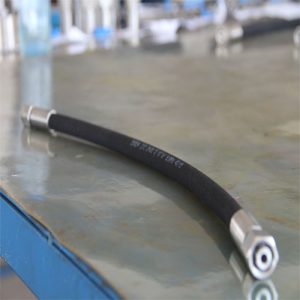 In the field of waterjet cutting, a working pressure of 4000 bar (approximately 58000 psi) means that the waterjet speed can reach over 1000 m/s - enough to easily cut glass, steel, and stone, and perform millimeter level precision cold cutting operations. The hose that carries this ultimate pressure is the core consumable of the entire ultra-high pressure water jet system, which needs to maintain structural stability in continuous high-pressure pulses, while also possessing characteristics such as low flow resistance, fatigue resistance, and long life. The 4000bar ultra-high pressure cleaning hose is a professional solution for the extreme working condition of water jet cutting - it uses a precision composite structure to carry a maximum pressure of 58000psi, a safety factor of 2.5:1 to ensure system safety, and a low bending radius to meet the flexible movement requirements of the cutting head. It has become a reliable channel for "high pressure does not fail, flexibility does not decay" in precision water cutting operations.
1、 4000 bar ultimate bearing capacity: mechanical architecture of multi-layer steel wire winding
4000bar (approximately 58000psi) is one of the highest pressure levels in the field of industrial ultra-high pressure water jets. The stable bearing capacity of this pressure level requires extremely high process requirements for the structural design and material selection of the reinforcement layer.
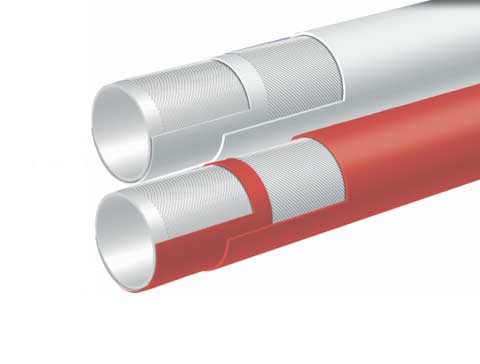
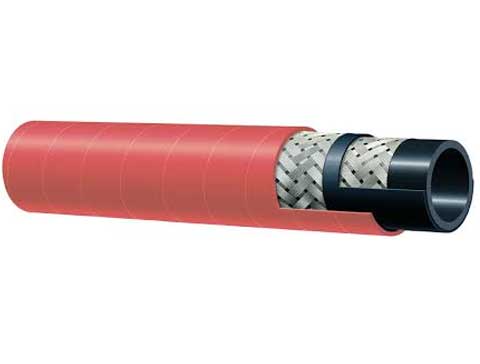
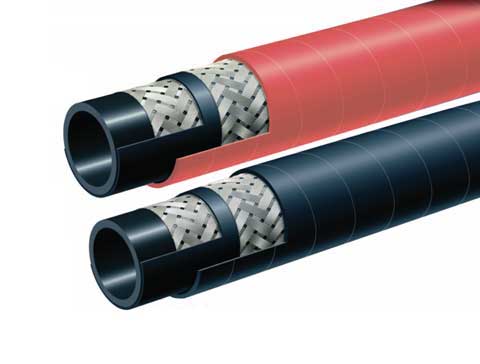
This grade of hose uses multi-layer high-strength steel wire spiral winding as the reinforcing skeleton, with a maximum of 6 to 8 layers or even higher. Unlike weaving structures, the winding process arranges each layer of steel wire at a precisely calculated spiral angle, with adjacent layers wound in alternating directions to form an "interlocking" mechanical skeleton. The inner steel wire provides radial support at a higher angle to resist tube swelling under ultra-high pressure; The outer steel wire constructs an axial tensile skeleton at a lower angle to prevent excessive elongation of the hose under pulse pressure. The layers are formed into a strong whole through high adhesion technology, which collaboratively deforms during pressure fluctuations rather than sliding relative to each other.
The inner layer is made of polyoxymethylene (POM) or polyamide (PA) resin, which has excellent chemical corrosion resistance and low friction coefficient, effectively resisting erosion by high-speed water jets. It has small volume expansion and better dimensional stability of the pipe body under pressure fluctuations than traditional rubber liners. The outer layer is made of polyamide or ultra wear-resistant polyurethane, which is wear-resistant, weather resistant, and chemical resistant, protecting the internal steel wire layer from mechanical damage and environmental erosion.
The safety factor of 2.5:1 is the design benchmark for 4000bar grade hoses - with a burst pressure of 10000bar (1000MPa), providing ample safety margin for instantaneous overpressure in the system. Some models have been certified according to the DIN EN 1829-2 safety standard, providing legally recognized safety guarantees for operators.
2、 Engineering adaptation of waterjet cutting: low bending and long lifespan
The requirements for hoses in water jet cutting equipment far exceed those in ordinary industrial cleaning scenarios. The cutting head needs to move precisely along the X-Y-Z axis, and the hose must swing flexibly in three-dimensional space without adding additional load, otherwise it will affect the cutting accuracy.
One of the core design goals of this type of hose is to have a small bending radius. Taking the 3/16 inch specification as an example, the minimum bending radius of a 4000bar grade product can meet the requirements of complex path movement of the cutting head on the surface of the workpiece without sacrificing its pressure bearing capacity. The multi-layer winding structure provides ultimate pressure while maintaining necessary flexibility through precise angle control. Some products adopt a continuous long pipe structure without broken ends to replace traditional steel pipes, significantly reducing the number of joints and lowering the risk of leakage.
The continuous manufacturing capability of a single unit with a length of up to 1200 meters is another key technological advantage of waterjet cutting. In large workpiece cutting or multi axis linkage equipment, long-distance seamless hoses can significantly reduce pressure loss and minimize potential leakage points caused by joint connections, ensuring long-term stability of cutting quality.
3、 On site safety and maintenance management
The ultra-high pressure system of 4000 bar imposes extremely strict requirements on the use and maintenance of hoses. Operators must wear protective goggles and face shields to prevent high-pressure water jets from splashing back and injuring people. The bending radius during installation should not be less than the rated value to avoid excessive bending and damage to the steel wire layer. The end joint must use a matching anti pull joint, which ensures that the joint does not loosen or leak under ultra-high voltage pulses through precision crimping technology.
Each hose must undergo a hydrostatic pressure test to verify its pressure integrity before leaving the factory, and be equipped with a unique traceability code to record the production batch and test data. It is recommended to conduct regular hydrostatic pressure tests, usually every 2 years or replace according to the strength of use. Before daily use, the outer layer should be checked for cuts or wear. If there is obvious damage to the outer layer, it must be immediately stopped and replaced. In the safety management of ultra-high pressure applications, the safety factor of hoses must be determined based on the operating conditions - pulse hydraulic applications require a safety factor of 4:1, while water jet cutting can be applied with a safety factor of 2.5:1 according to DIN EN 1829-2 standard.
In summary, the ultra-high pressure cleaning hose with a working pressure of 4000 bar perfectly meets the systematic requirements of water jet cutting for "ultra-high pressure, precision operation, and long-term stability" with its ultimate load-bearing capacity of multi-layer steel wire winding, stable channel of POM/PA low resistance inner layer, and abundant redundancy of 2.5:1 safety factor. From a working pressure of 58000psi to a blasting redundancy of 10000bar, from a precision diameter of 0.181 inches to a continuous manufacturing length of 1200 meters, every layer of wire winding and every crimping process points towards the same goal: to provide reliable guarantees for high-pressure water transportation without bursting, leaking, or attenuating in the extreme working conditions of precision water jet cutting.
In the field of waterjet cutting, a working pressure of 4000 bar (approximately 58000 psi) means that the waterjet speed can reach over 1000 m/s - enough to easily cut glass, steel, and stone, and perform millimeter level precision cold cutting operations. The hose that carries this ultimate pressure is the core consumable of the entire ultra-high pressure water jet system, which needs to maintain structural stability in continuous high-pressure pulses, while also possessing characteristics such as low flow resistance, fatigue resistance, and long life. The 4000bar ultra-high pressure cleaning hose is a professional solution for the extreme working condition of water jet cutting - it uses a precision composite structure to carry a maximum pressure of 58000psi, a safety factor of 2.5:1 to ensure system safety, and a low bending radius to meet the flexible movement requirements of the cutting head. It has become a reliable channel for "high pressure does not fail, flexibility does not decay" in precision water cutting operations.
1、 4000 bar ultimate bearing capacity: mechanical architecture of multi-layer steel wire winding
4000bar (approximately 58000psi) is one of the highest pressure levels in the field of industrial ultra-high pressure water jets. The stable bearing capacity of this pressure level requires extremely high process requirements for the structural design and material selection of the reinforcement layer.
This grade of hose uses multi-layer high-strength steel wire spiral winding as the reinforcing skeleton, with a maximum of 6 to 8 layers or even higher. Unlike weaving structures, the winding process arranges each layer of steel wire at a precisely calculated spiral angle, with adjacent layers wound in alternating directions to form an "interlocking" mechanical skeleton. The inner steel wire provides radial support at a higher angle to resist tube swelling under ultra-high pressure; The outer steel wire constructs an axial tensile skeleton at a lower angle to prevent excessive elongation of the hose under pulse pressure. The layers are formed into a strong whole through high adhesion technology, which collaboratively deforms during pressure fluctuations rather than sliding relative to each other.
The inner layer is made of polyoxymethylene (POM) or polyamide (PA) resin, which has excellent chemical corrosion resistance and low friction coefficient, effectively resisting erosion by high-speed water jets. It has small volume expansion and better dimensional stability of the pipe body under pressure fluctuations than traditional rubber liners. The outer layer is made of polyamide or ultra wear-resistant polyurethane, which is wear-resistant, weather resistant, and chemical resistant, protecting the internal steel wire layer from mechanical damage and environmental erosion.
The safety factor of 2.5:1 is the design benchmark for 4000bar grade hoses - with a burst pressure of 10000bar (1000MPa), providing ample safety margin for instantaneous overpressure in the system. Some models have been certified according to the DIN EN 1829-2 safety standard, providing legally recognized safety guarantees for operators.
2、 Engineering adaptation of waterjet cutting: low bending and long lifespan
The requirements for hoses in water jet cutting equipment far exceed those in ordinary industrial cleaning scenarios. The cutting head needs to move precisely along the X-Y-Z axis, and the hose must swing flexibly in three-dimensional space without adding additional load, otherwise it will affect the cutting accuracy.
One of the core design goals of this type of hose is to have a small bending radius. Taking the 3/16 inch specification as an example, the minimum bending radius of a 4000bar grade product can meet the requirements of complex path movement of the cutting head on the surface of the workpiece without sacrificing its pressure bearing capacity. The multi-layer winding structure provides ultimate pressure while maintaining necessary flexibility through precise angle control. Some products adopt a continuous long pipe structure without broken ends to replace traditional steel pipes, significantly reducing the number of joints and lowering the risk of leakage.
The continuous manufacturing capability of a single unit with a length of up to 1200 meters is another key technological advantage of waterjet cutting. In large workpiece cutting or multi axis linkage equipment, long-distance seamless hoses can significantly reduce pressure loss and minimize potential leakage points caused by joint connections, ensuring long-term stability of cutting quality.
3、 On site safety and maintenance management
The ultra-high pressure system of 4000 bar imposes extremely strict requirements on the use and maintenance of hoses. Operators must wear protective goggles and face shields to prevent high-pressure water jets from splashing back and injuring people. The bending radius during installation should not be less than the rated value to avoid excessive bending and damage to the steel wire layer. The end joint must use a matching anti pull joint, which ensures that the joint does not loosen or leak under ultra-high voltage pulses through precision crimping technology.
Each hose must undergo a hydrostatic pressure test to verify its pressure integrity before leaving the factory, and be equipped with a unique traceability code to record the production batch and test data. It is recommended to conduct regular hydrostatic pressure tests, usually every 2 years or replace according to the strength of use. Before daily use, the outer layer should be checked for cuts or wear. If there is obvious damage to the outer layer, it must be immediately stopped and replaced. In the safety management of ultra-high pressure applications, the safety factor of hoses must be determined based on the operating conditions - pulse hydraulic applications require a safety factor of 4:1, while water jet cutting can be applied with a safety factor of 2.5:1 according to DIN EN 1829-2 standard.
In summary, the ultra-high pressure cleaning hose with a working pressure of 4000 bar perfectly meets the systematic requirements of water jet cutting for "ultra-high pressure, precision operation, and long-term stability" with its ultimate load-bearing capacity of multi-layer steel wire winding, stable channel of POM/PA low resistance inner layer, and abundant redundancy of 2.5:1 safety factor. From a working pressure of 58000psi to a blasting redundancy of 10000bar, from a precision diameter of 0.181 inches to a continuous manufacturing length of 1200 meters, every layer of wire winding and every crimping process points towards the same goal: to provide reliable guarantees for high-pressure water transportation without bursting, leaking, or attenuating in the extreme working conditions of precision water jet cutting.
Previous: