Acid fracturing hose flame retardant and anti-static meets API explosion-proof standards for high-risk operation safety
release date:2026-08-26 14:38:17
reading volume:
share:
 At the shale gas fracturing operation site, fracturing fluid, proppant, and acid are continuously transported under ultra-high pressure, and oil and gas vapor are intertwined with dust. Any small electrostatic spark may cause catastrophic consequences. The heat accumulation generated by the high-frequency pulse of the fracturing pump and the risk of sudden fire in the well site require the hose itself to have the safety characteristics of "non combustible and self extinguishing". The flame retardant and anti-static acid fracturing hose that meets the API explosion-proof standard is a systematic safety solution for this high-risk scenario - designed with low surface resistance to eliminate the hidden danger of static electricity accumulation, constructed with a flame retardant outer layer to create a fire barrier, and ensured compliance with the dual certification of API 7K/16C standard and GB/T 46167-2025 national standard, becoming a "non combustible, non explosive, safe and reliable" flexible channel for high-risk operations in shale gas fracturing.
1、 Engineering logic of static electricity accumulation: from frictional electrification to safe discharge
During the high-pressure fluid transportation process of hydraulic fracturing hoses, static electricity is generated in two stages: high-speed friction between fracturing fluid (especially acid based or oil-based media) and the inner adhesive layer, and continuous impact of proppant particles (quartz sand, ceramic particles) on the inner wall. If the static charge cannot be guided away in time and the potential continues to rise above the dielectric strength, the energy of electrostatic discharge is sufficient to ignite the surrounding flammable steam - which is a fatal ignition source for fracturing sites containing natural gas and volatile chemicals.
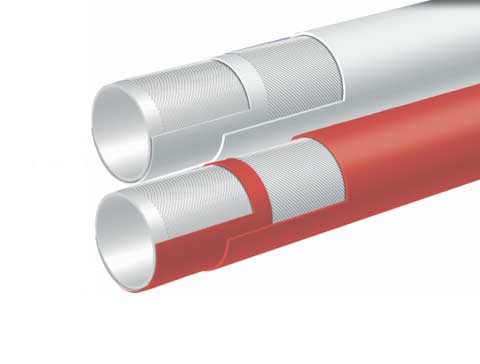
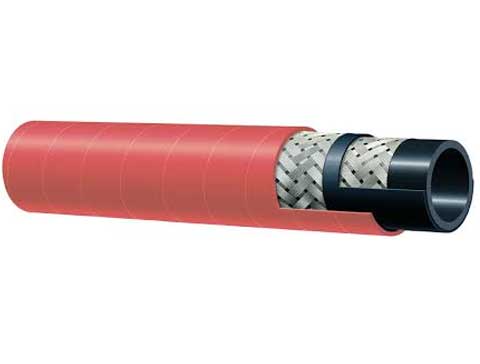
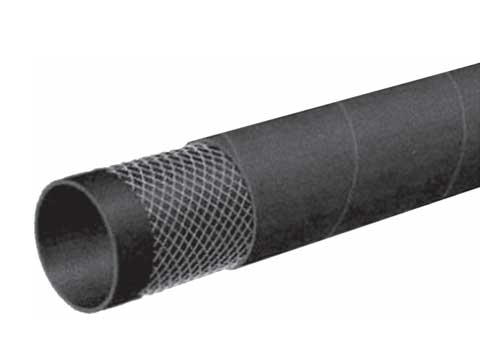
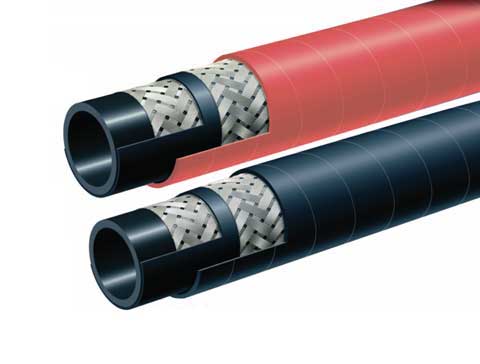
API explosion-proof standards (such as API RP 500 and API RP 505) explicitly require equipment used in hazardous areas to have static dissipation capabilities. The fracturing hose that meets the standards has achieved "full chain electrostatic discharge" in its structural design: the inner rubber layer is made of HNBR or UPE composite material doped with conductive carbon black, and the surface resistance is controlled at ≤ 10 ⁶ Ω, ensuring that the static charge generated by friction can quickly migrate along the pipe wall; The high-strength steel wire weaving layer of the reinforcement layer serves as a conductive channel to guide charges to the joint; The joint is connected to the system grounding grid through a grounding wire, forming a complete static discharge circuit. The explosion-proof static design of some products has been rigorously verified by API RP 500 standard, with a safety level of Class I, Division 2, and can be safely applied in hazardous areas containing flammable gases and vapors.
2、 Flame retardant design: multiple lines of defense from material formulation to standard certification
Flame retardant performance is the core guarantee for fracturing hoses to obtain emergency response time in fire accidents. Once a high-pressure manifold leak and fire occurs at the fracturing well site, the flame temperature can reach over 800 ℃. Flame retardant hoses resist flame invasion through multiple mechanisms: the outer rubber layer is made of flame-retardant chlorosulfonated polyethylene rubber (CSM) formula. In UL94 V-0 level testing, the material can self extinguish within 2 seconds after moving away from the fire source in a vertical combustion state without producing ignition droplets. Some high-end products add a silicone rubber or ceramic fiber fireproof insulation layer between the reinforcement layer and the outer adhesive layer, forming a dense carbonization layer to isolate heat during flame burning. For API 16C well control products, the fire rating requirements are more stringent - maintaining structural integrity for 30 minutes in an open flame at 704 ℃, and often equipped with stainless steel armor as the final protective layer.
In terms of certification system, API 7K and API 16C standards are internationally recognized entry thresholds for explosion-proof fracturing hoses. API 7K covers drilling and fracturing hoses, requiring a blasting safety factor of 4:1 and passing over 5000 high-pressure pulse tests; API 16C adds additional requirements for hydrogen sulfide stress corrosion cracking (SSC) resistance to throttling and well killing hoses, raising the fire rating to 704 ℃ for 30 minutes. The implementation of GB/T 46167-2025 "Specification for Flexible Hoses and Hose Assemblies for Fracturing" in March 2026 further incorporates flame retardancy and electrostatic safety into mandatory requirements, marking the complete alignment of domestic fracturing hose safety standards with international standards.
3、 Adaptation to high-risk work scenarios: from certification compliance to on-site management
Fracturing hoses that meet flame retardant and anti-static standards are widely used in shale gas fracturing, acid fracturing, and emergency well control operations. In the "factory based" zipper operation of shale gas fracturing platforms, multiple fracturing truck groups are connected in parallel, and hoses are densely arranged, which increases the risk of static electricity exponentially. Flame retardant and anti-static hoses have become "standard" rather than "optional" for on-site safety management - before operation, it is necessary to check the product's API and MA certification certificates to confirm that the flame retardant and anti-static test reports are complete. In on-site grounding management, all hose ends must be reliably connected to the system grounding grid through dedicated grounding clamps, and the grounding resistance value should be regularly tested to ensure ≤ 10 Ω.
The GB/T 46167-2025 standard requires hoses to be equipped with a wear warning layer, which enables visual monitoring of wear status through different colored warning layers. When the outer layer is worn to the point where the warning layer is exposed, it prompts for inspection or replacement to prevent the flame retardant layer from failing after the outer rubber is worn through. Each hose is equipped with a unique traceability code to record production date, batch, and test data, achieving full lifecycle quality monitoring and providing complete technical files for accident investigation and safety auditing.
In summary, the flame retardant and anti-static acid fracturing hose that meets the API explosion-proof standard perfectly meets the systematic safety requirements of "explosion prevention, fire prevention, and anti-static" for high-risk operations in shale gas fracturing, with three core technologies: the static electricity export system with a surface resistance of ≤ 10 ⁶ Ω, the dual barrier of UL94 V-0 flame retardant and 704 ℃× 30 minute fire prevention, and the compliance guarantee of API 7K/16C and GB/T 46167 dual standard certification. From the static safety classification of API RP 500 to the 2-second self extinguishing of UL94 V-0, from the 4:1 explosion safety factor to the unique traceability code of each hose, every certification and design points to the same goal: to provide a safety guarantee for high-risk operations in oil and gas steam filled fracturing sites that does not accumulate static electricity, does not support the spread of combustion, and can withstand the test of fire.
At the shale gas fracturing operation site, fracturing fluid, proppant, and acid are continuously transported under ultra-high pressure, and oil and gas vapor are intertwined with dust. Any small electrostatic spark may cause catastrophic consequences. The heat accumulation generated by the high-frequency pulse of the fracturing pump and the risk of sudden fire in the well site require the hose itself to have the safety characteristics of "non combustible and self extinguishing". The flame retardant and anti-static acid fracturing hose that meets the API explosion-proof standard is a systematic safety solution for this high-risk scenario - designed with low surface resistance to eliminate the hidden danger of static electricity accumulation, constructed with a flame retardant outer layer to create a fire barrier, and ensured compliance with the dual certification of API 7K/16C standard and GB/T 46167-2025 national standard, becoming a "non combustible, non explosive, safe and reliable" flexible channel for high-risk operations in shale gas fracturing.
1、 Engineering logic of static electricity accumulation: from frictional electrification to safe discharge
During the high-pressure fluid transportation process of hydraulic fracturing hoses, static electricity is generated in two stages: high-speed friction between fracturing fluid (especially acid based or oil-based media) and the inner adhesive layer, and continuous impact of proppant particles (quartz sand, ceramic particles) on the inner wall. If the static charge cannot be guided away in time and the potential continues to rise above the dielectric strength, the energy of electrostatic discharge is sufficient to ignite the surrounding flammable steam - which is a fatal ignition source for fracturing sites containing natural gas and volatile chemicals.
API explosion-proof standards (such as API RP 500 and API RP 505) explicitly require equipment used in hazardous areas to have static dissipation capabilities. The fracturing hose that meets the standards has achieved "full chain electrostatic discharge" in its structural design: the inner rubber layer is made of HNBR or UPE composite material doped with conductive carbon black, and the surface resistance is controlled at ≤ 10 ⁶ Ω, ensuring that the static charge generated by friction can quickly migrate along the pipe wall; The high-strength steel wire weaving layer of the reinforcement layer serves as a conductive channel to guide charges to the joint; The joint is connected to the system grounding grid through a grounding wire, forming a complete static discharge circuit. The explosion-proof static design of some products has been rigorously verified by API RP 500 standard, with a safety level of Class I, Division 2, and can be safely applied in hazardous areas containing flammable gases and vapors.
2、 Flame retardant design: multiple lines of defense from material formulation to standard certification
Flame retardant performance is the core guarantee for fracturing hoses to obtain emergency response time in fire accidents. Once a high-pressure manifold leak and fire occurs at the fracturing well site, the flame temperature can reach over 800 ℃. Flame retardant hoses resist flame invasion through multiple mechanisms: the outer rubber layer is made of flame-retardant chlorosulfonated polyethylene rubber (CSM) formula. In UL94 V-0 level testing, the material can self extinguish within 2 seconds after moving away from the fire source in a vertical combustion state without producing ignition droplets. Some high-end products add a silicone rubber or ceramic fiber fireproof insulation layer between the reinforcement layer and the outer adhesive layer, forming a dense carbonization layer to isolate heat during flame burning. For API 16C well control products, the fire rating requirements are more stringent - maintaining structural integrity for 30 minutes in an open flame at 704 ℃, and often equipped with stainless steel armor as the final protective layer.
In terms of certification system, API 7K and API 16C standards are internationally recognized entry thresholds for explosion-proof fracturing hoses. API 7K covers drilling and fracturing hoses, requiring a blasting safety factor of 4:1 and passing over 5000 high-pressure pulse tests; API 16C adds additional requirements for hydrogen sulfide stress corrosion cracking (SSC) resistance to throttling and well killing hoses, raising the fire rating to 704 ℃ for 30 minutes. The implementation of GB/T 46167-2025 "Specification for Flexible Hoses and Hose Assemblies for Fracturing" in March 2026 further incorporates flame retardancy and electrostatic safety into mandatory requirements, marking the complete alignment of domestic fracturing hose safety standards with international standards.
3、 Adaptation to high-risk work scenarios: from certification compliance to on-site management
Fracturing hoses that meet flame retardant and anti-static standards are widely used in shale gas fracturing, acid fracturing, and emergency well control operations. In the "factory based" zipper operation of shale gas fracturing platforms, multiple fracturing truck groups are connected in parallel, and hoses are densely arranged, which increases the risk of static electricity exponentially. Flame retardant and anti-static hoses have become "standard" rather than "optional" for on-site safety management - before operation, it is necessary to check the product's API and MA certification certificates to confirm that the flame retardant and anti-static test reports are complete. In on-site grounding management, all hose ends must be reliably connected to the system grounding grid through dedicated grounding clamps, and the grounding resistance value should be regularly tested to ensure ≤ 10 Ω.
The GB/T 46167-2025 standard requires hoses to be equipped with a wear warning layer, which enables visual monitoring of wear status through different colored warning layers. When the outer layer is worn to the point where the warning layer is exposed, it prompts for inspection or replacement to prevent the flame retardant layer from failing after the outer rubber is worn through. Each hose is equipped with a unique traceability code to record production date, batch, and test data, achieving full lifecycle quality monitoring and providing complete technical files for accident investigation and safety auditing.
In summary, the flame retardant and anti-static acid fracturing hose that meets the API explosion-proof standard perfectly meets the systematic safety requirements of "explosion prevention, fire prevention, and anti-static" for high-risk operations in shale gas fracturing, with three core technologies: the static electricity export system with a surface resistance of ≤ 10 ⁶ Ω, the dual barrier of UL94 V-0 flame retardant and 704 ℃× 30 minute fire prevention, and the compliance guarantee of API 7K/16C and GB/T 46167 dual standard certification. From the static safety classification of API RP 500 to the 2-second self extinguishing of UL94 V-0, from the 4:1 explosion safety factor to the unique traceability code of each hose, every certification and design points to the same goal: to provide a safety guarantee for high-risk operations in oil and gas steam filled fracturing sites that does not accumulate static electricity, does not support the spread of combustion, and can withstand the test of fire.
Previous: