Steam hose is resistant to pulse impact, pressure, sudden frequency conversion, and stable start stop working conditions
release date:2026-08-20 14:24:09
reading volume:
share:
In industrial scenarios such as flat vulcanizing machines, steam blowing systems, and intermittent reactors, steam hoses are not subjected to constant pressure, but rather undergo a periodic cycle of frequent "pressurization holding depressurization". Every time the system starts or stops, the pressure inside the pipe jumps from zero to the working value within a few seconds, and then quickly drops to normal pressure - this drastic pressure change causes much greater fatigue damage to the reinforcement layer than constant high pressure. Ordinary hoses may experience interlayer delamination after hundreds of cycles under such working conditions, while steam hoses designed specifically for pulse resistance are reinforced with multiple layers of steel wires and structurally optimized to increase the pulse fatigue life to tens of thousands of cycles, becoming a reliable channel for "pressure fluctuations without failure" in frequent start stop working conditions.
 1、 The destructive logic of pulse impact: why frequent start stop is more damaging to the pipeline than constant high voltage
The frequent start stop of the steam system generates alternating stress cycles inside the hose - with each sudden increase in pressure, the reinforcing layer of steel wire bears tensile load, and the interlayer bonding interface bears shear stress; With each rapid release of pressure, these stresses are instantly released. Unlike steady-state loads under constant high pressure, this periodic stress variation accumulates microscopic damage within the material, ultimately leading to fatigue failure.
The industry standard for pulse fatigue testing (such as ISO 6803) is designed to simulate this working condition. Test the application of alternating pressure to the rubber hose through the servo control system, and record whether there is leakage or structural damage under the specified number of cycles. High frequency pressure fluctuations can accelerate the micro fatigue of the reinforced layer material of the rubber hose, especially the interlayer bonding interface gradually produces microcracks and even structural separation under repeated stress waves. For steam media, high temperature further exacerbates this problem - EPDM rubber's modulus decreases at high temperatures, interlayer adhesion strength decays with increasing temperature, and the destructive effect of pulse loads is further amplified.
The anti pulse steam hose utilizes the high tension steel wire weaving structure of the reinforcement layer and the coordinated use of inner and outer pinhole exhaust technology to disperse and absorb the impact energy generated by sudden pressure changes, avoiding stress concentration on a weak point and maintaining structural stability during repeated pulses.
2、 Anti pulse structure design: synergy of multi-layer steel wire and pinhole exhaust technology
The anti pulse performance of steam hoses is rooted in the precise coordination between the reinforcement layer structure and the exhaust system.
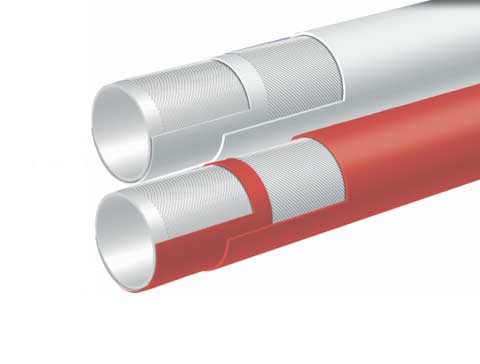
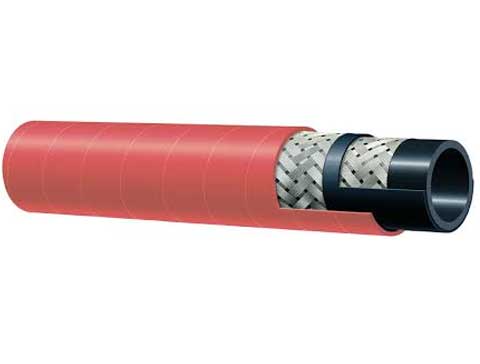
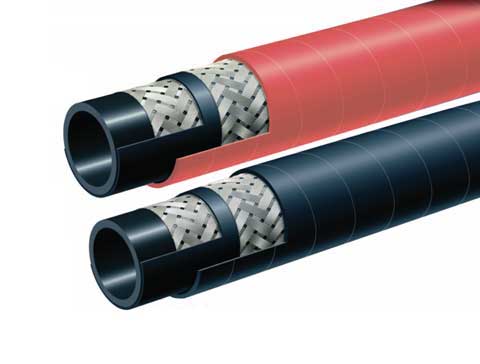
The multi-layer steel wire weaving/winding reinforcement layer is the mechanical core that withstands alternating pressure. Taking the LT1004 series of Litong Technology as an example, its high tension steel wire braided layer can withstand a working pressure of 270psi (about 18.6 bar) and frequent pulses, ensuring that the pipe size remains stable in pressure fluctuations. The steel wire layer is uniformly woven with high-strength and ultra flexible steel wire, which can withstand pressure without dead corners and maintain overall structural stability under frequent pressure impacts. The multi-layer structure enables stress to be evenly transmitted between layers, avoiding local fatigue concentration caused by uneven arrangement of steel wires. The skeleton layer design of the steel wire braided steam hose makes the pipe body less likely to deform under excessive pressure, and the anti high pressure layer and buffer layer between each layer effectively disperse the impact load, enhancing the overall anti pulse ability.
Pinhole exhaust technology is another key design for the anti pulse of steam hoses. Trace gas molecules in steam media can penetrate through the inner layer under high temperature and pressure. If they cannot be discharged, they will accumulate and form "bubbles" between layers, which can cause interlayer delamination when the pressure suddenly changes. The pinhole pattern design on the surface of the EPDM outer rubber layer allows for trace release of permeable gases, fundamentally preventing delamination, bubbles, and peeling issues between the outer rubber layer and the reinforcement layer. This design is particularly critical in frequent start stop conditions - the temperature rise and fall cycle causes the interlayer gas to expand and contract. If it cannot be discharged in time, it will accelerate the destruction of the interlayer interface.
In addition, some products are equipped with an anti high pressure layer between the inner adhesive layer and the buffer layer, which effectively protects the braided sleeve layer and the skeleton layer from being easily deformed by compression when the pressure inside the pipe is too high. The high-pressure steel wire steam hose adopts a multi-layer strength steel wire braided winding structure, which solves the common problems of ordinary hoses not being resistant to high temperatures, easily bulging, and aging, and maintains the integrity of the pipe structure under frequent pressure fluctuations.
3、 Adaptation to frequent start stop conditions: from pulse fatigue testing to system management
The anti pulse performance of steam hoses needs to be verified through rigorous testing. Pulse fatigue testing requires no leakage or structural damage after a certain number of cycles under alternating pressure. For frequent start stop conditions, the industry typically requires a pulse life of no less than 100000 cycles (15-25MPa alternating pressure). The ISO 6134:2024 standard provides detailed technical specifications for saturated steam rubber hoses and assemblies, clarifying the testing procedures for pulse fatigue and temperature resistance performance of hoses in high-temperature steam environments.
In daily applications, to ensure stability under frequent start stop conditions, it is important to focus on three aspects:
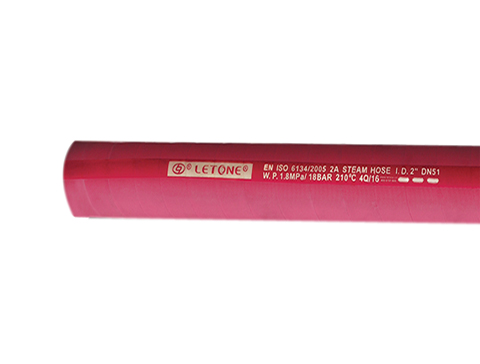
Firstly, confirm that the working pressure matches the pulse level. Steam hoses should be selected according to the actual pulse frequency and pressure amplitude, and products that are only suitable for constant low pressure should not be used in high-frequency pulse scenarios. ISO 6134 distinguishes between low-pressure (0.6MPa/164 ℃) and high-pressure (1.8MPa/210 ℃) operating conditions, and the selection should correspond to the actual system parameters.
Secondly, matching specialized connectors and correct crimping. The anti pulse ability of steam hoses not only depends on the body of the hose, but also on the quality of the crimping at the end joints. After the assembly of hoses and fittings, the lower rated capacity components in the entire system should be used as the upper limit of use. It is necessary to provide original factory certified steam specific compression joints to ensure that the joint area does not become a weak link during sudden pressure changes.
Thirdly, implement regular pulse performance verification. In frequent start stop continuous production, it is recommended to establish replacement cycles based on equipment operating hours or pulse cycles, rather than relying solely on visual inspection. Regularly conduct hydrostatic pressure tests at 1.5 times the working pressure to verify the pressure integrity of the hose after undergoing a certain number of pulse cycles. When there is local expansion or bulging of the outer layer of the pipe, it indicates that there is damage between the layers and should be replaced immediately.
In summary, the steam hose resistant to pulse impact, with its multi-layer steel wire weaving/winding reinforced anti fatigue skeleton, interlayer anti stripping design of pinhole exhaust technology, and verification of 100000 pulse fatigue tests, perfectly meets the systematic requirements of frequent start stop steam systems for "no failure due to sudden pressure changes and no fatigue due to pulse cycles". From the intermittent pressurization of the flat vulcanizing machine to the rapid start stop of the steam blowing system, every structural detail and testing standard points towards the same goal: to provide reliable guarantees for thermal energy transmission that can withstand pulse tests and cyclic fatigue in industrial steam pipelines with frequent pressure fluctuations.
1、 The destructive logic of pulse impact: why frequent start stop is more damaging to the pipeline than constant high voltage
The frequent start stop of the steam system generates alternating stress cycles inside the hose - with each sudden increase in pressure, the reinforcing layer of steel wire bears tensile load, and the interlayer bonding interface bears shear stress; With each rapid release of pressure, these stresses are instantly released. Unlike steady-state loads under constant high pressure, this periodic stress variation accumulates microscopic damage within the material, ultimately leading to fatigue failure.
The industry standard for pulse fatigue testing (such as ISO 6803) is designed to simulate this working condition. Test the application of alternating pressure to the rubber hose through the servo control system, and record whether there is leakage or structural damage under the specified number of cycles. High frequency pressure fluctuations can accelerate the micro fatigue of the reinforced layer material of the rubber hose, especially the interlayer bonding interface gradually produces microcracks and even structural separation under repeated stress waves. For steam media, high temperature further exacerbates this problem - EPDM rubber's modulus decreases at high temperatures, interlayer adhesion strength decays with increasing temperature, and the destructive effect of pulse loads is further amplified.
The anti pulse steam hose utilizes the high tension steel wire weaving structure of the reinforcement layer and the coordinated use of inner and outer pinhole exhaust technology to disperse and absorb the impact energy generated by sudden pressure changes, avoiding stress concentration on a weak point and maintaining structural stability during repeated pulses.
2、 Anti pulse structure design: synergy of multi-layer steel wire and pinhole exhaust technology
The anti pulse performance of steam hoses is rooted in the precise coordination between the reinforcement layer structure and the exhaust system.
The multi-layer steel wire weaving/winding reinforcement layer is the mechanical core that withstands alternating pressure. Taking the LT1004 series of Litong Technology as an example, its high tension steel wire braided layer can withstand a working pressure of 270psi (about 18.6 bar) and frequent pulses, ensuring that the pipe size remains stable in pressure fluctuations. The steel wire layer is uniformly woven with high-strength and ultra flexible steel wire, which can withstand pressure without dead corners and maintain overall structural stability under frequent pressure impacts. The multi-layer structure enables stress to be evenly transmitted between layers, avoiding local fatigue concentration caused by uneven arrangement of steel wires. The skeleton layer design of the steel wire braided steam hose makes the pipe body less likely to deform under excessive pressure, and the anti high pressure layer and buffer layer between each layer effectively disperse the impact load, enhancing the overall anti pulse ability.
Pinhole exhaust technology is another key design for the anti pulse of steam hoses. Trace gas molecules in steam media can penetrate through the inner layer under high temperature and pressure. If they cannot be discharged, they will accumulate and form "bubbles" between layers, which can cause interlayer delamination when the pressure suddenly changes. The pinhole pattern design on the surface of the EPDM outer rubber layer allows for trace release of permeable gases, fundamentally preventing delamination, bubbles, and peeling issues between the outer rubber layer and the reinforcement layer. This design is particularly critical in frequent start stop conditions - the temperature rise and fall cycle causes the interlayer gas to expand and contract. If it cannot be discharged in time, it will accelerate the destruction of the interlayer interface.
In addition, some products are equipped with an anti high pressure layer between the inner adhesive layer and the buffer layer, which effectively protects the braided sleeve layer and the skeleton layer from being easily deformed by compression when the pressure inside the pipe is too high. The high-pressure steel wire steam hose adopts a multi-layer strength steel wire braided winding structure, which solves the common problems of ordinary hoses not being resistant to high temperatures, easily bulging, and aging, and maintains the integrity of the pipe structure under frequent pressure fluctuations.
3、 Adaptation to frequent start stop conditions: from pulse fatigue testing to system management
The anti pulse performance of steam hoses needs to be verified through rigorous testing. Pulse fatigue testing requires no leakage or structural damage after a certain number of cycles under alternating pressure. For frequent start stop conditions, the industry typically requires a pulse life of no less than 100000 cycles (15-25MPa alternating pressure). The ISO 6134:2024 standard provides detailed technical specifications for saturated steam rubber hoses and assemblies, clarifying the testing procedures for pulse fatigue and temperature resistance performance of hoses in high-temperature steam environments.
In daily applications, to ensure stability under frequent start stop conditions, it is important to focus on three aspects:
Firstly, confirm that the working pressure matches the pulse level. Steam hoses should be selected according to the actual pulse frequency and pressure amplitude, and products that are only suitable for constant low pressure should not be used in high-frequency pulse scenarios. ISO 6134 distinguishes between low-pressure (0.6MPa/164 ℃) and high-pressure (1.8MPa/210 ℃) operating conditions, and the selection should correspond to the actual system parameters.
Secondly, matching specialized connectors and correct crimping. The anti pulse ability of steam hoses not only depends on the body of the hose, but also on the quality of the crimping at the end joints. After the assembly of hoses and fittings, the lower rated capacity components in the entire system should be used as the upper limit of use. It is necessary to provide original factory certified steam specific compression joints to ensure that the joint area does not become a weak link during sudden pressure changes.
Thirdly, implement regular pulse performance verification. In frequent start stop continuous production, it is recommended to establish replacement cycles based on equipment operating hours or pulse cycles, rather than relying solely on visual inspection. Regularly conduct hydrostatic pressure tests at 1.5 times the working pressure to verify the pressure integrity of the hose after undergoing a certain number of pulse cycles. When there is local expansion or bulging of the outer layer of the pipe, it indicates that there is damage between the layers and should be replaced immediately.
In summary, the steam hose resistant to pulse impact, with its multi-layer steel wire weaving/winding reinforced anti fatigue skeleton, interlayer anti stripping design of pinhole exhaust technology, and verification of 100000 pulse fatigue tests, perfectly meets the systematic requirements of frequent start stop steam systems for "no failure due to sudden pressure changes and no fatigue due to pulse cycles". From the intermittent pressurization of the flat vulcanizing machine to the rapid start stop of the steam blowing system, every structural detail and testing standard points towards the same goal: to provide reliable guarantees for thermal energy transmission that can withstand pulse tests and cyclic fatigue in industrial steam pipelines with frequent pressure fluctuations.
Previous: