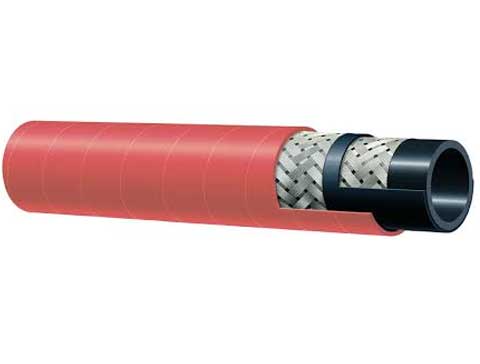
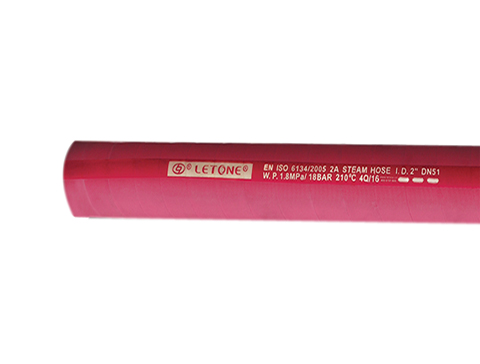
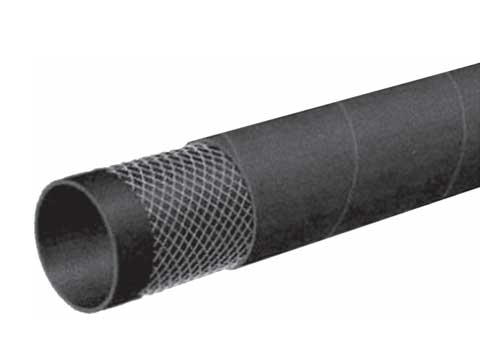
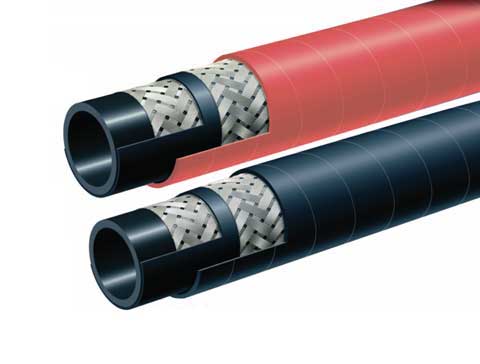
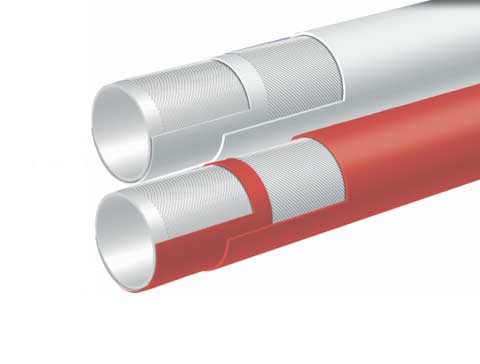
UPE ultra wear-resistant tailings conveying pipe has several times higher wear resistance than ordinary rubber, reducing costs and increasing efficiency
release date:2026-08-19 13:32:22
reading volume:
share:
In industrial scenarios such as mining beneficiation, tailings discharge, and metallurgical concentrate transportation, the slurry medium contains a large amount of high hardness particles such as quartz sand and iron concentrate, which form continuous "cutting" and "impact" dual wear on the pipe wall under high-pressure driving. Ordinary rubber hoses wear through within a few months under such working conditions, and frequent replacement not only increases operation and maintenance costs, but also causes production delays due to downtime. The UPE ultra wear-resistant tailings conveying pipe is a professional solution to this dilemma - with a molecular level wear-resistant mechanism lined with ultra-high molecular weight polyethylene (UPE), its service life can be extended to several times or even ten times that of ordinary rubber, becoming a reliable channel for "cost reduction and efficiency improvement" in the field of mining tailings conveying.
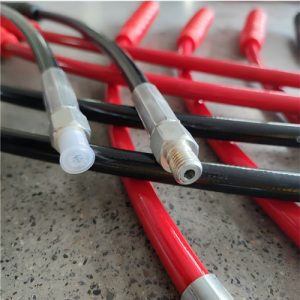 1、 Wear resistance 'several times greater than rubber': molecular level wear resistance code of UPE
The molecular weight of UPE (ultra-high molecular weight polyethylene, also known as UHMW-PE) is as high as 3 to 6 million g/mol, which is more than ten times that of ordinary polyethylene. The molecular chains of UPE are extremely long and arranged in a highly ordered manner. When the hard particles in the slurry wash the inner wall at high speed, the molecular chains of UPE convert the impact kinetic energy into intermolecular frictional heat dissipation through a "slip rearrangement" process, rather than directly damaging the molecular chain structure.
The measured data intuitively presents this advantage: UPE has the highest wear resistance among engineering plastics, with wear resistance 8-10 times that of ordinary rubber, 4-7 times that of carbon steel and stainless steel, and 6 times that of nylon. In direct comparison with ordinary rubber hoses, UPE has a much higher wear resistance index than natural rubber and significantly lower volume wear. Taking the transportation of slurry containing hard particles such as quartz sand as an example, the wear rate of UPE lining is only 0.03mm/thousand hours, and the service life can reach 8-10 times that of ordinary rubber pipes.
The wear resistance performance, which is several times that of rubber, directly translates into cost reduction benefits for mining tailings transportation scenarios. Taking the actual usage data of a certain steel group as an example, the service life of steel lined UPE composite pipes is about 3 years under a working pressure of 3.0MPa, which is 3 times that of ordinary steel pipes, and the usage cost is only 25% -30% of steel pipes. For mining enterprises with daily discharge of hundreds of tons of tailings slurry, this means that the replacement frequency has been reduced from "once a few months" to "once a few years", and the downtime losses and spare parts costs have been significantly reduced simultaneously.
2、 Triple synergy: comprehensive advantages of self-lubricating, impact resistant, and corrosion-resistant
The "cost reduction and efficiency improvement" of UPE tailings conveying pipes not only rely on single wear resistance, but also stem from the system synergy of "self-lubricating, impact resistant, and corrosion-resistant" triple performance, enabling the hoses to achieve multi-dimensional long service life in harsh mining conditions.
The self-lubricating and non scaling characteristics effectively reduce transportation energy consumption and maintenance costs. The friction coefficient of UPE is only 0.07-0.11, much lower than the 0.58 of steel pipes. When conveying materials, the resistance is extremely small, which can reduce pumping energy consumption by about 20%. At the same time, the inner wall of UPE has excellent surface non adhesion, which makes it less prone to scaling during slurry transportation, avoiding the downtime and high acid washing costs caused by scaling in ordinary steel pipes, and ensuring the long-term stability of transportation efficiency.
The extremely high impact resistance ensures the safety of the system under pressure fluctuations and external impacts. UPE has the highest impact strength among plastics, which is 10 times that of nylon 66 and 20 times that of polyvinyl chloride. Even in a low temperature environment of -40 ℃, its impact strength actually reaches a higher value and will not become brittle or crack due to the low temperature in winter. This characteristic is particularly critical in the frequent start stop of mining tailings conveying pump stations and pressure fluctuations in pipelines - the pipe body is not easily cracked due to water hammer impact or crustal settlement elongation.
The chemical stability and wide temperature range adaptation enable UPE pipes to cope with common acid-base corrosion in mine tailings. UPE belongs to a saturated molecular cluster structure and can withstand various corrosive media (acids, bases, salts) and organic solvents within a certain temperature and concentration range. Its working temperature ranges from -269 ℃ to+80 ℃, and it can maintain stable performance in a wide range from extreme cold to high temperature.
3、 Mining Application and Value Verification: Full Scene Coverage from Tailings to Concentrates
The application of UPE ultra wear-resistant tailings conveying pipe in the mining field has covered the entire chain from tailings discharge to concentrate transportation, and its "cost reduction and efficiency improvement" value has been verified in multiple real working conditions.
In the tailings conveying scenario, the traditional steel pipe conveying tailings slurry containing about 30% iron ore usually has a service life of only 1-2 years. The practice of Lunan Mining Co., Ltd. has proved that ultra-high molecular weight polyethylene pipelines meet the needs of long-distance transportation of tailings by water isolated slurry pumps, demonstrating the superiority of "energy saving, environmental protection, economy, and high efficiency". In the transportation of solid-liquid mixtures in the coal industry, steel pipes are worn out and scrapped after 16 months of use, while UPE pipes can effectively solve the problem of wear resistance and save a lot of maintenance costs.
UPE pipes also perform well in concentrate transportation and underground filling scenarios. A certain copper mining enterprise used UPE lining pipes to transport acidic slurry with a pH value of 2-3. After continuous use for 18 months, the inner wall remained smooth without corrosion pits or wear grooves. In heavy medium coal selection and filling pipelines, its impact toughness ensures that the pipeline does not rupture under frequent pressure fluctuations and external impacts.
In terms of comprehensive economic benefits, although the initial investment of UPE tailings conveying pipes is higher than that of ordinary PE pipes, their service life under high wear conditions can reach 5-10 times that of ordinary PE pipes, and the long-term comprehensive cost is significantly lower than that of alternative solutions that require frequent replacement. For large mines, this means lower annual maintenance budgets, fewer production interruptions, and higher overall equipment efficiency.
In summary, the UPE ultra wear-resistant tailings conveying pipe perfectly meets the systematic demand for "cost reduction and efficiency improvement" in mining tailings conveying with its three core technologies: the ultimate wear resistance of 8-10 times that of ordinary rubber, the non scaling characteristics of self lubrication and energy consumption reduction, and the full working condition adaptability of impact and corrosion resistance. From the replacement cycle of "every few months" to "every few years", from the 25% -30% steel pipe usage cost to the 18 month stable operation of acid slurry verification, every performance data and application case points to the same goal: to provide reliable guarantees for tailings transportation that can withstand wear, corrosion, and impact in the mining front line of ore crushing and slurry flow.
1、 Wear resistance 'several times greater than rubber': molecular level wear resistance code of UPE
The molecular weight of UPE (ultra-high molecular weight polyethylene, also known as UHMW-PE) is as high as 3 to 6 million g/mol, which is more than ten times that of ordinary polyethylene. The molecular chains of UPE are extremely long and arranged in a highly ordered manner. When the hard particles in the slurry wash the inner wall at high speed, the molecular chains of UPE convert the impact kinetic energy into intermolecular frictional heat dissipation through a "slip rearrangement" process, rather than directly damaging the molecular chain structure.
The measured data intuitively presents this advantage: UPE has the highest wear resistance among engineering plastics, with wear resistance 8-10 times that of ordinary rubber, 4-7 times that of carbon steel and stainless steel, and 6 times that of nylon. In direct comparison with ordinary rubber hoses, UPE has a much higher wear resistance index than natural rubber and significantly lower volume wear. Taking the transportation of slurry containing hard particles such as quartz sand as an example, the wear rate of UPE lining is only 0.03mm/thousand hours, and the service life can reach 8-10 times that of ordinary rubber pipes.
The wear resistance performance, which is several times that of rubber, directly translates into cost reduction benefits for mining tailings transportation scenarios. Taking the actual usage data of a certain steel group as an example, the service life of steel lined UPE composite pipes is about 3 years under a working pressure of 3.0MPa, which is 3 times that of ordinary steel pipes, and the usage cost is only 25% -30% of steel pipes. For mining enterprises with daily discharge of hundreds of tons of tailings slurry, this means that the replacement frequency has been reduced from "once a few months" to "once a few years", and the downtime losses and spare parts costs have been significantly reduced simultaneously.
2、 Triple synergy: comprehensive advantages of self-lubricating, impact resistant, and corrosion-resistant
The "cost reduction and efficiency improvement" of UPE tailings conveying pipes not only rely on single wear resistance, but also stem from the system synergy of "self-lubricating, impact resistant, and corrosion-resistant" triple performance, enabling the hoses to achieve multi-dimensional long service life in harsh mining conditions.
The self-lubricating and non scaling characteristics effectively reduce transportation energy consumption and maintenance costs. The friction coefficient of UPE is only 0.07-0.11, much lower than the 0.58 of steel pipes. When conveying materials, the resistance is extremely small, which can reduce pumping energy consumption by about 20%. At the same time, the inner wall of UPE has excellent surface non adhesion, which makes it less prone to scaling during slurry transportation, avoiding the downtime and high acid washing costs caused by scaling in ordinary steel pipes, and ensuring the long-term stability of transportation efficiency.
The extremely high impact resistance ensures the safety of the system under pressure fluctuations and external impacts. UPE has the highest impact strength among plastics, which is 10 times that of nylon 66 and 20 times that of polyvinyl chloride. Even in a low temperature environment of -40 ℃, its impact strength actually reaches a higher value and will not become brittle or crack due to the low temperature in winter. This characteristic is particularly critical in the frequent start stop of mining tailings conveying pump stations and pressure fluctuations in pipelines - the pipe body is not easily cracked due to water hammer impact or crustal settlement elongation.
The chemical stability and wide temperature range adaptation enable UPE pipes to cope with common acid-base corrosion in mine tailings. UPE belongs to a saturated molecular cluster structure and can withstand various corrosive media (acids, bases, salts) and organic solvents within a certain temperature and concentration range. Its working temperature ranges from -269 ℃ to+80 ℃, and it can maintain stable performance in a wide range from extreme cold to high temperature.
3、 Mining Application and Value Verification: Full Scene Coverage from Tailings to Concentrates
The application of UPE ultra wear-resistant tailings conveying pipe in the mining field has covered the entire chain from tailings discharge to concentrate transportation, and its "cost reduction and efficiency improvement" value has been verified in multiple real working conditions.
In the tailings conveying scenario, the traditional steel pipe conveying tailings slurry containing about 30% iron ore usually has a service life of only 1-2 years. The practice of Lunan Mining Co., Ltd. has proved that ultra-high molecular weight polyethylene pipelines meet the needs of long-distance transportation of tailings by water isolated slurry pumps, demonstrating the superiority of "energy saving, environmental protection, economy, and high efficiency". In the transportation of solid-liquid mixtures in the coal industry, steel pipes are worn out and scrapped after 16 months of use, while UPE pipes can effectively solve the problem of wear resistance and save a lot of maintenance costs.
UPE pipes also perform well in concentrate transportation and underground filling scenarios. A certain copper mining enterprise used UPE lining pipes to transport acidic slurry with a pH value of 2-3. After continuous use for 18 months, the inner wall remained smooth without corrosion pits or wear grooves. In heavy medium coal selection and filling pipelines, its impact toughness ensures that the pipeline does not rupture under frequent pressure fluctuations and external impacts.
In terms of comprehensive economic benefits, although the initial investment of UPE tailings conveying pipes is higher than that of ordinary PE pipes, their service life under high wear conditions can reach 5-10 times that of ordinary PE pipes, and the long-term comprehensive cost is significantly lower than that of alternative solutions that require frequent replacement. For large mines, this means lower annual maintenance budgets, fewer production interruptions, and higher overall equipment efficiency.
In summary, the UPE ultra wear-resistant tailings conveying pipe perfectly meets the systematic demand for "cost reduction and efficiency improvement" in mining tailings conveying with its three core technologies: the ultimate wear resistance of 8-10 times that of ordinary rubber, the non scaling characteristics of self lubrication and energy consumption reduction, and the full working condition adaptability of impact and corrosion resistance. From the replacement cycle of "every few months" to "every few years", from the 25% -30% steel pipe usage cost to the 18 month stable operation of acid slurry verification, every performance data and application case points to the same goal: to provide reliable guarantees for tailings transportation that can withstand wear, corrosion, and impact in the mining front line of ore crushing and slurry flow.
Previous: