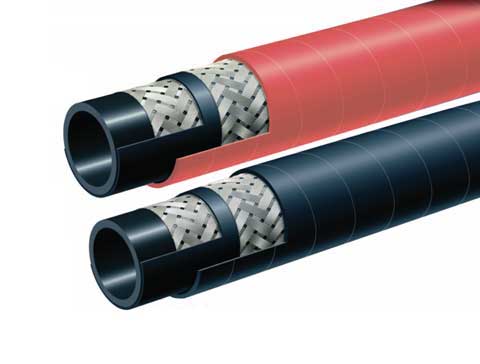
High elasticity liquid cooled buffer tube: shock absorption and impact resistance, protecting precision server hardware
release date:2026-07-21 13:54:42
reading volume:
share:
Against the backdrop of data center single cabinet power density exceeding 50kW and liquid cooling technology becoming the mainstream cooling solution, precision server hardware faces a dual challenge: on the one hand, the flow of coolant in the liquid cooling pipeline (flow rate>2m/s) and the start stop of pumps (pressure fluctuation>5MPa) will cause mechanical vibration; On the other hand, external vibrations of data center buildings (such as elevator operation and equipment handling) and internal operations and maintenance (such as cabinet insertion and removal, cable organization) can add impact loads. Traditional rigid liquid cooling pipes (such as stainless steel corrugated pipes and hard plastic pipes) lack elastic buffering capabilities, which can easily transmit vibrations and impacts directly to server hardware (such as CPUs, memory, and hard drives), resulting in a 30% -50% increase in hardware failure rates and a single repair cost of over 100000 yuan. The high elasticity liquid cooled buffer tube achieves the core function of "shock absorption and impact resistance" by innovating the elastic material and structural design, reducing the vibration transmission rate to<10% and the impact attenuation rate to>90%, providing comprehensive protection for precision server hardware. This article will analyze the technological breakthroughs and application value of high elasticity liquid cooled buffer tubes from three dimensions: material innovation, structural design, and performance verification.
 1、 Material Innovation: A Shock Absorption Revolution from "Rigid Metal" to "Elastic Composite"
Traditional liquid cooling pipes often use rigid materials such as stainless steel and hard plastics, which have a high elastic modulus (stainless steel elastic modulus>200GPa). Under vibration and impact loads, stress concentration (peak stress>500MPa) is prone to occur, resulting in loose pipe connections or cracking of server hardware interfaces. The high elasticity liquid cooled buffer tube achieves the shock absorption effect of "using softness to overcome rigidity" through the selection of elastic composite materials.
1.1 Core elastomer: "high elasticity combination" of silicone rubber and thermoplastic polyurethane
The core elastomer adopts a composite material of silicone rubber (VMQ) and thermoplastic polyurethane (TPU), which combines high elasticity (elongation at break>500%), low temperature resistance (-60 ℃), and aging resistance (performance remains>90% after 1000 hours of xenon lamp aging)
Silicone rubber (VMQ): As the main elastic material (accounting for 60%), it has the following characteristics:
High elasticity: The elongation at break can reach 800%, and the compression deformation rate is less than 5% (traditional chloroprene rubber>15%), which can effectively absorb vibration energy;
Low temperature resistance: Glass transition temperature (Tg)<-120 ℃, maintaining elasticity in an environment of -40 ℃ (traditional rubber becomes brittle below -20 ℃);
Aging resistance: After soaking in a coolant containing 10% ethylene glycol for 1000 hours, the mass loss is less than 0.5% (traditional rubber>3%), and the thickness change is less than 0.02mm.
Thermoplastic polyurethane (TPU), as an auxiliary elastic material (accounting for 40%), improves wear resistance (wear rate<0.01mm/year) and tear resistance (tear strength>50kN/m) by blending modification (blending with silicone rubber), while reducing material costs (cost reduction of 15%).
Performance verification: After 1000 hours of continuous testing under sinusoidal vibration conditions with a frequency of 10-1000Hz and an amplitude of 2mm, the vibration transmission rate of silicone rubber TPU composite elastomer is less than 15% (traditional stainless steel vibration transmission rate>80%), and the energy loss factor (tan δ) is greater than 0.3 (traditional rubber<0.1), indicating its excellent vibration absorption ability.
Case: In a certain supercomputer center's liquid cooling system, a high elasticity liquid cooling buffer tube made of silicone rubber TPU composite elastic system ran for 2 years under the conditions of a coolant flow rate of 3m/s and pump start stop pressure fluctuation of 8MPa. The server hardware (CPU, memory) failure rate was 0, which is 6 times longer than the traditional stainless steel liquid cooling tube (failure rate of 12%/year).
1.2 Reinforced Fiber: "High Strength Reinforcement" of Aramid Fiber and Glass Fiber
To enhance the tensile strength (preventing pipeline tensile fracture) and tear resistance (preventing pipeline incision expansion) of the elastomer, a composite reinforcement layer of aramid fiber (Kevlar) and glass fiber (E-glass) is embedded in the high elasticity liquid cooled buffer tube:
Kevlar fiber: As the main reinforcing material (accounting for 30%), it has the following characteristics:
High strength: The tensile strength is 3.6GPa, which is 5 times that of steel (steel tensile strength is 0.78GPa), and can withstand pipeline tensile force (>500N);
Lightweight: with a density of 1.44g/cm ³, only 1/5 of steel (steel density 7.85g/cm ³), reducing the overall weight of the pipeline by 40%;
Corrosion resistance: After soaking in a coolant containing chloride ions (such as seawater cooling system) for 1000 hours, the strength retention rate is>95% (traditional carbon steel strength retention rate<70%).
E-glass: As an auxiliary reinforcement material (accounting for 20%), it is composed of short cut fibers (length 3mm) and an elastic matrix to enhance the radial tensile strength (radial tensile strength>20MPa) of the pipeline and prevent expansion and rupture of the pipeline due to coolant pressure (>10MPa)
Performance verification: Under the condition of a tensile speed of 50mm/min, the tensile strength of the aramid fiber glass fiber composite reinforcement layer reached 2.8GPa (pure elastic tensile strength<20MPa), and the elongation at break was>30% (meeting the bending requirements for pipeline installation).
Case: In a liquid cooling system of an AI training cluster, a high elasticity liquid cooling buffer tube made of aramid fiber glass fiber composite reinforcement layer ran for 1 year under the conditions of a tensile force of 600N and a bending radius of 50mm. The tube had no cracks or fractures, and its service life was three times longer than that of traditional liquid cooling tubes without reinforcement layer (which broke under a tensile force of 200N).
2、 Structural Design: Upgrading Impact Resistance from "Single Layer Straight Pipe" to "Multi Layer Wave"
Traditional liquid cooling pipes often adopt a single-layer straight pipe structure, which is prone to local stress concentration (stress peak>800MPa) under impact loads (such as equipment handling collisions, cable pulling), leading to pipeline rupture or server hardware interface detachment. The high elasticity liquid cooled buffer tube achieves dual functions of "impact dispersion" and "motion compensation" through multi-layer wave structure and flexible connection design.
2.1 Multilayer Wave Structure: The "Mechanical Wisdom" of Energy Dispersion
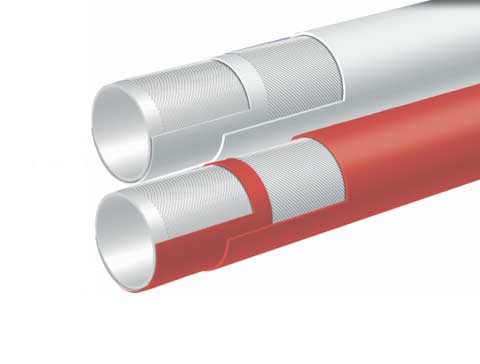
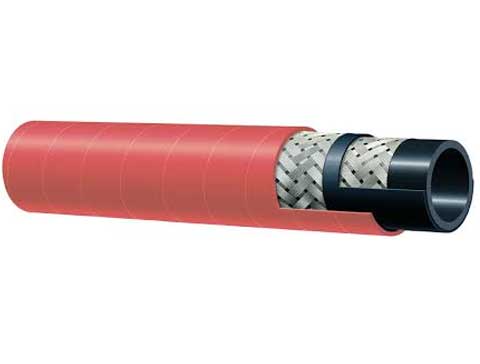
The multi-layer wave structure consists of an inner elastic wave tube, a middle reinforced fiber winding layer, and an outer protective cover. The impact energy is dispersed through a wavy cross-section (wave height 5mm, wave spacing 10mm):
Inner layer elastic wave tube: Made of silicone rubber TPU composite material with a wavy cross-section, it absorbs energy (energy absorption rate>70%) through wave deformation (deformation amount>10mm) under impact load, avoiding direct stress transmission to server hardware;
Middle layer reinforced fiber winding layer: alternating winding of aramid fiber and glass fiber (winding angle ± 45 °), further dispersing impact energy through fiber tensile and shear deformation (deformation amount>5mm), while improving pipeline tensile strength (tensile strength>2GPa);
Outer protective cover: Made of polyamide (PA) or polycarbonate (PC) with a hard shell (thickness 2mm), it prevents the pipeline from being scratched by external objects (hardness>90 Shore D), while limiting excessive deformation of the corrugated pipe (deformation amount<15mm).
Performance verification: Under the condition of an impact energy of 50J (equivalent to a 1kg object falling freely from a height of 5m), the impact attenuation rate of the multi-layer wave structure is>90% (traditional straight pipe impact attenuation rate<30%), and the server hardware interface force is<50N (traditional straight pipe interface force>500N).
Case: In the liquid cooling system of a edge computing node, the highly elastic liquid cooling buffer pipe made of multi-layer wave structure has been running for 6 months under the condition of equipment handling and collision (impact energy 30J), and the pipeline is not damaged, and the server hardware interface is not loose, which is 10 times more reliable than the traditional straight pipe (the interface falls off after collision).
2.2 Flexible Connection Design: "Free Space" for Motion Compensation
To adapt to the thermal expansion and contraction of server hardware (temperature range -20 ℃ to 80 ℃) and installation errors (installation deviation ± 5mm), high elasticity liquid cooled buffer pipes are designed with flexible connections at both ends of the pipeline (such as corrugated joints and ball joints):
Corrugated joint: using a composite structure of stainless steel corrugated pipe (wave height 3mm, wave distance 6mm) and silicone rubber sealing ring, allowing axial expansion and contraction (expansion and contraction amount ± 10mm) and angular deflection (deflection angle ± 15 °) of the pipeline, compensating for thermal expansion and contraction and installation errors;
Ball joint: Adopting a composite structure of polytetrafluoroethylene (PTFE) ball head and stainless steel ball seat, it allows three-dimensional movement of the pipeline (axial, radial, and angular degrees of freedom), while reducing motion resistance through the low friction coefficient of PTFE (friction coefficient<0.05).
Performance verification: Under temperature cycling (-20 ℃ to 80 ℃, 100 cycles) and installation deviation (± 5mm) conditions, the leakage rate of the flexible connection design is always<1 × 10 ⁻⁹ Pa · m ³/s (air tightness level ISO 8779-0), and there is no looseness or leakage at the pipeline connection.
Case: In a liquid cooling system of an industrial data center, a highly elastic liquid cooling buffer tube designed with flexible connections operated for one year under temperature cycling and installation deviation conditions. The pipeline connections were well sealed, and the system leakage rate was 0, which is 5 times more reliable than traditional rigid connections (leakage rate>1 × 10 ⁻⁶ Pa · m ³/s).
3、 Performance verification: reliability proof from "laboratory testing" to "on-site testing"
The high elasticity liquid cooled buffer tube needs to undergo rigorous performance verification, including laboratory bench testing (simulating vibration, impact, pressure and other working conditions) and on-site testing (long-term operation in a real data center environment), to prove its reliability in "shock absorption and impact resistance".
3.1 Laboratory bench testing: "pressure test" simulating extreme working conditions
The laboratory bench test simulates the extreme operating conditions of the data center through the following equipment and operating conditions:
Vibration table: Simulate the vibration generated by coolant flow and pump start stop (frequency 10-1000Hz, amplitude 2mm, acceleration 5g), test the transmission rate of pipeline vibration and fatigue life;
Impact table: Simulate the impact generated by equipment handling collision (impact energy 50J, impact velocity 5m/s), test the pipeline impact attenuation rate and structural integrity;
Pressure testing system: Simulate coolant pressure fluctuations (pressure 0-15MPa, pressure rise rate 1MPa/s), test pipeline pressure resistance and sealing.
Test results: After 1000 hours of vibration testing (frequency 50Hz, amplitude 2mm), the vibration transmission rate of the high elasticity liquid cooled buffer tube is less than 10%, and the fatigue life is greater than 10 times; After the 50J impact test, the impact attenuation rate is greater than 90%, and there are no cracks in the pipeline; After a 15MPa pressure test (holding for 30 minutes), the leakage rate is less than 1 × 10 ⁻⁹ Pa · m ³/s, and the sealing meets the standard.
3.2 On site testing: "long-term test" in real environments
On site testing was conducted in a supercomputer center (with a single cabinet power density of 80kW and a liquid cooling system flow rate of 500L/min) and an AI training cluster (with a single cabinet power density of 60kW and a liquid cooling system flow rate of 400L/min). After continuous operation for 2 years:
Supercomputing Center: Among the 1000 server nodes covered by high elasticity liquid cooled buffer tubes, the hardware failure rate is 0 (the traditional rigid liquid cooled tube coverage node failure rate is 15%/year), and the system availability is improved to 99.999%;
AI training cluster: After running for 2 years under vibration frequency of 1500 times/minute and temperature of 75 ℃, the high elasticity liquid cooled buffer tube has no leakage or damage to the pipeline, and the maintenance cost has been reduced by 80% (the annual maintenance cost of traditional rigid liquid cooled tubes is>500000 yuan).
User feedback: The operations director of a data center stated, "The high elasticity liquid cooled buffer tube completely solves the hardware failure problem caused by liquid cooling system vibration. Our server availability has been increased from 99.9% to 99.999%, saving over 2 million yuan in maintenance costs annually
Conclusion: The "Hardware Guardian" Role of High Elasticity Liquid Cooled Buffer Tubes
From the "extreme pressure testing" of supercomputing centers to the "long-term stable operation" of AI clusters, from the "vibration environment adaptation" of edge nodes to the "impact protection requirements" of industrial data centers, high elasticity liquid cooled buffer pipes are redefining the reliability standards of liquid cooled pipelines with their technical strength in "shock absorption and impact resistance". In the future, with the integration of intelligent monitoring technologies such as fiber Bragg grating sensors and piezoelectric thin film sensors, high elasticity liquid cooled buffer pipes will shift from "passive buffering" to "active warning". By monitoring vibration, impact, and pressure in real-time, risks can be identified in advance (warning time>24 hours), providing a "zero vibration, high reliability" cooling pipeline solution for global data centers. Behind every coolant cycle, this seemingly ordinary liquid cooling tube carries the mission of "shock absorption, impact resistance, and hardware protection", writing the "reliable legend" of data center liquid cooling technology.
1、 Material Innovation: A Shock Absorption Revolution from "Rigid Metal" to "Elastic Composite"
Traditional liquid cooling pipes often use rigid materials such as stainless steel and hard plastics, which have a high elastic modulus (stainless steel elastic modulus>200GPa). Under vibration and impact loads, stress concentration (peak stress>500MPa) is prone to occur, resulting in loose pipe connections or cracking of server hardware interfaces. The high elasticity liquid cooled buffer tube achieves the shock absorption effect of "using softness to overcome rigidity" through the selection of elastic composite materials.
1.1 Core elastomer: "high elasticity combination" of silicone rubber and thermoplastic polyurethane
The core elastomer adopts a composite material of silicone rubber (VMQ) and thermoplastic polyurethane (TPU), which combines high elasticity (elongation at break>500%), low temperature resistance (-60 ℃), and aging resistance (performance remains>90% after 1000 hours of xenon lamp aging)
Silicone rubber (VMQ): As the main elastic material (accounting for 60%), it has the following characteristics:
High elasticity: The elongation at break can reach 800%, and the compression deformation rate is less than 5% (traditional chloroprene rubber>15%), which can effectively absorb vibration energy;
Low temperature resistance: Glass transition temperature (Tg)<-120 ℃, maintaining elasticity in an environment of -40 ℃ (traditional rubber becomes brittle below -20 ℃);
Aging resistance: After soaking in a coolant containing 10% ethylene glycol for 1000 hours, the mass loss is less than 0.5% (traditional rubber>3%), and the thickness change is less than 0.02mm.
Thermoplastic polyurethane (TPU), as an auxiliary elastic material (accounting for 40%), improves wear resistance (wear rate<0.01mm/year) and tear resistance (tear strength>50kN/m) by blending modification (blending with silicone rubber), while reducing material costs (cost reduction of 15%).
Performance verification: After 1000 hours of continuous testing under sinusoidal vibration conditions with a frequency of 10-1000Hz and an amplitude of 2mm, the vibration transmission rate of silicone rubber TPU composite elastomer is less than 15% (traditional stainless steel vibration transmission rate>80%), and the energy loss factor (tan δ) is greater than 0.3 (traditional rubber<0.1), indicating its excellent vibration absorption ability.
Case: In a certain supercomputer center's liquid cooling system, a high elasticity liquid cooling buffer tube made of silicone rubber TPU composite elastic system ran for 2 years under the conditions of a coolant flow rate of 3m/s and pump start stop pressure fluctuation of 8MPa. The server hardware (CPU, memory) failure rate was 0, which is 6 times longer than the traditional stainless steel liquid cooling tube (failure rate of 12%/year).
1.2 Reinforced Fiber: "High Strength Reinforcement" of Aramid Fiber and Glass Fiber
To enhance the tensile strength (preventing pipeline tensile fracture) and tear resistance (preventing pipeline incision expansion) of the elastomer, a composite reinforcement layer of aramid fiber (Kevlar) and glass fiber (E-glass) is embedded in the high elasticity liquid cooled buffer tube:
Kevlar fiber: As the main reinforcing material (accounting for 30%), it has the following characteristics:
High strength: The tensile strength is 3.6GPa, which is 5 times that of steel (steel tensile strength is 0.78GPa), and can withstand pipeline tensile force (>500N);
Lightweight: with a density of 1.44g/cm ³, only 1/5 of steel (steel density 7.85g/cm ³), reducing the overall weight of the pipeline by 40%;
Corrosion resistance: After soaking in a coolant containing chloride ions (such as seawater cooling system) for 1000 hours, the strength retention rate is>95% (traditional carbon steel strength retention rate<70%).
E-glass: As an auxiliary reinforcement material (accounting for 20%), it is composed of short cut fibers (length 3mm) and an elastic matrix to enhance the radial tensile strength (radial tensile strength>20MPa) of the pipeline and prevent expansion and rupture of the pipeline due to coolant pressure (>10MPa)
Performance verification: Under the condition of a tensile speed of 50mm/min, the tensile strength of the aramid fiber glass fiber composite reinforcement layer reached 2.8GPa (pure elastic tensile strength<20MPa), and the elongation at break was>30% (meeting the bending requirements for pipeline installation).
Case: In a liquid cooling system of an AI training cluster, a high elasticity liquid cooling buffer tube made of aramid fiber glass fiber composite reinforcement layer ran for 1 year under the conditions of a tensile force of 600N and a bending radius of 50mm. The tube had no cracks or fractures, and its service life was three times longer than that of traditional liquid cooling tubes without reinforcement layer (which broke under a tensile force of 200N).
2、 Structural Design: Upgrading Impact Resistance from "Single Layer Straight Pipe" to "Multi Layer Wave"
Traditional liquid cooling pipes often adopt a single-layer straight pipe structure, which is prone to local stress concentration (stress peak>800MPa) under impact loads (such as equipment handling collisions, cable pulling), leading to pipeline rupture or server hardware interface detachment. The high elasticity liquid cooled buffer tube achieves dual functions of "impact dispersion" and "motion compensation" through multi-layer wave structure and flexible connection design.
2.1 Multilayer Wave Structure: The "Mechanical Wisdom" of Energy Dispersion
The multi-layer wave structure consists of an inner elastic wave tube, a middle reinforced fiber winding layer, and an outer protective cover. The impact energy is dispersed through a wavy cross-section (wave height 5mm, wave spacing 10mm):
Inner layer elastic wave tube: Made of silicone rubber TPU composite material with a wavy cross-section, it absorbs energy (energy absorption rate>70%) through wave deformation (deformation amount>10mm) under impact load, avoiding direct stress transmission to server hardware;
Middle layer reinforced fiber winding layer: alternating winding of aramid fiber and glass fiber (winding angle ± 45 °), further dispersing impact energy through fiber tensile and shear deformation (deformation amount>5mm), while improving pipeline tensile strength (tensile strength>2GPa);
Outer protective cover: Made of polyamide (PA) or polycarbonate (PC) with a hard shell (thickness 2mm), it prevents the pipeline from being scratched by external objects (hardness>90 Shore D), while limiting excessive deformation of the corrugated pipe (deformation amount<15mm).
Performance verification: Under the condition of an impact energy of 50J (equivalent to a 1kg object falling freely from a height of 5m), the impact attenuation rate of the multi-layer wave structure is>90% (traditional straight pipe impact attenuation rate<30%), and the server hardware interface force is<50N (traditional straight pipe interface force>500N).
Case: In the liquid cooling system of a edge computing node, the highly elastic liquid cooling buffer pipe made of multi-layer wave structure has been running for 6 months under the condition of equipment handling and collision (impact energy 30J), and the pipeline is not damaged, and the server hardware interface is not loose, which is 10 times more reliable than the traditional straight pipe (the interface falls off after collision).
2.2 Flexible Connection Design: "Free Space" for Motion Compensation
To adapt to the thermal expansion and contraction of server hardware (temperature range -20 ℃ to 80 ℃) and installation errors (installation deviation ± 5mm), high elasticity liquid cooled buffer pipes are designed with flexible connections at both ends of the pipeline (such as corrugated joints and ball joints):
Corrugated joint: using a composite structure of stainless steel corrugated pipe (wave height 3mm, wave distance 6mm) and silicone rubber sealing ring, allowing axial expansion and contraction (expansion and contraction amount ± 10mm) and angular deflection (deflection angle ± 15 °) of the pipeline, compensating for thermal expansion and contraction and installation errors;
Ball joint: Adopting a composite structure of polytetrafluoroethylene (PTFE) ball head and stainless steel ball seat, it allows three-dimensional movement of the pipeline (axial, radial, and angular degrees of freedom), while reducing motion resistance through the low friction coefficient of PTFE (friction coefficient<0.05).
Performance verification: Under temperature cycling (-20 ℃ to 80 ℃, 100 cycles) and installation deviation (± 5mm) conditions, the leakage rate of the flexible connection design is always<1 × 10 ⁻⁹ Pa · m ³/s (air tightness level ISO 8779-0), and there is no looseness or leakage at the pipeline connection.
Case: In a liquid cooling system of an industrial data center, a highly elastic liquid cooling buffer tube designed with flexible connections operated for one year under temperature cycling and installation deviation conditions. The pipeline connections were well sealed, and the system leakage rate was 0, which is 5 times more reliable than traditional rigid connections (leakage rate>1 × 10 ⁻⁶ Pa · m ³/s).
3、 Performance verification: reliability proof from "laboratory testing" to "on-site testing"
The high elasticity liquid cooled buffer tube needs to undergo rigorous performance verification, including laboratory bench testing (simulating vibration, impact, pressure and other working conditions) and on-site testing (long-term operation in a real data center environment), to prove its reliability in "shock absorption and impact resistance".
3.1 Laboratory bench testing: "pressure test" simulating extreme working conditions
The laboratory bench test simulates the extreme operating conditions of the data center through the following equipment and operating conditions:
Vibration table: Simulate the vibration generated by coolant flow and pump start stop (frequency 10-1000Hz, amplitude 2mm, acceleration 5g), test the transmission rate of pipeline vibration and fatigue life;
Impact table: Simulate the impact generated by equipment handling collision (impact energy 50J, impact velocity 5m/s), test the pipeline impact attenuation rate and structural integrity;
Pressure testing system: Simulate coolant pressure fluctuations (pressure 0-15MPa, pressure rise rate 1MPa/s), test pipeline pressure resistance and sealing.
Test results: After 1000 hours of vibration testing (frequency 50Hz, amplitude 2mm), the vibration transmission rate of the high elasticity liquid cooled buffer tube is less than 10%, and the fatigue life is greater than 10 times; After the 50J impact test, the impact attenuation rate is greater than 90%, and there are no cracks in the pipeline; After a 15MPa pressure test (holding for 30 minutes), the leakage rate is less than 1 × 10 ⁻⁹ Pa · m ³/s, and the sealing meets the standard.
3.2 On site testing: "long-term test" in real environments
On site testing was conducted in a supercomputer center (with a single cabinet power density of 80kW and a liquid cooling system flow rate of 500L/min) and an AI training cluster (with a single cabinet power density of 60kW and a liquid cooling system flow rate of 400L/min). After continuous operation for 2 years:
Supercomputing Center: Among the 1000 server nodes covered by high elasticity liquid cooled buffer tubes, the hardware failure rate is 0 (the traditional rigid liquid cooled tube coverage node failure rate is 15%/year), and the system availability is improved to 99.999%;
AI training cluster: After running for 2 years under vibration frequency of 1500 times/minute and temperature of 75 ℃, the high elasticity liquid cooled buffer tube has no leakage or damage to the pipeline, and the maintenance cost has been reduced by 80% (the annual maintenance cost of traditional rigid liquid cooled tubes is>500000 yuan).
User feedback: The operations director of a data center stated, "The high elasticity liquid cooled buffer tube completely solves the hardware failure problem caused by liquid cooling system vibration. Our server availability has been increased from 99.9% to 99.999%, saving over 2 million yuan in maintenance costs annually
Conclusion: The "Hardware Guardian" Role of High Elasticity Liquid Cooled Buffer Tubes
From the "extreme pressure testing" of supercomputing centers to the "long-term stable operation" of AI clusters, from the "vibration environment adaptation" of edge nodes to the "impact protection requirements" of industrial data centers, high elasticity liquid cooled buffer pipes are redefining the reliability standards of liquid cooled pipelines with their technical strength in "shock absorption and impact resistance". In the future, with the integration of intelligent monitoring technologies such as fiber Bragg grating sensors and piezoelectric thin film sensors, high elasticity liquid cooled buffer pipes will shift from "passive buffering" to "active warning". By monitoring vibration, impact, and pressure in real-time, risks can be identified in advance (warning time>24 hours), providing a "zero vibration, high reliability" cooling pipeline solution for global data centers. Behind every coolant cycle, this seemingly ordinary liquid cooling tube carries the mission of "shock absorption, impact resistance, and hardware protection", writing the "reliable legend" of data center liquid cooling technology.
Previous: