FPSO dynamic mooring adhesive flexible hose with small bending radius and resistance to repeated fatigue meets API 17K specifications
release date:2026-06-18 14:58:17
reading volume:
share:
 In the grand map of deep-sea oil and gas development, Floating Production Storage and Offloading Units (FPSOs) are known as the "offshore oil and gas factories". They anchor in open waters year-round through a single point mooring system "wind vane effect", withstanding the continuous impact of wind, waves, and ocean currents. The flexible riser connecting FPSO and underwater production system, like the "joint" in a mooring system, must maintain extremely high flexibility and structural integrity in high-frequency oscillation with the current. The adhesive flexible hose that complies with the API 17K specification is a professional solution designed for this extreme working condition - it achieves a very small bending radius with a multi-layer adhesive structure, endows super fatigue resistance with an integrated vulcanization process, and redefines the reliability standard for deep sea dynamic service with a design life of more than 20 years.
1、 Standard cornerstone: API 17K specification system for dynamic mooring hoses
API Spec 17K is a specification for adhesive flexible hoses developed by the American Petroleum Institute, which complements API 17J for non adhesive structures. This standard specifies the technical requirements for hoses applicable to "sweet and acidic production services", including risers, crossover pipes, and offshore loading and unloading hoses under static and dynamic operating conditions.
For FPSO dynamic mooring applications, API 17K emphasizes three core indicators: bending radius, fatigue life, and end fitting integrity. The standard specifies the calculation method and verification requirements for small bending radius (MBR) - the bending radius of hoses under dynamic conditions must be smaller than that under static conditions to adapt to the repeated deformation caused by ship motion. At the same time, the standard sets clear adhesive strength requirements for the multi-layer composite structure of the hose body (elastic layer, reinforcement layer, wear-resistant layer, outer protective layer) to ensure that interlayer peeling does not occur under long-term dynamic loads.
Hoses that comply with API 17K specifications must undergo a series of rigorous type tests, including bending stiffness testing, hydrostatic pressure testing, tensile testing, and pulse fatigue testing. These tests simulate the service conditions of FPSOs under extreme sea conditions that occur once every 100 years, ensuring that the hoses maintain structural integrity for a design life of over 20 years. In addition, the standard also specifies the medium corrosion resistance of hoses - they can transport complex corrosive media containing seawater, hydrogen sulfide (H ₂ S), and carbon dioxide (CO ₂) for a long time, and the outer rubber layer must have both seawater immersion resistance and UV radiation resistance.
2、 Structural code: Multi layer bonding and integrated vulcanization casting "super flexible and fatigue resistant"
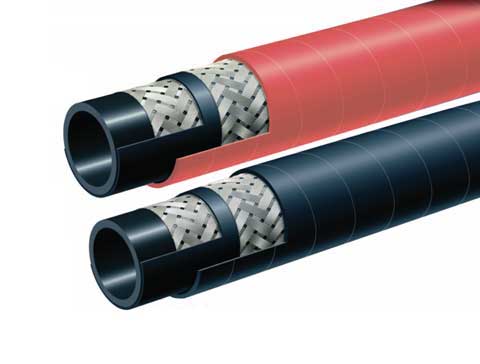
The excellent performance of FPSO dynamic mooring hoses is due to their precise multi-layer adhesive structure design, which is fundamentally different from traditional non adhesive hoses.
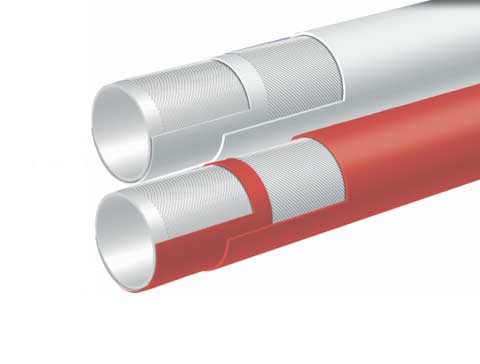
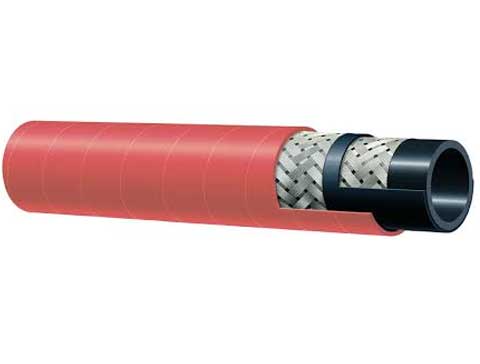
The core advantage of adhesive structures lies in the tight chemical bonding between the layers. Unlike loose non bonded structures, the inner adhesive layer, reinforcement layer, and outer adhesive layer of API 17K hose are bonded together into a single "flexible pressure vessel" through an integrated vulcanization process. This structure enables stress to be evenly transmitted between layers, avoiding friction and wear caused by relative sliding, and fundamentally improving fatigue resistance.
The multi-layered composite of reinforcement layers is the key to balancing pressure and flexibility. For the dynamic working conditions of FPSO, the hose usually adopts an alternating composite structure of high-strength steel wire winding layer and fiber reinforcement layer. The inner steel wire provides radial support at a higher angle to resist tube swelling under high pressure; The outer steel wire constructs an axial tensile skeleton at a lower angle to withstand the tensile load generated by ship motion. The adhesive material between each layer adopts a special formula to ensure that it maintains over 85% of the initial adhesive strength after millions of bending cycles.
The implementation of a small bending radius is a direct reflection of structural design. Traditional rigid pipelines are unable to adapt to the swaying motion of FPSOs with wind and waves, and are prone to stress concentration at connection points, leading to fracture. The API 17K adhesive hose reduces the small bending radius to less than 50% of conventional products by optimizing the thickness of the reinforcement layer and material modulus, and can adapt to high-frequency and large angle bending conditions of FPSO single point mooring systems. Taking a 150000 ton FPSO as an example, its single point system consists of 12 mooring lines and dynamic flexible risers, which can rotate 360 degrees - the ultra flexible nature of the bonded hose allows it to bend freely within this range without cracking due to repeated fatigue.
The temperature adaptability covers the extreme environments of global oceans. API 17K hoses can operate stably in a wide temperature range of -29 ℃ to+121 ℃, maintaining the physical properties of elastomeric materials from the extreme cold of the North Sea to the high temperature of the Gulf of Mexico. This is of great significance for the long-term deployment of FPSOs in polar or equatorial waters.
3、 Core Applications and Full Cycle Value of FPSO Dynamic Mooring Scenarios
In the mooring system of FPSO, API 17K adhesive flexible hose is mainly used for three functional modules: dynamic riser, crossover pipe, and loading and unloading hose.
The dynamic riser is the "main artery" that connects the underwater production tree with the FPSO hull. It rises from the seabed along a flexible riser guide to the ship's turret, bearing tensile, bending, and torsional loads caused by waves. The multi-layer adhesive structure of API 17K hose enables it to smoothly pass through the I/J type pipeline guide device, and the built-in skeleton layer ensures that the pipe cleaner can pass through online, achieving non-stop maintenance. Taking the Enping oilfield in the eastern South China Sea as an example, the "Ocean Oil 118" FPSO operates at depths of 86-96 meters, and its dynamic riser needs to adapt to the unpredictable wind direction during the transition period of internal waves and monsoons - the dynamic adaptability of the bonded hose is particularly critical in such complex sea conditions.
Lightweight design and convenient installation are another core advantage of API 17K hoses. Compared with traditional wrapped hoses, the adhesive structure has thinner pipe walls and lighter weight at the same pressure level, greatly reducing the difficulty of offshore lifting and platform riser loads. This is particularly important for FPSO decks with limited space - lighter hoses mean lower support structure requirements and easier maintenance and replacement.
The optimization of the entire lifecycle cost is the ultimate manifestation of value. The design life of adhesive hoses that comply with API 17K specifications can reach over 20 years, far exceeding the 5-7 year replacement cycle of traditional hoses. Although the initial procurement cost is high, considering the extremely expensive operation cost of replacing hoses in deep sea (requiring the use of large engineering ships and saturated diving support), the comprehensive benefits brought by long-life design far exceed the price difference of the product itself. Taking a deepwater gas field in the South China Sea as an example, after using API 17K adhesive hoses, unplanned downtime was reduced by 70%, and the full lifecycle operation and maintenance costs were reduced by more than 45%.
In summary, the FPSO dynamic mooring adhesive flexible hose that complies with the API 17K specification perfectly embodies the strict requirements of deep-sea oil and gas development for "high reliability, long service life, and easy maintenance" with its three core technologies of multi-layer bonded anti fatigue structure, integral vulcanization ultra flexible characteristics, and wide temperature corrosion-resistant material system. From pre salt oil fields in Brazil to deep-water blocks in West Africa, from the Liuhua oil field in the South China Sea to the Norwegian waters in the North Sea, this' deep-sea joint 'is carrying the core lifeline of global offshore oil and gas development with its reliable operation for 20 years.
In the grand map of deep-sea oil and gas development, Floating Production Storage and Offloading Units (FPSOs) are known as the "offshore oil and gas factories". They anchor in open waters year-round through a single point mooring system "wind vane effect", withstanding the continuous impact of wind, waves, and ocean currents. The flexible riser connecting FPSO and underwater production system, like the "joint" in a mooring system, must maintain extremely high flexibility and structural integrity in high-frequency oscillation with the current. The adhesive flexible hose that complies with the API 17K specification is a professional solution designed for this extreme working condition - it achieves a very small bending radius with a multi-layer adhesive structure, endows super fatigue resistance with an integrated vulcanization process, and redefines the reliability standard for deep sea dynamic service with a design life of more than 20 years.
1、 Standard cornerstone: API 17K specification system for dynamic mooring hoses
API Spec 17K is a specification for adhesive flexible hoses developed by the American Petroleum Institute, which complements API 17J for non adhesive structures. This standard specifies the technical requirements for hoses applicable to "sweet and acidic production services", including risers, crossover pipes, and offshore loading and unloading hoses under static and dynamic operating conditions.
For FPSO dynamic mooring applications, API 17K emphasizes three core indicators: bending radius, fatigue life, and end fitting integrity. The standard specifies the calculation method and verification requirements for small bending radius (MBR) - the bending radius of hoses under dynamic conditions must be smaller than that under static conditions to adapt to the repeated deformation caused by ship motion. At the same time, the standard sets clear adhesive strength requirements for the multi-layer composite structure of the hose body (elastic layer, reinforcement layer, wear-resistant layer, outer protective layer) to ensure that interlayer peeling does not occur under long-term dynamic loads.
Hoses that comply with API 17K specifications must undergo a series of rigorous type tests, including bending stiffness testing, hydrostatic pressure testing, tensile testing, and pulse fatigue testing. These tests simulate the service conditions of FPSOs under extreme sea conditions that occur once every 100 years, ensuring that the hoses maintain structural integrity for a design life of over 20 years. In addition, the standard also specifies the medium corrosion resistance of hoses - they can transport complex corrosive media containing seawater, hydrogen sulfide (H ₂ S), and carbon dioxide (CO ₂) for a long time, and the outer rubber layer must have both seawater immersion resistance and UV radiation resistance.
2、 Structural code: Multi layer bonding and integrated vulcanization casting "super flexible and fatigue resistant"
The excellent performance of FPSO dynamic mooring hoses is due to their precise multi-layer adhesive structure design, which is fundamentally different from traditional non adhesive hoses.
The core advantage of adhesive structures lies in the tight chemical bonding between the layers. Unlike loose non bonded structures, the inner adhesive layer, reinforcement layer, and outer adhesive layer of API 17K hose are bonded together into a single "flexible pressure vessel" through an integrated vulcanization process. This structure enables stress to be evenly transmitted between layers, avoiding friction and wear caused by relative sliding, and fundamentally improving fatigue resistance.
The multi-layered composite of reinforcement layers is the key to balancing pressure and flexibility. For the dynamic working conditions of FPSO, the hose usually adopts an alternating composite structure of high-strength steel wire winding layer and fiber reinforcement layer. The inner steel wire provides radial support at a higher angle to resist tube swelling under high pressure; The outer steel wire constructs an axial tensile skeleton at a lower angle to withstand the tensile load generated by ship motion. The adhesive material between each layer adopts a special formula to ensure that it maintains over 85% of the initial adhesive strength after millions of bending cycles.
The implementation of a small bending radius is a direct reflection of structural design. Traditional rigid pipelines are unable to adapt to the swaying motion of FPSOs with wind and waves, and are prone to stress concentration at connection points, leading to fracture. The API 17K adhesive hose reduces the small bending radius to less than 50% of conventional products by optimizing the thickness of the reinforcement layer and material modulus, and can adapt to high-frequency and large angle bending conditions of FPSO single point mooring systems. Taking a 150000 ton FPSO as an example, its single point system consists of 12 mooring lines and dynamic flexible risers, which can rotate 360 degrees - the ultra flexible nature of the bonded hose allows it to bend freely within this range without cracking due to repeated fatigue.
The temperature adaptability covers the extreme environments of global oceans. API 17K hoses can operate stably in a wide temperature range of -29 ℃ to+121 ℃, maintaining the physical properties of elastomeric materials from the extreme cold of the North Sea to the high temperature of the Gulf of Mexico. This is of great significance for the long-term deployment of FPSOs in polar or equatorial waters.
3、 Core Applications and Full Cycle Value of FPSO Dynamic Mooring Scenarios
In the mooring system of FPSO, API 17K adhesive flexible hose is mainly used for three functional modules: dynamic riser, crossover pipe, and loading and unloading hose.
The dynamic riser is the "main artery" that connects the underwater production tree with the FPSO hull. It rises from the seabed along a flexible riser guide to the ship's turret, bearing tensile, bending, and torsional loads caused by waves. The multi-layer adhesive structure of API 17K hose enables it to smoothly pass through the I/J type pipeline guide device, and the built-in skeleton layer ensures that the pipe cleaner can pass through online, achieving non-stop maintenance. Taking the Enping oilfield in the eastern South China Sea as an example, the "Ocean Oil 118" FPSO operates at depths of 86-96 meters, and its dynamic riser needs to adapt to the unpredictable wind direction during the transition period of internal waves and monsoons - the dynamic adaptability of the bonded hose is particularly critical in such complex sea conditions.
Lightweight design and convenient installation are another core advantage of API 17K hoses. Compared with traditional wrapped hoses, the adhesive structure has thinner pipe walls and lighter weight at the same pressure level, greatly reducing the difficulty of offshore lifting and platform riser loads. This is particularly important for FPSO decks with limited space - lighter hoses mean lower support structure requirements and easier maintenance and replacement.
The optimization of the entire lifecycle cost is the ultimate manifestation of value. The design life of adhesive hoses that comply with API 17K specifications can reach over 20 years, far exceeding the 5-7 year replacement cycle of traditional hoses. Although the initial procurement cost is high, considering the extremely expensive operation cost of replacing hoses in deep sea (requiring the use of large engineering ships and saturated diving support), the comprehensive benefits brought by long-life design far exceed the price difference of the product itself. Taking a deepwater gas field in the South China Sea as an example, after using API 17K adhesive hoses, unplanned downtime was reduced by 70%, and the full lifecycle operation and maintenance costs were reduced by more than 45%.
In summary, the FPSO dynamic mooring adhesive flexible hose that complies with the API 17K specification perfectly embodies the strict requirements of deep-sea oil and gas development for "high reliability, long service life, and easy maintenance" with its three core technologies of multi-layer bonded anti fatigue structure, integral vulcanization ultra flexible characteristics, and wide temperature corrosion-resistant material system. From pre salt oil fields in Brazil to deep-water blocks in West Africa, from the Liuhua oil field in the South China Sea to the Norwegian waters in the North Sea, this' deep-sea joint 'is carrying the core lifeline of global offshore oil and gas development with its reliable operation for 20 years.
Previous: